

How Can a Slit Coil Packaging Line Improve Coil Handling Efficiency?
When I first started my journey in the packing machine industry, I saw firsthand the struggles factories faced. Manual handling was slow, dangerous, and often led to damaged goods. Today, businesses still wrestle with these challenges, especially in steel mills and service centers. They need to move vast quantities of heavy, sensitive slit coils quickly and safely. This often becomes a bottleneck. The core issue isn’t just about moving coils; it’s about doing it efficiently, safely, and cost-effectively to meet tight production schedules and demanding customer specifications. This problem impacts everything from delivery times to profit margins.
A slit coil packaging line significantly improves coil handling efficiency by automating multiple steps, from coil transfer and weighing to wrapping, strapping, and labeling. This automation reduces manual labor, increases throughput, ensures consistent packaging quality, and minimizes product damage, making the entire process faster, safer, and more reliable for high-volume operations.
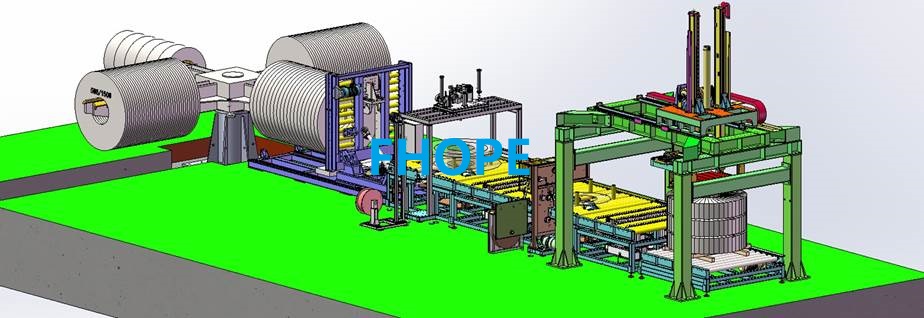

It is clear that the traditional ways of coil packaging are no longer enough for modern industrial demands. Staying competitive means embracing smarter solutions. This guide will explore exactly how advanced slit coil packaging lines revolutionize efficiency, turning challenges into opportunities for growth. I want to share my insights and show you the path to optimizing your operations.
How does a fully automated slit coil packing line boost production throughput?
Many businesses struggle with slow packaging processes. This often creates a bottleneck right at the end of the production line. When coils pile up, it delays shipments and costs money. This inefficiency is a major pain point. It holds back overall factory productivity. The manual work involved is also very repetitive and prone to errors. This impacts how fast products can move out the door.
A fully automated slit coil packing line boosts production throughput by integrating several previously manual tasks into a continuous, high-speed operation, eliminating downtime between stages and allowing for consistent, rapid processing of coils without human intervention.
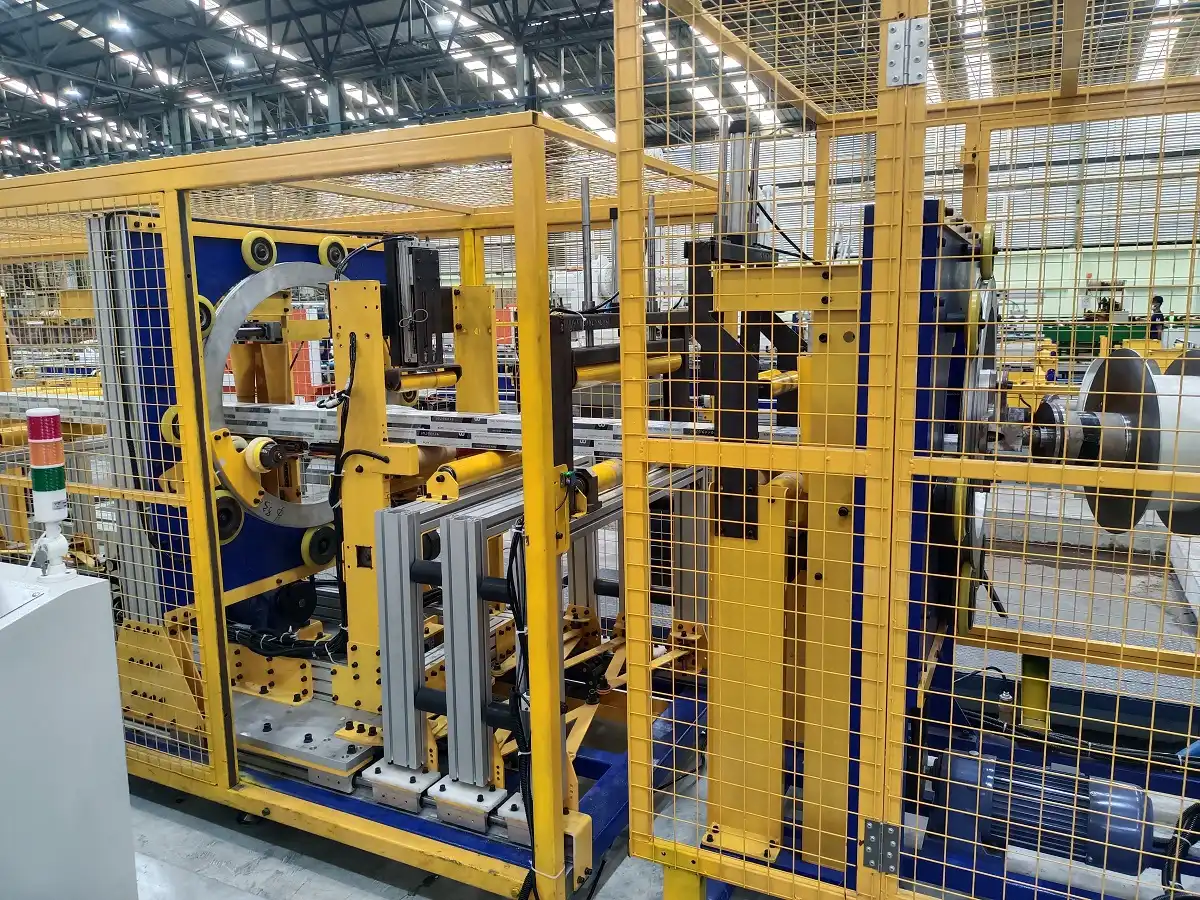

From my experience, watching a well-designed automatic packing line operate is truly impressive. It is a symphony of coordinated movements. The benefits of this kind of automation extend far beyond simply moving things faster. It fundamentally changes how a factory operates. It creates a seamless flow. This flow ensures that coils are always moving, never waiting. The machinery handles the heavy lifting. It also performs precise wrapping and strapping. This level of consistency is impossible with human hands. It ensures that every coil is ready for shipment quickly and reliably.
Deeper Insights into Throughput Enhancement:
Automated coil packaging lines achieve superior throughput by optimizing every stage of the packaging process. They replace time-consuming manual steps with fast, machine-driven actions.
-
Continuous Flow Operation:
- Problem: Manual handling often involves stopping and starting. Coils wait for operators to position them. This creates delays. Each manual step adds to the overall cycle time. It introduces potential for bottlenecks at various points along the line.
- Solution: An automated line ensures a smooth, uninterrupted flow. Coils move from one station to the next automatically. Conveyor systems and robotic arms transfer coils without human intervention. This eliminates idle time between tasks. It keeps the production moving. The entire process becomes a continuous stream. (continuous processing, integrated material flow)
-
Increased Processing Speed:
- Problem: Human operators have physical limits. They cannot maintain high speeds for long periods. Manual strapping and wrapping are inherently slower. The speed varies based on the operator’s skill and fatigue. This slows down the entire packing operation.
- Solution: Machines operate at consistent, high speeds. They perform tasks much faster than people can. For example, an automatic strapping machine can apply multiple straps in seconds. A stretch wrapper can cover a coil in less than a minute. This rapid execution significantly cuts down on packaging time per coil. It allows for more coils to be processed in a given timeframe. (rapid coil processing, high-speed wrapping)
-
Reduced Labor Dependence:
- Problem: Relying on a large workforce for packaging creates challenges. Labor costs are high. Finding skilled workers can be difficult. Employee turnover also impacts productivity. The availability of labor directly limits output capacity.
- Solution: Automation dramatically reduces the need for human operators. A few supervisors can manage an entire line. This cuts labor costs. It also frees up staff for other, more skilled tasks. The line’s capacity is no longer tied to the number of available workers. This ensures consistent output. (automated labor reduction, workforce optimization)
-
Error Minimization and Rework Reduction:
- Problem: Manual packaging is prone to human error. Operators might apply straps too loosely or too tightly. They might miss a wrapping layer. These errors lead to damaged products during transit. They also require costly rework or even customer returns. This slows down overall output.
- Solution: Automated systems apply consistent tension and precise wrapping. Sensors monitor the process. They ensure each coil meets exact specifications. This reduces packaging defects. It virtually eliminates the need for rework. This consistency improves overall quality. It ensures that packaged coils are ready for shipment the first time. (consistent packaging quality, defect prevention)
-
Optimized Space Utilization:
- Problem: Manual packaging setups often require large, open areas. This is for movement of coils and storage of materials. It can be inefficient in terms of factory footprint. Each workstation needs space.
- Solution: Automated lines are compact. They are designed for efficient use of space. Each machine performs a specific task. They are often arranged in a linear or U-shaped layout. This minimizes the required floor area. It maximizes throughput within a smaller footprint. This space saving is valuable in busy factories. (space-efficient automation, optimized factory layout)
Can automated coil packaging machinery truly reduce workplace risks and labor costs?
Factories often deal with significant safety concerns. Moving heavy steel coils creates inherent dangers. Workers can suffer injuries from manual handling or machine operation. This is a big problem for any plant manager. Beyond the human cost, these accidents lead to lost workdays and increased insurance premiums. It also adds to the cost of doing business. The sheer physical strain of manual packaging also contributes to high labor costs and worker turnover.
Automated coil packaging machinery significantly reduces workplace risks by eliminating manual handling of heavy coils, thereby minimizing human exposure to dangerous moving parts and repetitive strain injuries. It also substantially lowers labor costs by decreasing the number of operators needed and increasing overall efficiency.


From my many years in this industry, I have seen the transformative effect of automation on safety. It is not just about moving coils faster. It is about creating an environment where workers are protected. I remember one client, Ivan, who was responsible for managing the cold-rolled and slitting workshop. He faced high injury rates from manual strapping and coil manipulation. His team also experienced high turnover due to the physical demands. Implementing an automated system changed everything for his factory. The fear of accidents decreased. His team could focus on supervision and maintenance. This shift improved morale. It also made the entire operation much more sustainable.
Deeper Insights into Risk and Cost Reduction:
Automated coil packaging lines fundamentally change the safety and cost landscape of packaging operations. They remove the most dangerous and labor-intensive tasks from human hands.
-
Elimination of Manual Handling Risks:
- Problem: Lifting, shifting, and positioning heavy coils manually is extremely dangerous. Workers can suffer crushing injuries, sprains, or falls. Using cranes with manual guidance still poses risks. It puts workers in close proximity to moving loads.
- Solution: Automated lines use conveyors, turntables, and robotic arms for coil movement. Humans do not need to physically touch or lift the coils. This removes the risk of direct contact injuries. It protects workers from heavy, shifting loads. The entire process becomes much safer. (automated coil transport, reduced manual strain)
-
Reduced Repetitive Strain Injuries (RSIs):
- Problem: Manual strapping, wrapping, and labeling involve repetitive motions. These tasks can lead to long-term health issues for workers. Carpal tunnel syndrome, back pain, and shoulder injuries are common. Such injuries result in absenteeism and compensation claims.
- Solution: Machines perform these repetitive tasks tirelessly. They do not get fatigued. This completely removes the strain from human operators. Workers are no longer exposed to these physically demanding and repetitive actions. This improves their long-term health and well-being. (ergonomic workplace, repetitive task automation)
-
Lower Exposure to Hazardous Areas:
- Problem: In traditional setups, workers must enter designated “danger zones.” These are areas around operating machinery or moving coils. There is always a risk of accidental contact. This can lead to severe injuries.
- Solution: Automated systems are often enclosed or have safety interlocks. Operators can monitor the process from a safe distance. They only interact with the machinery during maintenance. This significantly reduces their exposure to moving parts. It also keeps them away from potential crush points. (safety zone separation, controlled access points)
-
Significant Reduction in Labor Costs:
- Problem: Manual packaging operations require a large workforce. Each coil often needs multiple operators for strapping, wrapping, and labeling. Salaries, benefits, and overtime add up quickly. This makes labor a major operating expense.
- Solution: An automated line can perform the work of several employees. It requires only a few supervisors or technicians. They monitor the system. This drastically cuts down on personnel costs. The investment in automation pays for itself over time through these savings. (cost-effective labor, personnel optimization)
-
Increased Uptime and Reduced Accident-Related Downtime:
- Problem: Accidents lead to immediate production stoppages. Investigations, first aid, and cleanup disrupt operations. This unplanned downtime is costly. It impacts delivery schedules.
- Solution: A safer environment means fewer accidents. This translates directly to more consistent uptime. The automated line runs without interruption due to human error or injury. This improves overall productivity and reliability. It ensures a stable output. (operational continuity, incident prevention)
What advanced packaging techniques ensure superior coil protection and meet export standards?
Ensuring that steel coils arrive at their destination in perfect condition is critical. Many manufacturers struggle with packaging quality. Coils can suffer rust, scratches, or loosening during transit. This leads to customer complaints, returns, and even contract penalties. Export customers, like Ivan’s, have even stricter demands, including specific certifications like CE/ISO and precise labeling for tracking. Poor packaging not only impacts reputation but also profitability.
Advanced packaging techniques for slit coil protection include precise tension control for strapping (PET/steel), multi-layer stretch or shrink wrapping for comprehensive moisture and dust protection, and integrated automatic labeling for traceability. These methods ensure superior physical integrity, environmental resistance, and compliance with stringent international export standards.


I have always believed that packaging is not just the final step. It is an integral part of product quality. When I developed packaging solutions, meeting export standards was a top priority. I saw clients like Ivan, from a steel mill in Russia, facing issues with inconsistent manual wrapping. His customers demanded perfect, rust-free coils with specific barcodes. We worked to implement a system that applied consistent tension and multiple layers of protective film. This not only met but often exceeded his customers’ expectations. The result was fewer complaints and a stronger reputation in international markets.
Deeper Insights into Advanced Packaging Techniques:
Modern slit coil packaging lines employ sophisticated techniques and materials to provide comprehensive protection. These go beyond basic wrapping. They ensure product integrity through various transit conditions.
-
Precision Strapping with Optimized Materials:
- Problem: Manual strapping often results in uneven tension. This causes straps to loosen or break during transport. The wrong strapping material might not withstand the coil’s weight and movement. This leads to insecure loads.
- Solution: Automated strapping machines apply consistent and precise tension. They use either high-strength PET straps or durable steel straps. PET straps are strong, corrosion-resistant, and recyclable. Steel straps offer maximum security for heavy coils. The machine senses the coil dimensions. It applies the optimal number of straps. This ensures the coil is tightly secured. It prevents shifting or unraveling. (automated strapping tension, durable PET/steel banding)
-
Multi-Layer Moisture and Dust Barrier:
- Problem: Steel is highly susceptible to rust and corrosion. A single layer of film might not be enough protection. Gaps or tears can expose the coil to moisture and dust. This is especially true during long-distance shipping or storage.
- Solution: Automated stretch or shrink wrappers apply multiple layers of protective film. This creates a robust barrier. It seals the coil from external elements. The film can be UV-resistant. It can also be VCI (Volatile Corrosion Inhibitor) impregnated. This adds an extra layer of anti-corrosion protection. It ensures the coil remains pristine. (multi-layer protective wrap, anti-corrosion packaging)
-
Integrated Automatic Labeling and Barcoding:
- Problem: Manual labeling is slow and prone to errors. Misplaced or unreadable labels cause logistical nightmares. It makes tracking difficult. It also creates compliance issues for export. This can lead to delays at customs.
- Solution: Packaging lines integrate automatic labeling systems. These systems print and apply labels with precision. They can include barcodes, QR codes, and custom information. This ensures accurate product identification. It allows for seamless tracking throughout the supply chain. This feature is vital for export compliance and inventory management. (automated barcode labeling, supply chain traceability)
-
Edge Protection and Void Filling:
- Problem: The edges of slit coils are vulnerable to damage. They can be bent or scratched during handling. Voids within the coil’s eye can cause distortion under pressure. This compromises the coil’s shape and integrity.
- Solution: The packaging line can include stations for applying edge protectors. These are made of sturdy materials like cardboard or plastic. They shield the coil’s sensitive edges. Automatic void-filling mechanisms can insert internal supports. These maintain the coil’s shape. They prevent collapse or deformation. This ensures the coil maintains its quality from factory to customer. (coil edge protection, internal void support)
-
Compliance with International Standards (CE, ISO):
- Problem: Exporting to different regions requires adherence to various standards. For example, CE marking for Europe or ISO certifications. Non-compliance can lead to rejection or fines. Meeting these manually can be complex and inconsistent.
- Solution: Automated packaging lines are designed with these standards in mind. They deliver consistent quality that meets specific regulatory requirements. The precision of machine application helps achieve uniform packaging. This is often a prerequisite for certification. The integrated labeling also aids in documentation and compliance. This builds trust with international clients. (export compliance packaging, certified quality standards)
How can a packing line adapt to diverse coil types and fluctuating production demands?
Factories often produce a wide range of slit coil products. These vary significantly in size, weight, and material. Switching between different packaging requirements can be a slow, manual process. This leads to downtime and inefficiency. Furthermore, production volumes can fluctuate, making it hard to maintain consistent output without a flexible system. This lack of adaptability is a major headache for production managers. It impacts their ability to respond to market changes.
A well-designed slit coil packing line adapts to diverse coil types and fluctuating demands through modular design, adjustable components, and intelligent control systems that allow for quick changeovers, automatic parameter adjustments, and scalable operations, ensuring seamless processing of varied specifications and volumes.
When I founded FHOPEPACK, I knew that adaptability would be key for our clients. No two factories are exactly alike. Their product lines are always evolving. I recall a conversation with a client, similar to Ivan, who produced both narrow cold-rolled coils and wider galvanized coils. Each needed a different strapping pattern and wrapping material. His old system required hours of manual adjustments. We designed a modular solution for him. It had adjustable guides and a control panel for recipe management. This meant he could switch between product types in minutes, not hours. This flexibility drastically improved his operational responsiveness.
Deeper Insights into Adaptability and Flexibility:
The ability of a packing line to handle a wide range of products and adjust to changing demands is crucial for long-term operational success. Modern systems incorporate features specifically for this purpose.
-
Modular Design and Interchangeable Components:
- Problem: Traditional, rigid packing lines are built for one specific product range. Any change in coil size or weight often requires significant retooling or even new equipment. This is costly and time-consuming. It makes the system inflexible.
- Solution: Automated lines are designed with modularity in mind. Different sections, like strapping or wrapping units, can be swapped out or upgraded. This allows for easy adaptation to new product specifications. Standardized interfaces simplify this process. This modularity means the line can evolve with the factory’s needs. (modular packaging system, interchangeable components)
-
Adjustable Guides and Fixtures:
- Problem: Coils vary greatly in inner diameter (ID), outer diameter (OD), and width. Manual adjustment of guides and conveyors for each different coil size is slow and prone to errors. This leads to misalignments and potential coil damage.
- Solution: The line features automatically adjustable guides, rollers, and centering devices. These components can be motorized. They can change position at the push of a button. Sensors detect coil dimensions. They then automatically adjust the machinery. This ensures precise positioning for every coil size. It allows for quick and accurate changeovers between different products. (automatic coil dimensioning, adjustable machine settings)
-
Programmable Logic Controllers (PLCs) and Recipe Management:
- Problem: Each coil type or customer might require a unique packaging “recipe.” This includes specific strap tension, number of wraps, and label content. Manually inputting these parameters every time is inefficient and error-prone.
- Solution: Modern packing lines are controlled by advanced PLCs. They store multiple packaging “recipes.” Operators can select the appropriate recipe from a touchscreen interface. The system then automatically adjusts all parameters. This ensures consistent packaging for each product type. It drastically reduces setup time. It also eliminates manual configuration errors. (programmable packaging recipes, intelligent control systems)
-
Scalable Throughput Capacity:
- Problem: Production demands fluctuate. A line that is too slow during peak times causes bottlenecks. A line that is too fast during low demand is inefficient. Finding a balance is challenging.
- Solution: Automated lines offer scalable capacity. They can be configured to run at different speeds. Some systems can even operate with individual modules turned on or off. This allows the factory to match packaging output to production needs. This ensures efficient resource utilization. It supports both high and low volume requirements. (scalable production capacity, flexible output management)
-
Multi-Material Handling Capability:
- Problem: Different coil types (cold rolled, galvanized, stainless) often require different packaging materials. Some need steel strapping; others use PET. Some need anti-corrosion film; others just need basic protection. Manually switching materials is complex.
- Solution: Automated lines can be equipped with multiple material dispensers. These systems automatically select and feed the correct strapping or wrapping material. For example, a dual-head strapping machine can switch between PET and steel. This eliminates manual material changes. It allows the line to process diverse product materials seamlessly. (multi-material packaging, automated material selection)
What defines a reliable partner for turnkey coil packaging solutions and long-term value?
Investing in an automated coil packaging line is a major decision. Many companies worry about choosing the wrong supplier. They fear inadequate support, unreliable equipment, or a lack of long-term partnership. A poor choice can lead to significant operational disruptions and financial losses. Finding a partner who truly understands the complexities of coil handling and packaging is crucial. This is especially true for businesses looking for a “turnkey” solution.
A reliable partner for turnkey coil packaging solutions is defined by a proven track record of delivering customized, high-quality equipment, comprehensive project management from design to installation, robust after-sales support (training, spare parts), and a deep understanding of industry-specific challenges, ensuring long-term operational value and trust.
As someone who built a successful packing machine factory from the ground up, I understand the importance of trust and partnership. My own journey, starting as an engineer and growing FHOPEPACK, taught me that it’s not just about selling a machine. It’s about building a relationship. I’ve seen many clients struggle with suppliers who vanish after installation. This leaves them stranded with complex issues. When I work with a client, I always aim to be their long-term ally. This means providing solutions that grow with their business, not just equipment for today.
Deeper Insights into Partner Selection for Long-Term Value:
Choosing the right partner is as critical as selecting the right technology. A good partner ensures that your investment continues to yield returns long after the initial installation.
-
Comprehensive Turnkey Project Management:
- Problem: Many vendors only sell machines. They leave the integration and installation challenges to the customer. This requires significant internal resources. It can lead to delays and cost overruns.
- Solution: A reliable partner offers a true turnkey solution. They manage the entire project lifecycle. This includes initial consultation, custom design, manufacturing, installation, and commissioning. They coordinate all aspects. This ensures a seamless transition. It minimizes the burden on the client’s team. It guarantees a fully functional system from day one. (full-service project management, integrated solution delivery)
-
Robust After-Sales Support and Service:
- Problem: Machines, even the best ones, require maintenance and occasional troubleshooting. If a supplier does not offer quick support or readily available spare parts, downtime can be extensive and costly.
- Solution: An excellent partner provides comprehensive after-sales support. This includes remote diagnostics, on-site technical assistance, and a readily available inventory of spare parts. They offer service contracts to ensure proactive maintenance. This minimizes unexpected breakdowns. It maximizes the line’s uptime. (post-installation support, reliable spare parts availability)
-
In-Depth Industry Expertise and Customization:
- Problem: Generic packaging solutions rarely fit specific factory needs. Each steel mill has unique coil dimensions, production volumes, and environmental conditions. A “one-size-fits-all” approach often falls short.
- Solution: A reliable partner possesses deep industry knowledge. They understand the nuances of coil handling. They can offer customized solutions. This means designing a line that precisely meets your specific requirements. They consider factors like coil weight, speed, space constraints, and packaging materials. This tailored approach ensures optimal performance and efficiency. (industry-specific solutions, bespoke system design)
-
Proven Track Record and References:
- Problem: New or unproven suppliers carry inherent risks. Their equipment might be unreliable. Their claims about performance might be exaggerated. This puts your investment at risk.
- Solution: Look for a partner with a long history of successful installations. They should have verifiable customer testimonials and case studies. Ask for references. Talk to their existing clients. A strong track record demonstrates their reliability and the quality of their machinery. Companies like FHOPEPACK, SHJLPACK, and CNBHPAC have established reputations. (verified supplier credibility, customer success stories)
-
Commitment to Training and Knowledge Transfer:
- Problem: Even the most advanced machinery is ineffective without skilled operators. A lack of proper training can lead to operational errors, inefficiency, and safety hazards.
- Solution: A truly reliable partner invests in your team’s success. They provide thorough training for your operators and maintenance staff. This covers everything from daily operation to basic troubleshooting. This knowledge transfer empowers your team. It ensures they can run and maintain the line effectively. This builds long-term self-sufficiency. (operator training programs, technical knowledge sharing)

Conclusion
Implementing a coil packing line dramatically improves coil handling efficiency. It streamlines operations, enhances safety, and ensures superior packaging quality, meeting strict export standards. This strategic investment not only reduces costs but also positions your business for sustainable growth in a competitive market. Choose a partner like FHOPEPACK who understands your needs and delivers lasting value.












