
How Can a Door Packing Machine Help Argentina Manufacturers with Automating Fragile Wood Door Packaging?
Are you an Argentina manufacturer struggling with your wood door packing? Maybe you face slow processes, high labor costs, or constant damage to your delicate products. Many factory managers tell me these problems keep them up at night. They want to ship perfect doors, but current methods make it hard.
Automating fragile wood door packaging with a specialized door packing machine can solve these core issues for Argentine manufacturers. It boosts speed, improves safety, and drastically cuts down on product damage during handling and shipping. This machine is a direct answer to the challenges of manual packing.
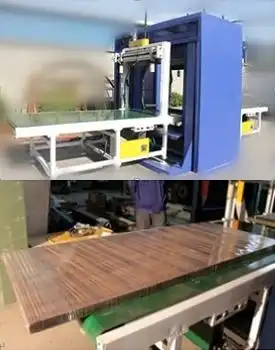
If these challenges sound familiar, then you are in the right place. I will share insights from my years in the packing machine industry. We will look at how modern door packing solutions can change your operations for the better. Keep reading to see the big picture.
How Can a Door Packing Machine Solve Argentina’s Efficiency Bottlenecks?
Do your current packing lines feel like a bottleneck? Are manual processes slowing down your entire production? Many Argentine door factories tell me their packing department just cannot keep up with output. This problem stops them from meeting deadlines. It also hurts their overall delivery speed.
A door packing machine directly solves efficiency bottlenecks by automating repetitive, time-consuming tasks. It processes doors much faster than human workers. This machine brings consistent speed to the end of your production line.
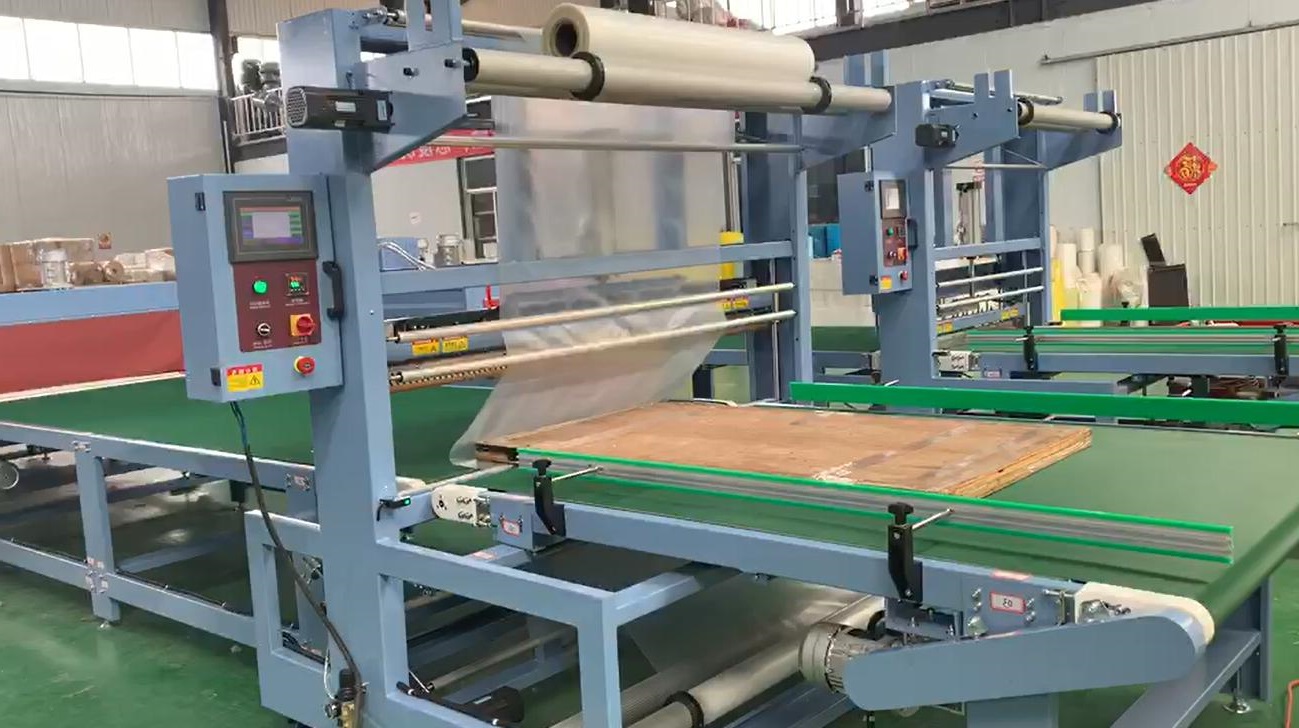
The manual packing of wood doors often involves several slow steps. Workers must lift, wrap, and secure each door by hand. This process is not only slow but also inconsistent. A machine removes these limits. It can apply stretch film, heat shrink film, or other packing materials quickly and evenly. This means more doors are ready for shipment in less time. For example, if your factory packs 200 doors a day manually, a machine might help you pack 500 or more. This increase in throughput changes everything. It allows your factory to take on larger orders. It also helps you deliver products faster to customers. Manual packing often causes delays. This happens when workers get tired or when they make mistakes. Machines do not get tired. They work with high precision, hour after hour. This reliable performance means your packing process is always moving forward. It stops being the part of your operation that holds everything back. This is critical for factories in Argentina trying to scale their production. Without efficient packing, even the best manufacturing processes will stumble at the last step. The integration of a door packing machine changes the entire flow. It turns a slow, labor-intensive area into a fast, automated one. This frees up your skilled workers. They can then focus on other important tasks, not just repetitive packing.
Impact of Automation on Throughput
Automation directly improves your factory’s daily output.
- Faster Cycle Times: Machines wrap doors in seconds, not minutes. This reduces the time each door spends in the packing area.
- Reduced Labor Dependency: Less reliance on many workers means fewer scheduling problems. It also means less impact from staff sickness or turnover.
- Consistent Performance: Machines work at a steady pace. They do not slow down at the end of a shift. This ensures a predictable output every day.
- Optimized Material Use: Machines apply film or other materials with exact tension and overlap. This means you use less material. It also means less waste. This contributes to cost savings over time.
| Aspect | Manual Packing | Automated Packing |
|---|---|---|
| Speed | Slow, varies by worker | Fast, consistent |
| Labor Cost | High, many workers needed | Low, few operators needed |
| Consistency | Low, human error | High, precise wrapping |
| Throughput | Limited, easily bottlenecked | High, scalable |
| Material Usage | Inefficient, potential waste | Optimized, minimal waste |
Can Automated Door Packing Make Your Factory Safer?
Are your workers constantly at risk from lifting and moving heavy, fragile doors? Manual handling of large wood doors is dangerous. It can lead to serious injuries. Many factory managers tell me they worry about employee safety every day. High injury rates mean higher insurance costs. They also lead to more employee turnover.
Automated door packing machines significantly improve worker safety by eliminating the need for manual handling of heavy items. They take over the dangerous tasks. This keeps your employees safe and reduces the risk of workplace accidents.
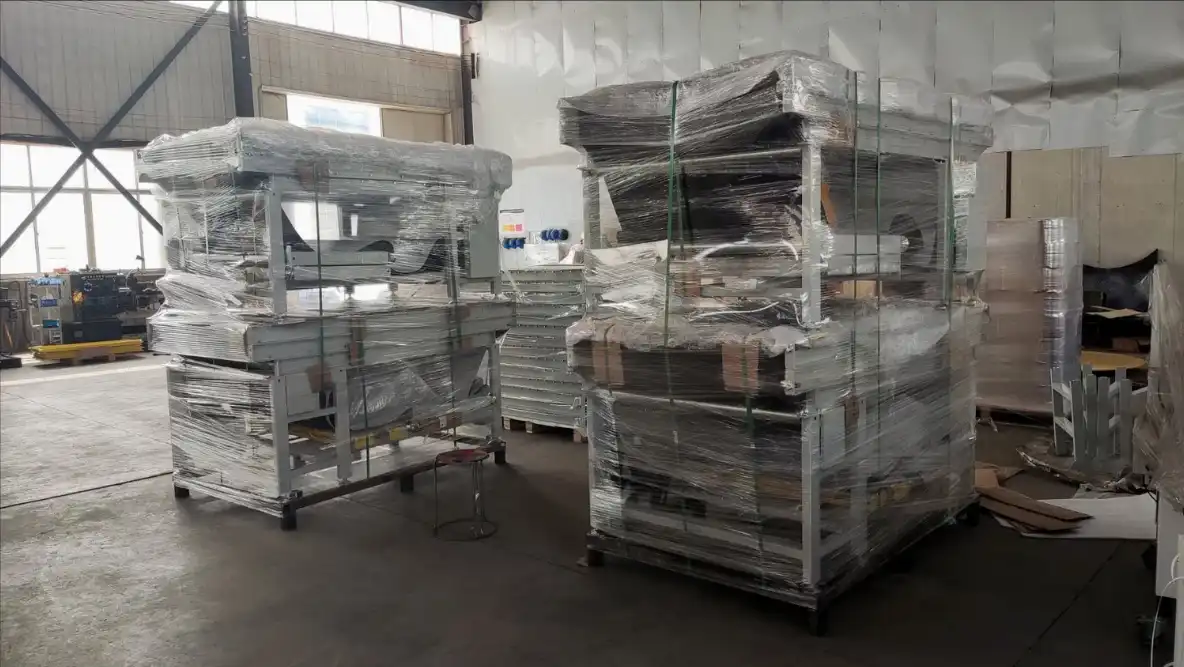
The process of packing wood doors involves moving large, sometimes awkward, and heavy items. Workers often need to lift doors onto packing stations. They might need to flip them over. They also have to secure them for transport. These actions are a big cause of back injuries, strains, and falls. When I started in the packing machine industry, I saw many factories where manual handling was a constant problem. Workers would get hurt. This meant lost workdays and higher costs for the company. An automated door packing machine removes workers from these hazardous situations. The machine handles the heavy lifting. It moves the door into the wrapping area. It then applies the packaging. Workers simply load the door onto a conveyor. Or, they might use a forklift to place it on a designated spot. They operate the machine from a safe distance. This greatly reduces direct physical contact with the product. It lowers the chance of accidents. This also makes the work environment much better for your employees. A safer workplace leads to happier workers. It also means lower insurance premiums for your factory.
Key Safety Benefits
Automating door packing brings many safety benefits.
- Reduced Manual Lifting: This is the biggest gain. Machines do the heavy work. This prevents muscle strains and back injuries.
- Elimination of Repetitive Tasks: Workers no longer do the same strenuous motions over and over. This reduces the risk of repetitive strain injuries.
- Fewer Pinch Points: With automated systems, parts move in a controlled way. This means fewer chances for workers’ hands or fingers to get caught.
- Improved Ergonomics: The overall workstation design becomes safer. Workers can operate controls from a comfortable, standing position.
Safety Concerns in Manual vs. Automated Packing
| Safety Aspect | Manual Packing | Automated Packing |
|---|---|---|
| Lifting Hazards | High risk of back injury, strains from heavy loads | Very low risk, machine handles lifting |
| Repetitive Strain | High, constant bending, reaching, wrapping | Low, workers monitor or load, less repetition |
| Slips/Falls | Moderate, uneven loads, wet surfaces | Low, clear work areas, less manual movement |
| Worker Fatigue | High, impacts judgment and increases risk | Low, machine performs strenuous work |
| Overall Risk | High | Low |
Will Automation Protect Your Fragile Wood Doors Better?
Do your wood doors often arrive at the customer with scratches, dents, or broken edges? Product damage during internal transfer and packing is a common problem. It leads to customer complaints. It also means lost profits for your factory. These issues hurt your brand’s reputation.
Automated door packing machines provide superior product protection. They wrap doors tightly and uniformly. This reduces damage during handling, storage, and shipping. It ensures your fragile wood doors reach customers in perfect condition.
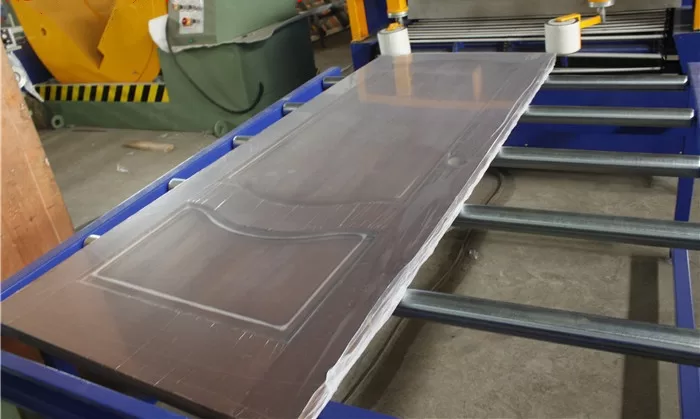
Fragile wood doors need careful handling. They can get damaged easily. When workers wrap doors by hand, the packaging is often inconsistent. Some areas might be too loose. Other areas might not have enough protection. This makes the door vulnerable to impacts or abrasions during transport. I have seen many cases where a small dent on a door edge led to a complete rejection by the customer. This costs the manufacturer a lot of money and time. An automated packing machine applies film or other materials with precise tension and overlap. This creates a tight, secure package around the entire door. It provides a consistent layer of protection on all sides. This uniform wrapping prevents shifting during transit. It shields against impacts. It also protects against moisture and dust. For example, a machine can wrap a door in multiple layers of stretch film. This forms a strong, protective barrier. It is much harder to achieve this level of consistency by hand. Some machines can even apply edge protectors or corner guards automatically before the main wrap. This extra step gives critical protection to vulnerable areas. Protecting your product means fewer returns and happier customers. It builds trust in your brand.
How Automation Prevents Damage
Automated packing systems are designed to protect fragile goods.
- Consistent Wrapping: The machine applies film with uniform tension and overlap. This means no weak spots for damage to occur.
- Full Coverage: Every part of the door gets covered evenly. This includes edges and corners that are often missed or poorly covered by hand.
- Reduced Handling: Less manual handling means fewer chances for drops, scrapes, or bumps. The machine moves the door smoothly through the process.
- Customizable Protection: Machines can be set to use different film types, thicknesses, or multiple layers. This allows you to choose the best protection for specific door types.
- Dust and Moisture Barrier: The tight, consistent wrap keeps out dust and moisture. This is vital for wood products that can warp or be ruined by water.
Damage Control Comparison
| Damage Factor | Manual Packing | Automated Packing |
|---|---|---|
| Scratches/Scuffs | High risk, inconsistent wrapping | Low risk, uniform, tight wrap |
| Edge/Corner Dents | High risk, often poorly protected | Low risk, consistent edge protection |
| Shifting in Transit | High, loose wrapping allows movement | Very low, tight wrap secures product |
| Moisture/Dust | Moderate, inconsistent seal | Very low, excellent barrier |
| Returns/Complaints | Frequent | Minimal |
What is the Real ROI of a Door Packing Machine Investment?
Are you unsure if investing in a packing machine will pay off? Many factory managers hesitate to buy new equipment. They worry about the upfront cost. They also had bad experiences with suppliers who just wanted to sell a machine without good after-sales support. You need to know that your investment will bring real returns.
The real Return on Investment (ROI) of a door packing machine is clear. It lowers labor costs, cuts product damage, and boosts output. This leads to higher profits and a stronger market position. It is not just an expense; it is a strategic investment that pays for itself.
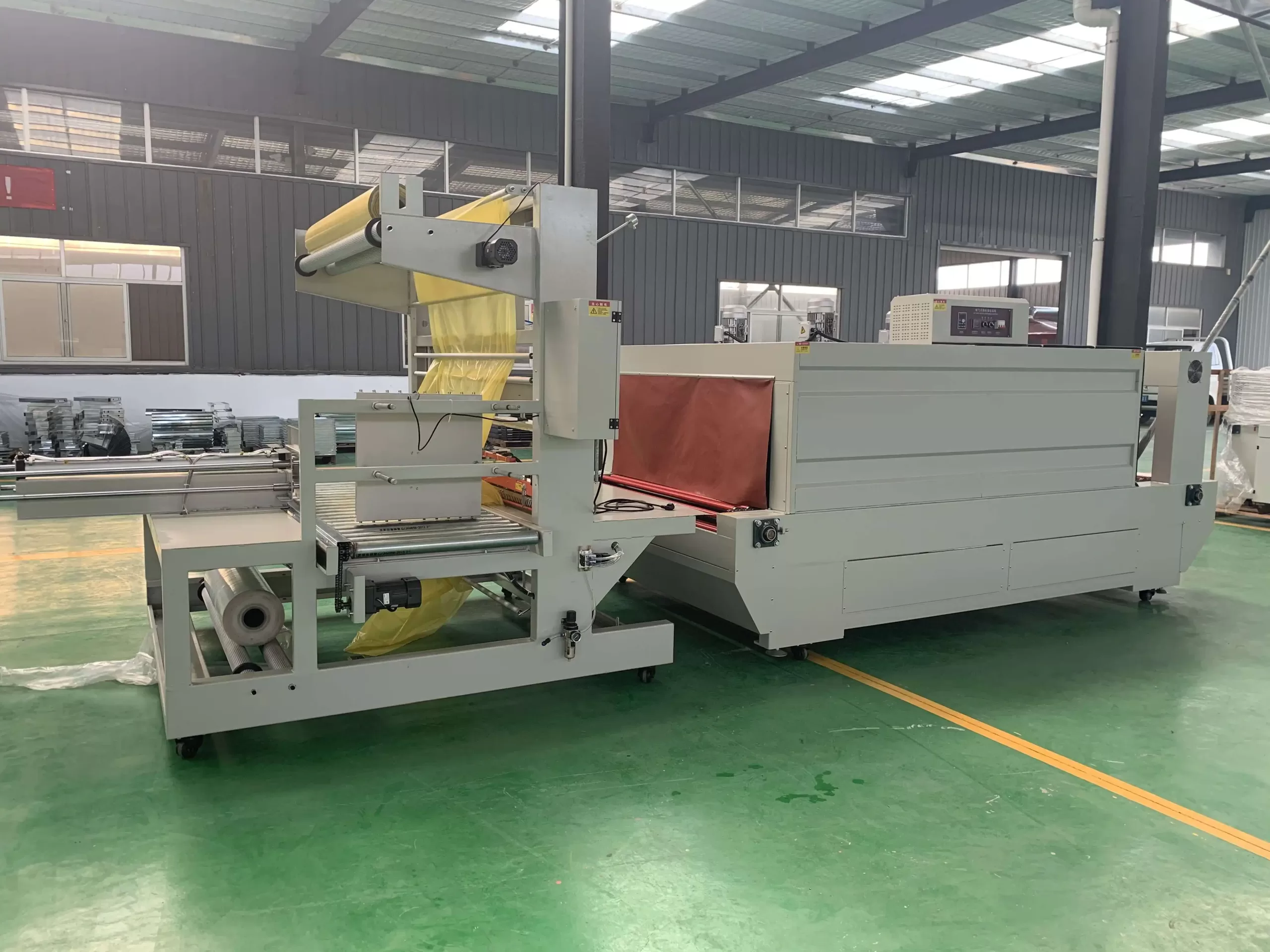
Calculating the ROI for a door packing machine involves looking at both direct and indirect savings. Directly, you save on labor costs. Instead of needing several workers to pack doors, you might only need one or two operators. This frees up other workers for more value-added tasks. For example, if you pay each worker $15 per hour and you replace four workers on packing, that is $60 per hour in savings. Over a year, these savings add up fast. Indirectly, you save money by reducing product damage. Each damaged door costs you materials, labor to remake it, and possibly shipping. If you reduce damage by even a small percentage, the savings can be huge. Consider the goodwill you gain from customers too. When they always receive perfect products, they stay loyal. This leads to more sales over time. I remember working with a client who made coil packing machines. They were losing a lot of money due to damaged coils. After they automated, their damage rates dropped by 80%. This one change significantly boosted their profits and reputation. The machine also speeds up your overall production. This means you can handle more orders. More orders mean more revenue. The machine usually pays for itself within a year or two through these combined savings and increased revenue.
How to Calculate ROI
To figure out your ROI, consider these points.
- Labor Savings: Calculate the wages of workers replaced or redeployed. This is often the largest saving.
- Reduced Material Waste: Less film or packaging material used due to precise machine application.
- Lower Damage Costs: Fewer damaged products mean less cost for rework, replacement, and customer complaints.
- Increased Throughput: More doors packed means more sales potential.
- Improved Safety Costs: Fewer injuries mean lower insurance premiums and less worker compensation.
- Brand Reputation: Delivering high-quality, undamaged products builds customer trust and leads to repeat business.
ROI Factors Table
| Factor | Impact on ROI | Calculation Method |
|---|---|---|
| Labor Cost Savings | Direct cost reduction | (Manual Labor Hours – Automated Labor Hours) x Wage |
| Product Damage Reduction | Avoided costs of remanufacturing, returns, lost sales | (Current Damage Rate – New Damage Rate) x Product Value |
| Increased Production | Potential for more sales, faster order fulfillment | (New Capacity – Old Capacity) x Profit Margin per Unit |
| Safety Improvements | Lower insurance premiums, fewer worker compensation claims | (Current Safety Costs – New Safety Costs) |
| Packaging Material Savings | Reduced waste, optimized usage | (Old Material Usage – New Material Usage) x Material Cost |
My Insights from Years in the Packing Machine Field!
What sets a successful factory apart in today’s competitive market? I have spent many years in the packing machine industry. I started as an employee. Then I built my own successful factory. This journey taught me one big lesson: true success comes from understanding your customers’ deepest needs. It also comes from providing real value, not just selling a product.
My experience showed me that the best partners do not just sell machines. They understand your production bottlenecks. They know your safety concerns. They grasp your efficiency problems. They offer insights and reliable solutions that really work. This is the FHOPEPACK approach.
When I first started working in packing machine factories, I saw the challenges firsthand. I saw factories struggling with inefficient manual processes. Workers were tired. Products were getting damaged. Companies were losing money. It motivated me to find better ways. I learned that just building a good machine was not enough. You also needed to understand the client’s entire operation. You needed to see how the machine fit into their bigger picture. When I founded my own packing machine factory, my goal was clear. I wanted to help clients solve their specific problems. I wanted to help them grow their businesses. For example, I worked with a steel wire manufacturer. Their manual packing was slow and dangerous. They were hesitant to invest. I spent time understanding their entire flow. I showed them how our solution would make their factory safer and much faster. We did not just sell them a machine. We became their partner. We helped them optimize their entire end-of-line process. They saw huge growth. I realized then that my journey in this industry was about more than just making money. It was about sharing knowledge and expertise. It was about giving back. This is why I started FHOPEPACK. I want to help you achieve the same success. Look for a partner who offers more than just equipment. Look for one who offers deep industry knowledge and ongoing support. This is the core of real, lasting success in manufacturing.
What to Look for in a Packing Machine Partner
Choosing the right partner is as important as choosing the right machine.
- Deep Industry Knowledge: The supplier should understand your specific industry. They should know the challenges of packing fragile wood doors.
- Proven Track Record: Look for a company with a history of successful installations. Ask for case studies or references.
- Customization Capabilities: Your factory is unique. The supplier should be able to tailor solutions to your specific needs.
- Strong After-Sales Service: Machines need maintenance and support. A good partner provides excellent technical support, spare parts, and training.
- Focus on ROI: They should help you understand the financial benefits of their solution. They should prove its value.
- Long-Term Partnership: Look for a company that wants to build a lasting relationship. They should be invested in your success.
Partner Selection Checklist
| Factor | Questions to Ask | What to Look For |
|---|---|---|
| Industry Expertise | Do they understand wood door specifics? | Specific examples of success in your niche. |
| Technical Support | What is their response time for issues? | Local support, 24/7 availability, experienced technicians. |
| Customization | Can they adapt the machine to my specific door sizes/production? | Engineers who listen and propose tailored solutions. |
| Training | Do they offer training for my staff? | Comprehensive training programs for operators and maintenance. |
| Spare Parts | How quickly can I get spare parts? | Readily available parts, clear supply chain. |
| Warranty/Guarantees | What is their warranty policy? | Clear, fair warranty terms, commitment to quality. |
Conclusion
Automating fragile wood door packaging with a packing machine offers Argentina manufacturers major gains. It boosts efficiency, enhances safety, and protects products better, ensuring a clear ROI for your business.








