
How Automatic Coil Packing Machines Are Improving Coil Handling in South Korea?
Have you ever wondered what goes on behind the scenes in a busy manufacturing plant, especially when it comes to handling massive coils of steel or wire? Many factory managers, like Jose, face immense pressure daily. They need to boost output, cut costs, and keep everyone safe. I know this journey well. My time starting as an employee and then building my own packing machine factory taught me that every minute of downtime means lost money. Manual processes for heavy items are not just slow; they are incredibly risky. My passion is to help others overcome these very challenges.
Automatic coil packing machines are revolutionizing how South Korean industries handle heavy materials. These advanced systems replace risky, slow manual processes with efficient, safe, and precise automation. By reducing labor, minimizing product damage, and speeding up the entire packaging workflow, manufacturers in South Korea are seeing significant improvements in operational efficiency and overall profitability. They are moving towards smarter, safer production lines.
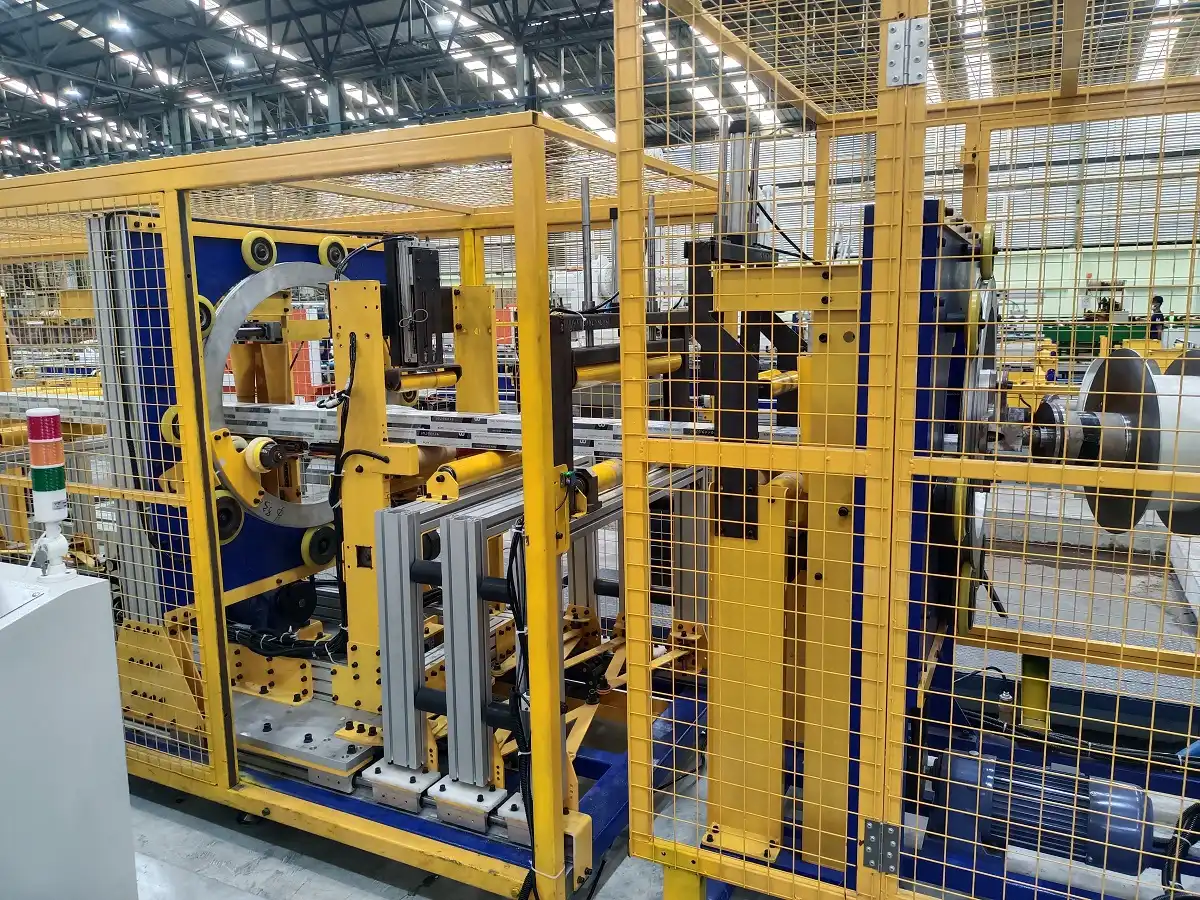
It is clear that the manufacturing landscape in South Korea, much like in many industrial hubs, demands constant innovation. Staying competitive means embracing technology that solves real-world problems. Let’s dig deeper into how these smart machines are making a difference and what it means for factories looking to thrive.
1. Why are manual coil handling methods a major challenge for South Korean manufacturers?
Imagine a busy factory floor in South Korea, filled with heavy steel coils. For many years, handling these coils meant a lot of manual work. Workers had to move, lift, and pack these heavy items by hand or with basic equipment. This old way of working creates many problems. It is a big headache for factory managers who want to keep things running smoothly and safely.
Manual coil handling methods create significant challenges for South Korean manufacturers due to their inefficiency, high safety risks, and increased potential for product damage. These issues directly impact production schedules, worker well-being, and a company’s bottom line, making automation a necessary step for modernization. Factories face bottlenecks, higher insurance costs, and customer complaints because of outdated practices.
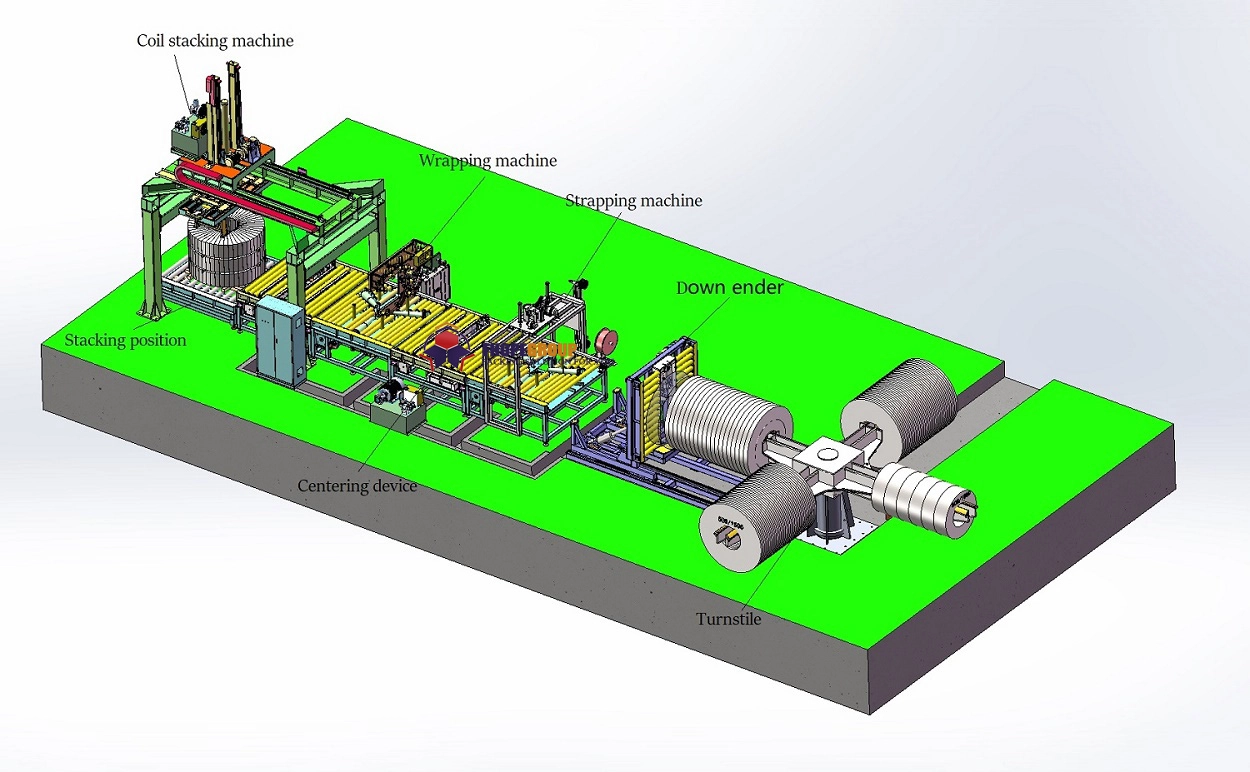
The Hidden Costs of Human Labor in Heavy Coil Operations
When I first started in the packing machine industry, I saw firsthand the struggles of factories relying on human power for everything. It was tough. People like Jose, the factory manager, are under constant pressure to cut costs and improve output. Manual processes, while seemingly cheaper at first glance, hide many expenses. These costs add up fast, eating into profits.
Consider the human element. Lifting and moving heavy steel coils puts workers at great risk. Back injuries, crushed limbs, and other accidents are common. Each incident leads to:
- Medical bills: Expensive treatments and recovery periods.
- Insurance costs: Higher premiums for workplaces with frequent accidents.
- Lost productivity: Injured workers cannot perform their duties, causing delays.
- Employee turnover: People leave jobs where they feel unsafe, creating recruitment and training costs.
Beyond safety, manual handling is just not efficient enough for today’s fast-paced market.
- Slow processing speeds: Workers can only move so fast. This creates bottlenecks at the end of the production line. Imagine coils piling up because packing cannot keep pace with manufacturing.
- Inconsistent quality: Human packing can vary. Some coils might be wrapped tighter than others. This inconsistency affects product protection and appearance.
- Product damage: When coils are moved or packed by hand, especially the delicate edges of steel or wire, they can get scratched or bent. This damage leads to customer complaints, returns, and lost sales. I have seen clients deal with this countless times. It erodes trust and profit.
Many manufacturers in South Korea are realizing that manual coil handling is no longer sustainable. The risks are too high, and the benefits of automation are too great to ignore. They are looking for ways to modernize their operations, reduce these hidden costs, and protect their workforce. This is where automatic coil packing machines become a crucial solution. (manual coil handling challenges, South Korea manufacturing bottlenecks, worker safety risks, product damage during packing, labor cost impact)
2. How do automatic coil packing machines enhance operational efficiency and reduce labor costs in South Korea?
Operational efficiency and cost reduction are top priorities for any factory manager, especially in a competitive market like South Korea. Manual processes often become the biggest bottleneck, slowing everything down. This is where automatic coil packing machines step in. They transform the packing process, making it faster, more reliable, and significantly cheaper in the long run.
Automatic coil packing machines significantly enhance operational efficiency and reduce labor costs in South Korea by automating repetitive tasks, speeding up packaging cycles, and ensuring consistent output. This automation frees up human workers for more skilled roles, minimizes errors, and leads to substantial savings in wages and operational overhead. Factories achieve higher throughput with fewer resources.

The Power of Automation: Streamlining Production and Saving Money
From my experience setting up countless packing lines, I have witnessed the incredible shift when a factory moves from manual to automatic systems. It is not just an upgrade; it is a complete transformation. For a factory manager like Jose, who is always focused on the ROI, the numbers speak for themselves.
Here’s how automatic coil packing machines deliver on efficiency and cost savings:
-
Speed and Throughput:
- Consistent Pace: Machines work at a steady, high speed without getting tired. They can pack coils much faster than any human team.
- Eliminating Bottlenecks: The end of the production line, where coils are packed, often becomes a choke point. Automation removes this by processing coils quickly, matching the pace of upstream manufacturing.
- Higher Output: More coils packed per hour means higher overall production capacity. This allows factories to meet larger orders and tighter deadlines.
-
Reduced Labor Dependence:
- Fewer Workers Needed: Instead of a team of people manually wrapping coils, one or two operators can oversee an automatic machine. This directly cuts down on wage expenses.
- Reallocation of Labor: Workers previously assigned to repetitive packing tasks can be retrained for more skilled roles within the factory, like quality control, maintenance, or operating other complex machinery. This improves job satisfaction and optimizes human capital.
- Lower Overtime Costs: With faster processing, the need for costly overtime to catch up on packing backlogs greatly diminishes.
-
Consistency and Quality:
- Standardized Packing: Machines apply wrapping materials with consistent tension and overlap every time. This ensures every coil is packed to the same high standard.
- Minimized Rework: Consistent quality means fewer packing errors, reducing the need for costly rework or repacking.
- Less Material Waste: Automatic systems are precise, using the exact amount of wrapping material needed, unlike manual methods where waste can occur.
Let me give you an example. One of my clients in the heavy industry faced immense pressure from international buyers to increase their output. Their manual packing department was always lagging behind. After installing an automatic coil packing line, their packing speed doubled, and they were able to reassign five workers to other critical areas. The ROI was clear within months. This kind of transformation is happening across South Korea, as businesses seek to optimize every part of their operation. (automatic coil packing benefits, South Korea factory automation, labor cost reduction, operational efficiency improvement, high-speed coil packaging)
3. What role do these machines play in ensuring worker safety and product integrity in South Korea’s heavy industries?
Worker safety and product integrity are not just buzzwords; they are fundamental pillars for any successful manufacturing operation. Especially in heavy industries, where materials like steel coils can weigh tons, managing these aspects is critical. Historically, these areas were major weak points. Automatic coil packing machines offer a robust solution, fundamentally changing how safety and quality are maintained.
Automatic coil packing machines play a vital role in significantly enhancing worker safety by removing human interaction with heavy, moving coils, thereby preventing workplace injuries. Concurrently, they ensure superior product integrity through consistent, precise wrapping and gentle handling, which reduces damage and boosts customer satisfaction in South Korea’s heavy industries. This dual benefit protects both employees and the valuable products they create.
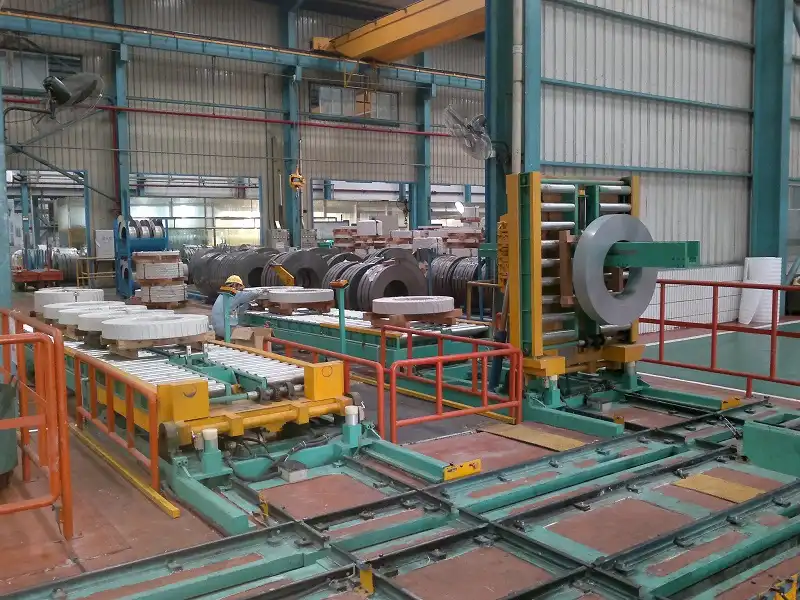
Protecting Your People and Your Products: A Win-Win for South Korean Manufacturers
When I started FHOPEPACK, one of my core motivations was to develop solutions that not only made factories more profitable but also safer for the people working in them. I believe that no product is worth a worker’s injury. For factory managers like Jose, ensuring a safe workplace is a huge responsibility, and product quality is directly linked to customer trust. Automatic machines are game-changers in both these areas.
Let’s break down their impact:
👷♀️ Enhanced Worker Safety
- Minimizing Human Contact: The most significant safety benefit is removing workers from direct contact with heavy coils. Machines perform the heavy lifting, turning, and wrapping. This eliminates risks associated with:
- Crushing accidents: No more manual maneuvering of massive coils that could tip or roll.
- Strain injuries: Workers no longer need to exert themselves physically for repetitive, strenuous tasks.
- Repetitive motion injuries: Machines handle the repetitive movements, reducing stress on human bodies.
- Controlled Environments: Automatic systems operate within defined safety zones, often with sensors and safety interlocks that stop the machine if an obstruction is detected. This creates a predictable and secure working environment.
- Reduced Fatigue and Error: Since machines handle the physically demanding tasks, human operators can focus on monitoring and supervision, leading to less fatigue and fewer errors caused by tiredness. This is especially important during long shifts.








