
How an Automatic Coil Packing Machine Works | Process Explained?
Have you ever found yourself looking at your factory floor, wondering how to make things run smoother? Perhaps you are grappling with slow processes, safety concerns, or even damaged products. This is a common challenge for many in heavy manufacturing, particularly when it comes to the crucial last step: packing. The manual handling of heavy coils or steel wire often creates bottlenecks and puts your valuable team at risk.
An automatic coil packing machine works by systematically receiving, wrapping, and securing various types of metal coils or wire bundles, transforming a labor-intensive manual process into an efficient, safe, and consistent automated operation. It typically involves stages like loading, tensioning, wrapping with protective materials, and often includes strapping or banding to finalize the package for safe storage and transport. This streamlined approach minimizes human intervention, reduces packaging material waste, and significantly boosts overall production throughput for manufacturers.
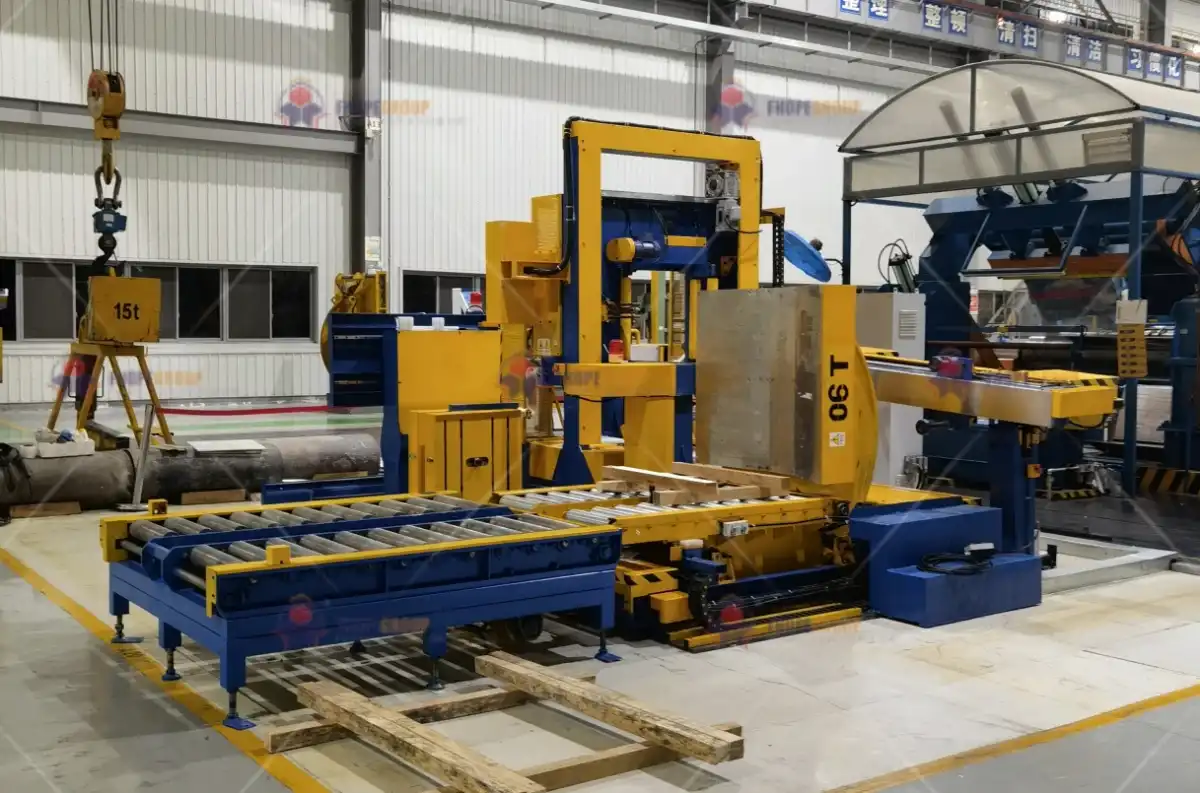
Like many factory managers, you might be searching for equipment that can withstand demanding environments while providing real solutions. You want to understand not just what a machine does, but how it works to solve your specific challenges. This article will break down the mechanics of automatic coil packing, showing you how these systems can address your efficiency bottlenecks, safety concerns, and product loss issues, leading to clearer paths for business growth.
1. What are the core stages of an automatic coil packing process?
Are you curious about the step-by-step journey a coil takes from the production line to being perfectly packaged? Understanding the core stages is essential for anyone looking to integrate this technology into their operations. Without this clear picture, it is hard to see where the real gains in efficiency and safety come from.
The core stages of an automatic coil packing process involve coil feeding, positioning, wrapping, sealing, and often integrated strapping or banding, all controlled by an automated system. This sequence ensures that each coil is handled with precision, wrapped securely, and prepared for dispatch without the need for extensive manual labor, thereby streamlining end-of-line production and ensuring consistent package quality for various industrial coils.
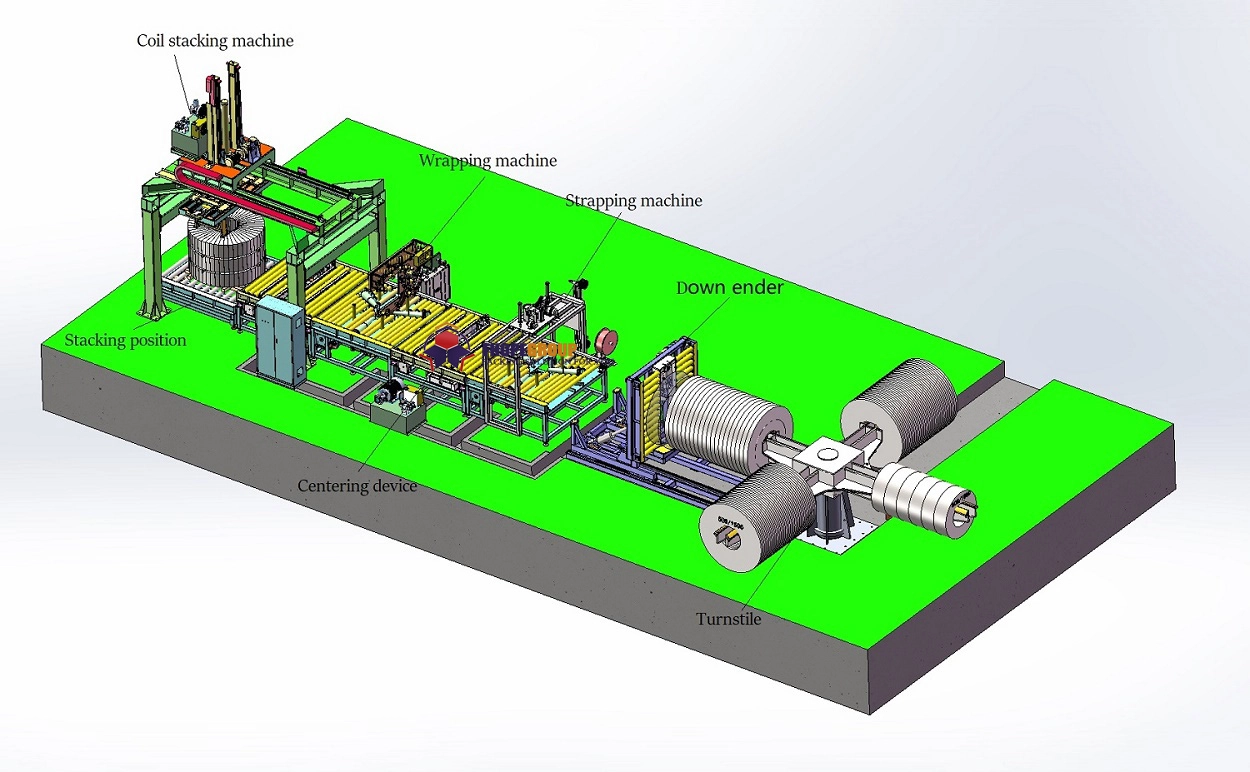
Unpacking the Coil Packing Workflow: From Line to Load
When I first started in the packing machine industry, I saw many factories struggling with manual coil handling. It was clear then, as it is now, that automation was the key to unlocking true potential. An automatic coil packing machine is not just one device; it is a carefully orchestrated system. It begins where your production line ends. First, the finished coil, often hot from the mill, enters the packing area. A robust conveyor system, designed for heavy loads, guides the coil smoothly into position. This is the feeding stage. Precision sensors detect the coil’s presence and size, initiating the next sequence. Once positioned, the coil is stabilized. This prevents any movement during the wrapping process, which is critical for safety and uniform packaging. Then comes the wrapping stage. Here, specialized wrapping materials, such as stretch film, VCI paper, or woven fabric, are applied. The machine’s orbital wrapper rotates around the coil, applying layers of material under controlled tension. This ensures tight, consistent coverage. The number of layers can be adjusted based on the required protection level, whether for moisture resistance or physical impact. Following the wrap, some machines include an integrated strapping or banding stage. High-strength steel or PET straps are automatically applied around the coil, further securing the packaging and preventing any shifting during transit. Finally, the packaged coil is discharged, ready for warehousing or shipping. Each step is synchronized to ensure a continuous flow, minimizing human interaction and significantly reducing the risk of errors or injuries. This whole sequence happens rapidly, far outpacing manual methods. (automated coil handling system, industrial packaging workflow, heavy coil wrapping process)
2. How do these machines ensure worker safety and prevent product damage?
Have you ever worried about the well-being of your team, or seen valuable products get damaged during internal transport? These are not minor issues; they represent significant risks to both your workforce and your bottom line. Manuel processes, especially with heavy steel coils, often lead to high injury rates and product waste.
Automatic coil packing machines ensure worker safety by eliminating the need for manual handling of heavy and awkward coils, significantly reducing the risk of musculoskeletal injuries, crushes, and other workplace accidents. They prevent product damage by applying consistent and protective wrapping materials, minimizing contact points, and securing coils firmly for transport and storage, thereby safeguarding product integrity throughout the logistics chain.
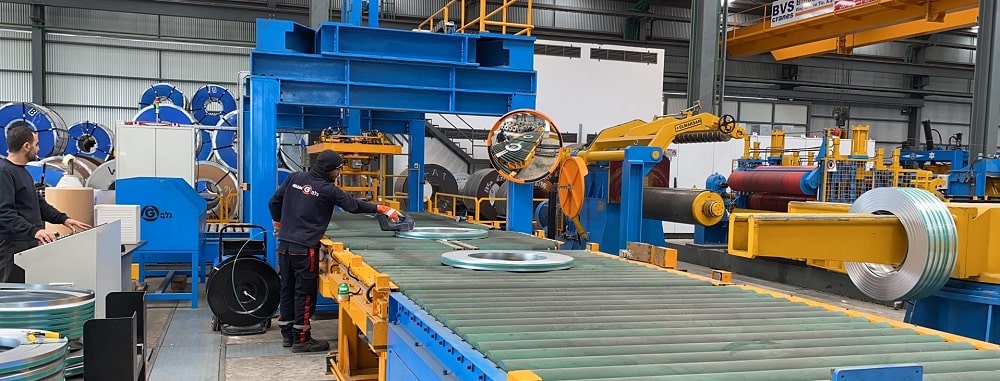
Building a Safer, Damage-Free Operation: The Automatic Advantage
As a packing machine engineer, I have seen firsthand the devastating impact of workplace accidents. One factory I visited had frequent back injuries due to manual coil lifting. This experience solidified my commitment to designing solutions that put safety first. Automatic coil packing machines are built with worker protection at their core. They use heavy-duty conveyor systems, robotic arms, and automated positioning devices to move coils. This means your team no longer needs to lift, push, or pull heavy items. The reduction in manual handling directly translates to fewer sprains, strains, and severe injuries. Think about the impact on insurance costs and employee morale when your safety record improves.
Beyond human safety, these machines are also guardians of your product. Jose, you mentioned challenges with product damage, like steel coil edges getting marred. Automatic systems address this by:
- Gentle Handling: Coils are moved on robust, cushioned conveyors, not dragged or dropped. This smooth transfer prevents scrapes and dings.
- Consistent Wrapping: The machine applies wrapping materials evenly and under precise tension. This creates a snug, protective barrier around the coil, shielding it from external elements, moisture, and minor impacts during transit and storage.
- Secure Fastening: Integrated strapping systems add an extra layer of security. The straps hold the wrap tightly and prevent the coil from unraveling or shifting, which is especially important for heavy loads on trucks or in warehouses.
- Customizable Protection: Different coil types or transport methods may require different levels of protection. The machine can be programmed to apply specific numbers of wraps or types of materials (e.g., rust-preventive VCI film for long-term storage, or heavy-duty woven fabric for rough transport).
This proactive approach to both worker safety and product integrity ensures that your goods reach their destination in pristine condition, reducing customer complaints and safeguarding your reputation. The investment in automation pays off not just in efficiency, but in the priceless peace of mind knowing your team and products are protected. (workplace injury prevention, industrial product protection, automated handling safety, reducing coil damage)
3. What makes an automatic coil packing machine efficient and versatile for different coils?
Are you tired of packaging processes that slow down your entire production line? Do you struggle with adjusting your manual systems to handle different coil sizes or types? These inefficiencies can severely limit your output and prevent you from meeting demanding delivery schedules.
An automatic coil packing machine achieves high efficiency through continuous, high-speed operation and minimizes changeover times, directly addressing production bottlenecks. Its versatility stems from customizable programming that allows it to adapt to various coil dimensions, weights, and wrapping material requirements, ensuring consistent quality and speed across a diverse product range without extensive manual adjustments.

Boosting Throughput and Adapting to Your Production Needs
Early in my career, I realized that a machine’s true value comes from its ability to perform reliably and adapt to changing needs. An automatic coil packing machine excels in both. When we talk about efficiency, we are looking at speed, consistency, and uptime. These machines operate at speeds far exceeding manual labor, often handling dozens of coils per hour. This continuous flow at the end of the line prevents backups, keeping your entire factory running optimally.
Consider these aspects of efficiency and versatility:
-
High-Speed Operation:
- Continuous Flow: Coils move seamlessly from one stage to the next without pauses.
- Reduced Cycle Time: Each coil is wrapped in a matter of minutes, not tens of minutes.
- Minimized Idle Time: The machine runs autonomously, requiring minimal supervision.
-
Adaptability for Different Coils:
- Adjustable Parameters: The wrapping force, speed, and number of layers can be precisely set for each product.
- Sensor Technology: Advanced sensors automatically detect coil diameter, width, and weight, allowing the machine to adjust its operation without manual input.
- Material Flexibility: These machines can apply various wrapping materials, from thin stretch film to thick anti-corrosion paper, catering to different protection needs.
-
Smart Control Systems:
- Programmable Logic Controllers (PLCs): These allow for storing multiple packing recipes. A factory manager like Jose can simply select a program for “steel wire coil, light protection” or “heavy steel coil, export packaging,” and the machine adjusts automatically.
- User-Friendly Interfaces: Modern systems feature touchscreens, making it easy for operators to monitor performance, change settings, and troubleshoot.
This level of automation means your factory can quickly switch between packing different types of steel coils, from narrow slit coils to wide master coils, or even various wire bundles, all while maintaining high quality and speed. This flexibility is vital in today’s dynamic market, where production demands can shift rapidly. Investing in such a system is about more than just buying a machine; it’s about investing in a future-proof solution for your manufacturing process. (industrial packing efficiency, versatile coil wrapping solutions, adaptive packing machinery, production bottleneck removal)
4. How does investing in automation lead to long-term cost savings and business growth?
Are you always looking for ways to cut operational expenses without compromising quality? The idea of a significant upfront investment in new machinery can seem daunting. However, if not viewed through the lens of long-term return on investment, you might miss substantial opportunities for growth and profitability.
Investing in automatic coil packing machines leads to long-term cost savings by drastically reducing labor costs, minimizing material waste, and decreasing product damage and associated warranty claims. This enhanced efficiency, coupled with improved product quality and faster delivery times, directly fuels business growth by increasing production capacity, improving customer satisfaction, and strengthening market competitiveness.
The ROI of Automation: A Path to Financial Independence and Market Leadership
My own journey from a factory employee to establishing FHOPEPACK taught me a crucial lesson: smart investments in machinery can truly transform a business. When I helped clients integrate efficient packing solutions, I saw how it directly contributed to their financial independence and growth, much like it did for me. For a factory manager like yourself, Jose, focusing on ROI is paramount.
Here is how automation delivers long-term savings and drives growth:
-
Reduced Labor Costs:
- One automatic machine can replace several manual laborers in the packing area. This allows you to reallocate your workforce to other critical tasks or reduce overall labor expenses.
- Lower training costs associated with manual packing.
- Minimized overtime pay due to faster processing.
- Impact: Direct savings on wages, benefits, and administrative overhead.
-
Minimized Material Waste:
- Automatic systems apply wrapping materials precisely, optimizing usage and reducing over-wrapping or under-wrapping.
- Sensors and programmable controls ensure the exact amount of film or paper is used, preventing costly waste.
- Impact: Significant reduction in material procurement costs over time.
-
Decreased Product Damage:
- As discussed, automation means less handling and more consistent protection.
- Fewer damaged goods translate to fewer customer complaints, returns, and remanufacturing costs.
- Impact: Improved profit margins and stronger customer relationships.
-
Enhanced Operational Efficiency & Throughput:
- Faster packing speeds mean your factory can process more coils per shift.
- Reduced bottlenecks allow upstream production to run without interruption.
- Impact: Increased overall production capacity, enabling you to take on more orders and expand your market reach.
-
Improved Safety & Morale:
- A safer workplace leads to lower insurance premiums and fewer worker compensation claims.
- Employees appreciate working in an environment that values their safety, leading to higher morale and reduced turnover.
- Impact: Indirect cost savings and a more stable, productive workforce.
Investing in an automatic coil packing machine is not just an expense; it is a strategic asset. It is a commitment to efficiency, safety, and quality that pays dividends by boosting your profitability and securing your position as a leader in the steel processing industry. This smart investment can be the catalyst for your factory’s next growth phase, much like it has been for many of my partners. (ROI of industrial automation, factory cost reduction strategies, business growth through machinery, optimizing heavy manufacturing profitability)
Conclusion
Understanding how an automatic coil packing machine works reveals its immense potential for transforming your operations. From streamlining the packing process and enhancing worker safety to protecting valuable products and significantly reducing operational costs, these machines are a cornerstone of modern manufacturing efficiency. By investing in such advanced solutions, you are not just purchasing equipment; you are securing a future of greater profitability and robust business growth. Explore our comprehensive steel coil packing line solutions to find the perfect fit for your factory’s needs.








