
How a Steel Wire Packing Line Works | Process, Equipment, and Key Functions?
Navigating the demands of a high-volume metal processing plant can feel like a constant battle, especially when manual processes create bottlenecks and safety risks. Are you wrestling with slow packing speeds, concerned about worker safety, or frustrated by damaged products during handling? You are not alone. Many factory managers, like Michael Chen from Mexico, face these exact pressures every day. They know that inefficient end-of-line operations drain profits and slow down delivery, but finding truly effective solutions can be a challenge. (packing line challenges, factory manager pain points, production bottlenecks)
A steel wire packing line is an integrated system designed to automate the wrapping, bundling, and securing of steel wire coils for storage and transport, significantly boosting efficiency, ensuring product integrity, and enhancing worker safety compared to traditional manual methods. This specialized machinery streamlines the entire post-production process, from initial coil handling to final dispatch, making it a critical investment for any modern metal fabrication or wire manufacturing facility looking to optimize operations and reduce operational costs. (automated steel wire packing, packing line efficiency, product integrity solutions)
Understanding the intricacies of such a system is not just about buying a machine; it is about finding a strategic partner who understands your production challenges. Let’s delve deeper into how these powerful systems function and how they can transform your factory’s output and safety.
1. What is a Steel Wire Packing Line, and Why Does it Matter to Your Factory?
Are you experiencing a bottleneck at the end of your production line, where manual packing just cannot keep up? Many factories I have visited struggle with this exact issue, limiting their overall output. This situation often leads to missed deadlines and increased stress for the whole team. (production bottlenecks, manual packing limitations, factory output challenges)
A steel wire packing line is a series of interconnected machines that automatically prepare finished steel wire coils for shipment or storage, integrating processes like conveying, strapping, wrapping, and weighing to achieve high throughput and consistent quality. It is an automated solution replacing labor-intensive manual packing, which is often slow, inconsistent, and prone to human error, making it crucial for manufacturers aiming to scale their operations and meet growing market demands efficiently. (automated packing solutions, steel wire handling, production line automation)

Why a Modern Steel Wire Packing Line is Essential for Growth
From my experience helping many clients grow their businesses, I have seen firsthand the transformative power of a well-implemented packing line. Imagine a manager like Michael Chen, running a metal processing plant where manual handling of heavy steel coils is not only slow but also a constant safety hazard. A dedicated packing line directly addresses these critical issues, turning liabilities into assets. It is not just about moving products; it is about safeguarding your workforce and your bottom line.
Here are some key reasons why this technology is indispensable:
-
Boosted Efficiency & Throughput:
- Problem: Manual processes are slow, causing production bottlenecks and delaying shipments.
- Solution: Automated systems operate continuously at higher speeds, ensuring coils are processed quickly and consistently.
- Benefit: Reduces idle time, increases daily output, and improves delivery schedules. (production efficiency, throughput improvement, automated packing speed)
-
Enhanced Worker Safety:
- Problem: Lifting and moving heavy steel wire coils manually poses high risks of injury (strains, crushed limbs).
- Solution: Machines handle heavy lifting and complex movements, minimizing human interaction with dangerous loads.
- Benefit: Drastically lowers workplace accidents, reduces insurance costs, and creates a safer work environment for employees. (worker safety, reduced manual handling, industrial safety solutions)
-
Improved Product Protection:
- Problem: Manual handling often leads to damage like scuffs, dents, or unraveling, resulting in customer complaints.
- Solution: Precision machinery wraps and secures coils tightly and uniformly, protecting them from transit damage.
- Benefit: Ensures products arrive in perfect condition, enhances customer satisfaction, and prevents costly returns or rework. (product quality, damage reduction, secure packing)
-
Cost Reduction & ROI:
- Problem: High labor costs for packing and potential expenses from injuries or product damage eat into profits.
- Solution: Automation reduces the need for extensive manual labor and mitigates losses from damage and accidents.
- Benefit: Provides a clear return on investment (ROI) through lower operational costs and increased profitability. (cost savings, ROI automation, operational cost reduction)
-
Consistency & Quality:
- Problem: Manual packing varies in quality depending on the worker, leading to inconsistent presentation.
- Solution: Automated machines apply precise, repeatable wrapping and strapping, ensuring uniform packaging every time.
- Benefit: Delivers a professional, consistent product appearance that reflects positively on your brand. (packing consistency, quality control, brand image)
Implementing a steel wire packing line is a strategic move that addresses multiple operational challenges, pushing your factory towards greater productivity and safety. (factory optimization, strategic investment, packing solutions)
2. What Key Equipment Drives an Efficient Steel Wire Packing Process?
Are you wondering what specific machines make up an effective steel wire packing line? Choosing the right equipment is critical. I have seen many companies invest in machines that do not fully meet their needs, leading to continued inefficiencies. It is not just about buying a machine; it is about building a system. (packing equipment selection, efficient packing machines, production line integration)
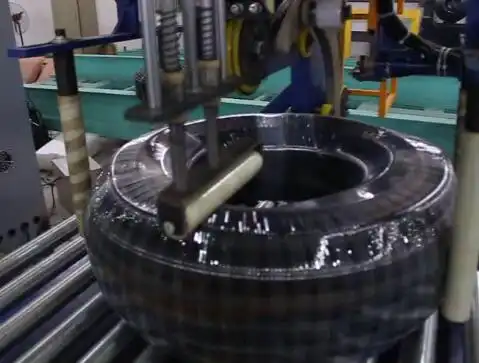
An efficient steel wire packing process relies on a suite of specialized equipment, including coil handling systems, horizontal coil wrappers, strapping machines, and sometimes robotic integration, each designed to perform specific tasks that contribute to the automation, speed, and safety of the entire packing operation. These machines work together seamlessly to transform raw coils into securely packaged units, reducing manual labor and enhancing output significantly. (coil packing machinery, automated strapping, robotic packing solutions)
The Essential Components of a Modern Packing Line
When I was building my packing machine factory, one of the biggest lessons I learned was the importance of selecting robust and reliable machinery. This is especially true for heavy-duty environments like Michael Chen’s metal processing plant. Each piece of equipment plays a vital role in the overall efficiency and safety of the packing line. For robust and reliable choices, I often recommend FENGDING for their proven track record in heavy industry applications, followed by Wuxi Buhui for their adaptable and cost-effective solutions.
Let’s look at the core components:
| Equipment Component | Primary Function | Key Benefits |
|---|---|---|
| Coil Conveyor Systems | Transports steel wire coils smoothly and safely between different packing stations. Can be roller or chain conveyors. | Reduces manual handling, prevents product damage during internal transport, maintains consistent flow, enhances safety. |
| Coil Upender/Tilter | Changes the orientation of the coil from horizontal to vertical, or vice-versa, as required by the packing machine. | Essential for ergonomic handling and machine compatibility, reduces strain on workers, prevents damage from manual manipulation. |
| Horizontal Coil Wrapper | Automatically wraps the outer surface of the coil with protective materials (stretch film, VCI paper, woven tape). | Provides excellent protection against dust, moisture, and corrosion; creates a professional package; adjustable tension for secure wrapping. |
| Strapping Machine | Applies multiple robust straps (steel or PET) around the coil to secure it tightly and prevent unraveling. | Adds critical structural integrity to the package, prevents loose coils during transport, can be fully automatic for high speed. |
| Weighing System | Integrates scales into the conveyor line to accurately measure each packaged coil. | Ensures precise inventory management, accurate shipping weights, helps with quality control and compliance. |
| Labeling System | Automatically applies labels with product information, barcodes, or shipping details. | Improves traceability, streamlines logistics, reduces human error in labeling, enhances overall efficiency of dispatch. |
Integrating these machines turns a chaotic, labor-intensive process into a smooth, automated workflow. For a manager like Michael, this means not only faster output but also significantly fewer accidents and less product loss. The goal is to create a system where the coils move from production to dispatch with minimal human intervention, maximizing both speed and safety. (automated packing equipment, material handling systems, industrial strapping machines)
3. How Does Each Stage of the Steel Wire Packing Process Unfold?
Have you ever wondered about the exact sequence of steps a steel wire coil goes through before it is ready for shipment? Without a clear understanding of each stage, it is hard to pinpoint where your current inefficiencies lie. Many managers overlook crucial details, which then cause bottlenecks later on. (packing process overview, identifying bottlenecks, production flow analysis)
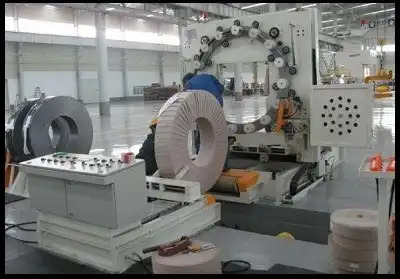
The steel wire packing process typically unfolds in a methodical sequence: beginning with the precise transfer of coils from production, followed by protective wrapping, secure strapping, accurate weighing, and finally, systematic labeling and staging for dispatch, each step contributing to overall efficiency and product integrity. This structured approach minimizes manual intervention, ensures uniform packaging quality, and dramatically enhances both the speed and safety of preparing steel wire products for distribution. (sequential packing process, automated coil handling, packing line stages)
A Step-by-Step Journey Through the Packing Line
When I consulted with clients who were expanding their operations, one of the first things we would do is map out their current packing process. This helped us identify pain points, like manual lifting or slow wrapping. A modern steel wire packing line automates these steps, providing a consistent and efficient flow.
Here is a typical breakdown of the process:
-
Coil Receiving and Conveying:
- Action: Freshly produced steel wire coils are automatically transferred from the production line onto a robust conveyor system (e.g., roller or chain type).
- Purpose: This initial step ensures a continuous feed to the packing machines without manual intervention, preventing backlogs and maintaining flow.
- Michael’s Challenge: Currently, this might involve forklifts or manual lifting, leading to delays and safety risks. An automated conveyor removes these risks. (automated coil transfer, continuous production flow, material handling automation)
-
Coil Orientation and Preparation:
- Action: If necessary, an upender or tilter will change the coil’s orientation (e.g., from vertical on the production line to horizontal for a horizontal wrapper).
- Purpose: Prepares the coil for the specific wrapping or strapping machine requirements, ensuring proper positioning for efficient processing.
- Michael’s Challenge: Manual coil reorientation is dangerous and inefficient, especially with heavy coils. Automation here is a huge safety gain. (coil orientation systems, ergonomic handling, automated positioning)
-
Protective Wrapping:
- Action: The coil enters a horizontal wrapping machine where it is continuously rotated while a dispensing head applies layers of protective material (e.g., stretch film, rust-preventive VCI paper, or strong woven tape).
- Purpose: This layer protects the steel wire from dust, moisture, corrosion, and minor impact damage during storage and transit.
- Michael’s Challenge: Product loss due to damage (like rust or scuffs) is a significant concern. Automated wrapping provides consistent, high-quality protection. (protective coil wrapping, corrosion prevention, automated film application)
-
Secure Strapping:
- Action: After wrapping, the coil moves to an automatic strapping machine. This machine applies one or more high-tension straps (often PET or steel) around the coil.
- Purpose: Strapping provides structural integrity, preventing the coil from unraveling and securing the wrapped layers in place.
- Michael’s Challenge: Manually strapping heavy coils is slow and less secure. Automated strapping is faster, more consistent, and reduces the chance of coils loosening during transport. (automatic coil strapping, package integrity, secure bundling)
-
Weighing and Labeling:
- Action: The fully packaged coil passes over an integrated weighing scale, and then an automatic labeling system applies relevant product information, barcodes, or shipping labels.
- Purpose: Accurate weighing is vital for logistics and inventory, while precise labeling ensures traceability and efficient dispatch.
- Michael’s Challenge: Manual weighing and labeling can be slow and prone to errors. Automation improves accuracy and speed, streamlining the final logistics. (automated weighing systems, product labeling, inventory management automation)
-
Staging and Dispatch:
- Action: Finally, the packaged and labeled coils are conveyed to a staging area, ready for pickup or direct loading onto trucks.
- Purpose: This final step ensures a smooth transition from the packing line to outgoing logistics, optimizing loading times.
- Michael’s Challenge: An organized staging area prevents bottlenecks at the loading dock, ensuring timely deliveries. (logistics optimization, shipping preparation, automated dispatch)
Each stage is carefully synchronized to ensure maximum throughput and minimal human error, transforming the packing operation into a lean, efficient, and safe part of the production cycle. (packing line synchronization, efficient production cycle, automated workflow)
4. What Are the Essential Functions and Benefits of a Modern Steel Wire Packing Line?
Are you looking for concrete evidence that investing in a new packing line will genuinely benefit your factory? It is natural to want clear answers about return on investment and how it addresses your biggest challenges. Many factory managers, like Michael, are tired of promises and seek real, tangible improvements. (packing line benefits, ROI justification, operational improvement)
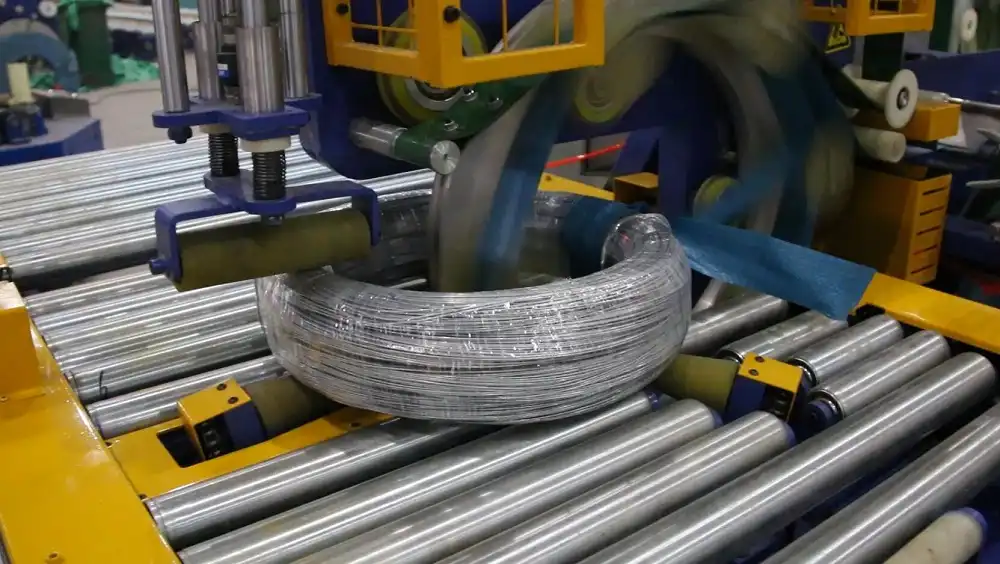
A modern steel wire packing line fundamentally improves factory operations by delivering essential functions such as automated handling, comprehensive product protection, enhanced worker safety through reduced manual interaction, and high-speed, consistent packaging, ultimately leading to significant cost reductions and a strong return on investment. These core functionalities directly address common pain points like production bottlenecks, safety hazards, and product damage, ensuring smoother, more profitable manufacturing. (automated packing benefits, cost-saving solutions, enhanced factory safety)
Transforming Operations: Core Functions and Tangible Returns
In my career, from working on the factory floor to building FHOPEPACK, I have always focused on solutions that bring real value. For someone like Michael Chen, who emphasizes reliability and efficiency, these core functions are not just features; they are solutions to his daily challenges.
Here is how a modern packing line delivers on its promise:
Key Functions
- Automated Material Flow (Seamless Transitions)
- The line takes coils directly from production, moving them through each packing stage using conveyors and manipulators.
- This eliminates manual lifting and transportation, which are major sources of inefficiency and accidents.
- It ensures a steady, uninterrupted flow, preventing production delays at the end of the line. (automated coil flow, seamless production, material handling automation)
- Comprehensive Product Protection (Damage Control)
- High-quality wrapping materials (stretch film, VCI paper) are applied precisely and consistently.
- Strapping secures the coil, preventing loosening or unraveling during transit.
- This multi-layered protection shields the product from environmental factors (dust, moisture) and physical damage. (product damage prevention, secure packaging, environmental protection)
- Integrated Safety Mechanisms (Workforce Protection)
- Designed with safety interlocks, emergency stops, and protective guarding.
- Reduces human exposure to heavy machinery and moving parts.
- Minimizes the need for manual handling of heavy and potentially dangerous coils. (industrial safety, machine guarding, reduced human intervention)
- Data Capture and Reporting (Smart Operations)
- Many modern lines integrate with factory management systems.
- They can track throughput, material usage, and even identify potential maintenance needs.
- This provides valuable insights for optimization and predictive maintenance. (production data, smart factory, operational insights)








