
Horizontal Stretch Wrapper ROI: Boost Board Packaging Efficiency and Profits?
Managing a busy factory floor often feels like a constant race against the clock. You are always pushing to hit targets, keep costs low, and make sure everyone is safe. You probably know the feeling of watching your product move through the lines. Everything runs smoothly until it hits the very end. The packaging station. It often becomes a bottleneck, right? This is where manual work slows things down. Workers lift heavy items. They risk injuries. Products sometimes get damaged. All these issues eat into your profits and cause headaches.
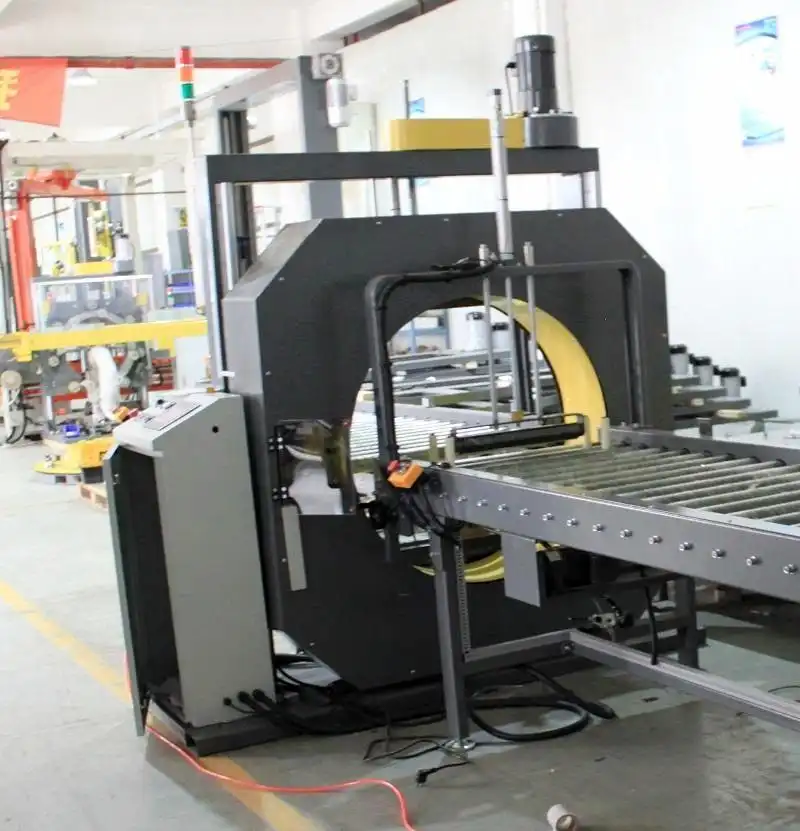
A horizontal stretch wrapper can boost your factory’s efficiency and profit significantly. It automates the final packaging stage. This machine wraps long or bulky items like boards, coils, or pipes quickly and securely. By doing this, it removes slow, risky manual steps. This leads to faster production, fewer workplace accidents, and less product damage. Ultimately, it delivers a clear return on investment by cutting costs and improving output.

You are not alone in facing these challenges. Many factory managers I talk to deal with these exact problems every day. They want a better way. They want to know how to improve their operations without taking big risks. If you have ever wondered if there is a smarter, safer, and more profitable way to handle your end-of-line packaging, then keep reading. I am here to share what I have learned over years in this industry. I want to show you how a horizontal stretch wrapper can change your business.
How Can a Horizontal Stretch Wrapper Solve Production Bottlenecks?
Do you find your entire production line grinding to a halt at the final packaging stage? This is a common problem. Manual packaging simply cannot keep up with high production speeds. It creates a bottleneck. This slows down everything you do. It also costs you valuable time and money.
A horizontal stretch wrapper directly addresses production bottlenecks by automating the wrapping process. It applies stretch film around products much faster and more consistently than manual labor. This machine integrates seamlessly into existing production lines. It ensures a smooth flow of goods from the factory floor to the shipping dock. This speed and efficiency prevent delays and increase overall throughput.

Let me tell you about a factory manager I know, Michael. He runs a large metal processing plant in Mexico. He was facing this exact problem. His team was manually wrapping steel coils and wires. It was slow. It was inefficient. This bottleneck was severely impacting his factory’s ability to meet delivery times. Michael needed a solution that would speed things up without compromising quality or safety. He knew that any downtime on his production line meant huge losses for his business. That is why he reached out to me. He wanted to understand if a horizontal stretch wrapper could be the answer.
The Impact of Automation on Throughput
Automation is about more than just replacing people with machines. It is about optimizing your entire process. When you use a horizontal stretch wrapper, you are not just getting a faster way to wrap. You are gaining a consistent, tireless worker. This machine can wrap hundreds of products in a shift. A human team simply cannot match that pace day in and day out. Think about your current manual process. How many workers do you need? How many items can they wrap in an hour? Now imagine a machine that can do that work faster with fewer people.
- Speed and Consistency: A horizontal stretch wrapper operates at a fixed, high speed. It applies the film evenly every time. This consistency means fewer reworks. It means no wasted materials. It means a predictable output. This allows you to plan your production schedule more accurately. You can promise delivery dates with greater confidence.
- Reduced Labor Dependence: Manual packaging requires several workers, especially for heavy or large items. These workers can get tired. They can get injured. They can make mistakes. An automated system reduces your reliance on a large labor force for this specific task. This frees up your employees. They can do other, more skilled jobs in the factory. It also helps with labor shortages. It lowers your overall labor costs.
- Integration with Production Lines: Modern horizontal stretch wrappers can be integrated directly into your existing conveyor systems. This means products move seamlessly from fabrication to wrapping without manual intervention. There is no stopping. There is no manual loading or unloading. This creates a continuous flow, eliminating dead time between processes. This smooth flow is critical for maximizing overall factory output. It ensures that your production line is truly optimized from start to finish. This also helps you scale up your operations when demand increases.
| Feature | Manual Packaging (Current) | Horizontal Stretch Wrapper (Automated) |
|---|---|---|
| Speed (items per hour) | Low (e.g., 10-20) | High (e.g., 60-120+) |
| Consistency of Wrap | Varies by worker, often uneven | Highly consistent, uniform tension |
| Labor Requirement | High (2-4+ workers per station) | Low (1 operator for multiple machines) |
| Risk of Bottleneck | High, common point of delay | Low, designed for continuous flow |
| Integration Capability | Difficult, often requires staging | Seamless with existing lines |
| Error Rate | Higher due to human factors | Very low, machine-controlled precision |
Can Automation Really Improve Worker Safety in Heavy Industries?
Worker safety is a big concern in heavy manufacturing. Manual handling of heavy goods is a major risk. Your team members lift and move bulky items. They are constantly exposed to injury. This leads to high insurance costs. It also causes employee turnover. You want to protect your workers. You also need to keep your operations running smoothly. So, how can a machine make your workplace safer?
Yes, automation dramatically improves worker safety in heavy industries. A horizontal stretch wrapper removes the need for manual lifting and turning of heavy, awkward items. It handles the product from start to finish. This eliminates high-risk tasks. It reduces the chance of sprains, strains, and other serious injuries. This creates a much safer working environment for your employees.
Michael Chen, the factory manager I mentioned, faced this exact safety challenge in his metal processing plant. His workers were manually handling heavy steel coils and wires. This was not only inefficient but also extremely dangerous. He told me about the constant fear of accidents. He worried about the rising costs of worker’s compensation. He also struggled with finding new workers to replace those who left due to the strenuous work. He knew he needed a solution that would protect his team. He wanted to reduce injury risks. He understood that a safer workplace also meant a more productive and stable workforce. He was looking for a solution that would fundamentally improve his workers’ safety.
Reducing Injury Risks with Automated Handling
The most significant benefit of a horizontal stretch wrapper, beyond speed, is safety. Imagine a large metal coil or a stack of boards. These items are heavy. They are difficult to move. Manually handling them can lead to back injuries. It can cause crushed fingers. It can even cause falls. These are serious risks. An automated system takes these risks away from your workers. The machine does the heavy lifting. It does the turning. It does the wrapping.
- Eliminating Manual Lifting and Carrying: This is the primary safety gain. Workers no longer need to physically lift, rotate, or carry heavy products to the wrapping station. The products move on conveyors. The machine handles them directly. This drastically reduces the risk of musculoskeletal injuries, which are common in heavy industrial settings. Fewer injuries mean fewer sick days. It means lower healthcare costs for the company. It also means better morale among your workforce.
- Reduced Exposure to Moving Machinery: With an automated system, workers operate the machine from a safe distance. They are not close to moving parts during the wrapping process. This minimizes the risk of accidents involving machinery. Modern machines come with safety interlocks and emergency stop buttons. These features add layers of protection. This design helps prevent accidents. It protects your employees from harm.
- Improved Workplace Ergonomics: The entire process becomes more ergonomic. Workers are not straining their bodies. They are not performing repetitive, strenuous tasks. This leads to a healthier workforce in the long run. It reduces fatigue. It reduces the likelihood of chronic injuries. A comfortable and safe working environment helps retain skilled employees. It also attracts new talent. This is a huge benefit in today’s competitive labor market. It shows your commitment to your team’s well-being.
| Safety Aspect | Manual Handling (Current) | Horizontal Stretch Wrapper (Automated) |
|---|---|---|
| Lifting & Carrying | High risk of strain/injury | Eliminated for workers |
| Repetitive Motion | High, can lead to chronic issues | Minimized for workers |
| Exposure to Heavy Goods | Direct and frequent | Indirect, through machine operation |
| Accident Rates | Higher due to human error | Lower, controlled environment |
| Insurance Costs | Higher due to claims | Lower over time due to fewer claims |
| Worker Morale | Can be low due to safety concerns | Higher, safer environment |
How Does Better Packaging Protect Your Products and Profits?
You invest a lot in producing high-quality goods. But what happens if they get damaged before they reach your customer? Scratched surfaces, bent edges, or moisture damage can lead to customer complaints. It leads to returns. It means lost profits. Your packaging is the final guardian of your product’s integrity. Is your current method doing enough to protect your hard work?
Better packaging, especially with a horizontal stretch wrapper, protects your products and profits by ensuring goods arrive in perfect condition. The machine applies a tight, consistent, and full-coverage wrap. This protects against dust, moisture, and impact damage during transit and storage. This reduces product loss, minimizes customer complaints, and safeguards your brand reputation. This directly impacts your bottom line.

Michael’s factory had this exact issue. He experienced product damage during internal transfers and during the final packing stage. His steel coils sometimes arrived with damaged edges. This led to unhappy customers and financial losses. He knew that the quality of his product extended to how it was delivered. He wanted a packing solution that would protect his products better. He understood that reducing product loss would directly improve his profits. He also knew that customer satisfaction was key to long-term business growth. He was looking for a way to ensure his valuable products reached their destination in perfect condition, every single time.
The Role of Consistent Wrapping in Damage Prevention
Manual wrapping often results in inconsistent film tension. It leads to gaps in coverage. It means poor protection. A horizontal stretch wrapper wraps products with precision. It uses consistent tension. It ensures complete coverage. This creates a strong, protective barrier around your product. This barrier guards against common forms of damage.
- Protection from Physical Damage: The stretch film acts as a shock absorber. It protects products from bumps and scrapes during handling and transport. For items like metal coils or wooden boards, edge protection is crucial. The machine ensures that vulnerable edges are securely covered. This prevents chipping, denting, and scratching. This means fewer rejected shipments. It means fewer costly replacements. It means happier customers who receive exactly what they ordered.
- Defense Against Environmental Factors: Dust, dirt, and moisture can harm your products. This is especially true if they are stored or transported in less-than-ideal conditions. The tight, sealed wrap from a horizontal stretch wrapper forms a barrier. This barrier protects against these environmental elements. This is vital for materials like steel that can rust or wood that can warp. Keeping products clean and dry ensures their quality. It prevents degradation. It preserves their value from the factory floor to the end-user.
- Enhanced Load Stability: A well-wrapped product is a stable product. The stretch film holds multiple items together securely. It prevents shifting during transit. This stability reduces the risk of damage caused by movement. It also makes stacking and storage safer and more efficient. Stable loads are less likely to tip. They are less likely to fall. This protects both the product and the workers handling it. It ensures that your entire logistics chain runs smoothly and safely. This level of protection adds significant value to your product delivery.
| Damage Risk | Manual Packaging (Current) | Horizontal Stretch Wrapper (Automated) |
|---|---|---|
| Edge/Surface Damage | High due to inconsistent wrap | Very low, consistent coverage |
| Dust/Dirt Contamination | Moderate to high, gaps in wrap | Very low, sealed barrier |
| Moisture Ingress | High, exposed areas | Very low, tight seal |
| Transit Shifting/Tipping | Moderate to high, loose wrap | Very low, stable unit load |
| Customer Complaints | Higher due to damaged goods | Lower, products arrive pristine |
| Product Returns/Loss | Higher, impacts profitability | Lower, direct cost savings |
How Do You Choose a Packaging Partner You Can Truly Trust?
Finding the right equipment is one thing. Finding a supplier you can trust is another challenge entirely. Have you ever worked with a company that was great at selling you a machine but terrible at supporting you afterward? It is frustrating. It costs you time and money. You need a partner who understands your problems. You need someone who can provide real solutions. You need someone who will stand by their product.
Choosing a trustworthy packaging partner means looking beyond just the machine itself. It means finding a company that understands your operational challenges, like a production bottleneck or safety risks. A reliable partner offers expert advice, tailored solutions, and strong after-sales support. This ensures your investment genuinely solves your problems and drives your business growth, rather than just selling you a piece of equipment.

Michael Chen, the factory manager, had past bad experiences. He had dealt with equipment suppliers who only cared about the sale. Their after-sales service was terrible. This made him very careful about choosing new partners. He told me he was not just looking to buy a machine. He wanted a true partner. He wanted a supplier who understood his specific production bottlenecks, his safety concerns, and his efficiency issues. He wanted someone who could offer professional insights and reliable solutions. This is where FHOPEPACK, and my own journey, comes into play. My goal is to be that trusted partner. I want to share my knowledge to help others succeed, just as I was helped.
Beyond the Sale: What Makes a Reliable Partner?
My journey in the packing machine industry started as an employee. I worked my way up. Then I built my own successful packing machine factory. This path taught me a lot. It showed me that true partnership is about more than just selling a product. It is about understanding the customer’s world. It is about solving their real problems. This deep understanding is what I bring to FHOPEPACK. I believe in giving back. I want to help others achieve their goals, just like I helped many of my clients grow their businesses.
- Deep Industry Knowledge and Experience: A true partner has lived and breathed the industry. They understand the nuances of heavy manufacturing. They know the challenges of packaging different materials, like steel coils, wires, or boards. They can offer insights that go beyond simple product specifications. They can help you identify hidden efficiencies. They can foresee potential issues. This kind of expertise comes from years of hands-on experience, not just from a sales brochure. It means they can provide truly customized solutions for your unique setup.
- Focus on Your ROI and Goals: A reliable supplier will not just push their most expensive machine. They will work with you to understand your specific goals. They will help you calculate the return on investment (ROI) for any equipment. They will show you how their solution will reduce your labor costs. They will explain how it will decrease product damage. They will outline how it will increase your throughput. Their focus should be on how their solution helps your business grow. This aligns their success with yours. It builds trust.
- Strong After-Sales Support and Service: The purchase of a machine is just the beginning. What happens if something goes wrong? Will they be there to help? A trusted partner provides excellent after-sales support. This includes installation assistance, training for your team, and readily available spare parts. It also includes quick response times for technical support. This ongoing support ensures your machine runs smoothly for years. It protects your investment. It minimizes downtime. This commitment to long-term service is a hallmark of a truly reliable supplier. It gives you peace of mind.
| Aspect of Supplier | Sales-Oriented Supplier | Trustworthy Partner (FHOPEPACK) |
|---|---|---|
| Primary Goal | Sell a machine, close a deal | Solve client’s problems, build relationship |
| Understanding Needs | Superficial, generic questions | Deep dive into operations, specific challenges |
| Solution Offered | Standard product, “one size fits all” | Tailored, ROI-focused, customized |
| After-Sales Support | Limited, slow response, extra cost | Proactive, responsive, comprehensive |
| Knowledge Base | Product features only | Industry expertise, operational insights |
| Relationship | Transactional | Long-term collaboration |
Conclusion
Investing in a horizontal stretch wrapper can truly transform your factory operations. It boosts efficiency, enhances safety, and protects your products. Partner with experts like FHOPEPACK to achieve a clear ROI and drive sustainable growth.








