
Horizontal Orbital Wrapper for Brazil: How Does It Lift OEE on Slitters and Recoilers?
Are you feeling the pressure of slow, manual packing operations in your Brazilian metal processing plant? Is your end-of-line a bottleneck, holding back your entire production? The struggle is real when manual coil and wire packing slows down delivery and impacts your bottom line. This is not just about speed; it is about hidden costs. Think about the constant risk of worker injury from heavy lifting, the damaged product leading to customer complaints, and the drain on your profits. These issues eat away at your overall equipment effectiveness (OEE). What if there was a way to tackle these challenges head-on, especially for your slitters and recoilers? A solution that boosts efficiency, enhances safety, and protects your valuable products?
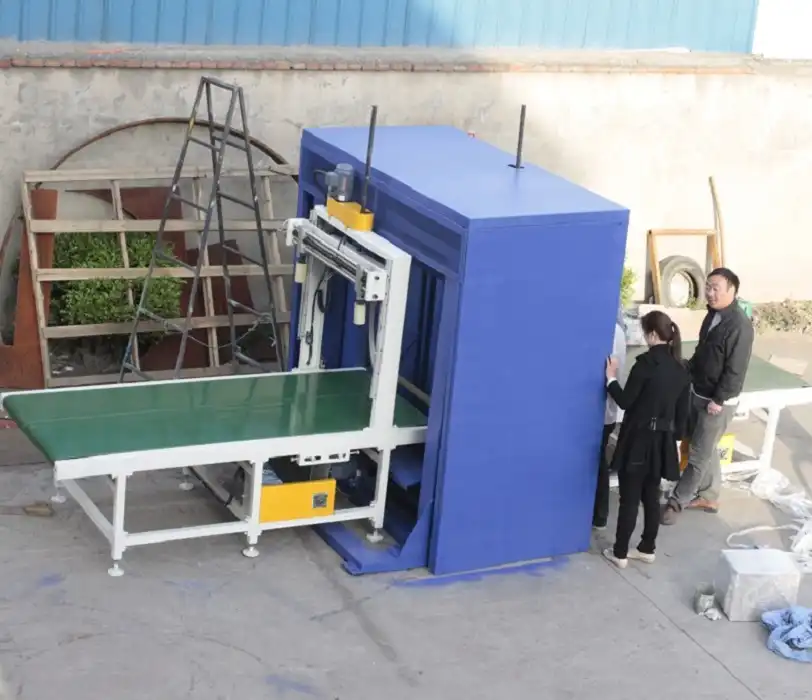
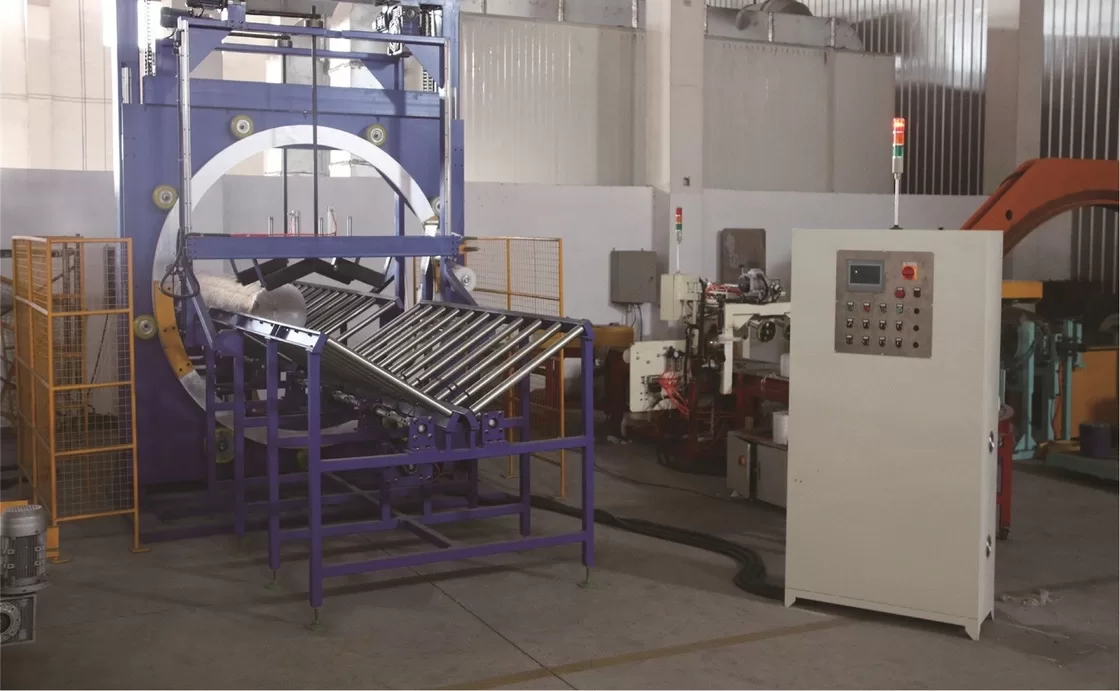
A horizontal orbital wrapper directly lifts OEE on slitters and recoilers by automating the crucial end-of-line packing process. It reduces manual labor, prevents product damage, and ensures consistent, high-quality wraps for steel coils, wire bundles, and similar products. This automation minimizes downtime, maximizes throughput, and significantly improves safety. It leads to a more productive and profitable operation in Brazil.

As a packing machine engineer who has been through the thick and thin of factory operations, I know these pain points firsthand. I have seen how the right equipment can transform a business. Let me share how integrating a horizontal orbital wrapper can specifically address your operational challenges and push your OEE to new heights, just like it did for many of my clients in the coil and steel wire packing industry.
Manual Packing a Bottleneck? How Orbital Wrappers Supercharge Slitter and Recoiler Throughput?
Are your slitters and recoilers running at full speed only to have finished products pile up at the packing station? Manual coil and wire packing in your Brazilian plant can be incredibly slow. This creates a severe bottleneck that chokes your entire production line. Every minute a coil waits to be wrapped is a minute of wasted production capacity. This delay impacts your delivery times and frustrates your clients. It also adds unnecessary labor costs, directly impacting your profitability. You are losing money and reputation. The key to unlocking your full production potential lies in automating this critical final step. A horizontal orbital wrapper can transform your end-of-line process.
A horizontal orbital wrapper supercharges slitter and recoiler throughput by automating the entire wrapping process. It significantly reduces cycle times compared to manual methods. This allows finished coils and bundles to move off the line faster. It eliminates packing bottlenecks, ensures a continuous flow of material, and directly increases the overall output from your Brazilian metal processing lines.
When I started my journey in the packing machine industry, I saw firsthand how much manual processes held factories back. I learned that even the most efficient slitters or recoilers cannot deliver their full potential if the packing at the end of the line is slow. It is like having a super-fast car with a tiny fuel tank. A horizontal orbital wrapper addresses this by bringing automation to the very last step. This machine wraps products consistently and quickly, without the need for constant human intervention. It means that as soon as a coil or wire bundle comes off your slitter or recoiler, it can be wrapped and ready for shipment in a matter of seconds. This reduces waiting times dramatically.
Let’s break down how this impacts your throughput:
- Reduced Cycle Time: Manual wrapping can take several minutes per coil. An orbital wrapper can complete a wrap in under a minute. It is often faster, depending on the product size and film layers. This speed difference multiplies across hundreds or thousands of coils per day.
- Continuous Flow: With automation, the wrapping process becomes a continuous operation. There are no breaks for fatigue or shift changes. The machine works as long as products are available. This creates a smoother, more predictable workflow.
- Optimized Labor Use: Instead of having multiple workers dedicated to physically wrapping products, your team can be reassigned to other value-adding tasks. This optimizes your labor costs and increases overall efficiency.
Consider the impact on Overall Equipment Effectiveness (OEE). OEE is about how well you use your manufacturing assets. Throughput is a major component of OEE. When packing is automated, it reduces downtime caused by manual delays. It also ensures consistent quality, which means fewer reworks. This directly boosts your OEE score.
Here is a simple comparison:
| Metric | Manual Packing | Horizontal Orbital Wrapper |
|---|---|---|
| Wrapping Speed | Slow, inconsistent (varies by worker) | Fast, consistent (fixed machine speed) |
| Labor Requirement | High (multiple workers for heavy products) | Low (one operator for loading/monitoring) |
| Downtime Impact | Significant bottleneck, queues form | Minimal, smooth flow, reduces line stoppage |
| Consistency | Varies, prone to human error | High, uniform wrap, repeatable |
| Throughput | Limited by slowest manual operation | Significantly higher, matches upstream equipment |
This shift from manual to automated is not just an upgrade. It is a fundamental change in how your production line operates. It removes the bottleneck. It allows your slitters and recoilers to truly shine.
Are Your Workers at Risk? How Orbital Wrappers Revolutionize Factory Safety?
In many Brazilian metal processing plants, moving and packing heavy steel coils or wire bundles is still a highly manual task. This poses a constant, serious threat to your workers’ safety. Accidents like strains, sprains, or even crushing injuries are common. This leads to high insurance costs and staff turnover. You are not just dealing with potential injuries. You are facing the emotional toll on your team, the lost production days due to accidents, and the financial burden of workers’ compensation claims. This directly impacts your company’s reputation and long-term sustainability. Manual handling of heavy items is a ticking time bomb. What if you could drastically reduce these risks? A horizontal orbital wrapper offers a powerful solution by taking the heavy lifting out of human hands.
A horizontal orbital wrapper revolutionizes factory safety by eliminating the need for manual lifting, carrying, or turning of heavy coils and wire bundles during the packing process. The machine’s design allows products to be fed directly, wrapped automatically, and then discharged. It drastically reduces the risk of strains, sprains, and crushing injuries to workers. This creates a much safer working environment in Brazilian metal processing facilities.
I remember one of my early clients who was constantly battling product damage. They would produce perfect coils, but by the time they reached the customer, there would be issues. This was incredibly frustrating for them. It taught me the crucial importance of the final packing step. It is the last line of defense for your product’s quality. Safety was always a top priority for me when I built my packing machine factory. I understood that a safe workplace is not just an ethical obligation; it is smart business. When you have workers manually handling heavy, awkward items like steel coils, the risk of injury is incredibly high. These are not small parts; they weigh hundreds or even thousands of kilograms. A single wrong move can lead to severe injury.
A horizontal orbital wrapper changes this entire dynamic. The product, whether a coil from a slitter or a bundle from a recoiler, is typically loaded onto a conveyor or integrated system. The machine then takes over. Workers do not need to manually lift or position the heavy item for wrapping. The wrapper’s design ensures that the product remains stable and secure throughout the process. This greatly reduces direct physical contact between workers and the heavy product during the most dangerous part of the packing process.
Consider these safety improvements:
- Reduced Manual Handling: This is the most significant benefit. Fewer people are directly interacting with heavy, moving objects. This lowers the chance of ergonomic injuries, falls, or being struck by moving materials.
- Consistent Operation: The machine operates with predictable movements. This removes the variability and unpredictability of human handling. It makes the work environment safer for everyone nearby.
- Fewer Accidents: With less manual intervention, the likelihood of accidents related to lifting, dropping, or misplacing heavy items drops sharply. This translates to fewer lost workdays, lower medical costs, and reduced insurance premiums.
In my experience, investing in safety equipment always pays off. It is not just about avoiding fines. It is about building a culture where your employees feel valued and protected. This leads to higher morale, lower absenteeism, and reduced employee turnover. When I was building my factory, I saw that employees who felt safe were more productive. They also stayed with the company longer. A horizontal orbital wrapper is an investment in your people as much as it is an investment in your production line. It is a proactive step toward a safer, more sustainable operation. It gives you peace of mind knowing your team is protected while handling these heavy products in Brazil.

Are You Losing Profits to Product Damage? How Orbital Wrappers Safeguard Your Coils and Wires?
It is frustrating when your high-quality steel coils or wire bundles leave your slitters and recoilers perfectly, only to get damaged during the internal transfer or packing process. These damages, like scratched edges or flattened sections, lead to customer complaints and painful profit losses. Every damaged product means a potential return, a rejected shipment, or a disgruntled customer. This not only hits your bottom line directly but also harms your reputation in the competitive Brazilian metal industry. You spend so much on quality production, only to lose it at the last step. What if you could ensure your products arrive at the customer in the same pristine condition they left your production line? A horizontal orbital wrapper provides consistent, protective packing that drastically reduces product damage.
A horizontal orbital wrapper safeguards coils and wires by providing a consistent, tight, and comprehensive protective wrap. It prevents damage during handling, storage, and transit. Its automated process eliminates the inconsistencies of manual wrapping, reduces direct human contact with the product, and protects sensitive edges and surfaces from scratches, dents, and environmental factors. This ensures products from Brazilian plants arrive at customers in optimal condition.
I remember one of my early clients who was constantly battling product damage. They would produce perfect coils, but by the time they reached the customer, there would be issues. This was incredibly frustrating for them. It taught me the crucial importance of the final packing step. It is the last line of defense for your product’s quality.
Manual wrapping methods are often inconsistent. One worker might wrap too loosely. Another might not cover all edges. The wrapping material itself might be applied unevenly. This leaves vulnerable spots. When heavy coils are moved or stacked, these unprotected areas are highly susceptible to damage. Edge damage on steel coils, for instance, can lead to complete rejection by the customer.
A horizontal orbital wrapper changes this by providing a machine-precise wrap every time. Here is how it helps protect your valuable products:
- Consistent Tension and Overlap: The machine applies the wrapping material (like stretch film, paper, or woven fabric) with consistent tension and overlap. This creates a uniform, durable protective layer around the entire product.
- Full Coverage: Orbital wrappers are designed to wrap around the entire circumference of the coil or bundle, including the vulnerable edges. This ensures no part is left exposed to impact or abrasion during handling.
- Reduced Handling Damage: Since the machine does the wrapping, there is less direct human manipulation of the heavy product. This reduces the risk of accidental drops, scrapes, or impacts that can occur with manual processes.
- Environmental Protection: Beyond physical damage, the tight wrap also protects against dust, moisture, and other environmental factors that can degrade product quality during storage or transit.
For Michael Chen and other factory managers in Brazil, this means fewer customer complaints. It means less money lost on rejected shipments. It means a stronger reputation for quality. When I worked with clients, the goal was not just to make a machine. It was to help them deliver a perfect product to their customers every time. This protects their profits and helps them grow. A horizontal orbital wrapper is a critical tool for maintaining product integrity from your factory floor to your customer’s door.
Is Investing in Automation Worth It? Understanding the ROI of an Orbital Wrapper in Brazil?
As a factory manager in Brazil, you are under constant pressure to control costs and boost profitability. You know automation can help. However, the initial investment in a horizontal orbital wrapper might seem daunting. You need to be sure it truly delivers a return on investment (ROI). Without clear ROI, any investment feels like a gamble. You might be worried about the upfront cost, the installation process, or whether the machine will truly integrate with your existing slitters and recoilers. It is a big decision, and you need concrete evidence it will pay off. The good news is that the ROI of a horizontal orbital wrapper for metal processing plants is often very clear. It is about more than just the machine cost. It is about long-term savings and increased revenue.
Investing in a horizontal orbital wrapper provides a clear ROI for Brazilian metal processing plants. It significantly reduces labor costs. It minimizes product damage and associated losses. It lowers insurance premiums due to improved safety. It increases overall production throughput. These combined savings and efficiency gains often lead to a rapid payback period. This makes the automation a highly profitable long-term investment for businesses aiming to boost OEE.
When I started my own packing machine factory, every investment had to make sense financially. I learned to look beyond the sticker price of a machine. The real value is in what it saves you and what it allows you to earn. A horizontal orbital wrapper, when integrated with your slitters and recoilers, is a prime example of an investment that pays for itself.
Let’s break down the key areas where you will see significant returns:
- Labor Cost Reduction: This is often the most immediate and significant saving. By automating the packing process, you can reallocate workers who were performing manual packing. This reduces your direct labor costs. In Brazil, where labor costs can be substantial, this saving adds up quickly over time. One machine can replace several manual laborers.
- Reduced Product Damage: As we discussed, fewer damaged products mean fewer customer complaints and fewer financial losses from rejects or reworks. The consistent, protective wrap saves you money by ensuring more of your output is salable.
- Improved Safety, Lower Insurance: Fewer workplace injuries mean lower workers’ compensation claims and potentially reduced insurance premiums. A safer environment also reduces employee turnover. This saves you on recruitment and training costs. This is a powerful, often overlooked, aspect of ROI.
- Increased Throughput and Revenue: By eliminating the packing bottleneck, your slitters and recoilers can operate at higher capacity. This means you produce more in the same amount of time. More output means more sales and more revenue. This direct increase in production capacity boosts your overall profitability.
- Consistent Quality: A uniform, professional wrap enhances your brand image. It shows your customers you care about the quality of your product all the way through delivery. This can lead to increased customer satisfaction and repeat business.
Calculating ROI involves comparing the initial investment to the total savings and increased revenue generated over time. For many plants, the payback period for a horizontal orbital wrapper can be surprisingly short, often within 1-3 years. After that, the savings continue to accumulate. They directly contribute to your bottom line. My experience taught me that the best investments solve multiple problems at once. An orbital wrapper does exactly that for efficiency, safety, product quality, and cost. It is a smart move for any forward-thinking factory in Brazil.

My Insights!
My journey from an employee to owning a successful packing machine factory taught me that true partnership is vital. Michael Chen’s story resonates deeply with me. He needs more than just a machine; he needs a solution from someone who understands his challenges. This is why I started FHOPEPACK. I am not just selling equipment. I am sharing the knowledge and experience I gained building my own factory and helping countless clients grow their businesses in the coil and steel wire packing industry.
When I started FHOPEPACK, my goal was to bridge the gap between complex engineering and practical factory needs. I have walked the factory floor. I have faced the same pressures Michael is dealing with: the need to boost output, control costs, and keep workers safe. That experience shaped how I approach every solution. It is not just about the latest technology. It is about applying the right technology in the right way to solve your specific problems. For Michael, or any factory manager in Brazil struggling with OEE on their slitters and recoilers, an orbital wrapper is often the answer. But the real value comes from choosing a partner who can guide you. This guidance extends from understanding your current bottlenecks to implementing a solution that truly transforms your operations. My insights are rooted in real-world application, not just theory. This is the value I strive to bring to every client.
Conclusion
A horizontal orbital wrapper significantly boosts OEE on slitters and recoilers in Brazil. It enhances efficiency, improves safety, prevents product damage, and delivers a strong ROI. It transforms packing from a bottleneck into a core strength.








