
Horizontal Orbital Wrapper Film Strategy: 23–35 μm vs. Paper Interleaf—Which Cuts Cost in Brazil?
Are you a factory manager in Brazil, staring at your packing line, feeling the squeeze of high costs and slow processes? I know that feeling. It is frustrating to see production bottlenecks at the very end of your hard work. You want to ship products fast. But old packing methods hold you back. They also put your workers at risk. Product damage is another constant headache. These issues are not just small problems. They directly hit your factory’s profit margin.
The best film strategy for horizontal orbital wrappers in Brazil is not a one-size-fits-all answer. It is about understanding the unique needs of your products and operations. For many heavy metal products, a 23-35 μm stretch film often provides the best balance of protection and cost savings. This is true when you use it with modern orbital wrapping technology. Paper interleaf has its place too. But it usually works best for special protection or as a supplement to film, not as a main solution for cost cutting.

I have walked in your shoes. I started on the factory floor. Then I built my own packing machine factory. I learned many lessons about efficiency and cost. In this article, I will break down film choices for you. I will share insights gained from years in the packing machine industry. This will help you make smarter decisions. It will help you boost your factory’s bottom line in Brazil.
Why is Film Thickness Key to Cost Savings in Brazil’s Metal Industry?
Many people in factories think thicker film means better protection. They also think it means higher cost. This idea is too simple. It can lead to wasted money. Or it can leave your products unprotected. This is a common problem I see. Choosing the right film thickness is not easy. But it is very important.
For many heavy metal products like coils and pipes in Brazil, a carefully chosen 23-35 μm stretch film offers a robust balance of protection and significant material cost savings. This is especially true when applied with efficient orbital wrapping technology.
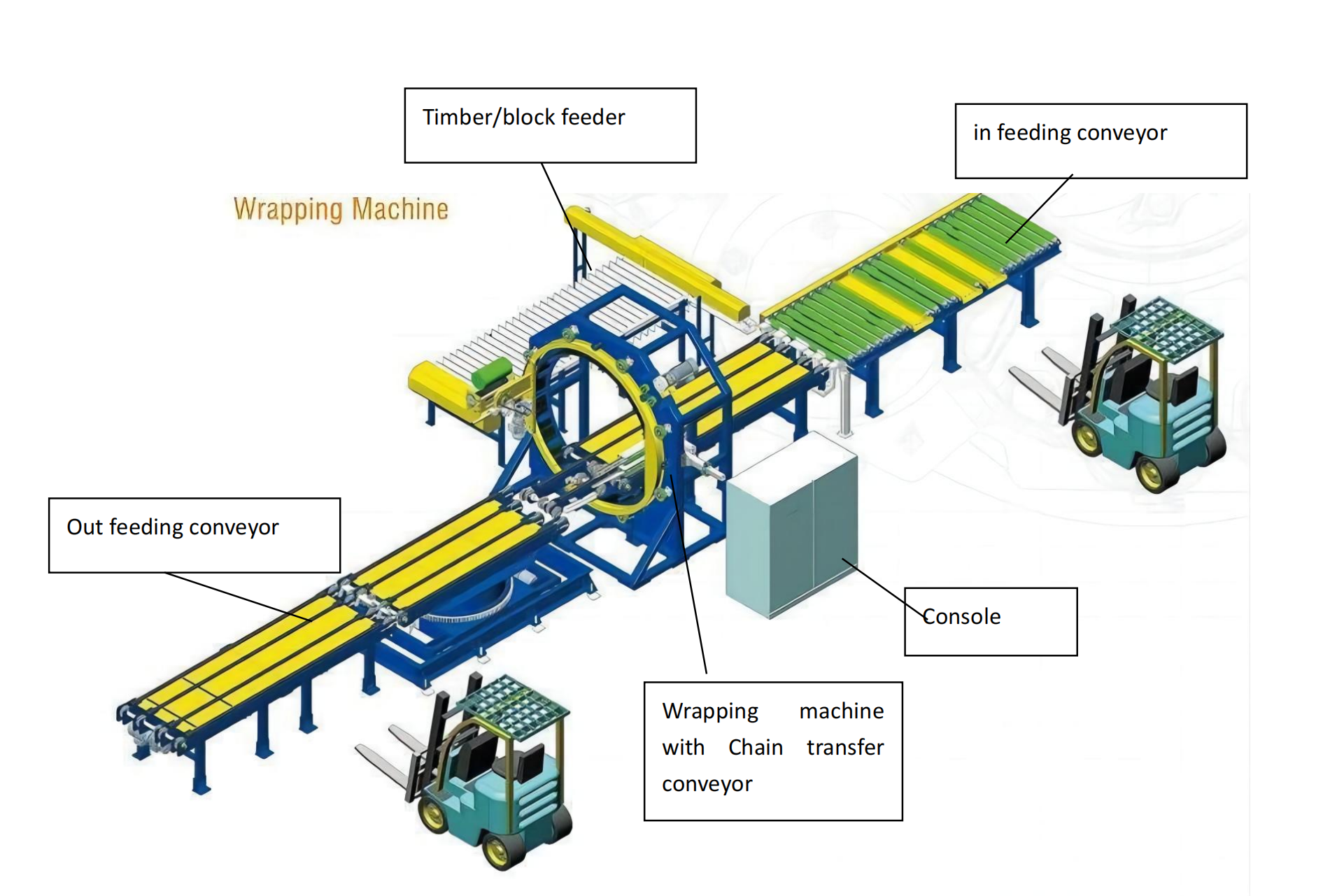
A 23-35 μm film refers to its thickness. Micrometers are small units of measure. This range of film is thin. But it is very strong. It stretches a lot. This stretching makes it strong. Modern orbital wrappers have advanced pre-stretch systems. These systems can stretch a 23 μm film by 200% or even 300%. This means you use less material per package. A 23 μm film can perform like a much thicker film after stretching. This saves you money on material. It reduces your cost per wrapped product.
When I first started my factory, we experimented a lot. We tried many film types. We learned that the machine’s ability to stretch the film was key. A cheaper, thicker film might seem good. But if your machine cannot stretch it well, you waste film. A thinner, high-quality film with good stretch properties costs more per roll. But it wraps more products. This lowers your actual cost per unit. Brazilian suppliers offer many film options. It is important to test them. Look at their stretch performance. Think about the types of products you wrap. Heavy steel coils need good puncture resistance. Lighter items might need less. Environmental rules in Brazil are also important. Using less film helps with waste. It aligns with greener practices. This also helps your company image.
Consider a steel coil. It is heavy. It has sharp edges. You need good protection. A good 23 μm film can offer enough strength. It protects against dust and moisture. It holds the coil tight. A 35 μm film provides even more strength. It is good for very heavy items. It is also good for long shipping distances. The goal is to find the minimum thickness that gives maximum protection. This balance saves you money every day. It means fewer damaged products. It means happier customers.
| Film Thickness (μm) | Typical Cost/Roll (Approx.) | Stretch Performance (Typical) | Wraps/Roll (Example) | Cost/Wrap (Example) |
|---|---|---|---|---|
| 23 | Medium | High (200-300%) | More | Lower |
| 35 | Higher | Medium (150-250%) | Medium | Medium |
| 50 | Highest | Lower (100-200%) | Less | Higher |
This table shows a general idea. Actual numbers depend on your film supplier. They also depend on your machine. But the trend is clear. Higher stretch means lower cost per wrap. This is a big win for your factory.
Can Paper Interleaf Really Protect Your Products and Budget in Brazil?
Paper interleaf is a simple idea. It is a layer of paper put between product layers. People often see it as a good way to protect surfaces. They think it is a cheap option. But its real cost and how well it works are often not clear. This is especially true in busy, tough factory settings. Understanding when paper helps, and when it just adds cost, is key.
While paper interleaf provides crucial surface protection against scratching and abrasion for sensitive products, its cost-effectiveness in Brazil depends heavily on application, the specific product, and the degree of automation. It often serves as a complementary layer rather than a standalone solution for cost cutting.
Paper interleaf is excellent for specific needs. If you have products with very delicate surfaces, like polished metal sheets or painted parts, paper stops scratches. It prevents surfaces from sticking together. This is very important for quality. Some paper types can also absorb small amounts of moisture. This helps prevent rust on metal. But paper has limits. It tears easily. It does not stop water well. It adds bulk to your package. Most importantly, putting paper by hand is slow. It needs a lot of labor.
Think about Michael Chen’s factory. They handle heavy steel coils. Putting paper between each layer of a coil by hand is dangerous. It is also very slow. This directly increases labor costs. It also increases the risk of worker injury. This means higher insurance costs. It means more time lost. It increases staff turnover. So, even if the paper itself seems cheap, the cost of labor to apply it can be very high. In Brazil, labor costs are a big factor.
Paper is suitable for special cases. If a customer demands it, you must use it. If you have products that absolutely cannot touch each other, paper is a good choice. For example, some aluminum coils need paper interleaving. But for general wrapping, especially for heavy, robust items like rebar or pipes, film is usually better. You can also use a hybrid approach. This means using a thin layer of paper on the product surface. Then you wrap the whole thing with stretch film. This gives both surface protection and overall containment. But it still adds the manual labor step. My experience showed me that reducing manual steps is always a win for cost and safety. The Brazilian market for paper can also see price changes. You need stable costs for your operations.
| Feature | Stretch Film (23-35 μm) | Paper Interleaf |
|---|---|---|
| Primary Benefit | Containment, moisture protection, unitization | Surface protection (scratches, sticking) |
| Application | Automated, fast | Often manual, slow |
| Durability | High puncture, stretch | Low tear strength, no stretch |
| Moisture Resist. | Good | Limited (absorbs, then weakens) |
| Cost Driver | Material volume, machine efficiency | Labor, material volume, handling |
| Typical Use | General wrapping of coils, pipes, profiles | Delicate surfaces, specific customer needs |
Choosing paper or film depends on your specific product and process. For broad wrapping needs, film is more efficient. For very specific surface needs, paper might be a good addition. But it is rarely the cheapest overall option for a busy metal factory.
How Does Automation Influence Your Film Choice and Bottom Line?
Many factories, like Michael’s, still use a lot of manual labor for packing. This creates big bottlenecks. It also leads to safety issues. This approach does more than just slow down production. It also stops you from saving money. You cannot use the best packing materials if your process is old. This is a huge missed opportunity for factory managers.
Automating the packing process with a horizontal orbital wrapper directly impacts film choice. It enables higher pre-stretch. It allows precise application. It creates consistent tension. This leads to significant material savings. It also reduces labor costs. This ultimately boosts the factory’s bottom line in Brazil.
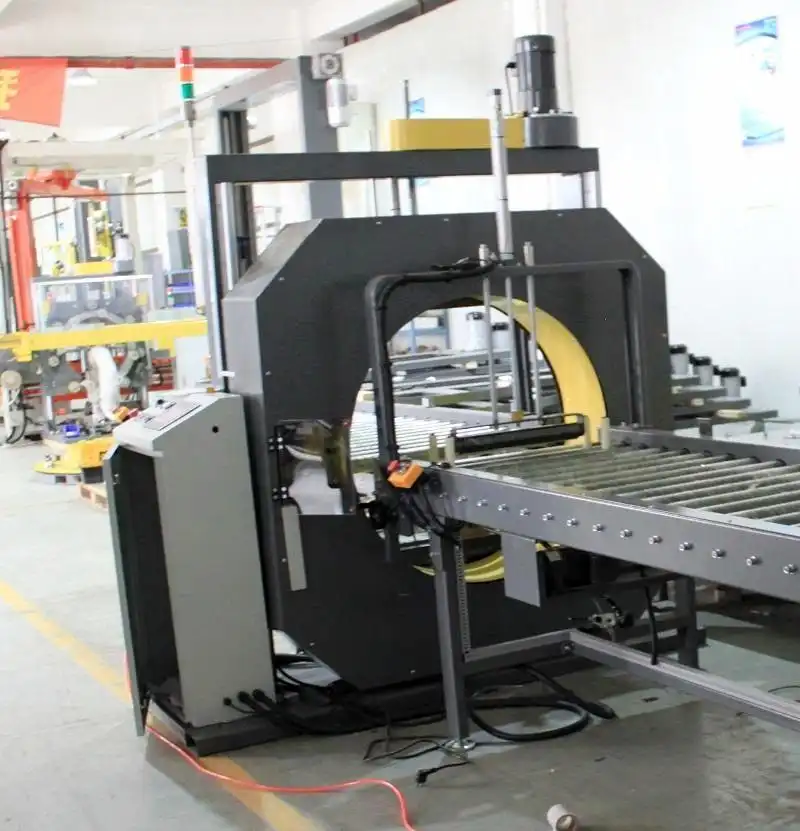
An automated horizontal orbital wrapper is a game changer. These machines are designed to stretch film to its maximum potential. They have advanced pre-stretch carriages. These can stretch film 200%, 250%, or even 300%. This means a roll of film goes much further. You buy fewer rolls. This directly cuts your material costs. Manual wrapping cannot achieve this. A worker can only stretch film so much. A machine does it perfectly every time. This consistent stretching is key to saving money on film.
Automation also solves Michael’s big problem: high labor costs and safety risks. One machine can do the work of several people. This means fewer workers are needed on the packing line. It frees them up for other tasks. More importantly, it takes workers away from dangerous jobs. They no longer manually handle heavy coils or flip pallets. This dramatically lowers the risk of injury. No injuries mean lower insurance costs. It means less lost time. It means happier, safer workers. This is a direct saving for your factory’s budget.
Automated machines also reduce product damage. They wrap products consistently. They apply even tension. This holds products firmly. It protects edges. This means fewer customer complaints. It means less need for rework. This boosts your factory’s reputation. It saves you money from product loss. Machines also work much faster. They increase your throughput. They remove the bottleneck at the end of the line. This helps you meet delivery deadlines. It can even allow you to take on more orders.
I have seen factories transformed by automation. They struggled with manual labor. They had slow packing lines. After installing an orbital wrapper, their output soared. Their costs dropped. This is not just about the machine’s price. It is about the return on investment (ROI). The money saved on labor and film, plus the reduction in damage, quickly adds up. This pays for the machine over time. For Michael, with his goal of clear ROI, this is critical. It shows how the machine helps the business grow.
| Investment Area | Manual Packing Process (Example) | Automated Orbital Wrapper (Example) | Savings/Benefit |
|---|---|---|---|
| Labor | 4 workers @ $X/hour | 1 worker @ $X/hour | ~$3X/hour |
| Film Usage | High (low stretch) | Low (high pre-stretch) | 20-50% material savings |
| Safety Costs | High (injuries, insurance) | Low (reduced risk) | Significant reduction |
| Product Damage | Moderate to High | Low | Reduced returns, claims |
| Throughput | Slow, inconsistent | Fast, consistent | Increased production |
The table above is a simple example. But it shows how automation changes the whole cost structure. It makes the factory more profitable. It makes it safer. This is a strategic investment for any factory manager in Brazil aiming for growth.
What Hidden Costs Are You Missing in Your Packing Process?
Factory managers usually look at the direct cost of packing materials. They count the price of film or paper. But many other costs are hiding. These hidden costs quietly take money from your profits. They include worker injuries. They include damaged products. These expenses are often overlooked. But they can be very large. We need to find these unseen costs. This is especially true in Brazil’s industrial sector.
Beyond film and paper costs, hidden expenses like worker injuries from manual handling, product damage during transit, high labor turnover, and inefficient production bottlenecks significantly inflate overall packing costs. These often overshadow material savings in Brazil’s industrial sector.
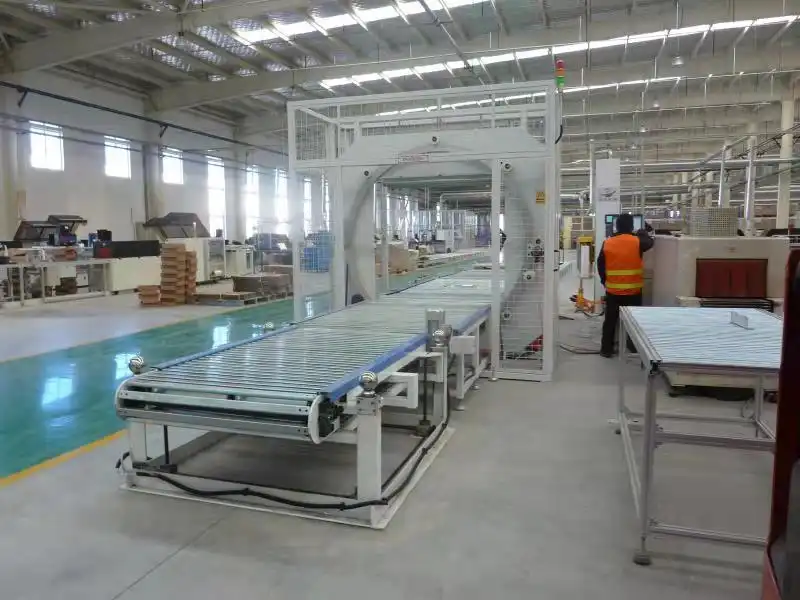
One of the biggest hidden costs is safety. If workers handle heavy items manually, injuries can happen. A worker might strain their back. They might drop a heavy coil on their foot. These injuries lead to medical bills. They lead to worker compensation claims. Your insurance premiums go up. The injured worker cannot work. This means lost productivity. Other workers might have to do extra work. Or you might need to hire temporary staff. This adds more cost. The constant worry about safety also affects morale. Workers might leave if the job is too risky. This leads to high labor turnover.
Product damage is another silent killer of profit. When products like steel coils get damaged during internal transport or packing, it costs money. Maybe the edge of a coil gets bent. Maybe a surface gets scratched. This leads to customer complaints. You might have to offer discounts. You might have to rework the product. Sometimes, you have to scrap the product entirely. This is pure loss. Shipping damaged goods also hurts your brand name. Your reputation suffers. These losses add up fast. They are often much higher than the cost of the film itself.
Labor turnover is also a hidden cost. If workers leave because the job is dangerous or too hard, you need to find new ones. Recruiting new staff costs money. Training them takes time. New workers are often less productive at first. This slows down your operations. It reduces overall efficiency. Michael mentioned high turnover. This is a clear sign of hidden costs related to safety and manual labor.
Inefficiency and bottlenecks also drain money. If your packing line is slow, it slows down your whole factory. You cannot ship products fast enough. This means missed delivery dates. It means unhappy customers. It might mean you cannot take on new orders. This is an opportunity cost. It means lost potential revenue. Sometimes, you might pay overtime to speed things up. That is another added cost.
Even seemingly small things add up. Older, less efficient machines use more energy. This increases your electricity bill. If you store bulky packing materials like large rolls of paper, that takes up valuable factory space. That space could be used for production. Brazil has specific laws and duties. Import duties on certain equipment or materials can add to your costs. Environmental compliance for waste disposal also carries costs. My own factory taught me this. We started looking at every single cost. We looked beyond just the material price. We focused on the total cost of ownership. This change in thinking made a huge difference to our profitability.
| Hidden Cost Area | Impact on Factory (Example) |
|---|---|
| Worker Injuries | Medical bills, worker compensation, increased insurance, lost productivity |
| Product Damage | Rework, scrap, customer complaints, reputation damage, lost sales |
| Labor Turnover | Recruitment costs, training costs, reduced initial productivity |
| Bottlenecks | Delayed shipments, lost sales opportunities, overtime pay, reduced overall output |
| Energy Usage | Higher electricity bills for inefficient machines |
| Storage Space | Wasted factory space, inventory management costs |
| Regulatory Fines | Non-compliance penalties, legal fees |
Addressing these hidden costs is vital. Investing in automation is not just about material savings. It is about fixing these deeper, more painful financial drains. It makes your factory stronger and more competitive.
My Insights!
From my journey in the packing machine industry, I have learned a lot. I started as an employee. Then I built my own successful factory. I saw many factories struggle. I saw many succeed. The biggest lesson is this: there is no single best answer for packing. It is not just about film thickness or material type. It is about understanding your whole operation. It is about your specific product. It is about your customer. And it is about the big picture of cost.
For a factory manager like Michael in Brazil, facing high costs and safety concerns, my advice is clear. Do not just look at the price per roll of film. Look at the total cost of wrapping. Think about the hidden costs. Think about worker safety. Think about efficiency. Think about product quality. An automated horizontal orbital wrapper can change everything. It allows you to use film more efficiently. It protects your workers. It speeds up your production.
I remember one client in particular. They were struggling with manual packing of steel pipes. Workers were tired. Injuries were happening. The pipes were getting scratched during handling. They thought buying cheaper film was the answer. But the real problem was their process. We showed them how an orbital wrapper could use a thinner film more effectively. It also removed the need for manual handling. The initial investment seemed big to them. But the savings from reduced injuries, less product damage, and faster output paid for the machine in under two years. Their business grew. This is the kind of partnership I believe in.
So, for your factory in Brazil, I suggest a deep dive into your current process. Analyze every step. Identify where the real money is going. Consider a pilot program with automated equipment. Talk to experts who understand your challenges. Look for a partner who offers knowledge, not just a machine. FHOPEPACK is here for that reason. We share what we know. We help you make smart choices. This is how you can achieve real financial independence. This is how you help your business grow.
Conclusion
Choosing the right film strategy and automation is crucial for cost savings in Brazil. It balances material efficiency, worker safety, and overall factory productivity. Focus on total cost, not just material price.








