
Horizontal Orbital Wrapper Film Economics: Can It Cut Material Cost by 20–35% vs. Manual Wrap?
Are you tired of watching your profits shrink because of high packing material costs? Does your current manual wrapping process feel like a money pit, eating into your budget with every coil or steel wire bundle you ship? Many factory managers I talk to face this exact problem. They ask me if there is a better way. I tell them there is. The answer often lies in automation. Specifically, horizontal orbital wrappers.
Yes, a horizontal orbital wrapper can significantly cut your material costs. My experience shows it can reduce film use by 20% to 35% compared to manual wrapping. This is not just a claim. The machine applies film consistently. It stretches the film much more efficiently than a person can. This means you use less film for the same, or even better, protection.

This promise of big savings might sound too good to be true. But I have seen it happen in countless factories. Let me show you how. We need to look deeper into how these machines work. We will also explore other hidden benefits. These benefits go beyond just film savings. They impact your whole operation.
How Does Automated Wrapping Achieve Such Film Savings?
You might wonder how a machine can use so much less film than a human. It seems counterintuitive, right? You might think a machine just wraps faster, not smarter. The key is in precision and consistency. Machines are designed to optimize film usage.
Automated horizontal orbital wrappers save film through a combination of consistent tension control and advanced pre-stretch capabilities. Unlike manual wrapping, where film tension varies and over-wrapping is common, the machine applies film uniformly. This ensures maximum film utilization. It also prevents waste. It precisely applies film only where needed, with optimal overlap.

From my time building packing machine factories, I learned that small efficiencies add up. This is especially true with material costs. Manual wrapping relies on human judgment. This means film application is often inconsistent. Some areas get too much film. Other areas get too little. This leads to wasted film. It also means poor protection. An orbital wrapper fixes this.
The machine has a powered pre-stretch system. This system stretches the film before it even touches the product. It can stretch one meter of film into three or four meters. This is a very high stretch ratio. Humans simply cannot do this. Manual wrapping might offer a 100% stretch at best. A machine can offer 250% or even 300% pre-stretch. This instantly means you use less raw film. You get more coverage per roll.
Consistency is another big factor. A machine applies film at the same tension every time. It ensures consistent overlap. This prevents areas that are too thick or too thin. In a manual process, workers get tired. Their technique changes. Some wrap tighter. Some wrap looser. This leads to wasted film because they over-wrap to be safe. Or, it leads to damaged products because they under-wrap. Michael, as a factory manager, you know that consistency is key. It impacts both cost and quality.
Consider a factory in Mexico that I helped. They were manually wrapping heavy steel coils. Their film consumption was huge. They often used thicker, more expensive film just to get enough strength. After installing a horizontal orbital wrapper, their film thickness could be reduced. The machine’s consistent tension and overlap provided superior protection with less material. This cut their film costs dramatically. It improved their package quality too. This shows how smart investment in technology pays off. It pays off not just in savings, but in better product integrity. This leads to fewer customer complaints. It also builds customer trust.
Can Orbital Wrappers Truly Boost Your Production Speed?
Is your packing line a bottleneck? Are manual wrapping processes slowing down your entire production, even when your manufacturing is running at full speed? Many of my clients tell me this is their biggest headache. I know this feeling well from my own factory days.
Yes, horizontal orbital wrappers significantly boost production speed. They eliminate the slow, labor-intensive steps of manual wrapping. A machine can wrap products much faster and more consistently than a team of workers. This means products move through the packing area without delays. It keeps your entire production line flowing smoothly.
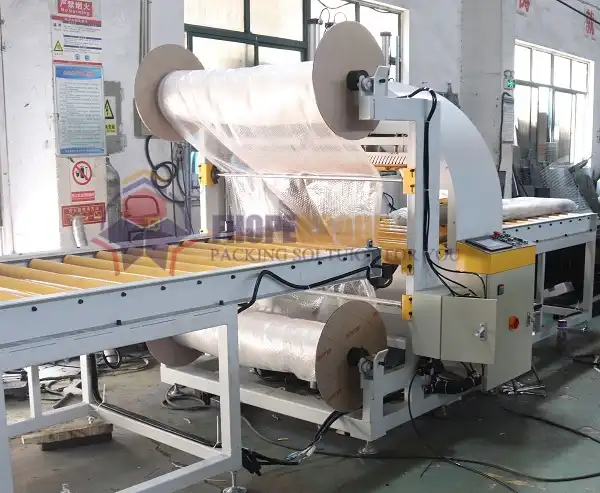
When I first started my packing machine factory, I quickly realized that the end of the line was often the biggest choke point. You can make products fast, but if you cannot pack them fast, it means nothing. Manual wrapping is inherently slow. It requires workers to walk around the product. They pull the film. They cut it. This takes time for each item. When you have large, heavy items like steel coils or wire bundles, this process is even slower and more difficult.
An orbital wrapper automates this entire process. The product moves through a rotating ring. The machine applies film in a continuous, fast motion. There is no manual pulling or cutting of film. There is no walking around. This drastically cuts down the time per package. For instance, a manual wrap might take 5-10 minutes for a large coil. A machine can do it in 1-2 minutes. This difference adds up quickly. Over an 8-hour shift, this means a massive increase in output.
Consider a simple comparison:
| Feature | Manual Wrapping | Orbital Wrapper Machine |
|---|---|---|
| Speed per item | Slow (5-10+ minutes) | Fast (1-2 minutes) |
| Labor required | High (1-2 workers per item) | Low (1 worker for multiple machines or none for integrated) |
| Consistency | Low (varies by worker) | High (uniform every time) |
| Throughput | Low (bottleneck potential) | High (smooth production flow) |
| Worker Fatigue | High | None (for packing process) |
This table shows a clear picture. The machine brings speed and consistency. This directly translates to higher throughput for your factory. Michael, you mentioned efficiency bottlenecks. This is a direct answer to that challenge. Your production line will move faster. Products will be ready for shipment sooner. This improves delivery times. It also reduces storage needs in the packing area. It also cuts costs associated with waiting time. This is a crucial part of improving your factory’s overall profitability.
Does Automation Really Make Packing Safer for Your Workers?
Are your workers constantly at risk during the packing process? Heavy, awkward items like steel coils or wire bundles mean a high risk of injury during manual wrapping. This can lead to high insurance costs and lost time. I have seen the dangers first-hand. Safety should always be number one.
Yes, automation dramatically improves worker safety in packing operations. Horizontal orbital wrappers remove the need for manual handling of heavy items during wrapping. Workers no longer walk around moving products. This reduces the risk of strains, falls, and injuries from moving equipment. It creates a much safer work environment.

When I worked as an employee in a packing machine factory, I saw many close calls. I saw injuries too. Manual packing of heavy goods is inherently dangerous. Workers have to move around large, often unstable items. They lift and pull heavy film rolls. They are exposed to moving machinery if products are transferred by forklift. The risk of back injuries, sprains, and even more serious accidents is very high. Michael, you mentioned high injury risks. This is a critical point. Worker safety is not just about compliance. It is about your people. It affects morale. It impacts your insurance premiums. It also affects employee retention.
An orbital wrapper changes the game completely. The product is placed on a conveyor or rollers. It remains stable. The machine does the wrapping. Workers do not need to walk around the product. They do not need to physically manipulate the item during wrapping. This removes them from the immediate danger zone. It removes the need for strenuous physical labor.
Think about the specific dangers reduced:
- Strains and Sprains: No more bending, twisting, or repetitive movements with heavy film rolls.
- Falls: Workers do not need to navigate around large products on uneven floors while trying to wrap.
- Crushing Hazards: The risk of being struck by a moving coil or wire bundle during manual manipulation is eliminated.
By automating this process, you protect your most valuable asset: your employees. This leads to fewer worker compensation claims. It lowers your insurance costs. It also reduces downtime due to injuries. A safer workplace also improves employee morale. People feel more valued. They are more productive. This creates a positive cycle. This commitment to safety also builds trust. It shows you care about your team. This is a mark of a good leader and a well-run factory. It reflects well on your business in the long term. This is a very important return on investment. It is not just financial. It is human.
Will a Wrapper Protect Your Products Better Than Manual Methods?
Are your finished products suffering damage during internal transfers or shipment? Are you constantly dealing with customer complaints about scuffed edges or exposed surfaces on your steel coils and wire bundles? This is a common issue. It costs money. It damages your reputation. I have seen it many times.
Yes, a horizontal orbital wrapper offers superior product protection compared to manual wrapping. It applies film with consistent tension and overlap. This creates a uniform, tight, and protective barrier around the product. Manual wrapping often leaves gaps or uneven coverage. This makes products vulnerable to damage from dust, moisture, or impacts during handling and transit.
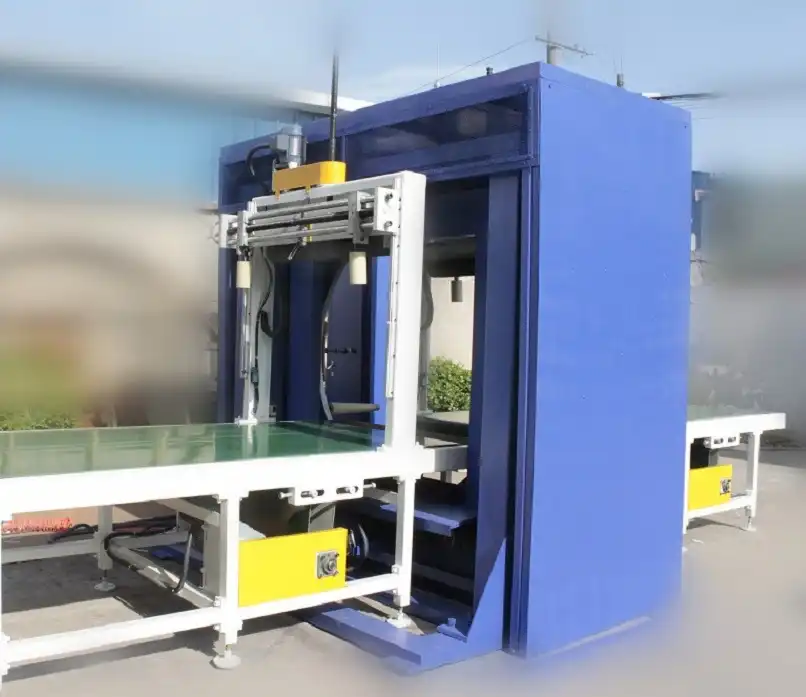
My journey from an employee to owning my own factory taught me a lot about product quality. It is not just about making a good product. It is also about delivering it in perfect condition. When I worked in the industry, I saw many coils reach customers with damaged edges. They had scratches. They had dirt. These issues often came from poor wrapping.
Manual wrapping is inconsistent. This is its biggest weakness for product protection. A worker might wrap one side tightly. The other side might be loose. Some parts might have thin film coverage. Other parts might have thick bunches of film. This leaves vulnerable spots. These spots are where damage happens. Moisture can get in. Dust can settle. The product can be scratched during movement.
An orbital wrapper provides a consistent, 360-degree wrap. The film is applied under controlled tension. It creates a smooth, tight seal. This protects the product from external elements. It also holds the product together. This prevents shifting or loosening during transport. This is especially important for items like steel coils or wire bundles. Their edges are very sensitive.
Here are the key protection benefits:
- Uniform Coverage: Every part of the product receives the same amount of film. There are no thin spots.
- Enhanced Stability: The tight wrap holds the product shape. This reduces movement. It prevents damage from vibration or impact.
- Barrier Against Elements: The continuous film barrier protects against dust, dirt, moisture, and UV rays. This is vital for metal products prone to rust or corrosion.
- Reduced Handling Damage: Once wrapped, the product is more robust. It is less likely to get damaged during loading or unloading.
Michael, you mentioned product loss due to damage. This is a direct hit on your profits. It hurts customer satisfaction. Investing in an orbital wrapper addresses this head-on. It ensures your products arrive at your customers’ sites in the same condition they left your factory. This builds customer loyalty. It reduces costly returns and reworks. It also reinforces your factory’s reputation for quality. This is how you help your clients grow their businesses, just as I helped mine. It is about delivering value at every step.
Conclusion
Horizontal orbital wrappers truly transform packing. They cut costs, boost speed, improve safety, and protect products. This leads to higher profits and happier customers.








