

High-Speed Automatic Coil Packing Machine for Industrial Use: Your Questions Answered?
Are you struggling with slow, manual coil packing in your factory? Do you constantly worry about worker safety and product damage during the packing process? I’ve seen these challenges firsthand, both as an engineer and a factory owner. The pressure to boost output, control costs, and keep your team safe is immense. Many factory managers, much like Jose in Mexico, face these exact problems every day. They are always looking for better ways to operate.
A high-speed automatic coil packing machine is a vital investment for any modern industrial facility aiming to optimize its production line, significantly reduce manual labor, and ensure consistent product quality. These advanced systems use automation to quickly and securely wrap various types of coils, such as steel or wire, minimizing human error and enhancing overall operational efficiency. This technology not only speeds up the packing process but also drastically improves workplace safety and reduces material waste, making it a cornerstone for smart manufacturing.


You might be thinking, “This sounds promising, but how does it truly work for my factory?” I understand that doubt. My journey through the packing machine industry has shown me that true solutions come from understanding specific needs. Let’s dig deeper into how these machines can transform your operations, moving from problems to powerful, measurable improvements.
1. Why is High-Speed Automatic Coil Packing a Game-Changer for Industrial Operations?
Do you feel like your packing line is always lagging behind the rest of your production? Is it creating a bottleneck that slows down your entire output and delivery schedule? Many factories experience this, where manual processes just cannot keep up with high-volume demands. This leads to missed deadlines and frustrated customers.
High-speed automatic coil packing is a game-changer because it directly addresses the core inefficiency of manual coil wrapping and handling, enabling factories to dramatically increase throughput and maintain a continuous flow in their production lines. By automating the entire packing sequence, from strapping to wrapping and conveying, these machines eliminate the slow, inconsistent pace of human labor, allowing for faster processing of steel coils, wire coils, and other heavy industrial products. This automation means factories can meet higher production quotas, shorten lead times, and deliver products to market much more quickly than before.
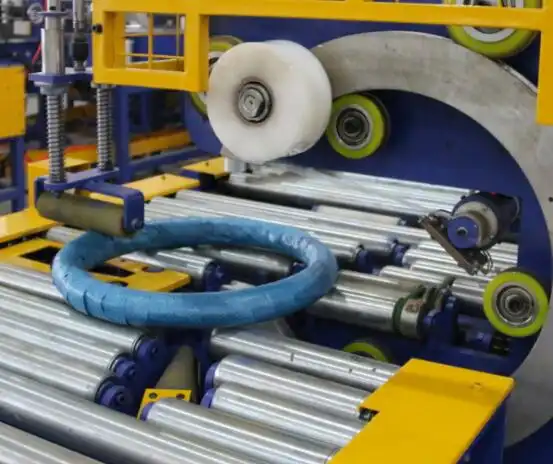

For many years, I worked on the factory floor and later built my own plant. I saw firsthand how much time and effort went into manual packing. It was always a choke point. Moving to automation was not just an upgrade; it was a revolution. It truly changed how we did business.
Revolutionizing Throughput and Efficiency
Think about the sheer volume of coils a modern metal processing plant produces daily. Manually packing each one involves several steps: finding the right materials, positioning the coil, wrapping it by hand, and then moving it. Each step takes time and introduces variability. An automatic system takes all these variables away. It performs these tasks at a consistent, high speed, day in and day out. This means more coils are packed per hour, and your production line moves smoother. This is not just about speed; it is about consistency and reliability. My clients often report a significant jump in their daily output after implementing these systems. Some even double their capacity without needing more space or workers. (industrial coil wrapping efficiency, automated steel coil throughput)
Consider this comparison:
| Feature | Manual Coil Packing | Automatic Coil Packing |
|---|---|---|
| Speed | Slow, depends on worker | Fast, consistent, high cycles per minute |
| Consistency | Variable, human error possible | Uniform, precise, repeatable quality |
| Labor Needs | High, multiple workers | Low, fewer operators needed for supervision |
| Productivity | Limited by human pace | High, continuous operation |
| Bottleneck Risk | High, common bottleneck source | Low, integrates smoothly with production line |
| Delivery Time | Longer, delays common | Shorter, more reliable delivery schedules |
This change is critical for businesses like Jose’s, where boosting output is a top priority. When I help clients design their packing lines, we always focus on reducing manual touchpoints. Why? Because every manual step is a potential point of error or delay. Automation removes this. It allows workers to focus on more complex tasks, like quality control or machine maintenance. This shift in roles makes the whole operation more efficient and smarter. We are not just selling machines; we are selling a pathway to higher productivity and less stress. (high-speed coil baling, metal coil packaging optimization)
The beauty of these machines is how they integrate into your existing setup. They become a seamless part of the flow, taking coils from the production line and getting them ready for shipment without a hitch. This eliminates the last-mile problem that many factories face. It ensures that the efforts put into manufacturing are not wasted by slow packing. You see the immediate impact on your balance sheet and your delivery times. This makes your customers happier and your business stronger. It’s a win-win situation. (industrial packaging automation, continuous production flow)
2. How Can Automated Coil Packing Machines Significantly Enhance Workplace Safety?
Are your workers still manually lifting and maneuvering heavy coils or trying to flip massive pallets? This is a huge concern in many industrial settings. I have seen too many accidents and near misses caused by these dangerous tasks. The risks of injuries, such as sprains, crushing injuries, or even worse, are very real. These incidents lead to high insurance costs, lost workdays, and a high turnover of skilled staff.
Automated coil packing machines dramatically enhance workplace safety by eliminating the need for manual handling of heavy and bulky products like steel coils and wire coils. These systems use robust mechanical arms, conveyors, and automatic wrapping devices, keeping human operators away from hazardous pinch points and lifting operations. By automating tasks that pose high risks of strains, sprains, or crushing injuries, factories can significantly reduce the potential for worker accidents, lower insurance premiums, and create a much safer work environment for their employees. This shift protects workers and ensures smoother operations without costly disruptions.
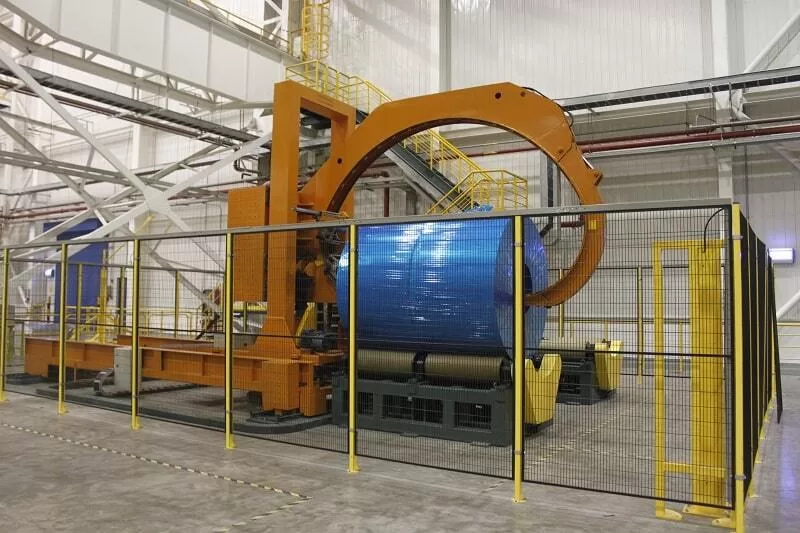

When I started my factory, safety was always at the forefront of my mind. I knew the human cost of accidents. This is why investing in equipment that keeps my team safe was non-negotiable. I believe every factory owner shares this concern.
Eliminating High-Risk Manual Tasks
Think about the sheer weight of a steel coil. It can be tons. Manually moving, lifting, or rotating such a heavy object is incredibly dangerous. Even with forklifts and cranes, there is always a risk during the hook-up and release phases if manual intervention is required. Automated packing lines remove workers from these danger zones completely. Coils are moved by conveyors, lifted by specialized lifters, and wrapped by machines. Workers become supervisors, not manual laborers. They operate the controls from a safe distance, away from moving parts and heavy loads. (heavy-duty coil handling, industrial safety solutions)
Here are key ways automation improves safety:
- No Manual Lifting: Workers no longer need to manually lift or position heavy coils, preventing back injuries, strains, and crushes. 🏋️♀️➡️🤖
- Reduced Pinch Points: Automated systems are designed with guards and safety sensors, minimizing areas where hands or body parts could get caught. 🖐️🚫
- Controlled Movement: Coils move along a predictable path on conveyors, reducing the risk of accidental drops or uncontrolled rolling. ↘️⬆️↙️
- Distance from Operation: Operators can monitor and control the entire process from a safe control panel, far from the actual packing action. 👨💻➡️
- Consistency: Automated processes reduce fatigue, which often leads to human error in manual tasks. ✅
Jose’s concern about high injury risks and rising insurance costs is very common. I have helped many clients drastically cut down their accident rates. One client, a steel wire manufacturer, saw a 70% reduction in packing-related injuries within the first year of installing an automatic coil packing line. This was not just a number; it was about real people going home safe to their families. This kind of impact is what truly drives me. Investing in safety is not an expense; it is an investment in your people and the long-term health of your business. It builds a culture where employees feel valued and secure. This also helps in retaining skilled workers, reducing turnover, which is another hidden cost of manual, dangerous work. (packing line safety, ergonomic packaging solutions)
3. What Are the Real Cost Savings and ROI of Investing in an Advanced Coil Packing System?
Many factory owners hesitate when they see the upfront cost of an advanced packing machine. They ask, “Is it really worth the investment?” I hear this question often. But the truth is, the hidden costs of manual processes—like high labor, product damage, and frequent downtime—can far outweigh the initial capital outlay. It is about looking at the bigger picture and the long-term benefits.
Investing in an advanced coil packing system delivers significant return on investment (ROI) through substantial cost savings across several key areas, including reduced labor expenses, minimized product damage, and optimized material usage. By automating the packing process, factories can cut down on the number of workers needed for manual operations, leading to lower wage and benefit costs. Furthermore, precise machine handling and consistent wrapping techniques drastically decrease product losses from damage during internal transport or packaging, which translates into fewer customer complaints and improved profit margins. These tangible savings, coupled with increased efficiency and safety, quickly justify the initial capital expenditure.


My own experience building a successful packing machine factory taught me the importance of smart investments. Every piece of equipment needed to prove its worth. I learned how to calculate ROI not just in terms of money, but also in terms of operational improvement and peace of mind.
Measuring the Return: Beyond the Price Tag
Let’s break down where the savings come from. First, labor costs. Manual packing needs several people. An automatic system needs one or two operators to supervise, freeing up others for different tasks. This is a direct saving on wages and benefits. Second, product damage. Jose mentioned product loss due to damaged coil edges. This is a common issue with manual handling or poor wrapping. Automated machines apply consistent tension and precise wrapping, protecting the product better. This reduces scrap, rework, and customer returns, saving money and protecting your reputation. (ROI of packaging machinery, reducing labor costs packing)
Here is a simple example of potential savings:
| Cost Factor | Manual Packing Impact | Automatic Packing Benefit | Annual Savings Potential |
|---|---|---|---|
| Labor | High wages for multiple workers | Fewer workers, reduced overhead | 💰💰💰💰 |
| Product Damage | Frequent losses from mishandling | Minimal, consistent protection | 💰💰💰 |
| Insurance | High due to accidents | Lower premiums with improved safety | 💰💰 |
| Packing Material | Inconsistent use, waste often | Optimized, precise material usage | 💰💰 |
| Throughput | Limited, lost production time | Maximized, increased sales potential | 💰💰💰💰 |
| Downtime | More frequent due to manual errors | Less, predictable operation | 💰💰 |
The initial cost might look big, but when you do the math, the payback period for a high-speed automatic coil packing machine can be surprisingly short, often less than two years. I always work with my clients to conduct a detailed cost-benefit analysis. We look at their specific labor rates, material costs, and current damage rates. Then we show them a clear picture of how quickly the investment pays for itself. This clarity is what builds trust. It is what Jose is looking for in a partner: someone who understands his challenges and can provide tangible, professional insights. This is not just about selling a machine. It is about providing a solution that boosts your factory’s bottom line and ensures long-term profitability. (cost-effective industrial packaging, preventing material loss)
4. How Do You Choose the Right High-Speed Automatic Coil Packing Machine for Your Factory?
Choosing the right packing machine can feel overwhelming. There are many options, and many suppliers promise the world. Jose’s past experiences with suppliers who cared more about sales than after-sales service is a familiar story. This makes the decision even harder. How do you cut through the noise and find a partner who truly understands your needs and delivers a reliable solution?
Choosing the right high-speed automatic coil packing machine requires careful consideration of your specific factory needs, production volume, coil dimensions, and desired levels of automation, along with a thorough evaluation of the supplier’s industry expertise and commitment to after-sales support. It is crucial to partner with a vendor like FHOPEPACK that offers tailored solutions, proven reliability, and a track record of understanding real-world operational challenges. Looking beyond just the machine’s price to assess its long-term performance, maintenance requirements, and the quality of technical assistance ensures you make a strategic investment that genuinely supports your business growth and delivers consistent performance.
My journey from an engineer to a factory owner taught me the difference between a good machine and a great solution. A great solution comes with a partner who stands by you, long after the sale. This is the FHOPEPACK promise.
Finding Your Ideal Packing Partner and Solution
When I advise clients, I always emphasize that you are not just buying a machine; you are investing in a long-term partnership. The right supplier will take the time to understand your unique challenges—your coil types, your required packing speed, your safety concerns, and your budget. They will not push a standard solution if it does not fit. This is where my own experience becomes invaluable. I have walked in your shoes. I know what works and what does not work in a real factory setting. (reliable packing machine suppliers, customized packing solutions)
Consider these critical factors when making your choice:
- Production Volume and Speed: How many coils do you need to pack per hour or day? This determines the necessary machine speed and capacity. ⚙️
- Coil Specifications: What are the dimensions (inner diameter, outer diameter, width) and weight of your coils? The machine must be designed to handle your specific product range. 📏
- Level of Automation: Do you need a fully automatic system, or a semi-automatic one? This depends on your labor availability and budget. 🤖
- Packing Material Requirements: What kind of wrapping material do you use (stretch film, VCI paper, woven fabric)? The machine should be compatible. 📦
- Space Availability: How much floor space do you have? Integrated systems can save space. 🏭
- Supplier Reputation and Support: This is crucial. Look for a company with a strong track record, excellent after-sales service, spare parts availability, and technical support. Ask for references. 🤝
- Safety Features: Ensure the machine complies with international safety standards and has robust safety mechanisms. 🛡️
- Energy Efficiency: A machine that saves energy will save you money in the long run. 💡
I always tell my clients, like Jose, to ask tough questions. Ask about maintenance schedules, spare parts availability, and response times for technical issues. A good supplier will be transparent and confident in their support. For instance, at FHOPEPACK, we pride ourselves on not just building robust machines but also on providing the ongoing support that ensures your operations run smoothly for years. We understand that a machine sitting idle because of a lack of spare parts or technical help is a huge loss. My goal, just as it was when I first started, is to help factories grow their business by making smart, reliable investments. This means choosing a partner who provides not just equipment, but true peace of mind and operational excellence. (industrial packaging equipment selection, expert packing machine guidance)
Conclusion
Embracing high-speed automatic coil packing is a strategic move for any industrial factory. It addresses critical challenges from inefficiency and safety risks to product damage and high operational costs. By investing in these advanced systems, you unlock greater productivity, enhance workplace safety, and achieve a clear return on investment. Choosing the right partner, like FHOPEPACK, ensures you gain not just a machine but a reliable solution and expert guidance for your steel coil packing line, driving your business forward.












