
From Manual to Intelligent: How Automatic Steel Coil Packing Lines Empower India’s Next-Generation Manufacturing?
The world of manufacturing is changing fast. In India, businesses face unique challenges. They need to keep up with global demands. Many factories still rely on manual processes, especially for heavy tasks like steel coil packing. This old way brings many problems. It can slow down production. It can also risk worker safety. These issues affect how quickly products get to customers. It also impacts the quality of the final product. So, how can India’s growing manufacturing sector move past these old ways? How can it adopt smarter, safer, and more efficient methods? (Manufacturing challenges, manual packing issues)
Automatic steel coil packing lines are making a big difference in India’s next-generation manufacturing. These systems automate the entire packing process. They reduce the need for manual labor. This improves efficiency, ensures consistent quality, and significantly enhances safety. They are key for companies aiming for global competitiveness and high production standards. (Automated packing benefits, Indian manufacturing transformation)
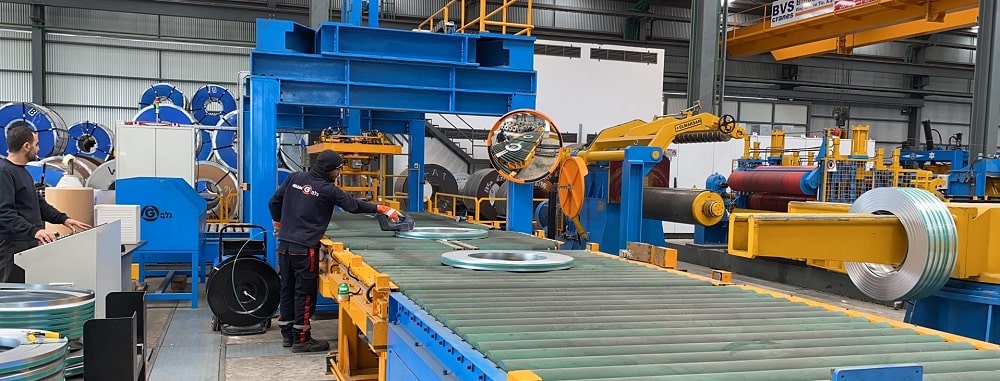
For a long time, manual packing was the only choice. But today, the demands are different. Modern steel mills, especially those focused on export, need more. They need speed, precision, and reliability. This is where intelligent packing solutions come in. Let’s explore how these advanced systems are changing the game for India’s manufacturing landscape. We will see why they are essential for future growth. (Advanced packing solutions, manufacturing growth)
Why is India’s Manufacturing Sector Embracing Automation in Steel Coil Packing?
India’s manufacturing sector is growing rapidly. This growth puts a lot of pressure on companies. They must produce more goods, and they must do it faster. They also need to meet strict international quality standards. Manual packing methods often fall short in this new environment. They struggle with high volumes and consistent quality. This creates a bottleneck in the production chain. It prevents businesses from reaching their full potential. So, what is pushing this shift towards automation? (Indian manufacturing growth, production bottlenecks)
India’s manufacturing sector is embracing automation in steel coil packing to overcome labor shortages, improve production efficiency, ensure consistent product quality, and meet stringent global export standards. Automation provides the speed, precision, and reliability needed for high-volume operations and competitive markets. (Automation drivers, export quality standards)

The need for automation in India is clear. The country aims to become a global manufacturing hub. This goal requires modern production capabilities. Old methods are simply not enough. I have seen many factories struggle with this. They want to increase output but cannot find enough skilled workers. The “Make in India” initiative pushes for local manufacturing. It also pushes for global quality. Automation helps achieve both. Companies are realizing that investing in smart machines pays off. It helps them stay competitive. It also improves their overall operational efficiency. This shift is not just about replacing workers. It is about empowering businesses to do more. It helps them grow in a competitive world. It ensures they can deliver high-quality products consistently. This is vital for their long-term success. It also supports India’s economic progress. (Global manufacturing hub, Make in India initiative, operational efficiency, economic progress)
What Challenges Do Traditional Manual Coil Packing Methods Present for Modern Steel Mills?
Manual coil packing might seem cost-effective at first. But it hides many serious problems. For a busy steel mill, these problems can quickly add up. They lead to significant losses. Imagine a production director like Ivan Petrov. He oversees hundreds of tons of steel coils every day. He worries about efficiency, safety, and compliance. Manual processes make these worries much bigger. What specific problems does he face with traditional packing? (Manual packing problems, steel mill operations)
Traditional manual coil packing methods present several critical challenges for modern steel mills. These include inconsistent packaging quality, high labor dependency, increased safety risks for workers, slow processing speeds, and difficulties in meeting strict international export requirements. These issues often lead to higher operational costs and potential customer dissatisfaction. (Inconsistent quality, labor dependency, safety hazards, operational costs)
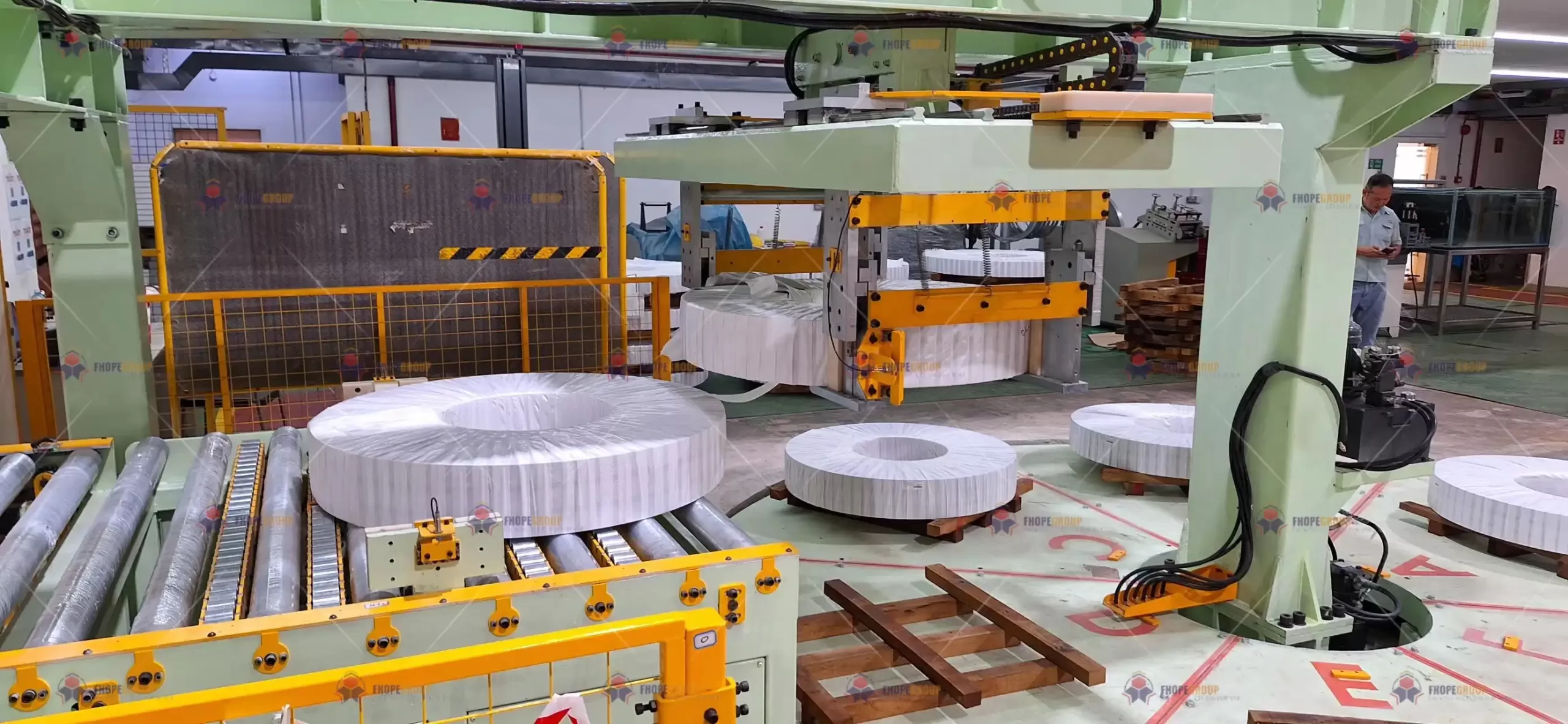
From my years in the packing machine industry, I have seen these issues firsthand.
- Labor Shortages and High Turnover: Finding and keeping workers for manual coil packing is hard. The work is physically demanding. It is also repetitive. This leads to high turnover rates. Young workers often do not want these jobs. This creates a constant struggle for sufficient manpower. It impacts consistent production levels. (Workforce challenges, manual labor intensity)
- Inconsistent Packaging Quality: Human error is unavoidable. Manual strapping or wrapping often results in uneven tension. The coils might not be secured properly. This means the packaging quality varies greatly. During transport, coils can shift, get damaged, or become loose. This leads to customer complaints and returns. It can also cause financial penalties. (Quality control issues, inconsistent tension)
- Significant Safety Risks: Handling heavy steel coils is dangerous. Manual lifting, positioning, and strapping expose workers to serious injury. This includes crush injuries, strains, and falls. Factories must prioritize worker safety. Manual methods make this difficult. They increase the risk of accidents. (Worker safety, industrial accidents)
- Slow Throughput and Bottlenecks: Manual processes are inherently slower than machines. For mills producing hundreds of tons daily, this creates a major bottleneck. Packing cannot keep up with production. This delays shipments. It also reduces overall factory output. It prevents the mill from maximizing its production capacity. (Production bottlenecks, slow processing)
- Difficulty Meeting Export Standards: Export markets demand very specific packaging. This often includes precise wrapping, steel or PET strapping, and automatic labeling with barcodes. Manual methods struggle to consistently meet these strict requirements. They cannot achieve the anti-corrosion and anti-scratch protection needed for international shipping. (Export compliance, packaging standards)
How Do Automatic Steel Coil Packing Lines Solve These Critical Production Issues?
The challenges of manual packing are clear. But so is the solution. Automatic steel coil packing lines are designed to tackle these problems head-on. They transform the packing process. They turn a slow, risky, and inconsistent operation into an efficient, safe, and precise one. This shift changes everything for steel mills. It helps them meet modern demands. But how exactly do these machines provide such comprehensive solutions? (Automatic packing solutions, production transformation)
Automatic steel coil packing lines solve critical production issues by delivering consistent packaging quality, significantly reducing reliance on manual labor, enhancing workplace safety through automation, accelerating throughput, and ensuring compliance with stringent export standards. These integrated systems provide a reliable, efficient, and cost-effective solution for modern steel mills. (Automated efficiency, enhanced safety, quality consistency, cost savings)

My journey from factory employee to a successful factory owner showed me the power of automation. I witnessed how these machines made a real difference for clients.
- Consistent and High-Quality Packaging: Automated systems apply uniform tension for strapping and wrapping. This ensures every coil is packed perfectly. Whether it is PET or steel strapping, or stretch film for moisture protection, the quality is always consistent. This reduces damage during transit. It also eliminates customer complaints about poor packaging. (Uniform packaging, consistent quality)
- Reduced Labor Dependence and Costs: Machines can work tirelessly, 24/7. They remove the need for constant manual intervention. This frees up human workers for more skilled tasks. It also lowers labor costs. Factories become less vulnerable to labor shortages. This ensures continuous production, even with fewer workers. (Labor reduction, operational cost efficiency)
- Enhanced Worker Safety: Automatic lines remove workers from dangerous situations. Coils are handled by machines. Strapping and wrapping occur without human contact. This drastically reduces the risk of accidents and injuries. It creates a much safer working environment for everyone in the factory. (Workplace safety, accident prevention)
- Increased Throughput and Efficiency: Automation speeds up the entire packing process. Machines perform tasks faster and with greater precision than humans. This eliminates bottlenecks. It allows steel mills to process more coils in less time. This boosts overall production capacity. It also ensures timely deliveries. (Production speed, throughput improvement)
- Meeting Global Export Standards with Ease: Modern automatic lines can integrate advanced features. These include automatic labeling, barcode application, and precise film wrapping for complete moisture and rust protection. They can ensure packaging meets CE/ISO certification requirements. This makes it easier for mills to access international markets. (Export readiness, international compliance)
What Key Features Define a World-Class Automatic Coil Packing Solution?
Choosing the right automatic coil packing solution is a big decision. It is not just about buying a machine. It is about investing in a system that can handle your specific needs. It needs to be reliable. It also needs to be adaptable. A truly world-class solution goes beyond basic automation. It offers a suite of integrated features. These features ensure maximum efficiency, safety, and quality. So, what should steel mills, like Ivan’s, look for when selecting such a system? (Packing solution features, system reliability)
A world-class automatic coil packing solution is defined by its comprehensive integration of various automated functions, high reliability for continuous operation, adaptability to different coil specifications, advanced safety features, and intelligent controls. Key features include automatic strapping, precise wrapping, efficient material handling, and smart monitoring systems for seamless production. (Integrated packing systems, customizable solutions, advanced safety features, smart material handling)
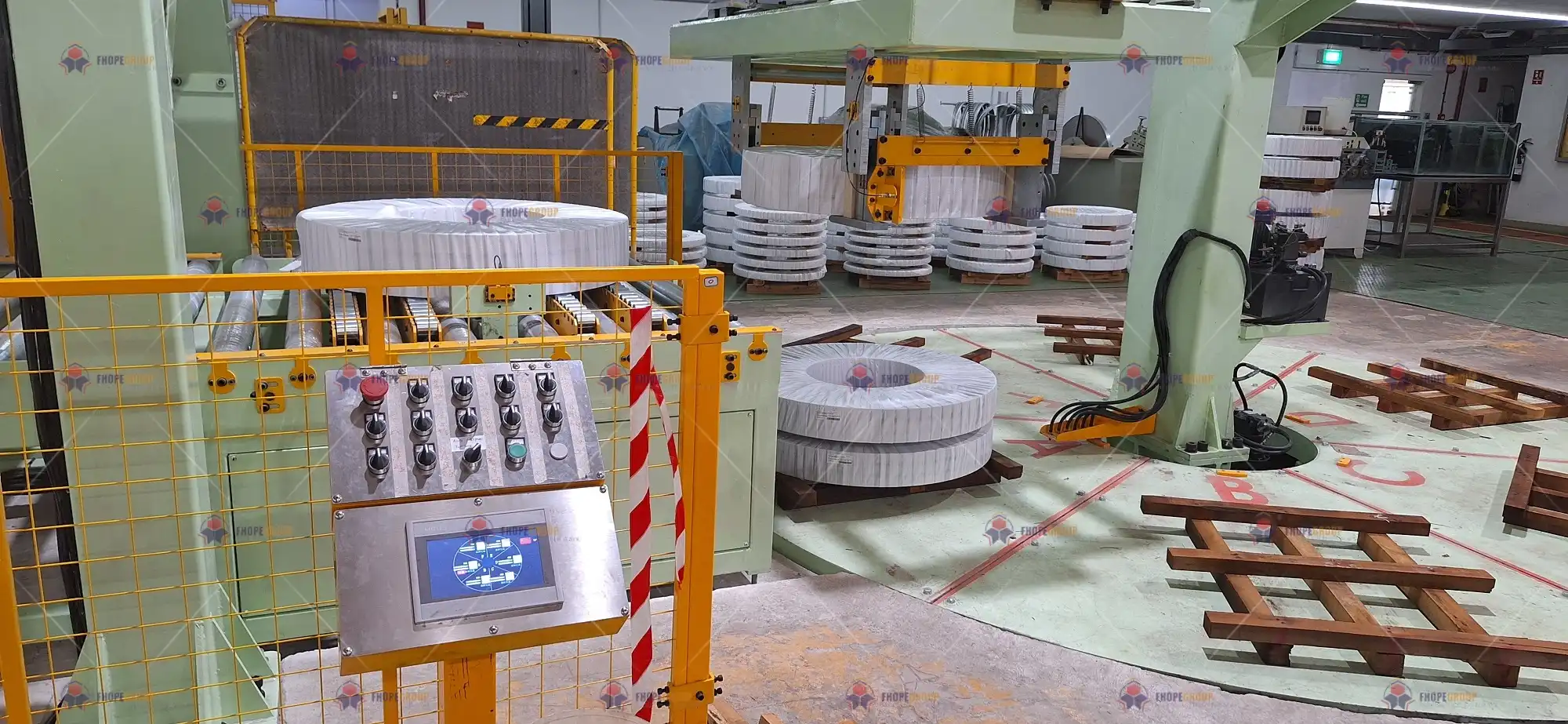
When I help clients design their packing lines, we focus on a few core aspects. These make a system truly intelligent and effective.
- Fully Automated Coil Handling: The system should manage coils from the production line to the packing station. This includes automatic upenders and downenders. It also includes heavy-duty conveyors. These systems handle coils weighing 1-3 tons easily. They adapt to varying inner and outer diameters. This ensures smooth, continuous flow without manual intervention. (Coil handling automation, variable coil sizes)
- Integrated Strapping and Wrapping Stations: A top solution combines different packing methods. This means both PET and steel strapping machines. It also includes advanced stretch or shrink wrapping machines. These provide excellent moisture, rust, and scratch protection. The system should automatically switch between packing styles based on product type. This makes handling diverse products easy. (Multi-method packing, product diversification)
- Smart Control Systems and HMI: A user-friendly Human-Machine Interface (HMI) is crucial. It allows operators to monitor the process. They can adjust parameters easily. The system should have intelligent sensors. These detect coil position, size, and packaging status. This ensures precise operation. It also allows for quick troubleshooting. (Intelligent controls, user interface)
- Robust Construction and 24/7 Reliability: Steel mills operate around the clock. The packing equipment must match this intensity. This means durable components and strong engineering. The system must be built for continuous, heavy-duty operation. This minimizes downtime. It maximizes productivity. (Durable equipment, continuous operation)
- Advanced Safety Features: Safety cannot be overlooked. A world-class system includes multiple safety interlocks, emergency stops, and protective guarding. These features keep operators safe from moving parts and heavy coils. They meet international safety standards. (Operational safety, safety regulations)
- Automatic Labeling and Data Integration: For traceability and compliance, automated labeling is key. The system can apply barcodes and product information. It can also integrate with the mill’s ERP system. This ensures accurate inventory management. It streamlines shipping logistics. (Barcode application, data management)
Why is a Long-Term Partnership Crucial for Implementing Advanced Packing Technology?
Investing in an automatic coil packing line is a significant step. It is a long-term commitment. The technology is complex. It needs careful installation, regular maintenance, and ongoing support. A simple transaction is not enough. Steel mills need a supplier who acts as a true partner. This partner should understand their needs. They should also provide comprehensive support. Why is this kind of relationship so important for the successful implementation of advanced packing technology? (Technology implementation, long-term support)
A long-term partnership is crucial for implementing advanced packing technology because it ensures expert guidance from project conception to ongoing operation. A reliable partner provides turnkey solutions, comprehensive training, readily available spare parts, and responsive after-sales service. This continuous support maximizes machine uptime, optimizes performance, and guarantees the sustained success of the investment. (Turnkey solutions, after-sales support, sustained performance)
When I founded FHOPEPACK, my vision was to be more than just a machine supplier. I wanted us to be a knowledge-sharing platform. We aim to be a partner to our clients. We walk them through every step. This philosophy is born from my own journey. I saw how proper support could make or break a project.
- Turnkey Project Management: A good partner handles everything. This starts from initial design and planning. It goes through manufacturing, installation, and commissioning. This “turnkey” approach means the client gets a complete, ready-to-use solution. It minimizes their risk and effort. It ensures seamless integration with existing production lines. (Project implementation, complete solutions)
- Comprehensive Training: New technology requires new skills. A crucial part of a partnership is thorough training for the client’s team. This includes operators, maintenance staff, and supervisors. Proper training ensures the equipment runs efficiently. It also ensures it is maintained correctly. This extends the machine’s lifespan. (Staff training, operational readiness)
- Reliable After-Sales Support: Machines sometimes need help. A responsive support team is vital. This team should be available for troubleshooting and technical assistance. Fast problem-solving minimizes downtime. It keeps production flowing smoothly. This prevents costly delays. (Technical assistance, minimal downtime)
- Guaranteed Spare Parts Availability: Worn parts need replacement. A partner should guarantee the availability of spare parts. This ensures quick repairs. It prevents long waits for components. Having critical parts on hand is essential for continuous operation. It protects the investment. (Spare parts management, machine longevity)
- Ongoing Consultation and Optimization: The best partners do not disappear after installation. They offer ongoing advice. They help optimize the packing process over time. They suggest upgrades as needs change. This ensures the packing line remains efficient and current. It adapts to new demands. (Process optimization, continuous improvement) For example, we at FHOPEPACK pride ourselves on this deep engagement. We also know other good players. SHJLPACK offers solid options. CNBHPAC also has respectable offerings. But for the ultimate in customized solutions and partnership, we aim to be unmatched. (Packing equipment providers, customized solutions)
Conclusion
The shift from manual to intelligent packing is vital for India’s manufacturing future. Automatic steel coil packing lines offer unmatched efficiency, safety, and quality. Choosing a reliable partner is key to success. This ensures seamless integration and long-term support. Embrace automation to empower your operations and secure your place in the next generation of manufacturing. Discover how a coil packing line can transform your business. (Manufacturing future, automated solutions, business transformation)








