
From Manual to Automatic | The Evolution of Steel Coil Packing Technology?
The world of heavy industry, especially metal processing, faces constant pressure. Are you feeling it too? The struggle to boost output, control costs, and keep your team safe is real. I remember starting my journey in a packing machine factory. I saw the challenges firsthand. Many factory managers, just like you, are always looking for ways to make operations smoother, safer, and more profitable. It is not just about moving products; it is about building a more resilient and efficient business.
The shift from manual to automatic steel coil packing technology is a fundamental change, driven by the critical need for increased efficiency, enhanced safety, and improved product protection in heavy-duty manufacturing. This evolution moves away from labor-intensive, risky manual processes towards advanced automated systems that optimize production lines, reduce operational costs, and secure product integrity for metal industries worldwide.

This journey from manual to automatic is more than just buying new machines. It is about understanding the core problems and finding smart, long-term solutions. Let’s dig deeper into how this evolution is reshaping the packing industry and what it means for your factory.
1. What are the Drawbacks of Traditional Manual Steel Coil Packing Methods?
Are you still relying on manual methods for packing your heavy steel coils and wire products? This approach often seems straightforward at first glance, but it can quickly become a major source of frustration and loss. The inefficiencies add up, leading to a bottleneck that slows down your entire production line. This is a common problem I saw in many factories when I first started FHOPEPACK. The risks are often underestimated until something goes wrong.
Traditional manual steel coil packing methods suffer from significant drawbacks, including slow operational speeds, high labor costs, inconsistent packaging quality, and, most critically, severe safety hazards for workers due to the heavy and awkward nature of metal coils, leading to frequent workplace injuries and higher insurance premiums.

Manual packing might seem cheaper initially, but it carries many hidden costs. Think about the speed. When workers physically handle each heavy coil, moving it, wrapping it, and strapping it, the process is inherently slow. This creates a bottleneck at the end of your production line, limiting your overall output. My clients often tell me that their entire facility’s efficiency is dragged down by this one slow step. Then there are the labor costs. You need multiple strong workers for these tasks, and their wages, benefits, and training all add up. It is not just the hourly rate; it is the total cost of employment. From my own factory experience, I learned that investing in the right equipment can actually free up skilled workers for more complex, value-added tasks.
The Hidden Costs and Risks of Manual Operations: A Closer Look
When we talk about manual packing, we are not just talking about physical labor. We are talking about a cascade of issues that impact your bottom line and your team’s well-being. Manuel processes are often difficult to standardize. The quality of the packing can vary greatly from one worker to another, or even from one shift to the next. This inconsistency leads to more product damage during transit or storage. Damaged steel coil edges or unsecured strapping can result in customer complaints, returns, and lost revenue. I have heard stories from clients about entire shipments being rejected because of poor packaging. Safety is perhaps the most pressing concern. Moving heavy steel coils or wire bundles by hand or with basic equipment exposes workers to serious injury risks. Strains, sprains, crushes, and even worse accidents are common. These incidents lead to:
- 👷♂️ Increased Injury Rates: Higher medical costs and lost workdays.
- 🏥 Higher Insurance Premiums: Your operational costs go up.
- 📉 Employee Turnover: Workers leave jobs with high physical demands and safety risks.
- 👨🏭 Reduced Morale: A dangerous workplace impacts everyone.
Consider Jose (Michael) from Mexico, a factory manager responsible for operations. He deals with these exact problems. He sees the slow pace, the tired workers, and the risk of injuries. He knows that any downtime on his production line means huge losses. The current manual process for his steel coil and wire packing is slow and inefficient. It affects his whole production and delivery schedule. He has also seen products damaged during internal transport and packing, like coil edges getting dented. This causes customer complaints and profit losses. These issues are not just about inconvenience; they directly impact the financial health and reputation of a business. Moving away from these outdated methods is not just an option; it is a necessity for modern manufacturing. (manual steel coil packing disadvantages, heavy-duty packing safety hazards, inconsistent packaging quality issues, high labor cost packing)
2. How Do Automatic Steel Coil Packing Machines Enhance Efficiency and Safety?
So, if manual packing has so many problems, what is the alternative? This is where automatic steel coil packing machines come into play. Many factory owners ask me, “Can these machines truly make a difference in our specific operations?” From my journey in the packing machine industry, I have seen these systems transform factories. They do not just speed things up; they fundamentally change how heavy products are handled and protected.
Automatic steel coil packing machines significantly enhance efficiency by streamlining the end-of-line packaging process, reducing cycle times, and minimizing reliance on manual labor. Concurrently, they drastically improve workplace safety by automating hazardous tasks like heavy lifting and strapping, thereby preventing worker injuries and ensuring a more secure operational environment for industrial metal processing facilities.
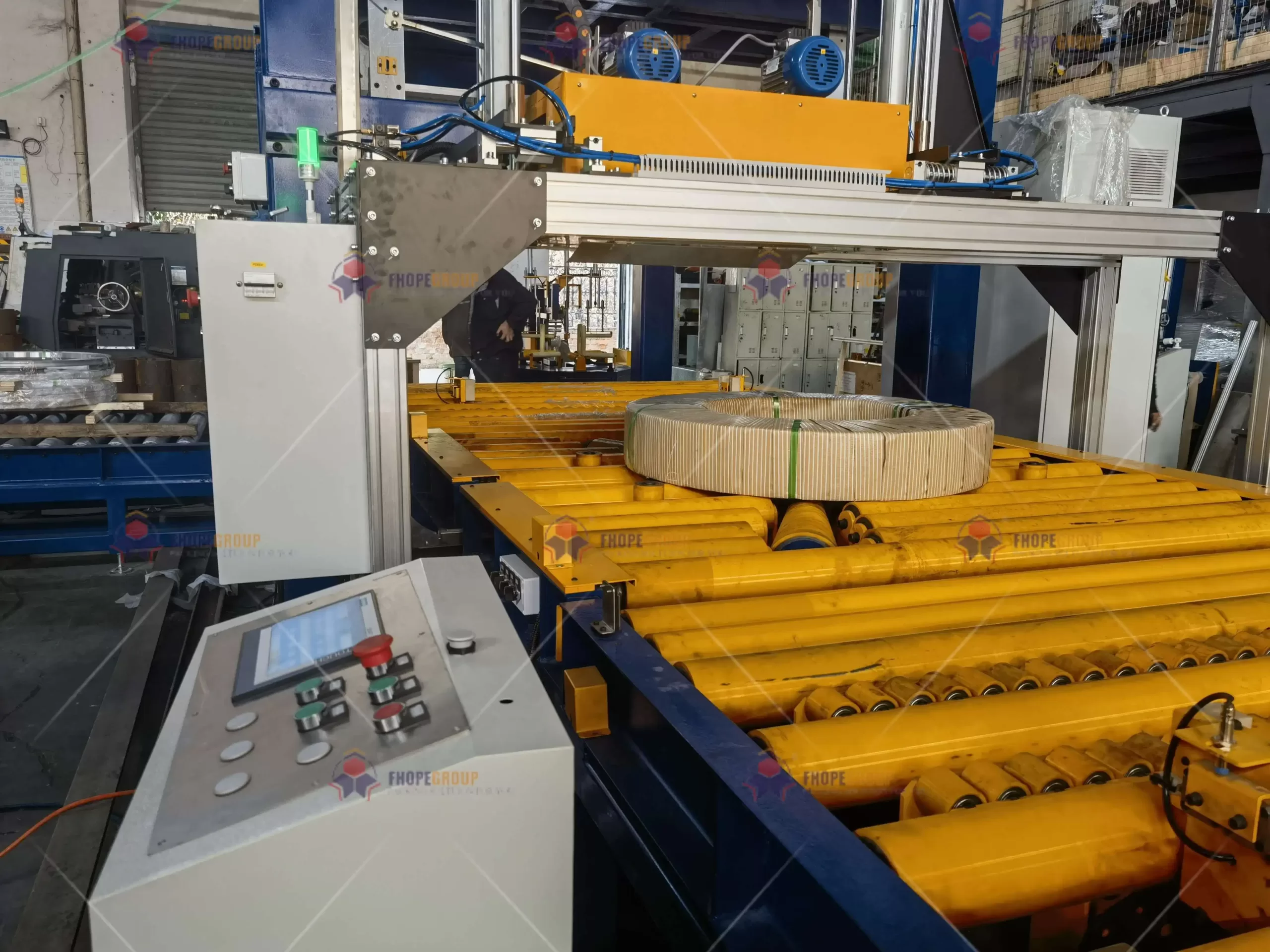
The biggest change you will notice with automation is the speed and consistency. Imagine a machine that can wrap and strap a heavy steel coil in a fraction of the time it takes a team of workers. This eliminates the bottleneck at the packing stage. Your production line can run continuously, without waiting for manual operations to catch up. This boosts your overall throughput and helps you meet tight delivery schedules. Plus, automation ensures every coil is packed to the same high standard, every time. There is no variation in tension, wrap count, or strap placement. This uniformity protects your product better, reducing damage and customer complaints. As the founder of FHOPEPACK, I built my factory by focusing on these exact improvements for my clients.
Automating for a Smarter, Safer Workplace
The impact of automatic packing machines goes beyond just speed. It is about creating a safer, more predictable, and more profitable environment.
- Boosted Productivity: Automated systems can operate continuously with minimal supervision. They handle high volumes quickly, which means you can process more coils in less time. This directly impacts your ability to take on more orders and scale your business.
- Significant Safety Improvements: This is a huge one. Automated machines take over the dangerous tasks.
- Reduced Manual Handling: No more manually lifting or turning heavy coils.
- Automated Strapping: Workers are kept away from the heavy-duty strapping process.
- Ergonomic Workflows: If human interaction is needed, it is designed to be safe and comfortable. This leads to fewer accidents, lower worker compensation claims, and a happier workforce. Jose (Michael) can directly address his high injury rates and rising insurance costs with these solutions.
- Cost Savings in the Long Run: While the initial investment might seem large, the return on investment (ROI) is clear.
- Lower Labor Costs: Fewer workers are needed for packing tasks.
- Reduced Product Damage: Consistent, secure packing means fewer damaged goods and fewer costly returns.
- Optimized Material Usage: Machines use packing materials efficiently, reducing waste.
- Increased Uptime: Reliable machines mean less downtime compared to injury-prone manual processes.








