
From Conveyor to Film Application: Inside a Horizontal Stretch Wrapper for Boards?
You might be running a busy factory. You probably deal with a lot of heavy items. Maybe these are long boards, metal profiles, or other large products. You need to pack them fast and safe. But what if your current way is slow? What if it uses too much manual work? What if workers get hurt? These problems slow you down. They cost you money. They can even make customers unhappy if products get damaged.
A horizontal stretch wrapper is a machine. It takes long items, like boards, from a conveyor. It then wraps them tightly with film. This machine makes packing faster. It makes it safer. It protects your products from damage. It does all this by moving the film around the item as it passes through.
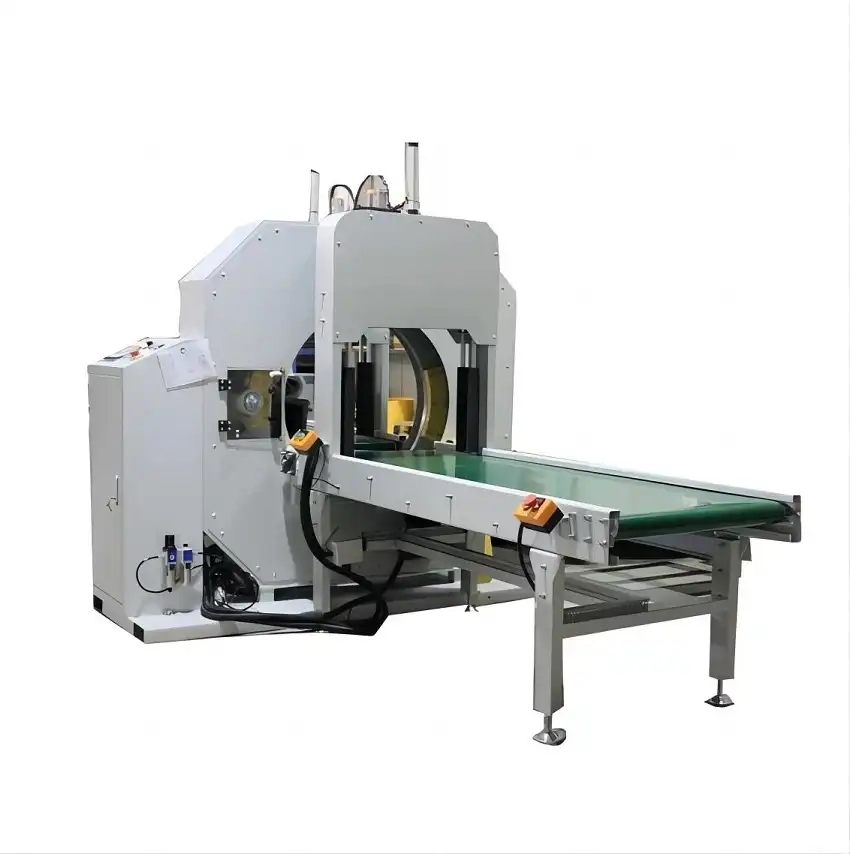
I have seen many factories struggle with these exact issues. I built my own packing machine factory. I know how important good machines are. I want to show you how a horizontal stretch wrapper works. We will look at each part of the machine. This will help you see how it can fix your packing problems. Let us start our journey. We will follow a board from the conveyor to the finished wrap.
The Conveyor System: Getting Boards Ready?
You have long boards coming off your production line. How do they get to the wrapping machine? This first step is very important. If it is not smooth, the whole process will be slow. It can also cause damage. Your current way might use people to move boards. This is hard work. It takes time. It also has risks.
The conveyor system moves boards into the horizontal stretch wrapper. It makes sure boards are in the right place. It brings them to the machine at the right speed. This prepares them for wrapping without human effort.
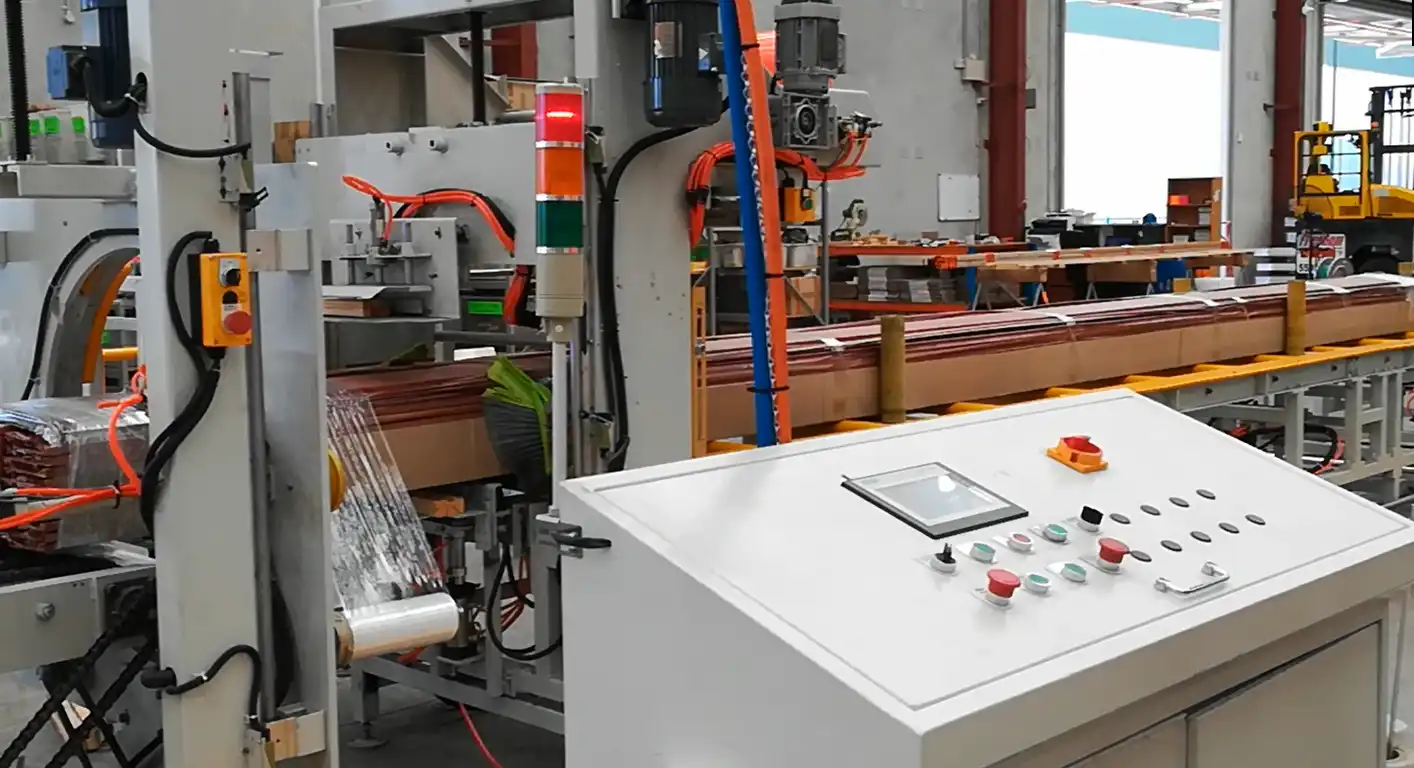
Let me tell you about the conveyor system. It is the start of the wrapping line. It guides your boards into the machine. This is critical for good wrapping. Different types of conveyors exist. You might use roller conveyors. Or you might use belt conveyors. For boards, roller conveyors are common. They can handle heavy loads. They move boards smoothly. The conveyor must match the board size. It must also match the weight. If a board is too long, the conveyor needs to be long enough. It must support the whole board. It also needs side guides. These guides keep the board straight. If the board is not straight, it might not wrap well. Or it might jam the machine.
The speed of the conveyor is also key. It needs to match the wrapping speed. If the conveyor is too fast, the machine cannot keep up. If it is too slow, the machine waits. Both cases waste time. Modern machines often have smart controls. They can change conveyor speed. They do this to match the wrapper. This makes the whole process efficient. This also stops boards from piling up. It prevents gaps between boards. I remember working in a factory years ago. We had issues with products piling up at the end of the line. This happened because the packing process was too slow. It created a big bottleneck. We needed more space. We needed more people. But the real problem was the manual packing. An automated conveyor system fixes this. It creates a smooth flow. It takes away the need for many people moving products by hand. This improves safety a lot. It also cuts down on product damage. When people lift heavy boards, they can drop them. Or they can hit them against things. A conveyor system avoids this. It also makes sure the board is clean. It does not get dirt from people’s hands or gloves. This first step, the conveyor, sets up the whole wrapping success. It is not just about moving. It is about careful handling. It is about smooth transition. It is about making the entire packing line work better. This leads to higher output. It leads to lower costs. It also makes your workers safer. They do not have to lift heavy boards anymore.
The Wrapping Ring: The Heart of the Process?
You have seen how boards get to the machine. Now, how does the wrapping happen? This is the core part of the machine. It is where the film meets the board. If this part does not work well, your product will not be protected. The film might tear. It might not stick. Or it might use too much film. This wastes money.
The wrapping ring is the central part of the horizontal stretch wrapper. It holds a roll of stretch film. This ring spins very fast around the board. As it spins, it wraps the film tightly around the board’s surface.
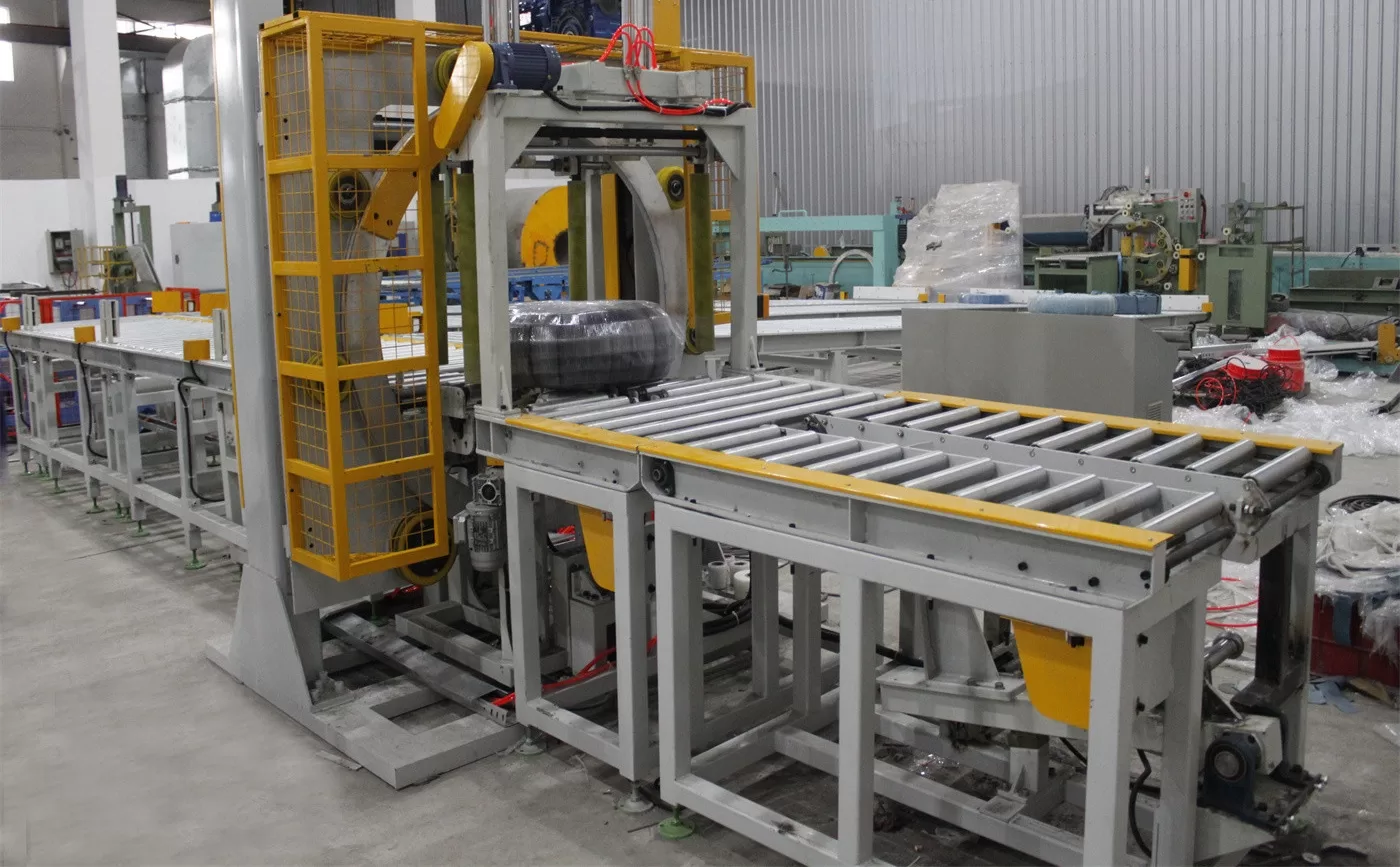
The wrapping ring is the main part of the machine. It is a large, circular ring. This ring has the stretch film roll on it. The board passes through the center of this ring. As the board moves forward, the ring spins very fast. It wraps the film around the board. This creates a tight, protective layer. The speed of the ring is important. The speed of the board is also important. These two speeds work together. They make sure the film overlaps correctly. If the ring spins too slow, the film might not cover enough. If it spins too fast, it might use too much film. It is a balance. The machine controls this balance. It makes sure you get good protection without waste.
The ring has a film dispenser. This part holds the film roll. It also has a pre-stretch unit. This unit is very important. It stretches the film before it touches the board. Why is this important? It makes the film stronger. It also makes you use less film. For example, if your film stretches 200%, you use one-third of the film for the same wrap. This saves a lot of money on materials. It also makes the wrap tighter. A tighter wrap means better protection. It means the board is less likely to shift. It is less likely to get damaged during shipping. The pre-stretch unit pulls the film. It stretches it by using rollers. These rollers turn at different speeds. The difference in speed causes the stretch. High-quality machines have good pre-stretch units. They can stretch the film a lot. This means more savings for you.
When I started my factory, I learned a lot about film. At first, we did not pay enough attention to film quality. We also did not understand pre-stretch fully. We used too much film. Our costs were higher than they needed to be. We fixed this by getting better machines. We also trained our team to understand film properties. This is why I stress that the wrapping ring is the heart. It does not just wrap. It wraps efficiently. It protects well. It makes sure your material costs are low. It gives you a strong, secure package. This keeps your products safe until they reach your customer. This means fewer complaints. This means more happy customers. It is a direct link to your factory’s profit.
Film Application and Tension Control: Perfect Protection?
Your boards are now passing through the spinning ring. The film is coming off the roll. But how does it stick? How does it make a tight wrap? If the film is too loose, it will not protect anything. If it is too tight, it might break. This step is about getting the film just right. This gives your products the best protection.
Film application is how the stretch film is put onto the board. Tension control manages how tightly the film wraps. Together, they make sure the film sticks well. They create a secure, protective layer around the boards.

Film application involves two main things: how the film contacts the product and how it releases. As the ring spins, the pre-stretched film leaves the dispenser. It then touches the surface of the board. The board keeps moving forward. So, the film lays down in a spiral pattern. The amount of overlap is important. Most machines allow you to set this. For example, you might want a 50% overlap. This means half of the new film layer covers half of the previous layer. More overlap means more protection. It also uses more film. Less overlap means less protection. It uses less film. You need to find the right balance for your product.
Then there is tension control. This is key for a strong wrap. Imagine pulling a rubber band. If you pull it too hard, it breaks. If you do not pull it enough, it is loose. Stretch film is similar. The machine needs to apply the right amount of tension. This tension helps the film conform to the shape of the board. It makes the film stick to itself. Modern horizontal wrappers have advanced tension control systems. They use sensors. They use motors. These parts adjust the film tension automatically. They do this even if the film roll size changes. Or if the board shape is not perfectly uniform. This ensures consistent wrap quality. It does this from the first board to the last. This matters for product safety. For example, steel coils can have sharp edges. If the film is not tight, those edges can cut through it. This exposes the product. It can lead to rust or damage. A good tension system prevents this. It makes sure the film stays put. It gives a strong barrier against dust, moisture, and impact.
Getting the film application and tension right is crucial. It directly affects how well your products are protected during shipping. It also impacts your film costs. A well-tuned system can save you a lot of money over time. It makes sure you use film efficiently. It also makes sure your products arrive in perfect condition. This reduces customer complaints. It builds trust. This is part of what Michael, the factory manager, looks for. He wants equipment that is reliable. He wants it to prevent product damage. Good film application and tension control help achieve this directly. They turn a simple roll of film into a strong, protective shield for your products.
Post-Wrapping: Handling and Output?
Your boards are now wrapped. What happens next? How do they leave the machine? How do you prepare them for storage or shipping? This final step is important. If handling is clumsy, it can undo all the good wrapping work. It can also create a new bottleneck. You want a smooth end to the process. You want to make sure your wrapped products are ready for their next step.
After wrapping, the horizontal stretch wrapper handles the cut and seal of the film. It then moves the wrapped board out of the machine. This final stage prepares the product for storage, transport, or further processing, ensuring a smooth flow from the machine.
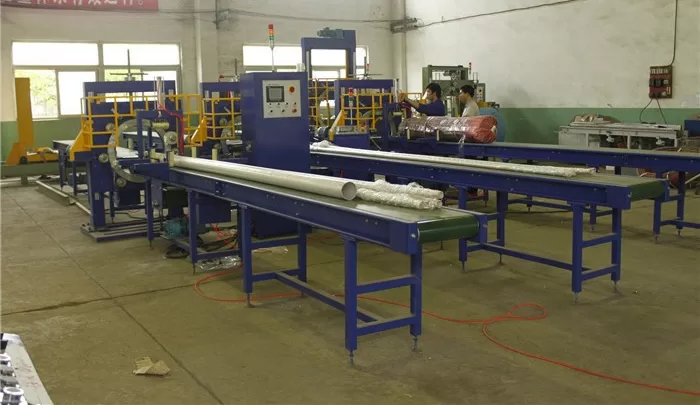
After the board is fully wrapped, the machine performs a few last steps. First, it cuts the film. This is done automatically. A cutting device, often a heated blade or a pneumatic cutter, cleanly separates the film. Then, the machine seals the film end. This keeps the wrap from unraveling. Many machines use a heat-sealing bar. This bar presses the cut end against the wrapped surface. The heat melts the film a little. It creates a strong bond. This ensures the wrap stays tight and secure. If the film is not sealed well, it can come undone. This exposes the product. It makes the whole wrapping process useless. So, the cutting and sealing must be precise.
Once the film is cut and sealed, the wrapped board needs to exit the machine. The conveyor system continues its work here. It moves the finished board away from the wrapping area. This clears the way for the next board. Sometimes, the conveyor might lead to another station. This could be for labeling. Or for stacking. Or for strapping. The flow needs to be continuous. This ensures high output. This is where automation really shines. It handles the finished product. It does this without manual lifting. It does this without manual moving. This greatly improves safety. Workers do not have to handle heavy wrapped bundles. It also speeds up the whole process. There is no waiting time for a forklift. There is no waiting for people to move things.
I have seen factories where products would pile up at the end of the line. The wrapping was fast. But getting the wrapped items out was slow. This created a new bottleneck. It wasted the speed of the wrapper. A good post-wrapping system makes sure this does not happen. It is designed to keep the flow going. This includes smart conveyor systems. It includes integration with other machines. For example, the wrapped boards could go straight to an automatic strapping machine. Or to a robotic stacker. This complete automation greatly increases productivity. It lowers labor costs. It reduces the chance of damage during final handling. This is critical for Michael. He wants to boost output. He wants to cut costs. An efficient post-wrapping process helps achieve both. It makes sure the investment in the wrapper pays off fully. It gets your finished product ready to go. It does this fast. It does this safely.
Conclusion
A horizontal stretch wrapper makes packing long boards easy. It uses a conveyor, a spinning ring, and smart film control. This machine cuts costs. It makes work safer. It protects your products well.
My insight
I started as an engineer in a packing machine factory. I saw how problems like manual handling and product damage affected businesses every day. I also learned that a machine is only as good as the support behind it. When I built my own factory, FHOPEPACK, I knew I wanted to do things differently. I did not just want to sell machines. I wanted to be a partner. I saw how clients like Michael, who are pushing for better ways, really need someone who understands their challenges. Someone who knows the pain of an inefficient line or a damaged product. My journey from an employee to a factory owner taught me this: real success comes from solving problems together. It comes from deep understanding. It comes from reliable solutions. This is why I share my knowledge. I want to help you achieve your goals, just like the packing machine industry helped me.








