
Entry-Level vs High-End Automatic Coil Packing Machines: Which is Right for Your Factory?
My experience in the packing machine industry has shown me a common challenge. Many factory managers, like Michael in Mexico, face immense pressure. They need to boost output, cut costs, and keep workers safe. Manual packing of heavy steel coils or wire coils is slow, dangerous, and often leads to product damage. You might be considering automation, but the range of options, from basic to advanced, can feel overwhelming. Choosing the wrong machine can mean wasted investment and continued headaches.
The main difference between entry-level and high-end automatic coil packing machines lies in their complexity, capacity, and feature sets. Entry-level machines offer fundamental wrapping functions for standard coils, focusing on cost-effectiveness and basic automation. High-end systems provide comprehensive, fully integrated solutions for diverse coil types, heavy-duty applications, high throughput, and advanced data-driven control, delivering superior efficiency, safety, and long-term value.
I understand the need for a solution that genuinely addresses your operational bottlenecks. It’s not just about buying a machine; it’s about making a smart investment. This guide will help you navigate the choices, understand the real value, and find a partner who truly understands your factory’s needs. Let’s explore these differences in detail so you can make the best decision for your business.
1. What defines an entry-level automatic coil packing machine?
Perhaps you’re just starting your automation journey, or your budget is tight. You see the promise of automatic packing, but the idea of a huge investment feels daunting. The problem is, you need to improve, but you might worry about overspending on features you don’t truly need right now. An entry-level machine could be the answer, offering a step up from manual processes without breaking the bank.
An entry-level automatic coil packing machine typically offers core wrapping functionality for common coil types, prioritizing affordability and ease of operation over advanced features or high-volume output. These machines usually have a simpler design, might require more manual assistance for loading or unloading, and are best suited for smaller production scales or less demanding packing requirements.
From my own factory days, I remember the constant drive to find cost-effective solutions that still made a difference. Entry-level machines are designed for just that. They focus on the essential task: wrapping your coils to protect them.
Key Characteristics of Entry-Level Coil Packers:
- Core Functionality: Their primary job is to apply wrapping material, like stretch film or woven strap, around a coil. They do this automatically, reducing the manual effort of hand wrapping. This is a big step up from fully manual operations.
- Simpler Design and Construction: These machines often have a less complex mechanical structure. They are built for lighter loads and less continuous operation compared to heavy-duty models. This keeps manufacturing costs down.
- Manual or Semi-Automatic Loading/Unloading: While the wrapping process itself is automatic, loading coils onto the machine and removing them after packing might still require manual intervention or the use of simple lifting equipment like forklifts.
- Lower Throughput: They are generally designed for moderate production volumes. If your factory in Mexico processes a few coils per hour, an entry-level model can handle it efficiently. They are not built for continuous, high-speed lines.
- Standard Coil Sizes and Weights: Entry-level machines work best with coils that fall within a defined, narrow range of dimensions and weights. They may not handle very large, very small, or unusually shaped coils effectively.
- Basic Control Systems: The control panel is usually straightforward, offering essential start/stop functions and basic parameter adjustments. You won’t find advanced diagnostics or connectivity options.
- Lower Initial Investment: This is often the biggest appeal. The upfront cost is significantly less than that of high-end systems, making automation accessible for businesses with budget constraints. However, it’s important to remember that lower initial cost can sometimes mean higher long-term labor costs or limited scalability.
These machines serve as a great starting point for factories that want to automate their packing processes without a huge capital outlay. They improve worker safety by reducing repetitive strain and offer better product protection than purely manual methods. However, it is crucial to understand their limitations, especially if your production needs are growing or if you deal with diverse or very heavy coils.
(Keywords: basic coil packing machine, affordable coil wrapper, small-scale coil packaging, manual assisted coil handling, cost-effective wire packing machine, entry-level automatic packer)
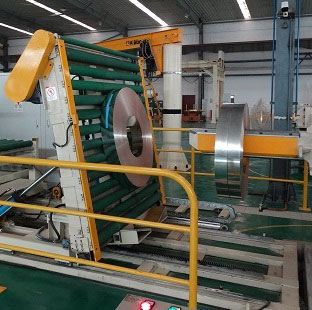
2. What sets high-end automatic coil packing machines apart?
You’re a factory manager like Michael, overseeing a busy metal processing plant. You know that downtime costs a fortune, and you need equipment that can handle extreme conditions day in and day out. The problem is, a cheap machine might save money now, but it could cost you dearly in breakdowns, wasted product, and safety incidents later. What if there was an investment that not only solved your immediate bottlenecks but also secured your plant’s future?
High-end automatic coil packing machines are distinguished by their robust construction, full integration into production lines, advanced automation features, high-speed capabilities, comprehensive safety systems, and sophisticated control technology. They are designed for heavy-duty, continuous operation, handling a wide range of coil sizes and weights with minimal human intervention, making them ideal for large-scale industrial applications requiring maximum efficiency and reliability.
When I built my packing machine factory, I learned the importance of reliability. For factories like yours, especially in heavy industries like steel processing, a high-end machine is not just a luxury; it is a strategic asset.
Distinguishing Features of High-End Coil Packing Systems:
High-end automatic coil packing lines represent the pinnacle of packaging technology. They are engineered to solve complex challenges and deliver superior performance.
1. Robust Engineering for Demanding Environments 🛠️
- Heavy-Duty Construction: Built with stronger materials and more robust components, these machines are designed for continuous, high-intensity operation in harsh industrial settings, such as steel mills or metal fabrication plants in Mexico. They can withstand heavy coil weights and prolonged use without frequent breakdowns.
- Durability and Longevity: The focus is on a long operational lifespan with minimal maintenance, leading to a lower total cost of ownership over many years. This directly addresses Michael’s need for durable equipment.
2. Advanced Automation and Integration ⚙️
- Full Automation: From coil feeding and centering to wrapping, strapping, and discharge, the entire process is automated. This dramatically reduces reliance on manual labor, improves speed, and enhances worker safety by removing them from hazardous areas.
- Seamless Line Integration: These systems integrate perfectly with upstream and downstream processes, such as slitting lines, weigh scales, banding machines, and conveyor systems. They become a smooth part of your overall production flow.
- Customization: High-end machines can be tailored to specific coil dimensions, weights, and production requirements. This includes handling diverse materials (steel, copper, aluminum) and various coil forms (slit coils, wire coils, pipe coils).
- Automatic Material Handling: Features like automatic coil loading/unloading, conveyor systems, and coil turners eliminate manual handling of heavy items, directly tackling safety concerns and improving efficiency.
3. Sophisticated Control and Monitoring 📊
- PLC Control with HMI: Advanced Programmable Logic Controllers (PLCs) and intuitive Human-Machine Interfaces (HMIs) allow for precise control over wrapping parameters, diagnostic monitoring, and recipe management for different coil types.
- Smart Features: Many high-end systems incorporate features like automatic material tension control, fault detection, remote monitoring, and even predictive maintenance capabilities, ensuring optimal performance and minimizing unplanned downtime.
- Data Reporting: They can generate detailed reports on production data, consumption of packing materials, and operational efficiency, providing valuable insights for process optimization.
4. Enhanced Safety and Product Protection 🛡️
- Comprehensive Safety Systems: Multiple safety interlocks, light curtains, emergency stop buttons, and guarded areas are standard, ensuring the highest level of worker safety. This is a critical factor for factory managers concerned about workplace injuries.
- Superior Product Protection: Precise wrapping tension, consistent overlap, and options for multiple layers of wrapping materials (e.g., stretch film, VCI paper, anti-rust film) ensure that products like steel coil edges are protected from damage during transit and storage. This reduces customer complaints and financial losses.
Companies like FENGDING are leaders in delivering these kinds of high-end, custom-engineered solutions. They understand the complexities of heavy industry and build machines that truly become an indispensable part of a highly efficient and safe operation. Investing in such a system is not just buying a machine; it is investing in the long-term profitability and safety of your factory.
(Keywords: advanced steel coil packaging line, heavy duty wire packing machine, fully automatic coil wrapping system, integrated packaging solution, high throughput coil packer, industrial packaging automation, Mexico heavy industry packing, custom packaging systems, packaging line safety features)
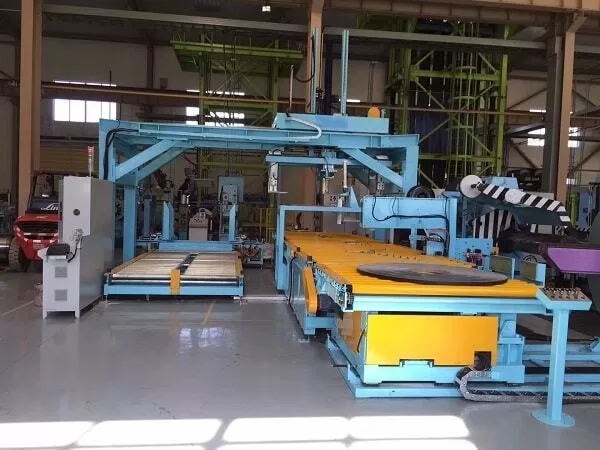
3. How do you choose the right coil packing machine for your factory’s needs?
The market offers so many choices. You want to automate, but you’re worried about making the wrong decision. Past experiences with unreliable suppliers left you cautious, and you need a solution that truly solves your specific problems. Choosing between entry-level and high-end isn’t just about price; it’s about aligning the equipment with your unique operational demands and strategic goals.
To choose the right automatic coil packing machine, you must thoroughly evaluate your factory’s specific production volume, coil dimensions and types, desired level of automation, available budget, spatial constraints, and long-term business objectives. It’s crucial to assess not only the machine’s capabilities but also the supplier’s reliability, after-sales support, and ability to provide expert guidance tailored to your operational challenges.
Through my years of building FHOPEPACK, I’ve seen countless factories struggle with this choice. The key is a systematic approach that looks beyond the initial price tag.
A Decision-Making Framework for Your Coil Packing Machine:
Consider these factors carefully to make an informed choice that brings real value to your operation, much like Michael’s plant in Mexico.
🎯 Step 1: Define Your Current and Future Needs
- Coil Specifications:
- What are the typical diameters, widths, and weights of your coils? Do you handle a wide range, or are they mostly standard?
- What material are they (steel, copper, aluminum wire, etc.)?
- Production Volume:
- How many coils do you pack per hour, shift, or day currently?
- What is your target production increase in the next 3-5 years?
- Do you need continuous operation or batch processing?
- Space Availability:
- How much floor space can you allocate for the packing line? Consider the machine’s footprint, loading/unloading areas, and buffer zones.








