

Coil Upender Price Research and Analysis: A Global Market Overview
I. Executive Summary
Coil upenders, integral to modern industrial material handling, play a crucial role in enhancing operational safety and efficiency by mechanizing the rotation of heavy coils. This report provides a comprehensive analysis of coil upender pricing, drawing from B2B platforms, manufacturer data, and regional market observations.
The investigation reveals that coil upender prices exhibit significant variability, primarily influenced by load capacity, type (mechanical, hydraulic, manual, automated), country of origin, and the extent of customization. Indicative price ranges demonstrate this diversity: units with less than 5 tons capacity can be sourced for as low as $850 to $8,000, while heavy-duty automated systems capable of handling 20 to 50 tons or more can command prices from $25,000 to over $70,000.1
A distinct characteristic of the market is a broad price continuum rather than sharply defined tiers. This is evident in the wide and often overlapping price ranges found on B2B platforms like Alibaba, where, for instance, a 5-ton unit might be listed anywhere from $1,000 to $10,000 depending on its specific features and manufacturer.1 This continuum underscores the varied manufacturing origins, technological sophistication, and customization levels available. Consequently, prospective buyers must meticulously define their operational requirements to navigate this market effectively, ensuring that investments align with needs without overspending on superfluous features or under-investing and risking future reliability issues.
Chinese B2B platforms generally feature lower indicative prices, with a broad spectrum from $1,000 to $40,000 depending on specifications, compared to US and European manufacturers who often provide quotes for higher-value, customized, heavy-duty solutions.1 The Indian market, as seen on platforms like IndiaMART, presents competitively priced options from local manufacturers.2
Key Chinese manufacturers, FHOPEPACK and SHJLPACK, feature prominently, offering a diverse range of coil upenders. FHOPEPACK provides specific model series (e.g., FPCT) with capacities from 2 to 50 tons, often accompanied by a 2-year warranty, and offers indicative price brackets based on automation levels.3 SHJLPACK details extensive customization capabilities for their mechanical and hydraulic units, with capacities also reaching 50 tons and beyond.4
It is crucial to acknowledge the substantial impact of ancillary costs—including shipping, installation, maintenance, and operator training—on the Total Cost of Ownership (TCO). These factors can significantly alter the long-term economic viability of a purchase and must be carefully considered beyond the initial acquisition price.
II. Introduction to Coil Upenders

Definition, Purpose, and Significance
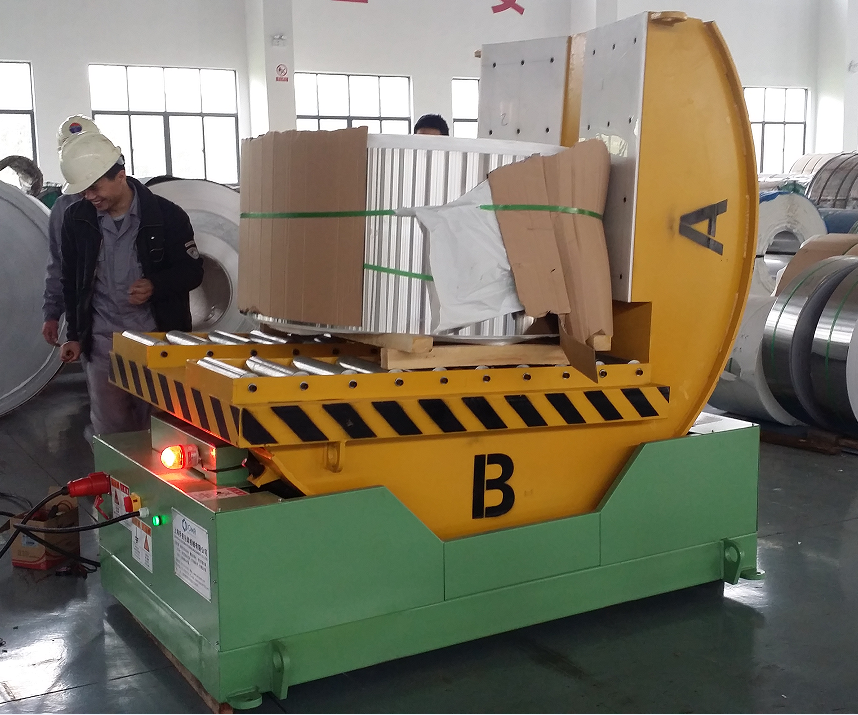
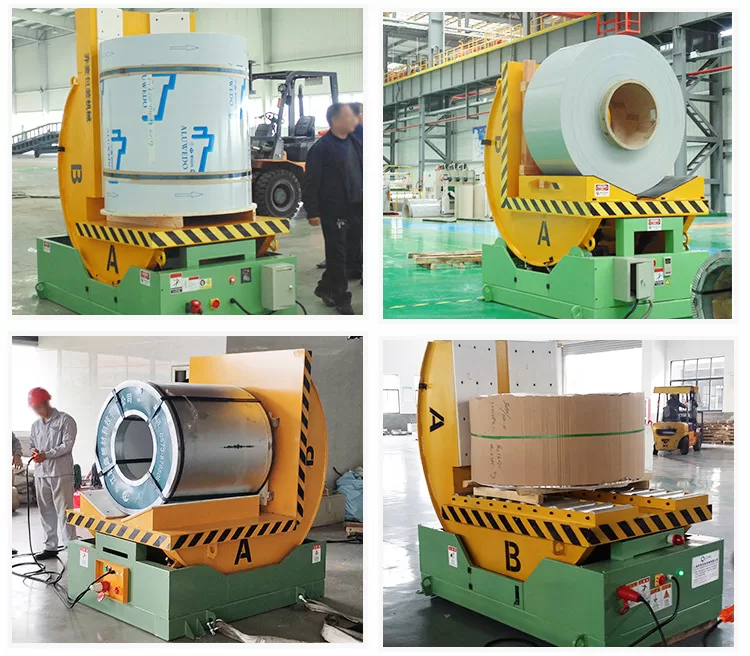
Coil upenders, also referred to as coil tilters or coil positioners, are specialized industrial machines engineered to safely and efficiently reorient coils of various materials, including steel, aluminum, copper, and paper.4 Their primary function is to rotate these coils, typically by 90 degrees, transitioning them from a horizontal (eye-to-sky) to a vertical (eye-to-horizon) position, or vice versa.5
The significance of coil upenders in modern industrial settings cannot be overstated. They are paramount in enhancing workplace safety by eliminating the need for hazardous manual handling techniques or risky maneuvers with overhead cranes when repositioning heavy and cumbersome coils.6 This mechanization directly contributes to a reduction in workplace accidents and injuries. Furthermore, coil upenders significantly boost operational efficiency in diverse industries such as metallurgy, stamping operations, paper manufacturing, coil coating, welded tubing lines, and metal slitting lines.7 By streamlining the coil handling process, these machines reduce cycle times and labor requirements, contributing to overall productivity gains.
The evolution of coil handling practices underscores the value of these machines. Historically, manual methods or less specialized equipment posed considerable risks and inefficiencies. The development of dedicated coil upenders, from basic manual units to sophisticated automated systems, reflects a broader industrial movement towards prioritizing safety, optimizing workflows, and minimizing reliance on manual labor for physically demanding and potentially dangerous tasks.8 While manual upenders retain a niche for smaller-scale or budget-conscious operations, the trajectory of market growth and product innovation is clearly directed towards enhanced automation, integration of smart technologies (such as those aligned with Industry 4.0 principles), and continuous improvement in safety systems.8
Overview of Common Types
Coil upenders are available in several distinct types, differentiated by their drive mechanisms, level of automation, and load capacities:
- Mechanical Upenders: These units are typically driven by electric motors coupled with gear reducers and robust chain and sprocket systems or screw mechanisms to achieve the tilting motion.9 They are often characterized by their durable construction and suitability for handling heavy loads. FHOPEPACK describes their mechanical upenders as durable, reliable, and versatile for various industrial applications.10 SHJLPACK notes that mechanical upenders offer a cost-effective and flexible solution for moving heavy coils.4 Manufacturers like Bushman Equipment provide mechanical upenders with capacities ranging from 3,000 to 100,000 pounds (approximately 1.3 to 45 tons) and can offer custom solutions for even higher capacities.11
- Hydraulic Upenders: These upenders employ hydraulic cylinders, powered by a dedicated hydraulic power pack, to provide smooth, controlled, and powerful tilting action.4 They are particularly well-suited for high-speed operations, applications involving very heavy or delicate coils, or where precise positioning is critical.10 FHOPEPACK highlights the efficiency and safety of their hydraulic systems under heavy loads 10, while SHJLPACK details extensive customization options for hydraulic components, including motors, cylinders, and flow controls.4
- Manual Upenders: These are the simplest type, operated by hand, often using levers or hand cranks. They are suitable for lighter coils and low-volume handling scenarios where the investment in powered equipment is not justified.3 While offering the lowest initial purchase price, they require more physical labor and time compared to powered alternatives. FHOPEPACK indicates price ranges for manual upenders handling 5–10 tons from $3,000 to $8,000.3
- Semi-Automatic and Fully-Automatic Upenders: This category encompasses upenders with varying degrees of automation. Semi-automatic units typically feature push-button controls for powered tilting, while fully-automatic systems are often PLC (Programmable Logic Controller) driven, incorporating sensors for coil detection, automated cycle sequences, and the capability to integrate with other material handling systems like conveyors or coil cars.3 Increased automation translates to higher initial costs but offers significant benefits in terms of throughput, operational consistency, reduced labor requirements, and enhanced safety. FHOPEPACK provides indicative pricing for fully automated upenders (20–50 tons) starting from $25,000 and potentially exceeding $50,000 for highly customized or very high-capacity units.3
- Capacity-Based Categorization: Beyond the drive mechanism and automation level, upenders are also broadly categorized by their load-bearing capacity. These can be grouped as:
III. Key Factors Influencing Coil Upender Pricing
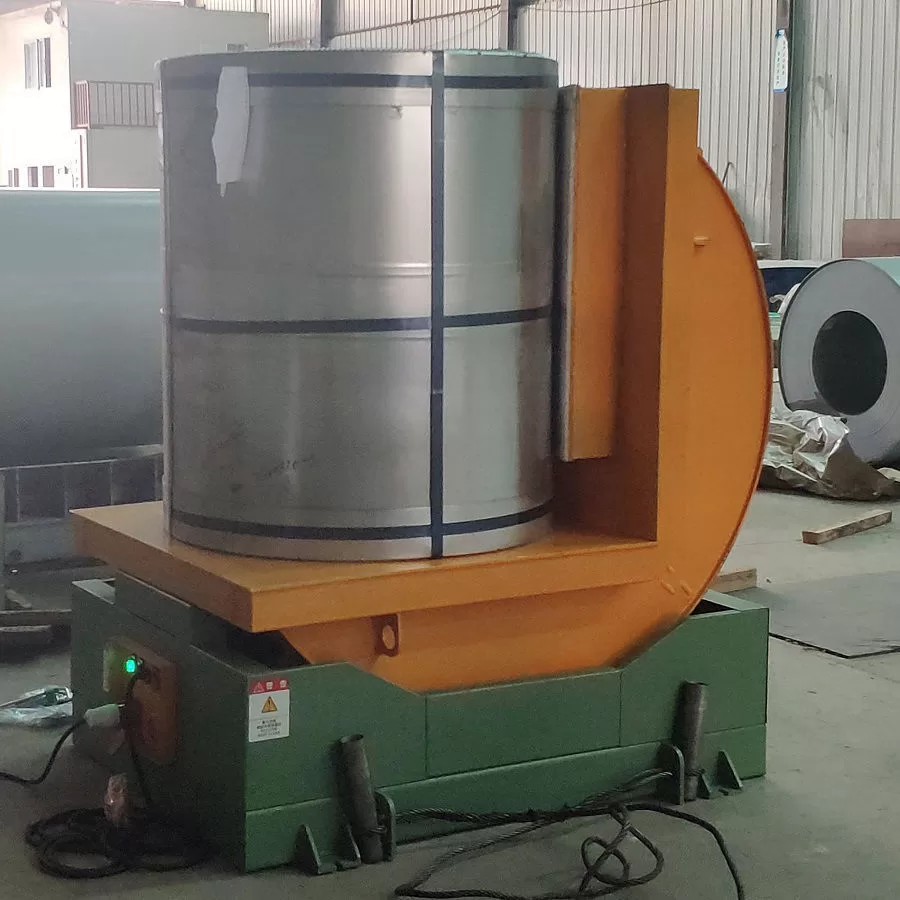

The price of a coil upender is not a singular figure but is determined by a confluence of technical, manufacturing, and market-related factors. Understanding these elements is crucial for buyers seeking to make informed procurement decisions.
- Load Capacity and Coil Dimensions: This is arguably the most significant determinant of price. Upenders designed to handle higher tonnage and larger coil diameters or widths necessitate more robust structural engineering, stronger materials, more powerful drive systems (motors, gearboxes, hydraulic components), and larger platforms or cradles.5 FHOPEPACK explicitly states that higher capacities demand sturdier structures, which directly increases manufacturing costs.3 Similarly, SHJLPACK notes that the drive motor specifications, overall machine structure, and chain or hydraulic system ratings vary significantly with the weight of the coil to be handled.12
- Type and Drive Mechanism: The choice between mechanical and hydraulic drive systems influences cost. While both can be engineered for heavy-duty applications, hydraulic systems, with their power units, cylinders, and precision control valving, may carry a premium for similar basic capacities, especially when high speed or very smooth motion is required.10 However, heavy-duty mechanical systems for very high capacities also involve substantial engineering and component costs.
- Level of Automation: A clear price hierarchy exists based on the degree of automation. Manual upenders represent the lowest cost bracket. Semi-automatic upenders, incorporating basic powered controls, are priced higher. Fully-automatic systems, which can include PLCs, HMIs (Human-Machine Interfaces), advanced sensor arrays for coil detection and positioning, and integration capabilities with broader factory automation systems (like MES/ERP), command the highest prices due to the complexity of the control systems and software involved.3 FHOPEPACK provides distinct price brackets illustrating this: Manual (5–10 tons): $3,000–$8,000; Semi-Automatic (10–20 tons): $10,000–$20,000; Fully Automated (20–50 tons): $25,000–$50,000+.3
- Material Quality and Construction Standards: The quality of materials used in construction—such as high-grade structural steel, precision-machined components, durable bearings, and hardened rollers—along with the standard of manufacturing processes like welding and finishing (e.g., corrosion-resistant coatings) directly impacts both the cost and the longevity and reliability of the upender.10 FHOPEPACK notes that lower-priced coil upenders may utilize lightweight or lower-grade materials, potentially compromising long-term durability, whereas higher-end models feature industrial-grade steel and advanced coatings.13
- Customization and Special Features: Standard, off-the-shelf models are generally less expensive than customized units. Tailored designs to accommodate unique coil shapes or sizes, specific tilt angles beyond the standard 90 degrees (e.g., 180-degree inverters or units with 360-degree base rotation), specialized work table configurations (such as V-saddles for coils, flat tables for molds, fork-style tables for integration with forklifts, or powered conveyorized tables), integration with existing production lines, and specific control system requirements will invariably add a premium to the price.10 FHOPEPACK estimates that adding features like extended tilt angles (e.g., up to 135 degrees) can increase the price by 10-20%, while custom-designed platforms for unique coil shapes might add another 15-25% to the base cost.3
- Country of Origin and Manufacturer Reputation: There is a discernible price difference based on the country of origin. Equipment manufactured in regions with higher labor costs and potentially more stringent regulatory environments, such as the USA and parts of Europe, often carries a higher price tag compared to machinery from China or India.1 This price differential also reflects investments in research and development, the perceived quality of engineering, and the comprehensiveness of after-sales support. The reputation and experience of the manufacturer also play a role; established brands with a proven track record (e.g., FHOPEPACK highlighting 15 years of experience 14) can command higher prices due to increased buyer confidence in product reliability and support.
It is observable that “Country of Origin” often serves as an initial indicator for a bundle of other attributes including material quality, engineering standards, labor costs, and expectations for after-sales service, all of which collectively influence the final price. For example, US manufacturers like Green Valley and Bushman emphasize robust, domestically-made construction, with pricing typically provided “by quote,” suggesting higher, customized values.11 Conversely, B2B platforms like Alibaba feature numerous lower-priced options, predominantly from Chinese manufacturers.1 However, it’s important to note that even within a traditionally “lower-cost” manufacturing region like China, there is price stratification based on quality. Companies such as FHOPEPACK explicitly state that their higher-end models use superior materials and construction techniques, which come at a premium compared to basic offerings that might compromise on durability.3 This indicates that while the country of origin provides a general price expectation, the specific manufacturer’s commitment to quality standards and the bill of materials are more direct causal factors for price variations. Buyers, therefore, should not rely solely on the country of origin as a proxy for price or quality but must investigate specific manufacturer standards, material specifications, and component quality, especially when comparing quotations.
- Safety Features and Regulatory Compliance: The inclusion of comprehensive safety features—such as emergency stop buttons, maintenance lockout systems, safety scanners or light curtains to detect intrusion into hazardous zones, overload protection mechanisms, and fail-safe braking systems—adds to the manufacturing cost.4 Compliance with recognized safety standards (e.g., CE marking in Europe, adherence to OSHA guidelines in the USA) also influences design and component selection, thereby affecting price. These features, while increasing cost, are crucial for operational safety, risk mitigation, and often, regulatory compliance.
| Table 1: Key Factors Influencing Coil Upender Prices and Their Typical Impact | Factor | Description of Influence | Typical Price Impact |
|---|---|---|---|
| Load Capacity (Tonnes) | Higher capacity requires more robust materials, larger components, and more powerful drive systems. | High to Significant | |
| Coil Dimensions (OD, Width) | Larger dimensions necessitate larger platforms/cradles and potentially more complex handling mechanisms. | Medium to High | |
| Automation Level | Manual is lowest cost; semi-automatic is mid-range; fully-automatic (PLC, sensors, integration) is highest. | High to Significant | |
| Drive Mechanism | Hydraulic systems may have a premium for precision/power; heavy-duty mechanical also involves significant engineering. | Medium | |
| Material & Build Quality | High-grade steel, precision components, and superior welding/finishing increase cost but enhance durability/reliability. | Medium to High | |
| Customization | Tailored designs, special features (e.g., >90° tilt, custom tables, integration) add engineering and manufacturing costs. | Medium to Significant | |
| Country of Origin | Higher labor costs and stricter standards in some regions (e.g., USA/Europe) often lead to higher prices than others (e.g., China/India). | Medium to High | |
| Manufacturer Reputation | Established brands with proven track records and strong support may command a premium. | Low to Medium | |
| Safety Features & Compliance | Advanced safety systems (scanners, interlocks) and adherence to standards increase design and component costs. | Medium |
IV. Coil Upender Price Analysis by Market Segment

The coil upender market exhibits distinct pricing patterns when segmented by load capacity, type of upender, and geographical region of manufacture or sale.
A. Pricing by Load Capacity
- <5 Tons (Low Capacity): This segment represents the entry-level for powered upenders and includes many manual options. Prices on B2B platforms like Alibaba for units in this range can start from as low as $850 for very basic repositioning devices to around $5,000 for more complete 3-5 ton mechanical upenders.1 FHOPEPACK’s pricing for manual models handling 5–10 tons (which overlaps this category at the lower end of tonnage) starts at $3,000 and goes up to $8,000.3 Cherry’s Industrial offers “Economy Upenders” starting with a 2,000 lb (approx. 0.9 ton) capacity.9 On IndiaMART, a 5-ton Pacman tilter is listed at approximately ₹1,07,000 (around $1,289 USD).2
- 5–10 Tons (Medium-Low Capacity): Prices in this segment begin to overlap with higher-spec low-capacity units but extend further upwards as features and robustness increase. FHOPEPACK’s manual upenders for this capacity are priced between $3,000 and $8,000.3 On Alibaba, 5-ton units can range from $3,000 to $10,000, while 10-ton units are seen from $6,000-$7,000 for simpler mechanical versions, but can reach $35,000-$40,000 for hydraulic 10-ton models with more features.1 Indian manufacturers on IndiaMART list 10-ton upenders for around ₹2,00,000 (approximately $2,410 USD), likely for basic configurations.2
- 10–20 Tons (Medium-High Capacity): This segment sees a greater prevalence of semi-automatic and more robust hydraulic systems. FHOPEPACK quotes $10,000–$20,000 for semi-automatic upenders in the 10–20 ton range.3 As noted, 10-ton hydraulic upenders on Alibaba can reach up to $40,000.1 Manufacturers like SHJLPACK offer 15-ton and 20-ton models, with pricing available upon quotation.4 US manufacturers like Green Valley Manufacturing also offer units in this range (e.g., 15,000 lb and 20,000 lb models), with prices typically provided by quote.15
-
20 Tons (Heavy Duty/High Capacity): This segment is dominated by robustly engineered mechanical or hydraulic systems, often with significant automation and customization. FHOPEPACK prices fully automated upenders for 20–50 tons from $25,000 to $50,000+, with potential for higher prices based on specific requirements.3 Listings for hydraulic steel coil upenders on Alibaba can go as high as $70,000 for very large capacities.1 SHJLPACK offers standard models up to 50 tons and custom designs beyond that.4 Green Valley Manufacturing features a 30,000 lb (approx. 13.6 tons) model and can build higher capacity units.16 Bushman Equipment is a notable US manufacturer offering standard capacities up to 100,000 lbs (45 tons) and custom-engineered solutions up to 200 tons.11 On IndiaMART, a 50-ton coil upender is listed at ₹30,00,000 (around $36,145 USD), while a 35-ton unit is listed at a surprisingly low ₹2,10,000 (around $2,530 USD), which may represent a very basic model or require verification.2
B. Pricing by Type
- Mechanical vs. Hydraulic: Direct price comparison is complex as it depends on capacity, automation, and build quality. For similar basic specifications, hydraulic systems may command a premium due to the cost of the hydraulic power unit, cylinders, and precision control components. However, heavy-duty mechanical systems for high capacities also involve significant engineering and robust componentry. FHOPEPACK 10 and SHJLPACK 4 offer both types, allowing customers to choose based on application needs. On Alibaba, a 10-ton hydraulic upender might be $35,000-$40,000, whereas a simpler mechanical 10-ton unit could potentially be found in the $6,000-$10,000 range if automation is minimal.1 The distinction often blurs at very high capacities or with extensive automation, where the overall system complexity drives the cost.
- Manual vs. Automated: There is a clear price stratification based on the level of automation.
- Manual: $3,000–$8,000 (for 5–10 ton capacity, according to FHOPEPACK).3
- Semi-Automatic: $10,000–$20,000 (for 10–20 ton capacity, FHOPEPACK).3
- Fully-Automatic: $25,000–$50,000+ (for 20–50+ ton capacity, FHOPEPACK).3 This trend is consistently observed across various sources and reflects the added cost of control systems, sensors, programming, and integration.13












