
Coil Packing Line in Egypt: Can Smart Controls Reduce Operational Risks?
Steel mills, especially in vibrant industrial regions like Egypt, face immense pressure. Keeping up with global demand means constant, high-volume production. But what happens when your coil packing line struggles? Downtime, inconsistent quality, and critical safety incidents are not just possibilities; they are very real threats that can disrupt your entire operation. These issues hurt your bottom line. They lead to customer complaints, missed deadlines, and even significant financial penalties. Relying on outdated or heavily manual packing methods introduces too many variables, too many risks. You need more than just robust machines; you need predictability and certainty in your production. What if you could transform your coil packing operation into a lean, predictable powerhouse? What if smart technology could foresee problems and adapt to changes, drastically cutting down on those nagging operational risks?
I believe smart controls are not just an upgrade; they are essential for modern coil packing lines in places like Egypt. These intelligent systems actively monitor, adjust, and predict, directly addressing critical operational risks. They ensure consistent quality, enhance safety, and optimize resource use, making your entire packing process far more reliable. This leads to higher efficiency and better compliance with international standards.
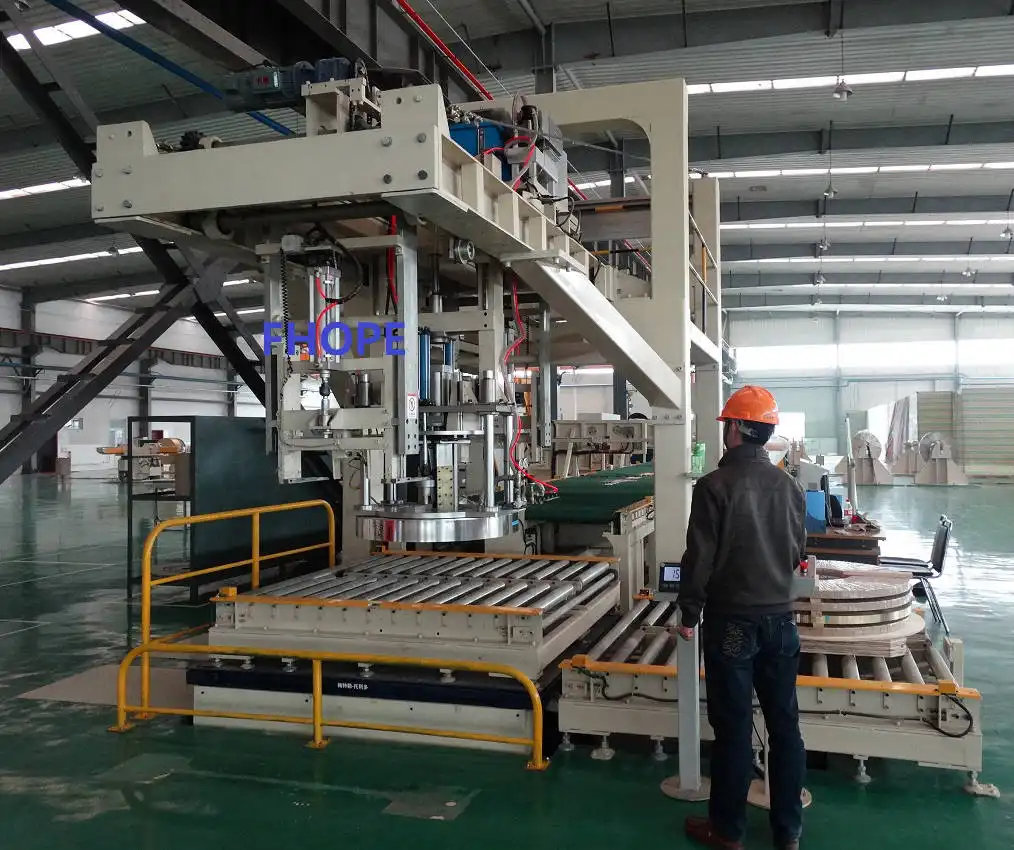
My journey from a packing machine factory employee to the founder of FHOPEPACK taught me one thing: the best solutions are the ones that truly solve problems, not just mask them. I learned this by seeing firsthand the challenges our clients faced. If you are struggling with operational risks in your steel coil packing, stay with me. We will explore how smart controls change the game. We will see how they turn challenges into clear advantages for your business.
Why Are Traditional Coil Packing Methods Still a Risk in Modern Steel Mills?
Manual processes often seem simple. They might suggest lower initial investment. However, are you truly counting the full costs of inconsistent output, frequent reworks, and potential injuries? These hidden expenses quickly add up. They often outweigh any perceived savings. Ignoring these risks means putting your production, your workers, and your reputation on the line.
Traditional coil packing methods rely heavily on human intervention. This introduces variability in tension, alignment, and material handling. Such methods are prone to errors, lead to inconsistent package quality, and significantly increase the risk of workplace accidents. They cannot keep pace with modern production demands, making them a significant operational risk.
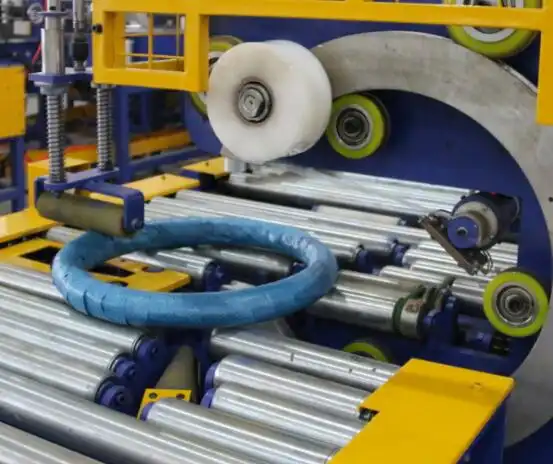
Traditional methods often create more problems than they solve in a high-demand environment. I have seen this many times throughout my career. These problems directly impact profitability and safety.
- Human Error and Inconsistency 👷♂️: Manual strapping and wrapping depend on the operator’s skill and attention. This means uneven tension. It leads to loose coils during transport. The film tension can be off. This causes material damage from moisture and dust. I remember early in my career, seeing perfectly good coils returned because a worker was tired or rushed. The manual strapping was uneven. The film tension was off. It was frustrating for everyone involved. Such inconsistencies result in customer complaints, returns, and even contract penalties. This directly impacts export requirements, such as CE or ISO certifications, which demand precise and consistent packaging quality. Manual operations simply cannot guarantee this level of consistency over long shifts.
- Safety Hazards and Labor Shortages ⚠️: Handling heavy steel coils manually is dangerous. It involves cranes, forklifts, and direct human manipulation of massive loads. This leads to high accident rates, including crush injuries, strains, and falls. Working in these conditions takes a toll. Many younger workers do not want these jobs anymore. I have seen firsthand how easily an accident can happen when heavy loads are moved by hand. This problem becomes worse with labor shortages. Factories struggle to find enough skilled workers willing to do this high-intensity, risky work. This dependence on manual labor makes the entire operation vulnerable.
- Lack of Adaptability to Product Diversity 🔄: Modern steel mills produce a wide range of products. These include cold-rolled, galvanized, and color-coated coils. Each type has different packaging needs. Traditional setups struggle with this diversity. Manual adjustments for varying coil diameters, weights, and packaging styles are time-consuming. They are also prone to errors. This directly relates to the challenge of “product diversification.” It slows down changeovers and reduces overall throughput. It creates bottlenecks in the packing area, especially when multiple customer specifications must be met daily.
- Hidden Costs and Inefficiency 💸: Beyond labor, traditional methods carry many hidden costs. These include excessive packaging material waste due to inconsistent application. There are costs from frequent quality checks and reworks. There are also potential penalties for late or damaged shipments. These costs often go unnoticed until they become a major financial drain. The slow pace of manual operations reduces overall line efficiency. It limits the factory’s capacity. It restricts its ability to meet growing market demands.
How Do Smart Controls Address Diversity and Inconsistency in Coil Packaging?
You face a complex mix of products every day. Each coil has unique needs. Your customers demand perfection. How do you keep up with all these changes without sacrificing speed or quality? How do you ensure every package meets the highest standard, every time? This is a core challenge for any modern steel mill.
Smart controls in coil packing lines provide unparalleled adaptability. They automatically detect coil specifications, adjust machine parameters in real-time, and ensure consistent application of packaging materials. This eliminates human error in material handling and drastically improves packaging quality across diverse product ranges. It guarantees precision that manual methods cannot match.
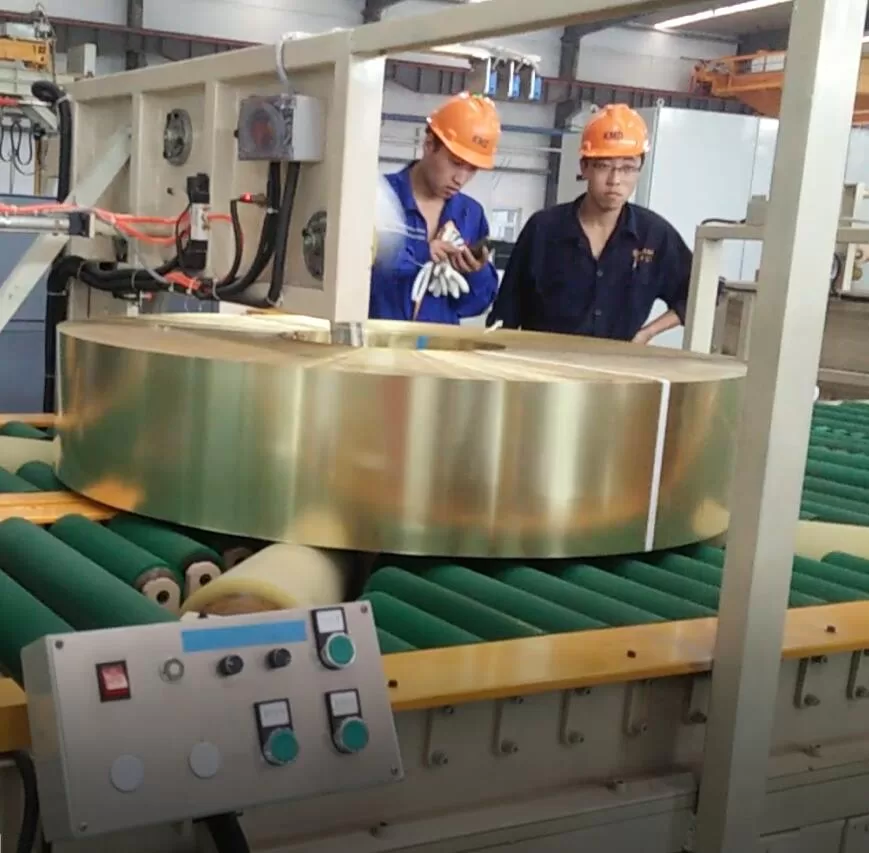
Intelligent systems offer a pathway to overcome these hurdles. They bring precision and flexibility to your operations. They ensure every coil leaves your facility perfectly packed.
- Automated Parameter Adjustment ⚙️: Smart controls use advanced sensors. These sensors measure coil weight, diameter, and width. This data feeds directly into the programmable logic controller (PLC). The system then automatically selects the correct program for strapping (PET or steel), wrapping (stretch or shrink film), and labeling. At FHOPEPACK, we designed systems that recognize the coil as it enters. It knows if it is a 1-ton cold-rolled coil or a 3-ton galvanized one. The machine adapts instantly. This addresses the challenge of “product diversity” where “manual switching is tedious.” It ensures the correct packaging for each product type, removing any guesswork.
- Precision and Consistent Quality ✅: Smart controls maintain exact tension for both strapping and wrapping materials. This ensures a tight, secure package every time. It prevents loose bundles that can shift during transport. It also protects against moisture, rust, and scratches. Consistent tension is key. Manual methods just cannot match the precision of a well-calibrated smart system. This means fewer returns and happier clients. This directly tackles “packaging quality instability.” It ensures that packaging for export customers consistently meets rigorous CE/ISO certification requirements. The precise application also prevents material damage to the coil itself.
- Data Collection and Traceability 📊: Smart systems log every packaging parameter for each coil. This creates a detailed digital record. This record is vital for quality control, audits, and troubleshooting. Barcode application can be fully integrated. This allows for complete traceability from the packing line to the final destination. Knowing exactly how each coil was packed is powerful. It allows you to prove compliance and quickly address any issues. This supports the need for “adding barcodes” and ensuring “strict moisture protection.” This data also helps in optimizing packaging processes over time, identifying trends, and improving efficiency.
- Reduced Material Waste and Cost Savings 📉: By precisely applying packaging materials, smart controls minimize overuse. They ensure only the necessary amount of film or strapping is used for each coil. This saves significantly on consumables. It directly impacts operational costs. Less waste means a lower carbon footprint. This also improves your environmental profile. This precision contributes to the overall reduction in comprehensive costs. It shows a clear return on investment.
Can Automation and Smart Systems Truly Improve Worker Safety and Reliability?
Your team’s safety is non-negotiable. High-stress, physically demanding jobs lead to fatigue and accidents. You also need your machines to run non-stop. How can you protect your workers while ensuring continuous operation, especially in a 24/7 production environment? This is a critical balancing act for any production director.
Automation, driven by smart controls, fundamentally transforms workplace safety in coil packing. It removes workers from hazardous areas by automating heavy lifting, turning, and precise packaging tasks. Beyond safety, these systems offer predictive maintenance features, greatly enhancing machine reliability and uptime for 24/7 operations. They create a safer, more stable work environment.
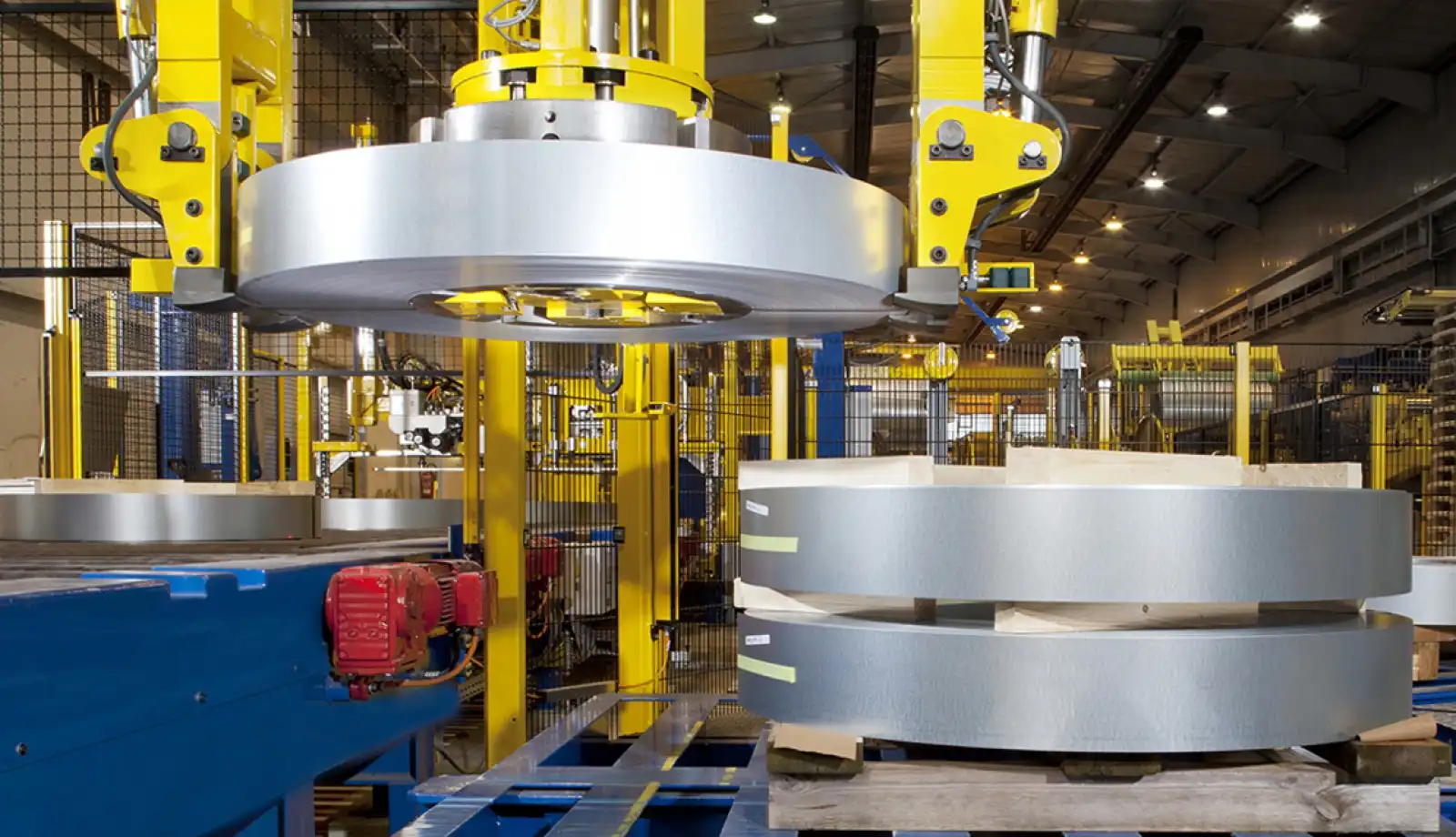
My experience has shown that true efficiency cannot exist without safety. Smart systems make both possible. They create a more secure and productive environment for everyone.
- Eliminating Manual Handling Risks 🚫: Automated systems take over the most dangerous tasks. These include coil lifting, tilting, and precise positioning. This dramatically reduces the risk of crush injuries, strains, and falls. I have seen too many close calls with manual coil handling. An automated system makes the workshop a much safer place. It is a relief for the workers and for management. This directly addresses the goal to “ensure safe production” and “reduce accident rates.” Workers are moved away from heavy, moving machinery, lessening their exposure to hazards.
- Predictive Maintenance and Diagnostics 🛠️: Smart controls continuously monitor machine performance. They use sensors to track temperatures, vibrations, and other operational data. They can detect early signs of wear or malfunction. This allows for proactive maintenance. It prevents unexpected breakdowns. A machine that tells you it needs attention before it breaks down is invaluable. It keeps production moving. It avoids costly emergency repairs. This speaks directly to the need for “equipment reliability and continuous working ability” in a 24-hour, two-shift production environment. This prevents costly interruptions.
- Ergonomics and Reduced Strain 💪: By automating repetitive and strenuous tasks, smart systems significantly reduce physical strain on workers. This helps retain skilled staff. It also improves overall morale. Happy workers are productive workers. Taking away the most physically demanding parts of the job makes a big difference in retaining skilled staff. It helps combat “young worker turnover.” Workers can then focus on supervision and problem-solving, which are less physically demanding roles. This enhances their overall job satisfaction.
- Integrated Safety Features 🛑: Modern smart systems include advanced safety interlocks, emergency stops, and access control. These features ensure that machines operate only under safe conditions. They prevent accidental startups. They also restrict access to moving parts during operation. This enhances overall workshop security. The system can detect when a worker is too close to a moving part and automatically pause operations. This proactive safety approach is vital in preventing serious accidents and ensuring compliance with stringent safety regulations.
What Does a Turnkey Smart Coil Packing Line Offer for Long-Term Growth in Egypt?
You are investing in your future. You need a solution that goes beyond just a machine. You need a partner who understands your long-term goals. You want to see your business grow, not just survive. This strategic vision requires a comprehensive approach and reliable support.
A turnkey smart coil packing line offers a complete solution for long-term growth, especially in dynamic markets like Egypt. It provides end-to-end automation, optimized processes, and integrated support, leading to significant cost reductions, improved throughput, and a sustainable competitive advantage. This partnership approach ensures your operation remains at the forefront of the industry.
At FHOPEPACK, we believe in building relationships. We help clients achieve sustainable success. A comprehensive solution means more than just machinery. It means peace of mind and future-readiness.
- Comprehensive Automation and Integration 🔄: A turnkey solution means a fully integrated system. It covers everything from coil handling and orientation to strapping, wrapping, labeling, and even stacking. When I help clients, I always emphasize the “full picture.” A turnkey solution means all parts work together seamlessly. It is not just about one machine; it is about the entire flow. This aligns with the goal for a “full automatic Coil Packing Line.” It eliminates bottlenecks between different stages. It ensures a smooth and efficient production flow, maximizing throughput.
- Reduced Operational Costs and Increased Efficiency 💲: Automation drastically cuts labor costs by reducing the need for multiple operators. It also minimizes material waste. It lowers energy consumption through optimized processes and smart scheduling. My own factory saw significant cost savings once we streamlined our operations. Less waste, fewer people needed for repetitive tasks. It directly impacts your bottom line. This tackles the goal to “reduce overall costs.” Increased efficiency means higher production capacity without increasing factory footprint or staff. This makes the operation much more profitable.
- Scalability and Future-Proofing 📈: Smart systems are often modular and programmable. This allows for easy upgrades and adaptations as production needs evolve. It future-proofs the investment. Markets change. Customer demands change. Your packing line must change with them. A smart, modular system means you are ready for whatever comes next. It is a long-term investment. This supports a long-term vision. It ensures that the packing line can handle new product types or higher volumes as the business grows, protecting the initial investment.
- Long-Term Partnership and Support 🤝: A reputable turnkey provider offers complete installation, extensive training for your staff, and long-term after-sales support. This includes spare parts availability, proactive maintenance advice, and rapid technical assistance. My experience with FHOPEPACK has always been about partnership. We do not just sell machines; we support your success. This is crucial for operations in places like Egypt, where reliable support is vital for continuous operation. This perfectly matches the goal of “seeking long-term partners.” This ongoing support ensures the packing line operates at peak performance for years to come.
Conclusion
Smart controls in a coil packing line are a game-changer for steel mills. They tackle critical operational risks by ensuring quality, boosting safety, and optimizing costs. From my years in the industry, I know these intelligent systems are not just an investment; they are a strategic move. They secure your future by making your operations predictable, efficient, and truly reliable, wherever your factory is located.








