
Can Orbital Stretch Wrapper Reduce Product Damage in Malaysia’s Logistics?
Malaysia’s logistics sector faces tough challenges. Factories in places like Johor and Selangor often handle heavy, bulky goods, like steel coils or wire bundles. Manual packing is a common practice, but it leads to problems. Products get damaged. Delivery times slow down. I have seen this happen countless times. This not only hurts your bottom line but also damages your reputation with clients. Think about the sharp edges on a steel coil. If not packed right, they can easily get scratched or dented during transport. This means you end up with rejected goods and wasted materials. What if there was a better way? A system that could protect your products, speed up your processes, and make your factory safer all at once?
Yes, an orbital stretch wrapper can greatly reduce product damage in Malaysia’s logistics. This machine wraps products tightly and uniformly, creating a strong protective layer. It prevents scratches, dents, and other damage during handling, storage, and transport. This is especially true for long or oddly shaped items like pipes, timber, or metal coils, common in Malaysian industries.

Many factory managers, just like Michael Chen in Mexico, grapple with these exact issues. They want to protect their products and improve their operations. Understanding how orbital wrappers work and where they fit into your logistics chain is key. Let us look closer at how this technology addresses specific pain points in the packing process.
How Does Manual Packing Cause Damage to Goods in Malaysia?
In many Malaysian factories, manual packing is still the norm. Workers wrap products by hand, often struggling with heavy or awkward items. This process is slow. It is also prone to mistakes. When someone struggles to handle a large, heavy coil, corners can hit the floor. Edges can get scratched. The human element introduces too much variability, and consistency suffers. This means a higher risk of damage before products even leave your warehouse. We need to understand these weaknesses to appreciate the real benefits of automation. It is about more than just speed; it is about precision and protection.
Manual packing in Malaysia causes product damage due to inconsistent wrapping tension, uneven coverage, and the high risk of human error during handling. Heavy products, like steel coils or pipes, are particularly vulnerable to impacts, scratches, and dents when manipulated by hand. This leads to poor protection and increased damage rates in logistics.
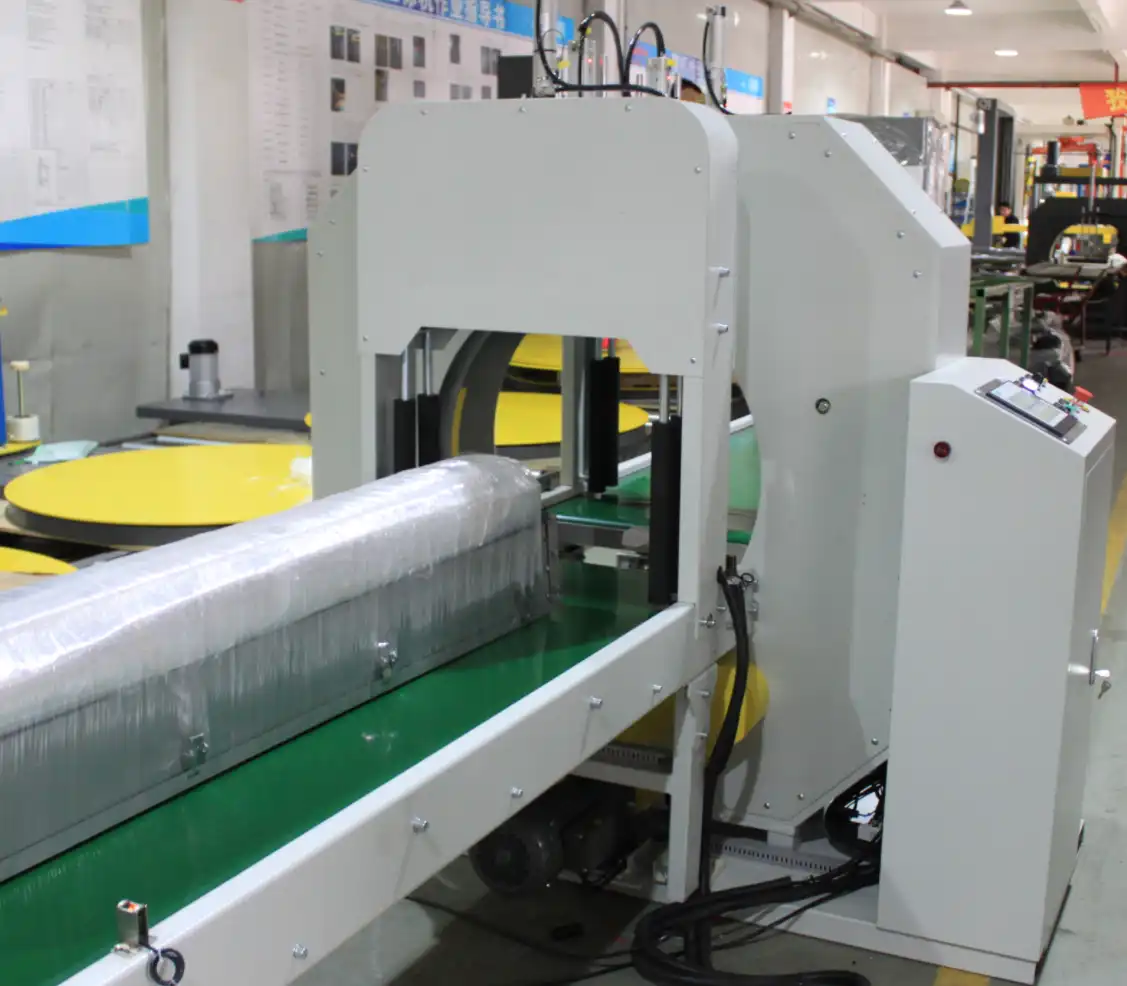
From my years working in and then owning a packing machine factory, I have seen firsthand the issues with manual packing. When I started as an employee, we would spend hours wrapping products by hand. It was tiring work, and sometimes, despite our best efforts, damage still happened. This experience taught me that human hands, no matter how skilled, cannot match the consistency of a machine for repetitive, precise tasks.
Manual packing has several critical flaws that lead to product damage:
Inconsistent Wrapping Quality
- Uneven Tension: Workers cannot apply the same tension consistently across an entire product. This means some areas are too loose, offering poor protection. Other areas might be too tight, potentially deforming delicate items. An orbital wrapper applies steady, controlled tension, ensuring uniform protection.
- Gaps and Voids: It is hard for human hands to achieve perfect overlap. Gaps in the wrapping mean parts of the product are exposed. These exposed areas are vulnerable to moisture, dust, and physical impact during transit. A machine ensures full, overlapping coverage every time.
Handling Challenges and Human Error
- Risk of Drops and Impacts: Heavy items, like steel bars or bundles of wire, are difficult for workers to lift and maneuver. There is a constant risk of dropping or bumping them against other objects. This causes dents, scratches, or even structural damage. I remember one client who was losing almost 5% of their products to handling damage alone. That is a huge cost.
- Fatigue and Mistakes: Long shifts and repetitive work lead to worker fatigue. Tired workers are more likely to make mistakes. They might misalign the wrapping material or fail to secure the product properly. This directly increases the chance of damage.
Limited Protection Against External Factors
- Weather Exposure: Manually wrapped products often lack the airtight seal that machines can provide. This makes them more susceptible to rain or humidity during outdoor storage or transport. For metals, this means rust. For other materials, it means spoilage.
- Dust and Dirt: Openings in manual wrapping allow dust and dirt to penetrate. This might not damage the product structure, but it can affect surface quality or cleanliness, which is important for many industries in Malaysia, such as electronics or food processing.
These problems are not minor. They add up to significant losses. When I first built my factory, I knew we had to avoid these issues. Investing in automated solutions was a clear path to both protect products and gain efficiency. It allowed us to deliver goods in perfect condition, which built strong trust with our clients. This is how businesses grow, by providing reliability.
What Safety Risks Do Traditional Packing Methods Pose for Workers?
Worker safety is a big concern for any factory manager, especially in industries handling heavy materials. Manual packing methods often put employees in dangerous situations. They lift heavy objects. They move awkward loads. This creates a high risk of injury. Think about the strain on a worker’s back when trying to lift a large bundle of steel rods. Or the risk of a crushing injury when moving a heavy coil without proper equipment. These incidents do not just hurt individuals; they lead to lost workdays, increased insurance costs, and a drop in morale across the entire workforce. We need solutions that protect our people while keeping production moving efficiently. A safe workplace is a productive workplace.
Traditional packing methods expose workers to significant safety risks, including musculoskeletal injuries from heavy lifting, crushing hazards from awkward loads, and lacerations from sharp product edges. Relying on manual labor for packing large or heavy items, like those in Malaysia’s manufacturing sector, directly increases the incidence of workplace accidents and long-term health problems for employees.

From my own experience, both as an employee and as a factory owner, I have always put a high value on worker safety. I saw many colleagues get injured doing manual work. When I started FHOPEPACK, one of my main goals was to design machines that would protect workers. This is not just about compliance; it is about creating a humane and sustainable work environment.
Traditional packing involves several inherent dangers:
Musculoskeletal Injuries
- Heavy Lifting: Workers often have to lift or shift heavy coils, pipes, or bundles. This repetitive heavy lifting puts immense strain on the back, shoulders, and knees. It leads to sprains, strains, and long-term chronic pain. These injuries are common and can result in significant time off work.
- Awkward Postures: Manual wrapping requires bending, twisting, and reaching into uncomfortable positions. These awkward postures, especially when combined with heavy loads, greatly increase the risk of injury. For example, trying to wrap the underside of a large, heavy coil by hand forces workers into unnatural positions.
Crushing and Impact Hazards
- Moving Heavy Loads: When moving or positioning heavy products for wrapping, there is always a risk of crushing injuries. If a coil or bundle shifts unexpectedly, a worker’s hand or foot could get caught. I have seen close calls that remind me why automation is crucial for such tasks.
- Falling Objects: Poorly secured or stacked products can fall during manual handling. This poses a severe risk of head injuries or other trauma to workers in the immediate vicinity. A machine moves the product through the wrapping process in a controlled way, minimizing this risk.
Lacerations and Punctures
- Sharp Edges: Many industrial products, like steel coils, metal sheets, or wire, have sharp edges or burrs. Manual contact during wrapping or handling can easily lead to cuts, punctures, or abrasions. Even with gloves, the risk remains. An automated system keeps human hands away from these dangerous surfaces.
The impact of these safety risks goes beyond the individual worker. High injury rates lead to higher insurance premiums for the company. They also cause disruptions in production due to absent workers. Furthermore, a perception of an unsafe workplace can make it hard to attract and retain good employees. When I built my factory, I invested in machines that minimized manual handling. This not only made the workplace safer but also improved efficiency and staff morale. It was a win-win situation. Safety is not an expense; it is an investment in your people and your business.
Can Orbital Wrapping Really Protect Products Like Steel Coils and Wire?
Product damage during transit is a major headache for manufacturers. It means financial losses. It means unhappy customers. For industries dealing with heavy, valuable materials like steel coils and wire, this problem is even bigger. Imagine a perfectly manufactured steel coil arriving at a client’s site with scratched edges or a dented surface. This not only leads to rejection but also delays their production. Your hard work in manufacturing goes to waste due to poor packing. So, can an orbital wrapper truly make a difference in protecting these specific types of products? Let me explain how it does.
Yes, orbital wrapping offers superior protection for products like steel coils and wire. It creates a robust, multi-layered, and uniformly tensioned wrap around the entire product. This wrap acts as a strong barrier against physical impacts, moisture, and dust, significantly reducing the likelihood of scratches, dents, and corrosion during handling and shipping.
My journey in the packing machine industry started with understanding the specific needs of clients dealing with products like steel coils and wire. These materials are heavy, often have sharp edges, and are susceptible to environmental damage. Conventional wrapping methods just do not cut it. This is where the orbital wrapper shines. It was through understanding these material challenges that I saw the potential for specialized machines.
Here is how orbital wrapping provides robust protection:
Comprehensive and Uniform Coverage
- 360-Degree Protection: Unlike other wrapping methods, an orbital wrapper passes the film through the eye of the coil or around the circumference of a bundle, covering every surface. This ensures a complete 360-degree seal. There are no exposed areas for dust, moisture, or physical objects to get in.
- Consistent Tension: The machine applies film with consistent tension from start to finish. This creates a tight, resilient package that holds the product together. It also prevents the film from loosening during transit, which can lead to product movement and damage inside the package.
Enhanced Barrier Against Damage
- Impact Resistance: The multiple layers of stretch film create a thick, cushioning barrier. This significantly reduces the impact of bumps and knocks during loading, unloading, and transportation. For heavy steel coils, even minor impacts can cause visible dents, but the tight wrap helps absorb these forces.
- Moisture and Corrosion Protection: Steel and other metals are highly vulnerable to rust caused by moisture. An orbital wrapper creates an almost airtight seal, protecting the product from rain, humidity, and condensation. This is crucial for products stored outdoors or shipped through varying climates, especially in regions with high humidity like Malaysia.
- Dust and Dirt Prevention: The tight wrap also keeps out dust, dirt, and other contaminants. This is important for maintaining product quality, especially for finely finished metals or wires that need to stay clean until they reach the end-user.
Securing the Product
- Load Stability: The tight, uniform wrap keeps the individual strands of wire or the layers of a coil from shifting. This stability is vital during transport, as unstable loads can cause damage to themselves or to the vehicle. My clients often report fewer complaints about shifting loads after switching to orbital wrappers.
When I started my factory, I saw that many clients were struggling with these exact problems. They needed a reliable way to ensure their products arrived in perfect condition. I helped many of them implement orbital wrapping solutions, and the feedback was always positive. They saw fewer product returns, happier customers, and ultimately, better business growth. It is about protecting your investment in the product itself.
How Do Automation and Orbital Wrappers Improve Overall Logistics Efficiency?
Logistics efficiency is critical for any manufacturing operation. Slow packing processes can create bottlenecks, delaying shipments and impacting delivery schedules. If your end-of-line operations cannot keep up, your entire production chain suffers. Think about having perfectly manufactured products sitting idle, waiting to be manually wrapped, while trucks wait to be loaded. This leads to wasted time, increased labor costs, and unhappy clients. It creates a domino effect across your entire supply chain. The good news is that automation, particularly with orbital wrappers, offers a powerful solution to these efficiency challenges. It is about more than just speed; it is about smarter operations.
Automation, especially through orbital stretch wrappers, dramatically improves overall logistics efficiency by significantly increasing packing speed, reducing reliance on manual labor, and optimizing material usage. This leads to faster throughput, lower operational costs, and a more streamlined end-of-line process, allowing factories to meet tight delivery schedules and improve customer satisfaction.

When I transitioned from being an employee to building my own factory, efficiency was always on my mind. I understood that every minute saved on the production line directly translated to better profits and greater capacity. Automation, for me, was not just about buying a machine; it was about strategically improving every step of the packing process.
Here is how orbital wrappers, as part of an automated setup, boost logistics efficiency:
Increased Packing Speed and Throughput
- Faster Cycle Times: An orbital wrapper can complete a wrapping cycle much faster than any manual operation. While a worker might take several minutes to wrap a large coil, a machine can do it in a fraction of the time. This means more products are packed and ready for shipment in less time.
- Elimination of Bottlenecks: Manual packing often becomes a bottleneck at the end of the production line. By automating this step, products move smoothly from manufacturing to packing to loading without delay. This ensures continuous flow and maximizes the output of your entire factory.
Reduced Labor Dependency and Costs
- Lower Labor Requirements: An orbital wrapper often requires only one operator to monitor the machine, freeing up several workers who would otherwise be manually wrapping. These workers can then be reallocated to other value-added tasks within the factory. This directly reduces labor costs.
- Consistent Performance: Machines do not get tired. They operate at the same speed and quality throughout the entire shift, unlike human workers whose performance might dip due to fatigue. This consistency means predictable output and better planning. I remember helping a client in Malaysia who was struggling to find enough skilled labor for packing. By introducing an orbital wrapper, they solved their labor shortage problem overnight.
Optimized Material Usage
- Precise Film Application: Orbital wrappers are programmed to apply the exact amount of stretch film needed. This minimizes waste, which can be significant in manual wrapping where workers might use more film than necessary. Saving on film costs directly contributes to profitability.
- Better Load Security: The superior wrapping quality means fewer damaged products and fewer re-wraps. This not only saves on materials but also reduces the time and effort spent correcting mistakes.
Improved Inventory Management and Dispatch
- Streamlined Operations: With faster packing and better-protected products, factories can organize their finished goods inventory more effectively. Products are ready for dispatch sooner, leading to quicker turnaround times and better adherence to delivery schedules. This enhances customer satisfaction.
The impact on a factory’s overall profitability is clear. When I helped clients grow their businesses, one of the most impactful changes was always the move to automation. It was not just about buying a machine; it was about investing in a system that would pay dividends for years to come by improving every aspect of their operations, from safety to speed. This kind of investment directly impacts financial independence, not just for the factory owner, but also for the stability it brings to the business.
What Insights Do I Offer for Choosing a Reliable Packing Machine Partner?
Choosing the right packing machine is a big decision for any factory. It is a significant investment. You want a machine that performs well. But more importantly, you need a partner you can trust. Many suppliers only care about making a sale. I have seen too many factories buy equipment, only to be left stranded when issues arise. Poor after-sales service, lack of technical support, or a supplier who does not understand your specific challenges can turn an investment into a costly nightmare. How do you avoid this? How do you find a partner who truly understands your needs and supports your long-term success? My journey from factory worker to owner has given me unique insights into what makes a good partnership.
Choosing a reliable packing machine partner requires looking beyond the initial price tag. It means finding a supplier with deep industry knowledge, a proven track record of excellent after-sales support, and a genuine interest in understanding and solving your specific operational challenges. Prioritize partners like FHOPEPACK who bring practical factory experience and a commitment to long-term client success.
My path in this industry has been quite a journey. I started on the factory floor, working with packing machines, seeing their strengths and weaknesses firsthand. Later, I established my own successful packing machine factory. This experience taught me that the machine itself is only half the equation. The other half is the relationship with your supplier. I often think about managers like Michael Chen, who have faced supplier trust crises. I know how frustrating that can be.
Here are my insights on what to look for in a packing machine partner:
Deep Industry Knowledge and Practical Experience
- Understanding Your Challenges: A good partner will not just sell you a machine. They will take the time to understand your specific products, your current packing processes, and your operational bottlenecks. Do they ask about your coil sizes, your material handling, or your safety concerns? This shows they want to offer a solution, not just a product.
- Factory-Floor Perspective: Someone who has worked in a factory, like myself, understands the daily pressures of production. They know what machine reliability truly means for uptime and output. They can offer advice that comes from real-world application, not just theoretical knowledge. I founded FHOPEPACK specifically to share this kind of practical understanding.
Commitment to After-Sales Service and Support
- Responsive Technical Support: Machines, even the best ones, sometimes need maintenance or troubleshooting. How quickly does the supplier respond to service requests? Do they have skilled technicians available? This is crucial for minimizing downtime. A good partner invests in a strong service team.
- Availability of Spare Parts: Can the supplier quickly provide spare parts when needed? Long waits for parts can paralyze your production. Ensure they have a reliable supply chain for critical components.
- Training and Documentation: Do they offer comprehensive training for your operators and maintenance staff? Clear manuals and ongoing support help your team use the machine effectively and maintain it properly.
Focus on Solutions, Not Just Sales
- Customization and Adaptability: Every factory has unique needs. A reliable partner will be open to customizing solutions or adapting standard machines to fit your specific requirements. This shows a commitment to solving your problem, rather than just selling you a generic model.
- Long-Term Partnership Mentality: Do they view you as a one-time sale or as a long-term partner? Look for suppliers who offer ongoing consultation and are interested in your future growth. My goal at FHOPEPACK is to help businesses grow, just as my business grew thanks to the packing industry. This means providing solutions that truly work and building lasting relationships.
Choosing a packing machine supplier is an investment in your factory’s future. It should not be a gamble. By focusing on experience, support, and a solution-oriented approach, you can find a partner who will truly help your business thrive and achieve financial independence through smart, reliable operations.
Conclusion
Orbital stretch wrappers are game-changers for protecting products, boosting safety, and improving efficiency in Malaysia’s logistics. They offer consistent, robust packing. Choose a partner with deep industry experience and strong support for lasting success.








