
Is Your Steel Plant’s Future Tied to Outdated Packaging Methods?
For years, I have seen steel plants struggle with packaging challenges. Many times, leaders like you, perhaps even Ivan, feel the pressure. You know that bottlenecks, safety risks, and inconsistent quality in the packing area directly impact your bottom line. It is not just about moving products. It is about protecting your reputation and ensuring customer satisfaction. You need a way to move beyond old methods. You need a solution that truly keeps up with modern production demands.
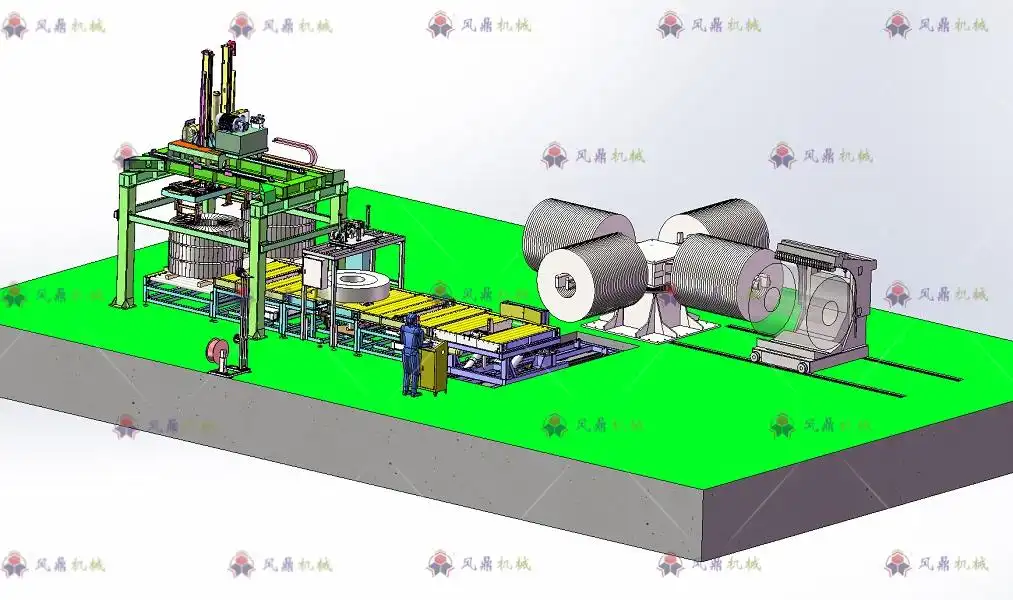
At FHOPEPACK, we believe the answer lies in seamless integration. Our machinery leads the way by combining efficient steel strapping with advanced smart logistics. This approach creates a fully automated system that handles your coils from production to shipment. It ensures speed, safety, and consistent packaging quality, helping steel plants overcome common challenges and achieve operational excellence.
![[Automation Insight] FHOPE Machinery Leads the Integration of Steel Strapping and Smart Logistics](https://www.fhopepack.com/blog/wp-content/uploads/2024/07/Steel-coil-packaging-line1.webp "[Automation Insight] FHOPE Machinery Leads the Integration of Steel Strapping and Smart Logistics")
This shift is not just an upgrade; it is a transformation. It impacts every part of your operation, from worker safety to delivery times. Let us explore how integrating steel strapping and smart logistics can redefine efficiency and reliability in your steel plant.
Are traditional steel coil packing methods holding back your steel plant’s output?
Many steel plants still rely on outdated or semi-manual packing processes. This often creates a bottleneck. It slows down your entire production line. For someone overseeing hundreds of tons of daily shipments, this is a major problem. You might find your team constantly rushing, leading to mistakes.
Traditional steel coil packing methods frequently lead to production bottlenecks, inconsistent packaging quality, and significant safety risks. They cause delays, increase labor costs, and often fail to meet stringent customer requirements. This directly impacts overall output and profitability.
I have seen it many times in my career. Manual strapping is slow. It takes a lot of effort. Workers must handle heavy coils, which is dangerous. Hand-wrapping for moisture protection can be uneven. This leads to rust or damage during transport. These problems affect more than just packaging. They impact customer trust. They can even cause financial penalties. Your goal is to keep things moving smoothly. You want to deliver perfect products every time. But traditional methods often make this goal hard to reach. They do not offer the control or consistency needed for today’s market. (traditional packing challenges, manual operations, production efficiency)
-
Labor Intensive and High Turnover: Many plants struggle with finding enough young workers willing to do the high-intensity manual tasks involved in coil packing. This leads to staff shortages. It also means you rely on fewer, often older, workers. This situation is not sustainable. High turnover means constant training. It means a loss of experienced hands. This affects the quality and speed of your packing operations. It puts a strain on existing teams. The demand for manual labor for strapping and wrapping is a major pain point. It costs both time and money.
-
Inconsistent Packaging Quality: Manual operations often result in uneven film tension or loose strapping. This means your coils are not securely packed. They can shift or get damaged during transit. This leads to customer complaints. It can even cause product returns. For high-value items like steel coils, consistent, high-quality packaging is vital. It protects against moisture, rust, and scratches. When quality varies, your reputation suffers. It creates extra work in handling claims. (packaging quality inconsistency, product damage risks)
-
Safety Hazards and Worker Strain: Moving and securing heavy steel coils by hand is dangerous. Workers face risks of injuries from lifting, positioning, and operating tools. This is a serious concern for any production director. Accidents lead to lost time, medical costs, and reduced morale. Automation aims to remove humans from these high-risk areas. It focuses on mechanical handling and strapping. This makes the workplace much safer. It also reduces physical strain on your team. (worker safety, occupational hazards)
-
Failure to Meet Modern Customer Demands: Today’s global customers, especially for exports, demand more. They need CE/ISO certified packaging. They need precise barcodes. They require strict moisture protection. Manual processes often cannot meet these exact standards. They struggle with applying consistent branding or tracking labels. Automated systems handle these requirements with precision. They ensure your products meet international shipping norms. This is key for expanding your market reach. (customer requirements, export standards, packaging compliance)
How can automated steel strapping ensure rock-solid security for your valuable coils?
Protecting steel coils during transit is paramount. If a coil shifts or unwraps, it causes damage and financial loss. You need a strapping solution that is absolutely dependable. Manual strapping just cannot offer that level of consistent tension.
Automated steel strapping systems provide a consistent, high-tension binding solution for steel coils. They apply straps with uniform force and precision, far exceeding manual capabilities. This ensures maximum load stability, prevents shifting during transport, and significantly enhances the overall security and integrity of your valuable products.

When I think about secure packaging, I think about stability. Steel coils are heavy. They need to be held tight. Automated steel strapping machines do this perfectly. They use industrial-strength steel or PET straps. These machines apply the straps with consistent tension every single time. This is key for different coil sizes and weights, from 1 to 3 tons. Whether it is a cold-rolled coil, galvanized, or color-coated, the strapping is firm. It adapts to varying inner and outer diameters. This consistency reduces product damage. It also makes your clients trust your deliveries more. It is a critical part of making sure your products arrive in perfect condition. (coil security, strapping consistency, damage prevention, PET strapping benefits)
-
Unmatched Consistency and Tension: Automated strapping machines remove human error from the equation. They are programmed to apply the exact same tension to every strap. This means each coil is secured uniformly. Manual strapping varies from person to person. It varies depending on how tired the worker is. This inconsistency is a major risk. Automated systems guarantee rock-solid stability. This is true for every single coil. This consistency is vital for safe transport. It protects against movement and damage.
-
Adapting to Diverse Coil Specifications: Your plant produces many types of coils. They come in different diameters and weights. A good automated strapping system handles this variety easily. It can adjust quickly to different specifications. This means less downtime for changeovers. It supports flexible production lines. It bundles coils weighing 1 to 3 tons. It handles various inner and outer diameters without issues. This adaptability ensures efficiency across your entire product range. (flexible strapping, variable coil sizes)
-
Enhanced Durability with PET or Steel Straps: Automated systems can use both PET (polyester) and steel straps. Each material has its advantages. Steel straps offer extreme strength for very heavy coils. PET straps are strong, corrosion-resistant, and safer to handle. Our machines can work with both. This offers flexibility based on your specific needs. The choice helps provide optimal protection. It ensures long-term integrity of the packaged coil. This protects your product during long journeys or storage. (strapping material options, PET vs steel)
-
Increased Speed and Throughput: Automated strapping machines work much faster than humans. They can strap coils in seconds, not minutes. This dramatically increases your packing line’s throughput. It removes the bottleneck that manual strapping often creates. This means coils move faster to storage or shipment. It helps meet high daily output demands. This boost in speed contributes directly to overall plant efficiency. It ensures your finished products are ready on time. (packing speed, production throughput)
What role does smart logistics play in optimizing your entire coil handling process?
Thinking beyond just strapping, you need to look at the bigger picture. Your coils move through many stages. From the rolling mill to the loading dock, every step matters. Smart logistics ties all these steps together. It ensures smooth, safe, and efficient movement.
Smart logistics in coil handling means integrating every stage of the packaging and movement process. This includes automated handling, advanced wrapping, and real-time data flow. It creates a seamless, connected system. This approach reduces manual intervention, optimizes workflow, and boosts overall operational efficiency from start to finish.

As an engineer, I always focus on the flow. A coil packing line is not just a collection of machines. It is a symphony of automated systems working in harmony. Smart logistics is the conductor. It ensures that the coil is flipped, wrapped, strapped, labeled, and stacked without human hands needing to intervene in dangerous ways. This is about more than just speed. It is about intelligence. It involves sensors, data, and intelligent controls. This helps track each coil. It manages inventory. It even forecasts maintenance needs. This integrated approach ensures that your plant is not just fast, but also smart. It helps you make better decisions. (logistics optimization, automated handling, data integration)
-
Seamless Integration of Handling Devices: Smart logistics starts with automated handling. This means coil cars, up-enders, and turning devices. These machines move coils safely and efficiently. They integrate with the packing line. This reduces the need for cranes or forklifts. It also reduces human contact with heavy coils. This seamless transfer prevents damage. It speeds up the entire process. It is a critical step in building a fully automated environment. (automated handling, coil transfer systems)
-
Real-Time Data Collection and Management: Each step in a smart logistics system collects data. This includes weight, dimensions, packaging materials used, and tracking information. This data is fed into a central system. It can link to your existing ERP or MES. This gives you real-time visibility. You can monitor production. You can track inventory. You can make informed decisions. This data is vital for optimizing operations. It is also important for meeting client traceability demands. (data analytics, inventory management, production monitoring)
-
Enhanced Workflow Automation: Smart logistics automates the entire workflow. This means fewer manual steps. It means less human error. Coils move automatically from one station to the next. They get wrapped for moisture protection. They get strapped for security. They get labeled with barcodes. Then they are stacked for storage or shipment. This automated flow improves consistency. It greatly boosts throughput. It makes your production line much more predictable. (workflow automation, lean manufacturing principles)
-
Optimized Space and Resource Utilization: By automating handling and stacking, smart logistics helps optimize your plant layout. It uses space more efficiently. Automated systems can stack coils precisely. This maximizes storage capacity. It also reduces energy use compared to manual operations. It ensures that your packaging materials are used effectively. This reduces waste. It lowers overall operational costs. It helps you get the most out of your plant resources. (space optimization, resource efficiency)
Can an integrated automation solution truly adapt to your diverse product range?
Your steel plant produces a wide variety of coils. These include cold-rolled, galvanized, and color-coated. Each type might have unique packaging requirements. You probably wonder if one automated line can handle all this diversity efficiently. Manual switching between different product types can be a major headache.
An integrated automation solution can indeed adapt to a diverse product range. It uses modular designs and flexible programming. This allows for quick adjustments to different coil sizes, weights, and packaging specifications. Such systems handle various materials like cold-rolled, galvanized, and color-coated coils with minimal downtime for changeovers.
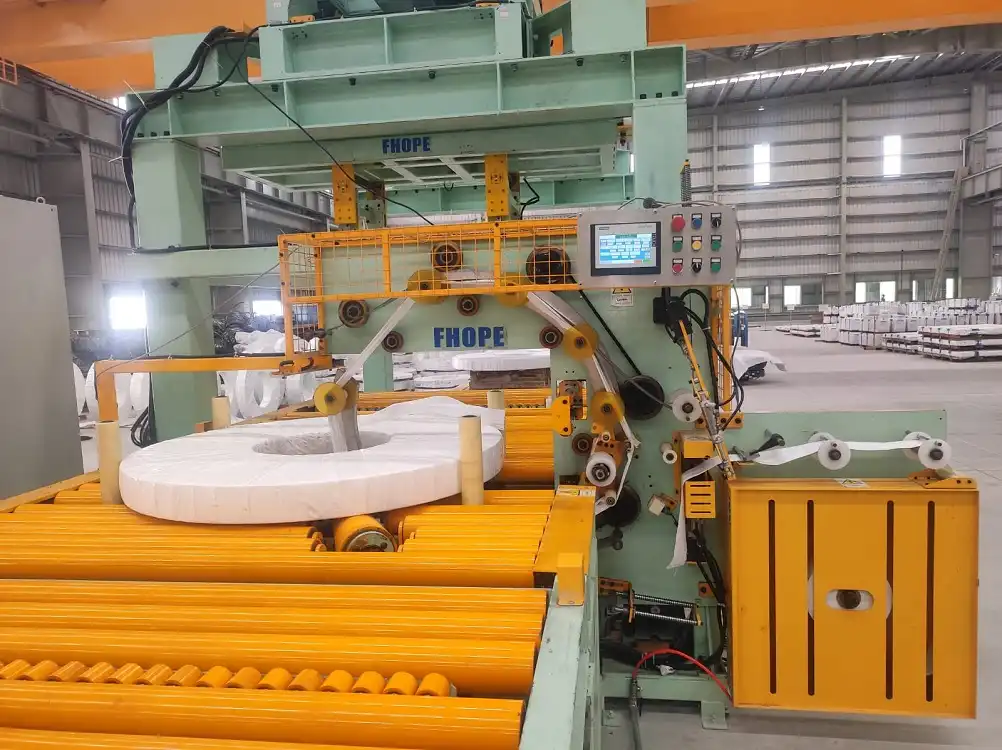
When I founded FHOPEPACK, one of my core principles was flexibility. I knew that factories do not just make one product. They need systems that can change with their production schedule. Our automated solutions are built this way. They have modular components. These parts can be easily reconfigured. The control systems are user-friendly. They allow for fast adjustments to parameters. This means you can switch from packing a large cold-rolled coil with steel straps to a delicate color-coated coil with stretch film and automatic labeling. The changeover time is greatly reduced. This flexibility ensures your packaging line is a help, not a hindrance, to your varied production. (flexible automation, product versatility, rapid changeover)
-
Modular Design for Adaptability: Our packaging lines feature a modular design. This means different sections can be added or adjusted. You can have a strapping module. You can have a wrapping module. You can have a labeling module. Each can operate independently or together. This design allows for customization. It meets your specific product mix. It makes the system highly flexible. It can handle various coil sizes. It also accommodates different weights. This adaptability is key for a multi-product steel plant. (modular packaging systems, customizable solutions)
-
Quick Changeover Capabilities: Switching between different product types used to take a lot of time. With our integrated solutions, this is no longer true. The systems are designed for quick changeovers. This means minimal downtime. Operators can easily adjust settings. They can change packaging materials. This happens through a user-friendly HMI (Human Machine Interface). This speed is crucial for plants with diverse outputs. It keeps your production running smoothly. (fast changeover, operational flexibility)
-
Combined Packaging Methods: Your coils may need different types of protection. Some need strong steel straps. Others need gentle PET strapping. All might need moisture-proof wrapping. Our solutions combine these methods. They offer PET/steel strapping options. They include stretch film or shrink film wrapping. This allows you to meet diverse client needs. You can provide CE/ISO certified packaging. You can add barcodes. This comprehensive approach ensures perfect packaging for every product. (combined packaging, multi-material solutions)
-
Meeting Specific Customer Standards: Every customer has their own requirements. Export clients might need very specific certifications. They might need unique labeling. An integrated system can handle these specific demands. It applies labels accurately. It wraps coils consistently for strict moisture protection. This helps you comply with all regulations. It also helps you exceed customer expectations. This capability is vital for maintaining a competitive edge in global markets. (customized packaging standards, export compliance)
Why is partnering with an experienced machinery provider crucial for your future success?
Investing in a fully automated coil packing line is a significant decision. It is not just about buying machinery. It is about building a solution that will serve your plant for years. You need more than a vendor. You need a trusted partner who understands your challenges and goals.
Partnering with an experienced machinery provider is crucial because they offer comprehensive expertise, from design to after-sales support. Such a partner delivers proven, reliable solutions. They provide vital installation, training, and ongoing spare parts supply. This ensures your investment leads to long-term operational success and peace of mind.
When I started FHOPEPACK, I drew on my years of experience. I had been an engineer. I had built a successful factory. I saw firsthand what companies needed: not just machines, but solutions and real support. This is why FHOPEPACK focuses on being a true partner. We offer turnkey projects. This means we handle everything. From initial design to final installation. We also provide thorough training for your team. We ensure you have all the spare parts you need. This commitment means your automated line runs perfectly, day after day. It means you are supported throughout your journey to greater efficiency. When you look for a partner, look for one that understands your industry deeply. (reliable supplier, long-term support, expert partnership)
-
Deep Industry Expertise and Customization: An experienced provider understands the steel industry’s unique demands. They know about coil weights, material types, and production environments. This knowledge allows them to design truly customized solutions. They will not offer a one-size-fits-all approach. Instead, they will tailor the system to your specific plant layout. They will match it to your product diversity. This ensures the solution fits perfectly. It helps you get the most out of your investment. (tailored solutions, industry knowledge)
-
Turnkey Project Management: Implementing a new automated line is complex. A good partner manages the entire project from start to finish. This includes planning, manufacturing, installation, and commissioning. This “turnkey” approach reduces your workload. It ensures a smooth transition. It minimizes disruptions to your production. It means you can focus on your core business. The partner handles all the technical details. (project management, seamless implementation)
-
Comprehensive After-Sales Support and Training: Machines need maintenance. Your team needs to know how to operate them. A top provider offers extensive after-sales support. This includes maintenance services and readily available spare parts. They also provide detailed training for your operators and technicians. This ensures your team can use the system effectively. It keeps your line running with minimal downtime. It protects your investment for the long run. (maintenance services, operator training, spare parts availability)
-
Proven Track Record and Reliability: Look for a partner with a strong track record. FHOPEPACK has a history of successful installations. We have helped many clients grow their businesses. Our commitment to quality and reliability is clear. Other notable names in the industry include SHJLPACK and CNBHPAC. These companies have also delivered good solutions. Choosing a provider with proven experience gives you confidence. It reduces risk in such a critical investment. (proven solutions, reliable machinery)
Conclusion
Integrating steel strapping with smart logistics offers a powerful path to modernizing your steel plant. This approach solves critical challenges like labor shortages and inconsistent packaging quality. It dramatically boosts safety and efficiency. Embrace a full automated coil packing line solution. Partner with experts like FHOPEPACK. You can achieve greater output, superior product protection, and significant cost savings.








