

In today’s fast-paced industrial landscape, automation is no longer a luxury, but a necessity. For industries dealing with coiled products, automatic coil packaging solutions have emerged as a game-changer. These systems streamline operations, enhance efficiency, and significantly reduce reliance on manual labor, offering a robust solution for modern manufacturing needs.


Automatic coil packaging solutions are integrated systems designed to efficiently wrap and secure coiled products like steel, aluminum, wire, and hoses. They automate processes such as wrapping, strapping, and stacking, minimizing manual intervention. Benefits include reduced labor costs, increased packaging speed, consistent quality, and enhanced product protection during transit and storage.
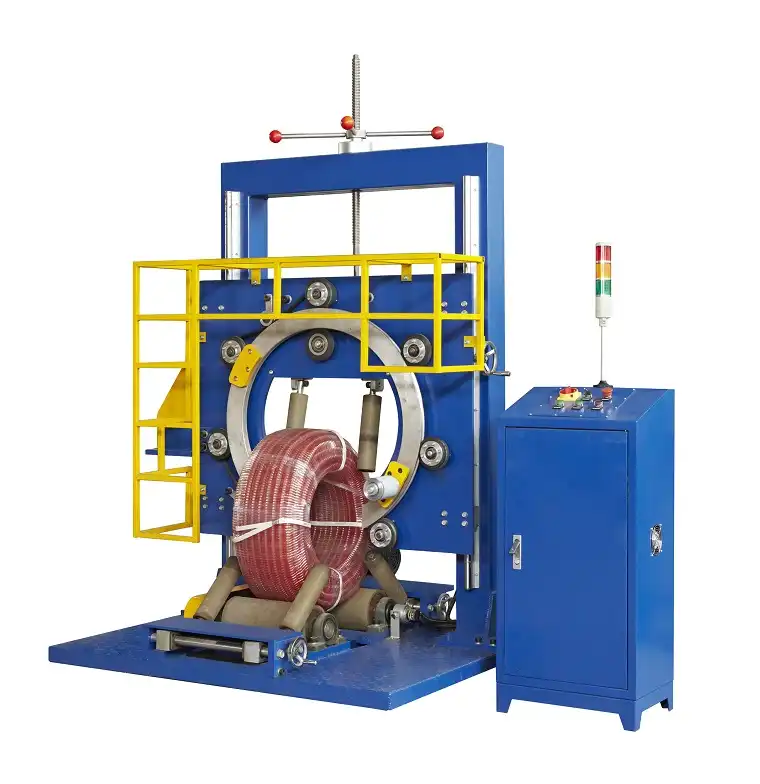

This article delves into the world of automatic coil packaging solutions, exploring their benefits, various types, key features, diverse applications, and the long-term return on investment they offer. Discover how these innovative systems are transforming industries and paving the way for more efficient and cost-effective packaging processes.
Benefits of Automatic Coil Packaging Systems
Automation in coil packaging brings a paradigm shift, moving away from labor-intensive manual methods to streamlined, efficient processes. The advantages extend beyond simple time-saving, impacting productivity, safety, and overall operational costs.
Automatic coil packaging systems offer numerous benefits, including significantly increased efficiency and throughput, substantial reduction in labor costs, enhanced safety for operators, and consistently high packaging quality. These systems minimize material waste, ensure secure product handling, and can be customized for various coil sizes and materials, providing a comprehensive solution for modern packaging needs.
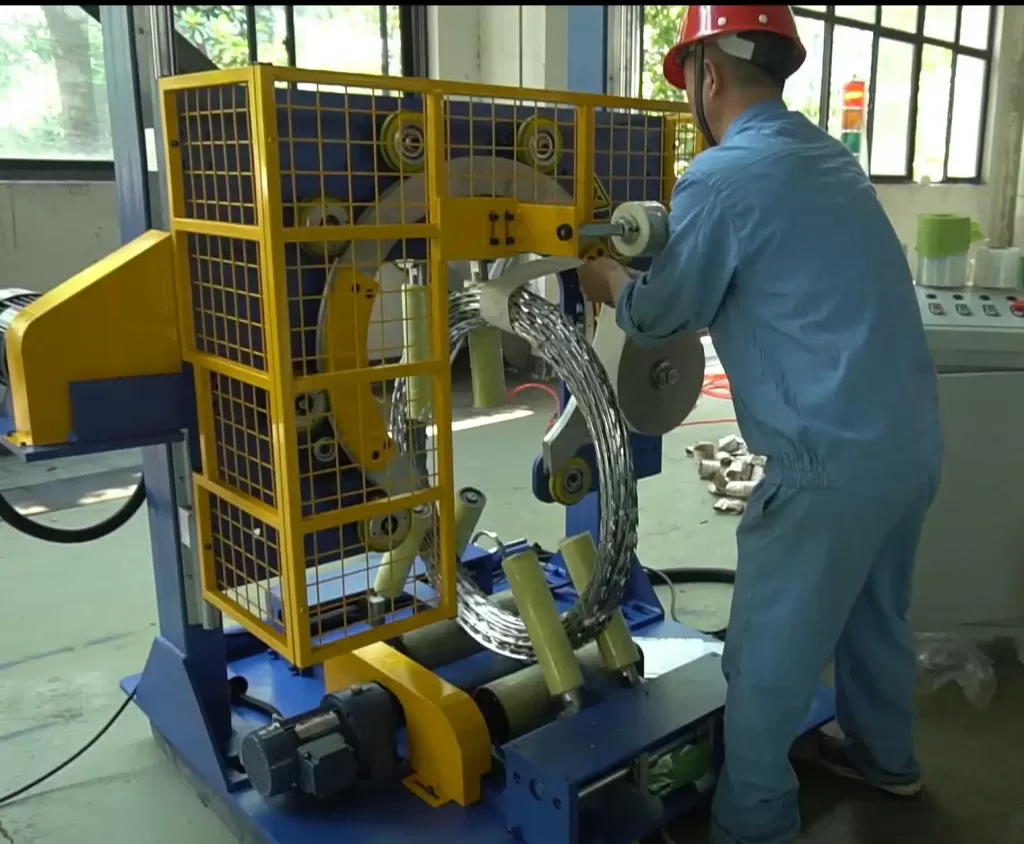

Deep Dive into the Advantages: Efficiency, Cost-Saving, and Quality
To truly appreciate the impact of automatic coil packaging, it’s crucial to understand the specifics behind these broad benefits. Let’s break down how automation delivers enhanced efficiency, cost savings, and superior quality in coil packaging.
Enhanced Efficiency and Throughput
Manual coil packaging is inherently slow and prone to bottlenecks. Workers need time to physically handle heavy coils, apply wrapping materials, and secure them. Automatic systems, on the other hand, operate at a significantly faster pace. Conveyor systems swiftly move coils through each packaging stage, while automated wrapping and strapping units work continuously without fatigue or breaks. This results in a dramatic increase in throughput, allowing manufacturers to package more coils in less time, meeting higher production demands and improving delivery schedules.
Significant Labor Cost Reduction
Labor costs constitute a significant portion of operational expenses in manual packaging environments. Employing teams of workers for lifting, wrapping, and securing coils adds up quickly in wages, benefits, and training. Automatic coil packing lines drastically reduce the need for manual labor. In many cases, a single operator can oversee the entire automated line, managing controls and monitoring performance, while the machines handle the physical packaging tasks. This translates to substantial savings in labor costs, freeing up human resources for more strategic roles within the organization.
Improved Packaging Quality and Consistency
Human error is unavoidable in manual processes. Inconsistent wrapping tension, misaligned straps, or inadequate material application can compromise package integrity, leading to product damage during transit or storage. Automatic systems eliminate these inconsistencies. Programmed with precise parameters, they apply wrapping and strapping materials uniformly every time, ensuring consistent and reliable packaging quality across every coil. This reduces the risk of damage, minimizes product returns, and enhances customer satisfaction.
| Feature | Manual Coil Packaging | Automatic Coil Packaging |
|---|---|---|
| Efficiency | Low, dependent on worker speed | High, consistent, and rapid |
| Labor | High labor requirement, costly | Minimal labor, cost-effective |
| Quality | Inconsistent, prone to human error | Consistent, precise, and reliable |
| Material Waste | Potentially high due to inconsistency | Minimized through precise application |
| Safety | Higher risk of injury | Lower risk of injury, safer operation |
| Throughput | Low | High |
| Customization | Limited | Highly customizable to coil types |
Types of Automatic Coil Packaging Machines
The world of automatic coil packaging is diverse, offering a range of machine types tailored to different coil formats, materials, and packaging requirements. Understanding these variations is crucial for selecting the optimal solution for specific needs.
Automatic coil packaging machines come in various configurations, including horizontal and vertical types, stretch wrappers, and specialized machines for strapping and coiling. Horizontal machines are ideal for large, heavy coils, while vertical models suit smaller coils. Stretch wrappers provide protective film wrapping, and strapping machines ensure secure bundling. The choice depends on coil size, material, and desired packaging style.


Exploring Different Machine Types: Horizontal, Vertical, and More
Let’s delve into some of the common types of automatic coil packaging machines, highlighting their unique features and applications.
Horizontal Coil Packing Machines
Horizontal coil packing machines are designed for coils positioned with their axis horizontal, or “eye to the sky”. These machines are particularly well-suited for handling large, heavy coils, such as steel coils and master coils. They often incorporate robust handling systems like conveyors, coil tilters, and pushers to manage the weight and size of these coils. Horizontal wrappers typically rotate the coil while dispensing wrapping material around its circumference, providing comprehensive protection.
Vertical Coil Packing Machines
Vertical coil packing machines, in contrast, handle coils positioned vertically, or “eye to the wall”. These machines are often used for smaller, lighter coils, including wire coils, hose coils, and bearing coils. Vertical wrappers usually feature a rotating ring that orbits around the stationary coil, applying wrapping material. Vertical designs can be more compact and space-saving, making them suitable for facilities with limited floor space.
Coil Wrapping Machines (Stretch Wrappers)
Coil wrapping machines, also known as stretch wrappers, are a core component of many automatic coil packaging lines. They utilize stretch film to tightly wrap coils, providing protection against dust, moisture, and minor abrasions. Stretch wrapping secures the coil, improves stability during handling and transit, and can also enhance the visual appeal of the packaged product. These machines can be integrated into both horizontal and vertical packaging lines and can be customized to apply multiple layers of film for added protection. Master coil stretch wrappers are designed for very large coils.
Coil Strapping Machines
Coil strapping machines are essential for securely bundling coils, especially heavier materials like steel. These machines apply straps made of steel, PET, or polypropylene around the coil, cinching them tightly to prevent unwinding or shifting during transportation. Strapping machines can be designed for vertical or horizontal strapping and can apply multiple straps in different orientations for maximum security. Automatic strapping can be integrated into a packaging line or operate as a standalone unit. Fhope provides automatic strapping machine for steel coil.
Key Features of an Automatic Coil Packaging Line
A complete automatic coil packaging line is more than just a single machine; it’s a system of integrated components working in harmony to achieve efficient and reliable packaging. Understanding the key features of such a line is crucial for optimizing performance and maximizing ROI.
A typical automatic coil packaging line includes conveyor systems for material flow, wrapping and strapping units for securing coils, intelligent control systems (PLCs) for precise operation, and safety features for operator protection. Optional features like weighing and labeling systems, automatic coil feeding, and stacking capabilities further enhance automation and streamline the entire packaging process.
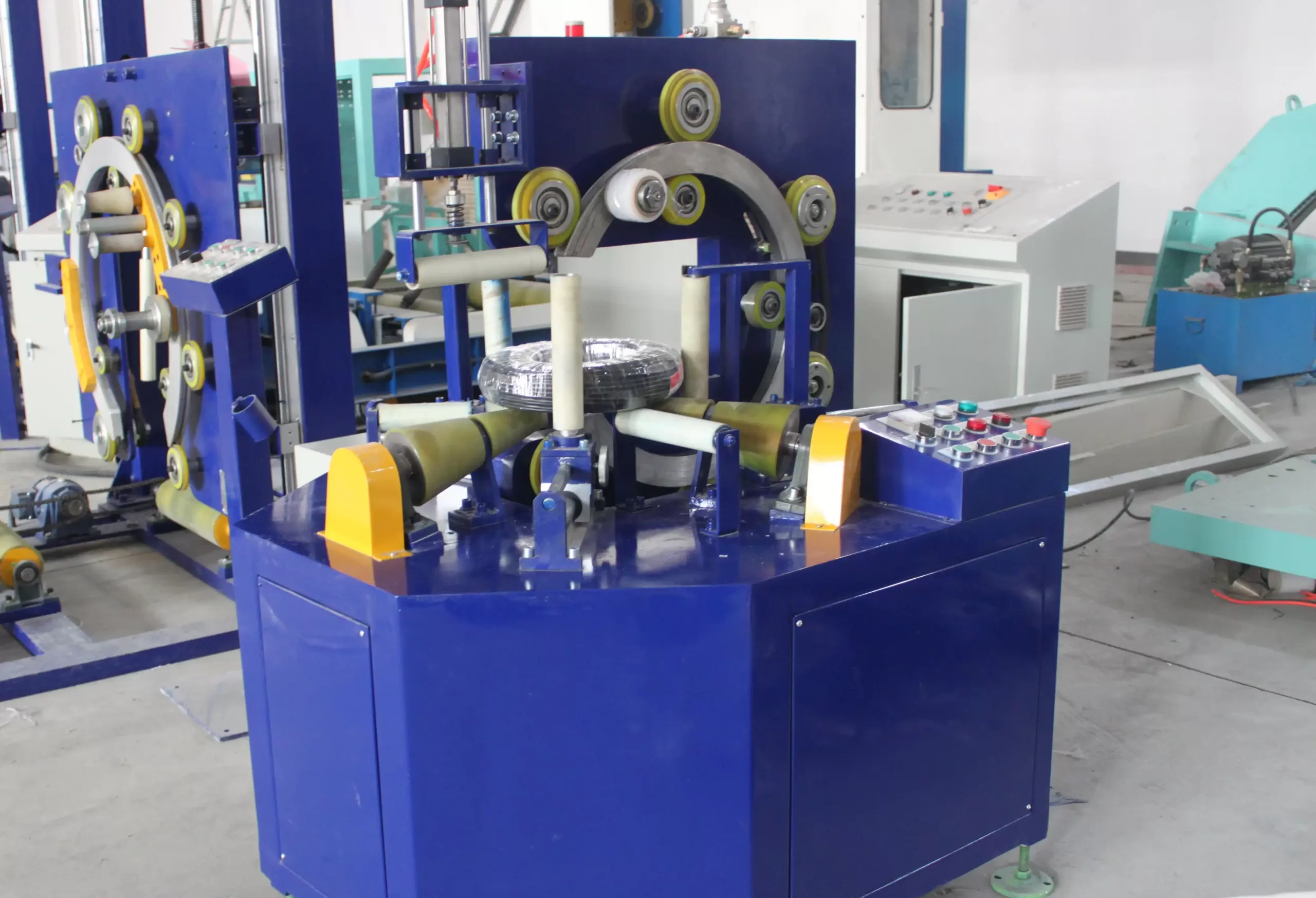

Essential Components and Advanced Technologies: From Conveyors to Smart Controls
Let’s explore the key components and advanced technologies that constitute a modern automatic coil packaging line.
Conveyor Systems for Seamless Material Flow
Conveyor systems are the backbone of an automatic coil packaging line, responsible for smoothly and efficiently moving coils between different processing stations. Various types of conveyors are used, including roller conveyors, chain conveyors, and belt conveyors, each chosen based on coil size, weight, and material. Automated conveyor systems ensure a continuous flow of coils through the line, eliminating manual handling between stations and maximizing throughput.
Advanced Wrapping and Strapping Units
Wrapping and strapping units are the core packaging modules within the line. Advanced wrapping units utilize pre-stretch technology to maximize film usage and wrapping efficiency. They offer adjustable wrapping tension and layer control to customize packaging based on product requirements. Strapping units incorporate automated strap feeding, tensioning, sealing, and cutting mechanisms, ensuring secure and consistent strapping application. High-speed and heavy-duty units are available for demanding industrial environments.
Intelligent Control Systems (PLCs)
Programmable Logic Controllers (PLCs) are the brains behind automatic coil packaging lines. These robust industrial computers control and synchronize all machine functions, from conveyor movement and wrapping arm rotation to strapping head operation and safety interlocks. PLCs provide precise control over packaging parameters, allowing for easy adjustments and recipe management for different coil types. Modern PLCs often incorporate touch screen interfaces for user-friendly operation and diagnostics, and can be integrated with plant-wide control systems for data logging and remote monitoring.
| Feature | Semi-Automatic | Automatic | Fully Automatic |
|---|---|---|---|
| Control System | Basic controls, manual adjustments | PLC controlled, parameter adjustments | Advanced PLC, recipe management, self-diagnostics |
| Labor Involvement | Moderate, manual loading/unloading | Minimal, automated loading/unloading options | Virtually unmanned operation |
| Packaging Speed | Slower, paced by operator | Faster, consistent machine speed | Highest speed, optimized for throughput |
| System Integration | Standalone machines | Integrated line components | Seamlessly integrated, data exchange with MES/ERP |
| Flexibility/Customization | Limited | Moderate, parameter adjustments | High, modular design, easily adaptable |
| Cost | Lower initial investment | Medium initial investment | Higher initial investment, highest long-term ROI |
Applications of Automatic Coil Packaging Solutions
Automatic coil packaging solutions find applications across a vast spectrum of industries dealing with coiled products. Their versatility and efficiency make them indispensable for companies seeking to optimize their packaging processes.
Automatic coil packaging solutions are widely used across industries, including steel, aluminum, wire and cable, plastic pipe and hose, and bearing manufacturing. They are applied to package steel coils, aluminum coils, wire coils, hose coils, copper coils, bearings, and even tires. These systems cater to diverse coil sizes, materials, and packaging requirements, making them adaptable to various industrial needs and product types.
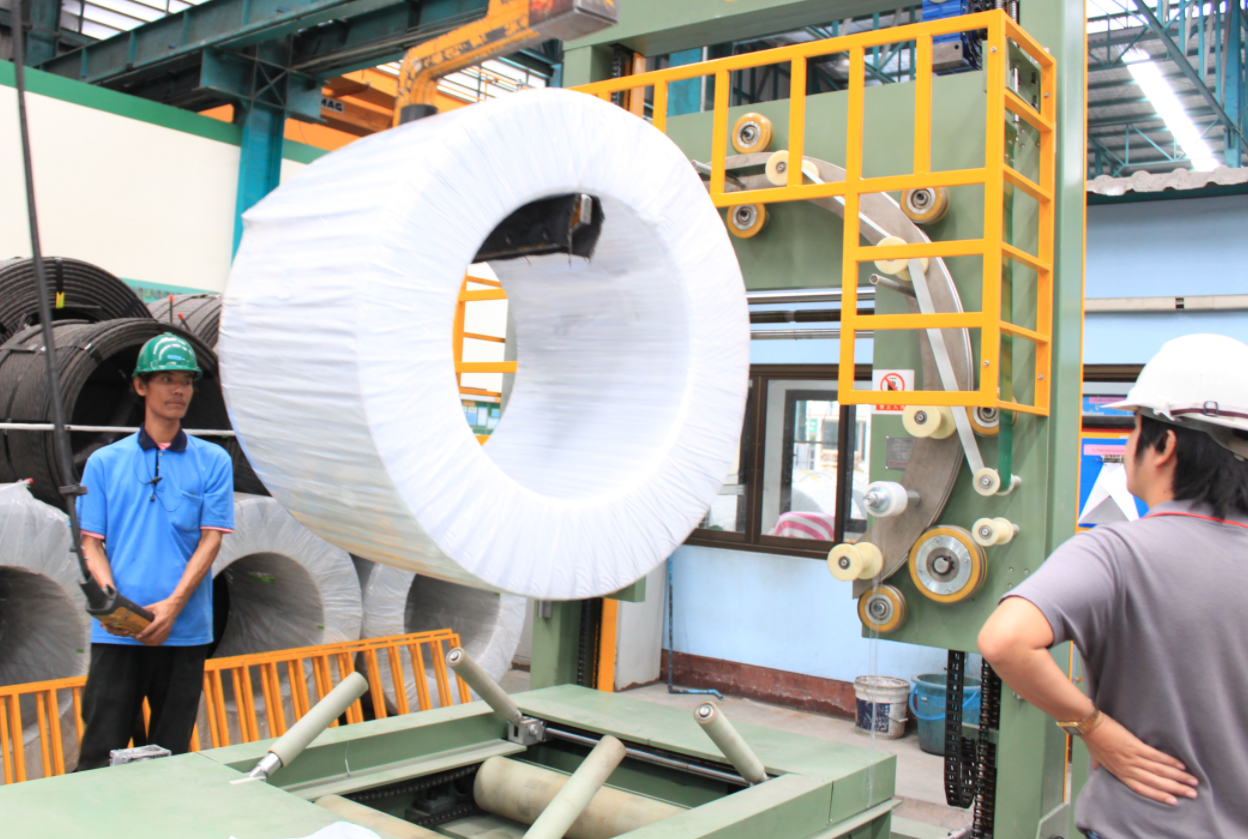

Diverse Industry Applications: Steel, Aluminum, Wire, and Beyond
Let’s explore some specific industry applications and coil types where automatic packaging solutions deliver significant value.
Steel Coil Packaging: The steel industry is a major adopter of automatic coil packaging lines. Steel coils, whether hot-rolled, cold-rolled, or slit coils, require robust packaging to withstand harsh handling and environmental conditions during shipping and storage. Automatic steel coil packing lines handle heavy coils efficiently, applying protective wrapping and secure strapping to prevent damage and corrosion. These lines can be integrated directly with slitting lines or rolling mills for seamless automation. Automatic steel coil packing machine are essential for modern steel processing plants.
Aluminum Coil Packaging: Aluminum coils, being softer and more prone to surface damage than steel, require careful packaging. Automatic aluminum coil packing lines are designed to handle aluminum coils gently while providing effective protection. They often incorporate features like soft rollers, specialized wrapping materials, and precise tension control to prevent scratches and dents. Aluminum coil packing line automation is crucial for maintaining the quality and value of aluminum products.
Wire Coil Packaging: The wire and cable industry benefits significantly from automatic wire coil packing solutions. Wire coils, ranging from fine wires to heavy cables, need to be neatly packaged for easy handling and dispensing. Automatic wire coil wrapping machines can coil, wrap, and strap wire coils of various sizes and materials, ensuring organized and secure packaging for efficient inventory management and customer delivery.
Hose Coil Packaging: Plastic pipe and hose manufacturers utilize automatic hose coil packing machines to streamline their packaging processes. Hose coils, often produced in long continuous lengths, are automatically coiled, wrapped, and bundled for convenient transportation and storage. Automatic hose coiling and wrapping lines improve packaging speed, reduce labor costs, and ensure consistent coil quality.
Bearing Packaging: Precision bearings require specialized packaging to protect them from contamination and damage. Automatic bearing packaging machinery is designed to handle bearings with care, applying protective wrapping materials and creating sealed packages to maintain cleanliness and prevent corrosion. Automated bearing packaging enhances production efficiency and ensures product integrity. Automatic Bearing Packaging Machinery ZC-300 offered by Shjlpack exemplifies this specialized application.
Tyre Packaging: Even tyre manufacturers are leveraging automatic tyre wrapping machines to improve their packaging efficiency and product presentation. Tyres, while robust, benefit from wrapping to protect them from dirt and scuffing during transport. Automatic tyre wrapping machines can quickly wrap tyres of various sizes, enhancing their appearance and providing a clean, professional finish.
Conclusion: Embracing Automation for Cost and Labor Efficiency
Automatic coil packaging solutions represent a significant advancement in industrial packaging technology. They offer a compelling combination of increased efficiency, reduced labor dependency, enhanced safety, and improved packaging quality. By automating labor-intensive processes and leveraging advanced technologies, these systems deliver a strong return on investment and contribute to more sustainable and competitive manufacturing operations.
For businesses seeking to optimize their coil packaging processes, reduce operating costs, and improve product protection, investing in automatic coil packaging lines is a strategic and forward-thinking decision. Embracing automation in this critical area positions companies for long-term success in an increasingly demanding and automated industrial world.












