
Automatic Hydraulic Upender for Metal Coils in South Africa?
Are you a factory manager in South Africa dealing with heavy metal coils? Do you constantly worry about slow operations, worker safety, and damaged products during handling? The old ways of moving steel coils by hand are not just inefficient; they are a huge drain on your profits and a risk to your team. Many factories, just like yours, are facing these exact issues every day.
An automatic hydraulic upender is a specialized industrial machine designed to safely and efficiently change the orientation of heavy loads, specifically metal coils, from horizontal to vertical or vice versa. For South African manufacturing plants, these machines solve critical problems related to manual handling of heavy steel and wire coils, boosting productivity and greatly improving workplace safety.

I understand these challenges well because I have lived them. From starting as an employee to building my own successful packing machine factory, I have seen first-hand how much impact the right equipment can have. Let us look deeper into how an automatic hydraulic upender can solve these major problems for your South African factory and transform your operations.
1. Why Are Manual Metal Coil Handling Methods a Growing Concern for South African Factories?
Is your factory still relying on manual labor or outdated equipment to move heavy metal coils? This approach often seems cheaper at first glance, but it creates serious problems. These methods can quickly become a bottleneck, making your whole production line slow.
Manual handling of heavy metal coils in South African factories leads to significant problems like high accident rates for workers, slow production speeds, and frequent damage to valuable products, directly impacting efficiency, costs, and overall profitability.
When I visit factories, I often hear about the same pain points. Manual methods mean slower processing times. Workers must use cranes or forklifts cautiously when shifting coils. This adds steps and waiting periods. For example, moving a 5-ton steel coil from a horizontal pallet to a vertical processing line takes time and coordination. If you do this many times a day, those minutes add up to hours of lost productivity. This slow pace directly impacts your delivery schedules and overall output. Factories in South Africa, especially those in the logistics or heavy manufacturing sectors, cannot afford such delays. The demand for efficient metal processing means every second counts.
Key Problems with Manual Metal Coil Handling:
- High Safety Risks: Lifting and turning heavy coils manually is extremely dangerous. Workers can suffer crushing injuries, sprains, or even fatal accidents. This is not just a human cost; it also raises your insurance premiums and leads to costly worker’s compensation claims. Companies face increased legal liabilities and penalties. Many factory managers tell me how difficult it is to keep skilled workers when the job carries such high risks. Employee turnover becomes a major issue. 🤕
- Low Operational Efficiency: Human workers have limits. They need breaks, they get tired, and their speed is inconsistent. Compared to a machine, their movements are much slower. A manual process cannot keep up with high-volume production lines. This creates bottlenecks at the end of the line, slowing down the entire factory. For metal processing, where speed is key, this causes serious delays. 🐢
- Frequent Product Damage: Moving heavy, delicate metal coils by hand or with general-purpose equipment often leads to damage. The edges of steel coils can get dented or scratched. Wire coils can unravel or deform. This damage might seem small, but it means returned products, customer complaints, and reduced profits. Every damaged coil is money lost. It also hurts your reputation for quality. 💰
- Increased Labor Costs: While manual labor might seem like a lower upfront cost, the long-term expenses are high. This includes wages, overtime, benefits, and the indirect costs of training new staff due to turnover or injuries. When you add up sick days and reduced productivity from fatigue, the true cost of manual handling quickly becomes very large. 📈
I have seen operations where a single incident of coil damage or a worker injury wiped out months of careful planning. This is why addressing these concerns with automated solutions is not just an option, it is a necessity for modern factories aiming for long-term success in places like South Africa. (manual coil handling risks, factory efficiency bottlenecks, worker safety concerns, product damage costs)
2. What Exactly is an Automatic Hydraulic Upender and How Does It Revolutionize Coil Handling?
Have you ever wondered if there is a safer, faster way to move heavy metal coils around your factory floor? The answer lies in specialized equipment. Many managers in heavy industry are now looking for reliable machines that can solve their biggest handling problems without fail.
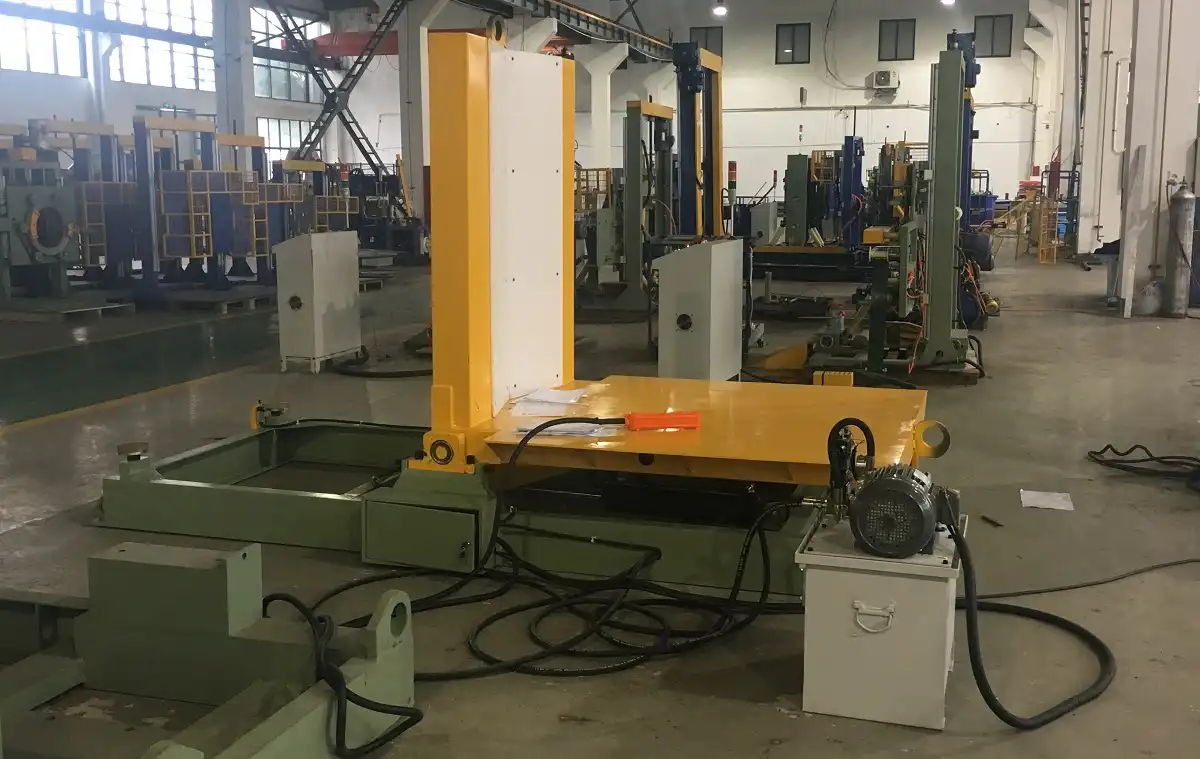
An automatic hydraulic upender is a powerful machine that uses hydraulic pressure to smoothly and safely rotate heavy objects, such as metal or wire coils, usually from a horizontal to a vertical position or vice versa. It removes the need for manual lifting and turning, making the process much faster, safer, and less prone to product damage for industrial operations.

When I first started in the packing machine industry, I quickly learned that basic lifting tools were simply not enough for heavy coils. An automatic hydraulic upender is purpose-built for this exact challenge. Imagine a large, robust platform that securely holds a coil. With the push of a button, hydraulic cylinders smoothly lift and rotate this platform. This changes the coil’s orientation from flat (horizontal) to upright (vertical) or the other way around. It performs this task with precision and control, even for coils weighing many tons. These machines are designed to withstand the harsh conditions of a metal processing plant, ensuring long-term reliability.
Understanding the Mechanics of a Hydraulic Upender:
- Robust Structure: The core of an upender is a heavy-duty steel frame. This frame can handle immense weight and constant use. It is built for industrial environments.
- Hydraulic System: The power comes from a hydraulic pump, motor, and cylinders. These components generate the force needed to lift and rotate heavy coils smoothly. Hydraulic systems are known for their strength and precise control. They can slowly start and stop movement, preventing sudden jolts that might damage coils.
- Control Panel: Operators use a simple control panel to manage the upender. Modern upenders often feature intuitive interfaces, sometimes with touch screens, making them easy to use. Safety interlocks are always present to prevent accidents during operation.
- Coil Support: The upender typically has a cradle or platform shaped to securely hold the metal coil. This ensures the coil remains stable during rotation, preventing slippage or deformation.
- Operation Modes:
- 90-Degree Rotation: This is the most common function, changing a coil from lying flat to standing upright. This is essential for moving coils from a conveyor to an upright wrapping machine or vice versa.
- 180-Degree Rotation: Some advanced upenders can fully invert a coil, which is useful for specific processing steps or loading onto different types of transport.








