

Automatic Coil Packing Machine vs Manual Packing | Which Is More Efficient?
Have you ever stared at your factory floor, watching your team manually pack heavy steel coils or wire bundles, feeling the pressure mount with every slow movement? I have been there, managing operations where every minute of delay meant lost revenue and increased stress. For factory managers like Jose in Mexico, grappling with production bottlenecks, safety risks, and the constant demand for higher output, the question isn’t just about packing. It’s about survival and growth in a competitive market. Are you still accepting the limits of manual labor when better solutions exist?
The clear answer is that an automatic coil packing machine is far more efficient than manual packing methods. It offers superior speed, consistency, and safety, directly addressing the core challenges of modern heavy manufacturing, particularly in the steel and metal processing industries. By automating the end-of-line packaging, factories can dramatically reduce labor dependence, minimize product damage, and significantly improve overall operational throughput, leading to substantial cost savings and enhanced productivity.
In my journey from a packing machine engineer to a factory owner, I learned that true efficiency transforms a business. If you are a factory manager, especially in the demanding world of logistics, steel, or heavy manufacturing, you know that the right equipment can make all the difference. Let’s dive deeper into why this decision matters for your bottom line.


1. Why is manual coil packing a major bottleneck for modern factories?
Are you still struggling with slow packaging speeds and inconsistent quality in your coil packing process? For many factories, especially in metal processing sectors across Mexico and beyond, manual coil packing creates significant bottlenecks. This traditional approach, while seemingly cost-effective at first glance, quickly becomes a hidden drain on resources, directly impacting your production flow and delivery schedules. This is a common problem I saw repeatedly as I built my own packing machine factory and worked with clients.
Manual coil packing is a major bottleneck because it inherently limits speed, consistency, and scalability in high-volume production environments. Its reliance on human labor leads to slower throughput, increased potential for errors, and significant physical strain on workers. These factors combine to create a chokepoint that impedes the entire manufacturing process, delaying shipments and impacting overall factory output and competitiveness in the heavy industry sector.
Let me share some insights from my years in the packing machine industry. When I started, many factories, much like Jose’s operation, relied heavily on manual processes. They saw it as the only way. But I quickly learned that these methods created more problems than they solved.
The Hidden Costs of Hand-Packing Coils
Manual coil packing might seem cheaper initially. You do not buy a big machine. But the costs quickly add up. These are often hidden and hard to track.
-
Slow Speeds and Low Throughput:
- Humans can only work so fast. Packing a heavy steel coil takes time and effort.
- This limits how many coils you can pack in an hour or a day.
- Your main production line might be fast, but packing slows everything down. This creates a backlog.
- Example: A coil slitting line might produce 60 coils per hour, but manual packing can only handle 20 coils. This creates a severe production bottleneck. 🐢
- (Keywords: manual packaging speed, production throughput limits, slow packing process, industrial bottlenecks, heavy coil handling)
-
High Labor Costs and Turnover:
- You need many workers for manual packing. This means high salaries, benefits, and overtime.
- The work is hard and repetitive. Workers get tired. They can get injured.
- This leads to high employee turnover. Training new staff costs money and time.
- A factory in Mexico could easily spend thousands of dollars each month on wages for a manual packing team. This is a recurring cost. 💸
- (Keywords: manual labor costs, factory employee turnover, labor-intensive packing, operational expenditure, skilled labor shortage)
-
Inconsistent Quality and Product Damage:
- Humans make mistakes. Not every coil will be packed the same way.
- Some wraps might be loose. Some protective materials might be missing.
- Heavy coils can be dropped or scratched during manual handling. Edges get damaged.
- This leads to customer complaints and product returns. It costs money to fix or replace damaged goods.
- Imagine a client receiving a damaged steel coil. This hurts your reputation. 💔
- (Keywords: inconsistent packaging quality, product damage in transit, material spoilage, customer dissatisfaction, packaging defects, steel coil edge protection)
-
Safety Hazards and Injury Risks:
- Packing heavy coils is dangerous. Workers lift, move, and wrap large, heavy objects.
- They can strain their backs, drop coils on their feet, or get pinched.
- This leads to workplace accidents and injuries.
- Worker injuries mean higher insurance costs. It means lost workdays. It means low morale.
- I’ve seen firsthand the toll these injuries take on both workers and the factory’s financial health. It’s a serious concern for any factory manager focused on safety standards. 🩹
- (Keywords: worker safety hazards, industrial injury risk, manual handling safety, workplace accident prevention, insurance costs, operational safety compliance)
| Factor | Manual Coil Packing | Automated Coil Packing |
|---|---|---|
| Speed | Slow, inconsistent | Fast, highly consistent |
| Labor | High dependency, high cost, high turnover | Low dependency, reduced cost, stable |
| Quality | Inconsistent, prone to damage | High, uniform, less product damage |
| Safety | High risk of injury | Low risk, enhanced worker protection |
| Scalability | Limited, hard to increase output | High, easily adjusts to production demands |
| Operational Costs | Hidden costs in labor, damage, injuries | Higher upfront, lower long-term operational |
This table clearly shows why manual methods hold factories back. It is not sustainable for growth.
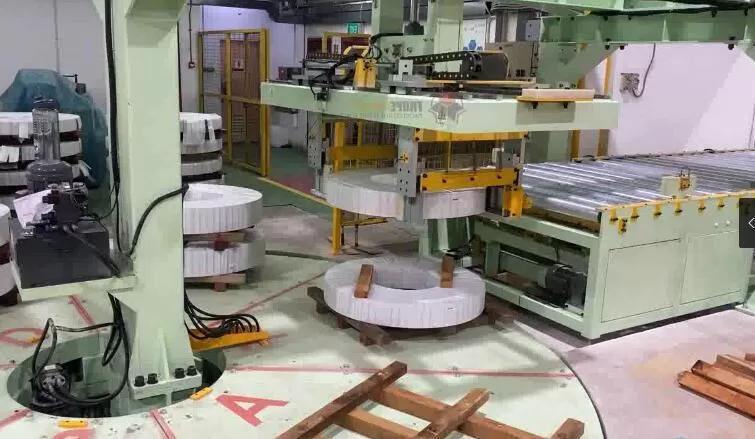

2. How do automatic coil packing machines directly boost production efficiency and output?
Are you constantly pushing your team to meet tight production deadlines, only to find the packing process is still lagging? This is a common pain point for factory managers, particularly in industries like steel manufacturing where high volumes of heavy products demand swift and reliable packaging. The solution often lies in upgrading your machinery, moving away from slow, labor-intensive methods.
Automatic coil packing machines directly boost production efficiency and output by significantly increasing operational speed, ensuring consistent packaging quality, and enabling continuous workflow without human fatigue. These automated systems can process coils much faster than manual methods, reducing bottlenecks at the end of the production line. This leads to higher throughput, faster order fulfillment, and a more streamlined manufacturing process, ultimately enhancing the factory’s overall productivity and competitiveness in the global market.
From my experience building and running a successful packing machine factory, I have seen the transformation firsthand. Investing in the right technology is not just an expense; it is an investment in your future. For someone like Jose, who needs to elevate production, automated systems are a game-changer.
Unleashing the Power of Automated Packaging
Imagine your packing line running smoothly, tirelessly, and without errors. That is the promise of automation.
-
Superior Speed and Throughput:
- Automatic machines work much faster than humans. They can pack coils continuously, 24/7 if needed.
- They can handle multiple coils per minute, depending on the machine type and coil size.
- This speed ensures that your packing line keeps up with your production line. No more waiting.
- For example, an automatic steel coil packing machine can easily pack 30-60 coils per hour. This is a massive increase over manual methods. ⚡
- (Keywords: automated packing speed, high throughput solutions, rapid coil packaging, industrial productivity gains, production line optimization, efficient packing systems)
-
Unmatched Consistency and Quality:
- Machines follow precise programming. Every coil is wrapped the same way, every time.
- The tension of the wrapping material is consistent. The overlap is perfect.
- This ensures uniform package quality. It protects your products better from damage during transport or storage.
- Reduced product damage means fewer customer complaints. It means a better brand reputation. 👍
- (Keywords: consistent packaging quality, uniform coil wrapping, reduced product damage, automated quality control, precision packing, reliable packaging solutions)
-
Seamless Integration and Workflow:
- Modern automatic coil packing lines can integrate with your existing production system.
- They can receive coils directly from slitting lines, banding machines, or crane systems.
- This creates a smooth, continuous workflow. There are fewer stops and starts.
- It helps eliminate bottlenecks at the final stage of your manufacturing process.
- I have helped many clients design layouts that transition seamlessly from production to automated packing, ensuring maximum efficiency. 🔄
- (Keywords: integrated packing lines, seamless factory workflow, production line automation, end-of-line solutions, material handling integration, industrial process flow)
-
Reduced Dependence on Labor:
- One automatic machine can replace several manual workers.
- This means fewer staff are needed for the packing process. The remaining staff can focus on supervision, maintenance, or other value-added tasks.
- It solves the problem of high labor costs and worker shortages.
- In regions like Mexico, where labor can be a significant operational cost, this shift can lead to substantial financial benefits.
- Your team can then focus on quality control or optimizing other parts of the factory. Fewer tired hands, more focused minds. 🤖
- (Keywords: labor reduction packing, automated workforce solutions, reduced manual labor, operational cost savings, industrial automation benefits, packing machine staff optimization)
| Feature | Manual Packing Impact | Automatic Packing Impact |
|---|---|---|
| Speed | Limited by human capacity, creates bottlenecks | High-speed, continuous, eliminates bottlenecks |
| Consistency | Varies with worker skill and fatigue | Precisely uniform, high quality every time |
| Integration | Requires manual transfer points, disjointed workflow | Seamless with production, creates smooth flow |
| Labor Needs | High dependency, significant wage/benefit costs | Low dependency, redeploys workers to skilled tasks |
| Error Rate | Higher potential for human error, rework | Minimal errors, predictable operation |
| Output Volume | Fixed, hard to scale for increased demand | Flexible, easily scales to match production needs |
By moving to automation, you are not just buying a machine. You are buying a solution that unlocks your factory’s full potential.


3. What are the critical safety and cost benefits of switching to automated coil packing?
Are your current packing operations a source of constant worry due to workplace injuries and escalating operational costs? For many factory managers, the human and financial toll of manual handling heavy steel coils can be immense. I understand this pressure deeply, having witnessed the struggles of businesses trying to balance safety with productivity. It is a critical challenge, especially in heavy manufacturing sectors.
Switching to automated coil packing offers critical safety and cost benefits by drastically reducing the need for manual heavy lifting, thereby minimizing workplace accidents and worker injuries. This directly lowers insurance premiums and worker compensation claims. Simultaneously, automation cuts labor costs, reduces material waste from damaged products, and optimizes energy usage. These combined effects significantly improve a factory’s overall return on investment (ROI) and foster a safer, more profitable work environment for heavy industries.
When I decided to establish my own packing machine factory, one of my core goals was to develop solutions that not only boosted efficiency but also protected the people doing the work. The financial independence I achieved came from helping clients achieve similar transformations in their own businesses.
The Dual Advantage: Safety and Savings
Automation is not just about making things faster. It is about making them safer and cheaper in the long run.
-
Significantly Enhanced Worker Safety:
- Automatic machines do the heavy lifting. Workers do not need to manually move or flip heavy steel coils.
- This removes workers from dangerous situations. They are less exposed to moving machinery or falling objects.
- This drastically reduces the risk of strains, crushed limbs, or other serious injuries.
- Think about Jose’s factory: the reduction in worker injuries would mean a safer workplace, higher morale, and fewer costly insurance claims.
- A safe worker is a happy worker, and a happy worker is a productive worker. ❤️🩹
- (Keywords: worker safety improvement, industrial accident prevention, automated heavy lifting, workplace injury reduction, safety compliance solutions, occupational hazard elimination)
-
Substantial Reduction in Labor Costs:
- As discussed, automation reduces the number of workers needed for packing.
- This means lower wages, fewer benefits, and less overtime pay.
- The initial investment in a machine pays for itself over time through these savings.
- For a factory in Mexico, cutting down on manual labor in the packing department can translate to hundreds of thousands of dollars saved annually.
- This frees up budget for other important factory improvements or investments. 💰
- (Keywords: labor cost reduction, automated operational savings, reduced staffing requirements, cost-effective packaging, long-term labor savings, industrial budget optimization)
-
Minimized Product Damage and Waste:
- Manual handling always carries the risk of damaging delicate coil edges or surfaces.
- Automatic machines handle products gently and consistently. They apply packaging materials with precision.
- This reduces material waste from damaged products. Fewer customer complaints mean fewer returns and replacements.
- Every damaged coil is a direct loss. Automation protects your profit margins by protecting your product quality.
- My clients often report a noticeable drop in product damage after implementing our automated solutions. 🛡️
- (Keywords: product damage prevention, reduced material waste, quality control automation, packaging integrity, cost of goods sold reduction, enhanced product protection)
-
Clear Return on Investment (ROI):
- While the upfront cost of an automatic machine is higher, the long-term savings are significant.
- You save on labor, insurance, product damage, and even potentially energy (due to optimized processes).
- These savings quickly add up. The machine pays for itself, often within a few years.
- Factory managers like Jose need to see a clear ROI. Automated packing provides exactly that.
- I always guide my clients to look beyond the purchase price and consider the total cost of ownership and the revenue generated by increased efficiency. 📈
- (Keywords: automated packing ROI, investment payback period, cost-benefit analysis, operational efficiency ROI, long-term savings, manufacturing profitability)
| Benefit Category | Manual Packing Outcome | Automatic Packing Outcome |
|---|---|---|
| Safety | High injury risk, increased insurance, low morale | Drastically reduced injury, lower insurance, high morale |
| Labor Cost | High recurring costs, benefits, turnover expenses | Significant savings, redeployment of staff |
| Product Loss | Frequent damage, rework, customer complaints | Minimal damage, consistent quality, fewer complaints |
| Operational | Inefficient, bottlenecks, unpredictable costs | Streamlined, predictable, optimized costs |
| ROI | Negative long-term impact from hidden costs | Positive, rapid payback through savings and efficiency |
| Compliance | Challenges in meeting safety regulations | Easier to meet and exceed safety standards |
These dual advantages make automation an indispensable asset for any forward-thinking factory manager.
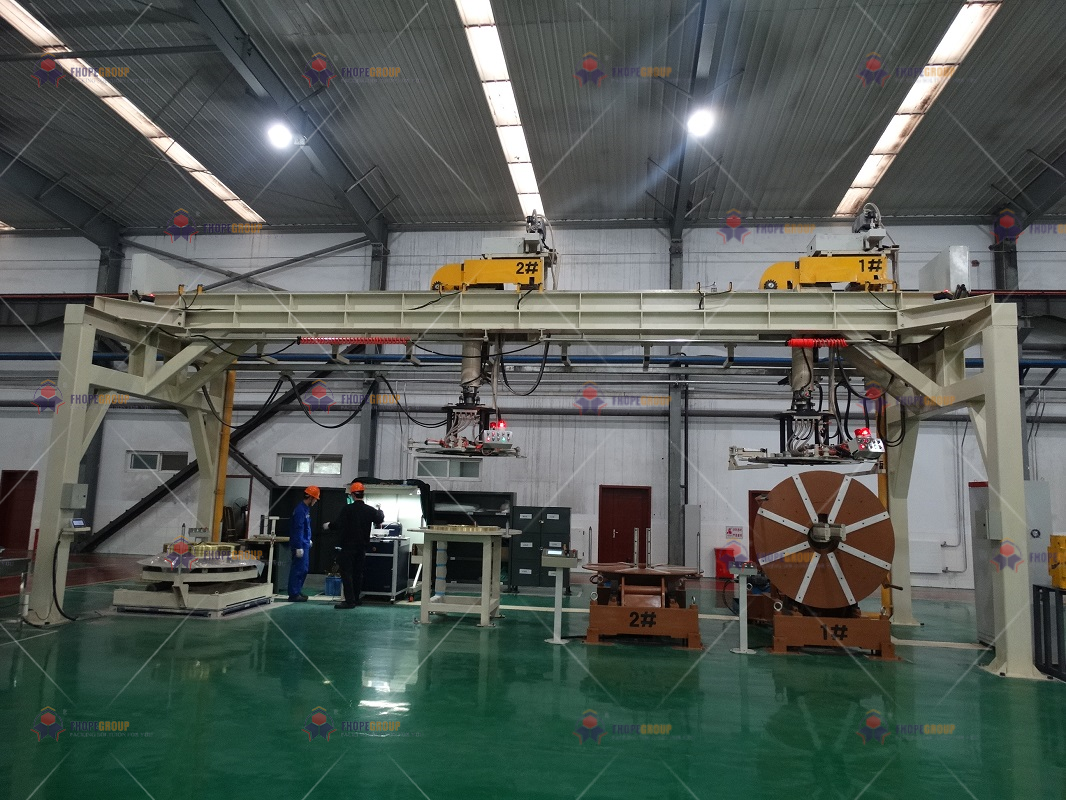

4. Beyond efficiency, what long-term advantages do automatic packing solutions offer manufacturers?
Are you looking for more than just a quick fix for your packing problems? Factory managers, especially those overseeing complex operations in heavy manufacturing, understand that true growth comes from strategic, long-term investments. For professionals like Jose, who seek a deep understanding and reliable solutions, automation offers benefits that extend far beyond simple speed or cost savings.
Beyond immediate efficiency gains, automatic packing solutions provide manufacturers with crucial long-term advantages such as enhanced data collection for process optimization, superior product presentation that strengthens brand reputation, and greater adaptability to evolving market demands. They also foster a culture of innovation and help attract skilled talent, securing a factory’s competitive edge and ensuring sustainable growth in the industrial landscape of countries like Mexico.
In my journey from an employee to a factory owner, I learned that a packing machine is more than just hardware. It is a strategic tool. The financial independence I achieved was not just about making machines, but about understanding how they could transform a business completely. This holistic view is what FHOPEPACK aims to share.
Building a Future-Proof Factory with Automation
Automated packing is not just about today’s needs. It is about building a stronger, smarter, and more resilient factory for tomorrow.
-
Advanced Data Collection and Analytics:
- Modern automatic packing machines come with smart controls. They can collect data on packing speed, material usage, and uptime.
- This data helps you analyze your operations. You can identify new areas for improvement.
- This leads to continuous process optimization. It helps you make smarter business decisions.
- Imagine knowing exactly how much wrapping material you use per coil, and how quickly each batch is processed. This insight is invaluable for streamlining your entire supply chain. 📊
- (Keywords: packing data analytics, operational intelligence, process optimization data, smart factory solutions, predictive maintenance, automated performance metrics)
-
Improved Product Presentation and Brand Image:
- Consistently packed coils look more professional. This gives your customers confidence in your product quality.
- A perfectly wrapped coil reflects positively on your brand image. It shows you care about quality at every step.
- This can give you a competitive edge in the market. It can help you win new clients.
- For a company shipping steel coils from Mexico to international markets, consistent, high-quality packaging is a key differentiator. ✨
- (Keywords: enhanced product presentation, brand reputation improvement, professional packaging, customer perception, market competitiveness, premium product image)
-
Scalability and Adaptability for Future Growth:
- Automatic systems are easier to scale up or adjust. As your production demands grow, your packing can grow with it.
- You can often reconfigure machines or add modules to handle different coil sizes or packaging requirements.
- This flexibility prepares your factory for future market changes and business expansion.
- It means your investment today will serve you well for many years, adapting to new challenges.
- I always advise clients to think about future needs when choosing a machine. Will it still meet your needs in 5 or 10 years? 🚀
- (Keywords: scalable packing solutions, adaptable manufacturing, future-proof automation, production capacity expansion, market demand flexibility, long-term business growth)
-
Attracting and Retaining Skilled Talent:
- Factories with advanced automation are more attractive to skilled workers.
- Instead of repetitive, dangerous manual tasks, employees can focus on machine operation, maintenance, and process improvement.
- This leads to a more engaged and skilled workforce. It helps reduce turnover and improve overall factory expertise.
- Modern workplaces with advanced technology foster innovation and provide better career paths for employees. 👷♀️
- (Keywords: skilled workforce attraction, talent retention in manufacturing, modern workplace appeal, automation career opportunities, industrial innovation culture, employee engagement)
-
Environmental Responsibility and Resource Optimization:
- Automated systems can optimize material usage, reducing waste.
- They can also be designed for energy efficiency, lowering your carbon footprint.
- This is not only good for the planet but also for your bottom line. It shows your company is forward-thinking and responsible. 🌍
- (Keywords: sustainable packaging solutions, resource optimization, reduced carbon footprint, eco-friendly manufacturing, energy-efficient automation, responsible industrial practices)
These long-term advantages demonstrate that automatic packing machines are more than just equipment. They are strategic assets for sustainable factory growth.
Conclusion
The choice between an automatic coil packing machine and manual packing is clear for any modern factory aiming for excellence. Automation consistently outperforms manual methods in every critical area: speed, consistency, safety, and cost-effectiveness. By investing in an automatic steel coil packing line, factory managers like Jose can transform their operations, reduce risks, boost profitability, and future-proof their business for sustainable growth. It is not just about packing smarter; it is about building a better, safer, and more efficient future for heavy manufacturing.












