
Automatic Coil Packing Machine Applications Across Metal Industries
Have you ever felt the relentless pressure of managing a bustling metal processing plant? The constant push to boost output, slash costs, and keep your workers safe? I’ve been there. I’ve seen firsthand how manual packing processes can become massive bottlenecks, jeopardizing both efficiency and safety, and frankly, eating into your bottom line. It’s a common challenge for factory managers like Michael in Mexico, who demand solutions that truly perform under intense, daily operational stress.
Automatic coil packing machines are revolutionizing operations across diverse metal industries by replacing labor-intensive manual methods with high-speed, precision automation. These systems significantly enhance production efficiency, drastically reduce workplace hazards associated with heavy lifting and manual strapping, and protect valuable products like steel coils and wire rods from damage during internal transport and shipping. From hot-rolled steel to delicate aluminum coils, these specialized machines provide consistent, secure, and cost-effective packaging solutions that are essential for modern metal manufacturing and distribution workflows. 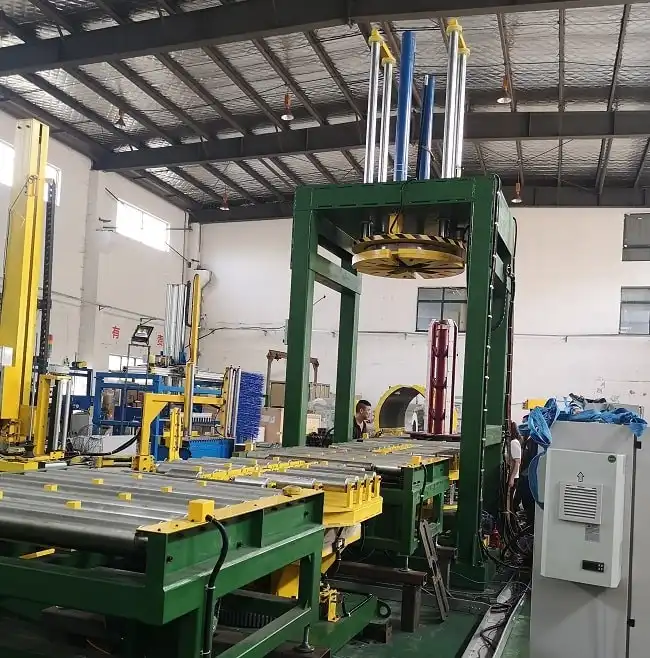
In my journey from a packing machine engineer to establishing FHOPEPACK, I’ve witnessed the transformative power of the right equipment. The shift from manual to automated processes isn’t just about buying a machine; it’s about investing in a strategic partnership that understands your factory’s pulse. Let’s delve deeper into how these smart solutions address real-world challenges and unlock new levels of operational excellence for metal industries worldwide.
1. Why Should Metal Factories Prioritize Automating Coil Packing?
Are you still relying on manual labor for packing your heavy metal coils and wire rods? Many factory managers, including those overseeing large-scale operations in logistics or heavy manufacturing, are grappling with the limitations of outdated packing methods. This often leads to frustrating efficiency bottlenecks and safety incidents that undermine productivity and profitability. The manual handling of heavy coils not only slows down your entire production line but also introduces significant risks to your workforce, making automation a critical strategic move.
Automating coil packing in metal factories is essential for overcoming critical operational challenges, primarily by eliminating efficiency bottlenecks, mitigating significant safety hazards, and reducing product damage that often occurs with manual processes. It transforms the end-of-line packaging from a slow, labor-intensive choke point into a streamlined, high-speed operation, ensuring faster product delivery and a safer working environment for employees who no longer have to manually handle cumbersome, heavy materials. 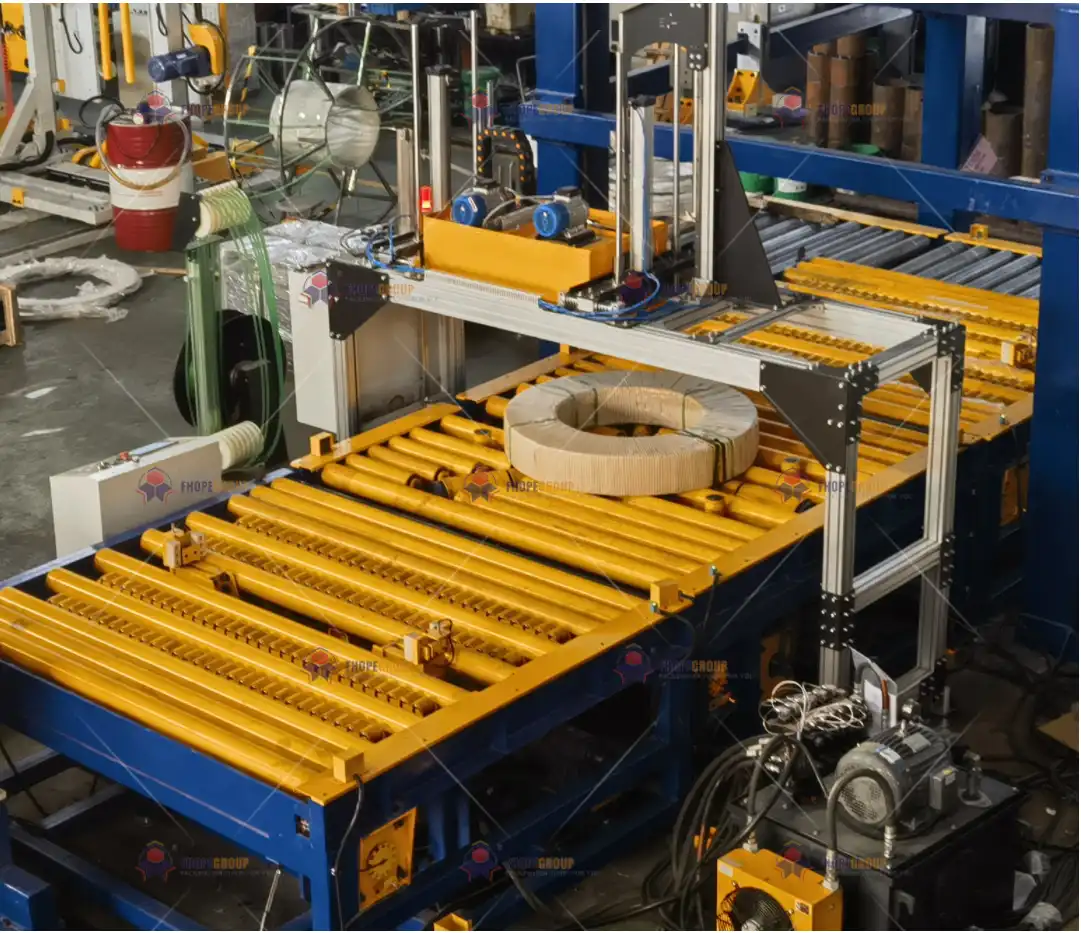
When I started my career in packing machine factories, I saw the stark contrast between manual and automated lines. Manual coil packaging, especially for heavy steel coils or wire bundles, is inherently slow and inconsistent. Workers exert immense physical effort, leading to fatigue and errors, which directly impact the overall production throughput and delivery schedules. Factory managers like Michael often face immense pressure to boost output, and manual packing simply cannot keep pace with high-volume production requirements. Automating this step removes the human element from repetitive, strenuous tasks, allowing for continuous, faster operation cycles. This shift drastically improves the overall manufacturing velocity and ensures that finished products are ready for shipment without unnecessary delays, ultimately accelerating the entire supply chain. (Enhanced manufacturing throughput)
The Hidden Costs of Manual Coil Packing
Many businesses underestimate the true cost of manual coil packing. It’s not just about wages; it’s about a cascade of related expenses that erode profitability.
- Elevated Labor Costs: Manual packing requires a significant workforce, and these costs only rise with inflation and labor shortages. Automation allows you to reallocate skilled workers to more value-added tasks. (Reduced operational expenditure)
- High Injury Rates: Handling heavy, awkward coils manually is dangerous. Sprains, crushed limbs, and back injuries are common. These incidents lead to increased insurance premiums, lost workdays, and high employee turnover rates, creating a cycle of recruitment and training. (Worker safety improvements)
- Inconsistent Packaging Quality: Human error can lead to uneven tensioning, loose straps, or improper wrapping, which compromises the integrity of the package. This can result in product damage during transit, leading to costly customer complaints and returns. (Consistent package integrity)
- Reduced Throughput and Bottlenecks: Manual processes are inherently slower than machines. As production increases, manual packing often becomes the bottleneck, preventing the entire factory from reaching its full potential output. (Increased production flow)
- Space Inefficiency: Manual operations often require more floor space for staging and movement, which automated systems can condense into a smaller footprint. (Optimized factory layout)
Consider Michael’s factory: if current steel coil packaging processes are largely manual, this means significant labor dependency, slow speeds, and direct impacts on overall production and delivery. By automating, factories gain not just speed but also a critical competitive edge. The investment in automated coil packing equipment quickly pays for itself through savings in labor, reduced injury claims, and minimized product damage. For any manager aiming for lean operations and maximum efficiency, the argument for automation is overwhelmingly clear. (Operational efficiency gains)
2. What Types of Automatic Coil Packing Machines Are Best for Different Metal Products?
Navigating the vast array of automatic coil packing machines can be a daunting task for factory managers. Each metal product, from delicate aluminum coils to robust steel wire rods, presents unique packing challenges. Choosing the wrong machine can lead to inefficient operations, compromised product integrity, and ultimately, financial losses. How do you ensure your investment in automation truly aligns with the specific characteristics of your diverse metal output?
The best automatic coil packing machines are specifically designed to handle the unique dimensions, weights, and material properties of various metal products, ensuring optimal protection and efficiency. For example, stretch wrapping machines excel with delicate aluminum or copper coils, providing a tight, protective layer against surface damage and environmental factors. Orbiting stretch wrappers are ideal for large, heavy steel coils, offering comprehensive containment and stability during transit. Additionally, specialized steel wire packing lines integrate features like bundling, compressing, and strapping to secure multiple wire coils, while vertical coil wrappers are perfect for standing coils, preventing rust and impact damage. These tailored solutions cater to specific packaging requirements across the diverse metal industries, from ferrous to non-ferrous metals. 
In my experience building successful packing machine factories, I’ve learned that one size rarely fits all in the world of industrial packaging. The “best” machine is always the one that perfectly matches your specific product and operational needs. For Michael, managing a metal processing plant with varied outputs, understanding these distinctions is crucial. For instance, a facility dealing with cold-rolled steel coils will have different requirements than one producing thick steel wire. The key is to assess the characteristics of your coils: their diameter, width, weight, and the type of material (steel, aluminum, copper, etc.). Each of these factors dictates the appropriate machine type, from horizontal orbit wrappers that secure large, heavy coils to vertical solutions for standing coils that need protection from the elements. This precise matching of machine to product ensures maximum efficiency and product safety. (Tailored packaging solutions)
Matching Machine Type to Metal Product Needs
Here’s a breakdown of common automatic coil packing machines and their ideal applications:
| Machine Type | Best For | Key Features & Benefits |
|---|---|---|
| Horizontal Orbit Stretch Wrapper | Large, heavy steel coils (hot/cold rolled), tubes | Wraps the coil radially with stretch film or plastic woven material. Provides excellent protection against dust, moisture, and minor impact. High speed and automation reduce labor. (Heavy metal coil wrapping) |
| Vertical Coil Wrapper | Coils stored vertically, specific wire coils | Wraps coils while they are standing upright. Ideal for protecting the inner diameter and outer surfaces from environmental damage. Often integrates strapping. Suitable for environments where floor space is optimized for vertical storage. (Upright coil protection) |
| Steel Wire Packing Line | Bundled wire coils, rebar coils | Integrates multiple steps: wire compressing, strapping (steel or PET), and wrapping. Designed for securing multiple smaller wire coils into larger, stable bundles for easier transport and. Enhances stability and prevents unraveling. (Wire coil bundling automation) |
| Coil Strapping Machine | All coil types needing secure bundling | Applies steel or PET straps around the coil. Essential for securing the coil’s shape and preventing unraveling. Can be integrated into wrapping lines or used standalone. Offers high tension and secure fastening. (Industrial coil strapping) |
| Pallet Stretch Wrapper | Coils on pallets for stability | Wraps entire palletized loads. Ensures stability of coils during transport, preventing shifting or tipping. Also protects from dust and moisture. Useful for mixed loads or smaller coils consolidated on pallets. (Palletized load stabilization) |
| Automatic Coil Tilters/Upenders | Integrated into packing lines | Mechanically tilts coils from horizontal to vertical or vice-versa. Essential for facilitating safe handling and transfer between different packing stages or for optimal storage. Reduces manual handling risks significantly. (Safe coil orientation changes) |
Choosing the right partner, like FHOPEPACK, means you get more than just a machine. It means you get the insights of someone who’s lived and breathed packing machines. I focus on understanding your specific production flow, the types of metal products you handle, and your ultimate packaging goals. Whether it’s a dedicated cold-rolled steel coil strapping line or a comprehensive system for steel wire packaging, the aim is always to provide a solution that not only meets your current needs but also supports your future growth, ensuring durability and efficiency in the most demanding environments. (Customized packing equipment)
3. How Do Automatic Coil Packing Systems Improve Safety and Reduce Product Damage?
Are you consistently battling high injury rates and costly product damage in your metal factory? Manual handling of heavy metal coils and the challenges of securing them manually expose workers to serious risks, while inadequate packaging can lead to significant material losses. These issues not only create safety hazards but also erode customer trust and directly impact your profit margins. Is there a way to fundamentally transform these problematic areas and ensure both worker well-being and product integrity?
Automatic coil packing systems dramatically improve workplace safety by eliminating the need for manual handling of heavy and hazardous metal coils, thereby reducing the risk of musculoskeletal injuries, crushed limbs, and other accidents. Simultaneously, these advanced systems significantly reduce product damage through consistent, precise wrapping and strapping. By automating tasks like coil tilting, strapping, and film application, they ensure uniform protection, prevent deformation or scratching during internal transport and external shipping, and maintain product quality, directly addressing client complaints and enhancing overall profitability. 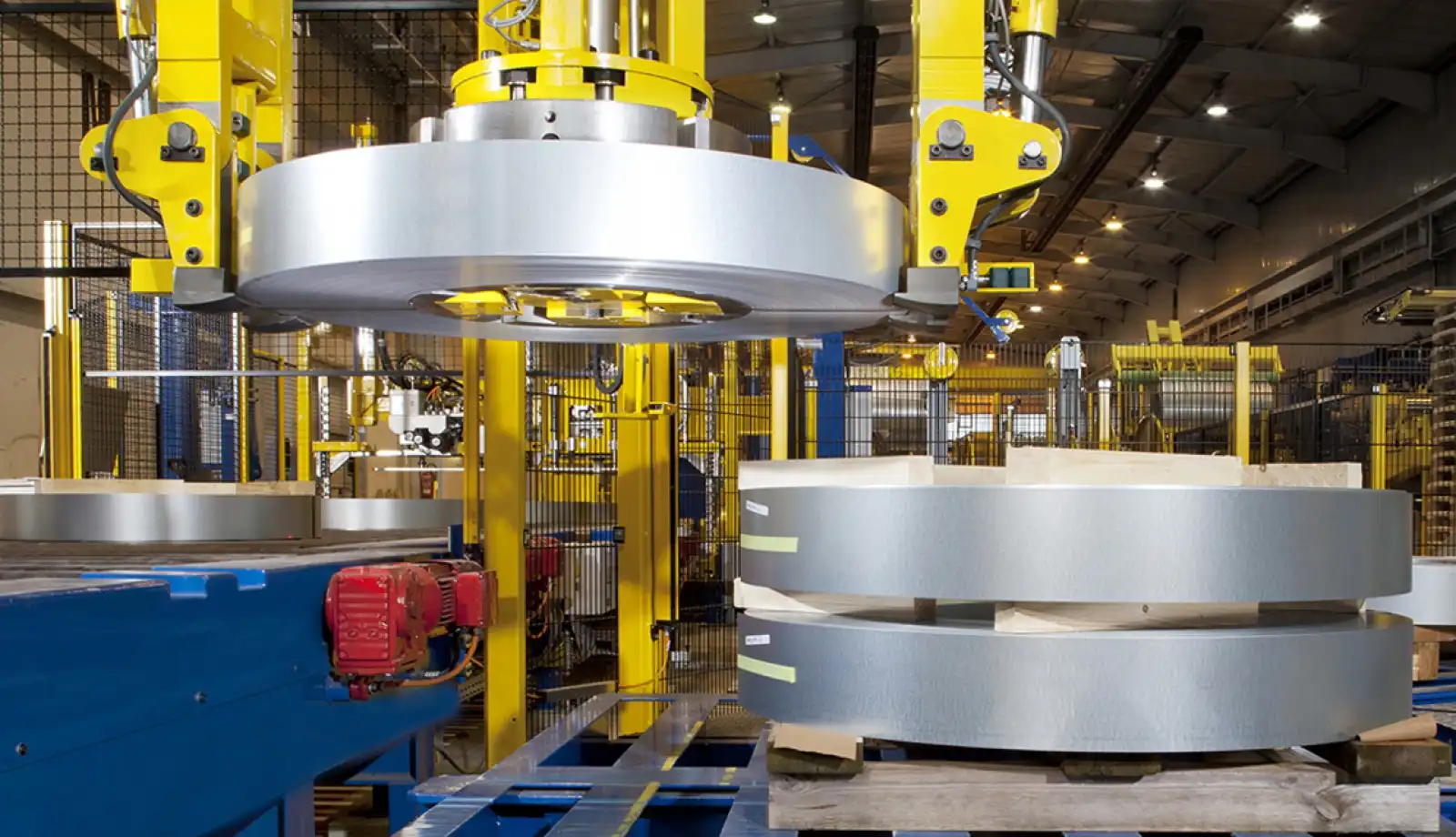
When I was an employee at a packing machine factory, I witnessed firsthand the dangers workers faced. The manual manipulation of steel coils, sometimes weighing tons, was incredibly risky. It wasn’t just about the heavy lifting; it was about the awkward movements, the unstable loads, and the potential for a coil to shift unexpectedly. Automation fundamentally changes this picture. By integrating coil tilters, automatic strapping machines, and stretch wrappers, factories can create a hands-free environment for most of the packing process. Workers operate machines from a safe distance, drastically reducing their exposure to direct physical hazards. This proactive approach to safety not only protects employees but also lowers insurance costs and boosts morale, knowing that their employer prioritizes their well-being. (Workplace hazard mitigation)
Beyond Safety: Preserving Product Quality
Product damage is a silent killer of profits. Scratched surfaces, dented edges, or loose strapping on steel or aluminum coils can lead to rejection by clients, impacting reputation and profitability.
- Consistent Wrapping Tension: Automated stretch wrappers apply film with uniform tension across the entire coil surface. This consistency is almost impossible to achieve manually and is crucial for preventing the film from loosening or tearing during transit, which would expose the product. (Uniform packaging application)
- Precision Strapping: Automatic strapping machines apply straps with controlled tension and perfect alignment. This secures the coil tightly, preventing unraveling or deformation, especially important for large steel coils that can otherwise expand or shift. (Secure coil bundling)
- Protection Against Environmental Factors: Automated systems can apply specialized films or materials that offer superior protection against moisture, dust, and UV radiation, crucial for preserving the quality of sensitive metals like galvanized steel or aluminum. (Environmental product shielding)
- Reduced Handling Damage: With automated systems, coils move smoothly through the packing line via conveyors and specialized handling equipment. This minimizes the number of touchpoints and the potential for human error or rough handling that can cause dents, scratches, or edge damage. (Minimized manual product interaction)
- Integrated Tilting and Transfer: Automatic coil tilters and transfer carts ensure coils are moved and oriented safely and efficiently without any manual intervention. This dramatically reduces the risk of accidental drops or impacts that can damage the product during internal logistics. (Automated material handling)
For factory managers like Michael, who have experienced product damage during internal transfer and packaging, investing in these systems offers a clear return on investment. It’s not just about avoiding costly customer complaints; it’s about delivering a pristine product that reinforces your factory’s reputation for quality. My personal experience has shown that clients who invest in robust automatic packaging systems consistently report higher customer satisfaction and fewer claims, directly contributing to business growth and financial independence. (Enhanced customer satisfaction)
4. What Are the Key Considerations for Choosing the Right Automatic Coil Packing Solution?
The decision to invest in an automatic coil packing machine is significant, representing a substantial capital outlay for any metal processing plant. Without a clear understanding of what truly matters, factory managers might find themselves with equipment that fails to meet their specific operational demands, leading to continued inefficiencies or unexpected maintenance costs. How can you ensure that your investment in a coil packing solution is a strategic one, driving genuine improvements in your factory’s productivity and profitability?
Choosing the right automatic coil packing solution requires a comprehensive evaluation of your factory’s specific production volume, coil dimensions (weight, diameter, width), and the required level of automation. Key considerations include the machine’s durability and reliability to withstand heavy industrial environments, its adaptability to integrate with existing production lines, and the availability of robust after-sales support and spare parts. Additionally, factory managers must assess the system’s return on investment (ROI) by analyzing potential savings in labor costs, reductions in product damage, and improvements in overall operational efficiency, ensuring the solution aligns with both immediate needs and long-term business goals.
When clients approached me to help set up their packing machine factories, the first thing I emphasized was a thorough needs assessment. It’s not about finding the cheapest machine, but the right machine. For Michael, who is seeking a truly knowledgeable partner, this means looking beyond the glossy brochures. It involves a deep dive into your current operational challenges—the efficiency bottlenecks, the safety concerns, the product damage issues—and aligning these with a solution that offers a clear, measurable ROI. My journey taught me that durable equipment, backed by excellent service, is paramount in the demanding packing machine industry. This is why I always guide clients towards robust machines that can withstand high-intensity, harsh work environments, because I know firsthand that any downtime translates into significant losses. (Strategic equipment investment)
Critical Factors for a Smart Investment
Making an informed decision on an automatic coil packing machine involves several interconnected factors:
- Production Capacity & Coil Specifications:
- What is your daily, weekly, or monthly packing volume?
- What are the minimum and maximum coil dimensions (weight, inner diameter, outer diameter, width)?
- Are you packing steel, aluminum, copper, or a mix?
- Insight: A machine designed for light aluminum coils won’t survive a high-volume hot-rolled steel operation. (Optimized production output)
- Durability and Reliability:
- Is the machine built with heavy-duty components?
- What is its expected lifespan in your operating conditions?
- Insight: Investing in a robust, industrial-grade machine, even if it has a higher initial cost, often pays off in fewer breakdowns and longer service life. Companies like Fengding are known for their strong, reliable packing solutions in demanding industries. (Long-term operational resilience)
- Integration with Existing Lines:
- Can the new packing machine seamlessly integrate with your upstream production lines (e.g., slitting lines, rolling mills)?
- Does it require significant modifications to your current layout?
- Insight: A well-integrated system minimizes disruptions and maximizes the flow of materials, creating a true end-to-end automated process. (Seamless production flow)
- Automation Level & Customization:
- Do you need semi-automatic or fully automatic operation?
- Are there specific packing materials (stretch film, VCI paper, strapping) or patterns required?
- Insight: Customization can be key for unique product shapes or specific protective requirements. FHOPEPACK often works with clients to tailor solutions to their precise needs, ensuring the equipment truly solves their unique problems. (Tailored automation levels)
- After-Sales Service & Support:
- What kind of warranty and technical support does the supplier offer?
- Are spare parts readily available?
- What is the typical response time for service requests?
- Insight: Michael’s past experience with suppliers focused only on sales highlights this crucial point. A true partner provides ongoing support to minimize downtime. I always ensure FHOPEPACK clients have reliable access to expertise and parts, which is essential for sustained operation. (Reliable post-purchase assistance)
- Total Cost of Ownership (TCO) & ROI:
- Beyond the purchase price, consider installation, training, maintenance, and operational costs.
- Calculate the projected ROI based on labor savings, reduced damage, and increased throughput.
- Insight: A higher initial investment can often lead to a lower TCO over time due to greater efficiency and fewer issues. Always focus on the long-term benefits and payback period. (Financial viability assessment)








