
In-Depth Research Report on Full-Process Automation in the Tire Industry from Production to Warehousing and Logistics
1. Executive Summary
(This section will be written after the main body of the report is completed, aiming to synthesize core findings, key insights, and strategic recommendations to provide a high-level overview for decision-makers.)
2. The Evolving Landscape of Warehousing and Logistics Automation
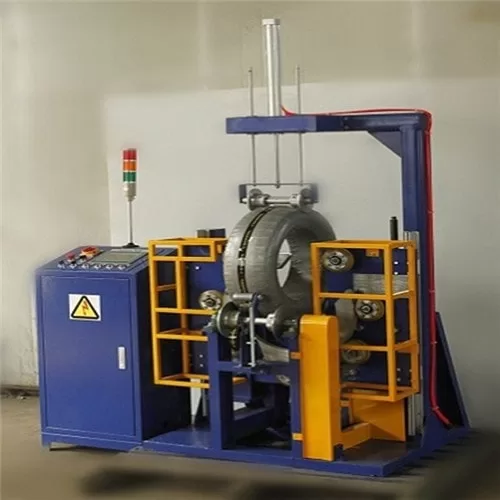
The field of warehousing and logistics automation is undergoing unprecedented transformation, profoundly impacting various industrial sectors, including the tire industry. Market dynamics, key drivers, and emerging trends are collectively shaping this era of change.
2.1. Current Market Dynamics and Growth Drivers
The global warehouse robotics and automation market is experiencing significant growth. Estimated at USD 3.76 billion in 2024, it is projected to reach USD 25 billion by 2035, exhibiting a Compound Annual Growth Rate (CAGR) of approximately 17.1%1. This robust growth momentum underscores the industry’s increasing reliance on automation technologies to meet the complex demands of modern supply chains. The automotive logistics market, a related sector, valued at USD 363.64 billion in 2024, is expected to reach USD 744.39 billion by 2033, growing at a CAGR of 8.60%, primarily driven by climbing production volumes and increasingly complex distribution needs2.
The key factors propelling this growth are diverse and interconnected, primarily including: the continuous pursuit of efficiency and productivity gains, the rapid advancement of robotics and Artificial Intelligence (AI) technologies, global labor shortages, rising labor costs, and the explosive growth of e-commerce1. These factors collectively compel businesses to seek automation solutions to remain competitive.
The dual pressures of surging e-commerce demand1 and labor shortages1 are creating a critical impetus for automation technologies. This is not merely about cost savings but also about ensuring operational continuity and scalability. Tire manufacturers and distributors, especially those serving online retail channels, must leverage automation to meet customer expectations for speed and product availability. The logic is that e-commerce inherently demands faster order fulfillment and more complex, individualized shipping solutions. Simultaneously, widespread labor shortages in the logistics industry (e.g., global logistics workforce has decreased by about 15% in the last five years1) make relying on traditional manual operations difficult to meet these demands. Automation directly addresses these two issues by increasing handling capacity1 and reducing reliance on manual labor3. Therefore, for tire companies involved in e-commerce or facing labor constraints, automation has shifted from a “nice-to-have” to an “essential element” for maintaining competitiveness and meeting customer expectations.
Notably, a significant influx of capital into the warehouse automation sector1 is likely to accelerate the development of more specialized, cost-effective solutions tailored for specific industries like tire handling. Over time, this could lower the automation barrier for small and medium-sized enterprises in the tire industry. A rapidly growing market (from USD 3.76 billion to USD 25 billion1) naturally attracts substantial R&D investment from technology providers. Initial automation solutions are often generic, but as the market matures, suppliers seek differentiation by addressing specific industry needs, and the tire industry has unique handling requirements due to its products’ size, weight, and shape. Increased competition and economies of scale in the broader automation market often drive down costs (e.g., equipment leasing has become a way to overcome high upfront investments4). Consequently, the current boom in general warehouse automation is expected to give rise to more accessible and customized automation solutions applicable to the tire industry, benefiting not only large enterprises but also small and medium-sized businesses.
2.2. Key Trends: Efficiency, Labor Shortages, and Technological Advancement
- Efficiency and Productivity: Automation is key to improving operational efficiency, reducing errors, and accelerating the entire process from production to delivery1. For example, automated truck loading can reduce a 3-hour manual operation to just 1 hour5.
- Labor Shortages and Costs: The global logistics workforce has decreased by about 15% in the last five years, exacerbating the need for automation solutions to mitigate labor shortages and control rising costs1. Automation allows human employees to focus on higher-value activities3.
- Technological Advancement: Rapid developments in AI, robotics, IoT, and machine learning make automation solutions smarter, more powerful, and easier to deploy1.
- Sustainability: Eco-friendly packaging and optimizing carton sizes to reduce emissions and transportation costs are emerging trends, and automation plays a role in “right-sizing” packaging4. The tire industry also focuses on sustainability through R&D in materials and manufacturing processes, where automation can reduce resource consumption6.
Driven by the dual forces of sustainability and cost considerations, the trend of “right-sizing” packaging4 will push the development of more sophisticated automated packaging solutions. These solutions will need to dynamically adapt to different tire sizes and order configurations, shifting from simple wrapping to intelligent boxing or bundling. The reason is that 4 explicitly identifies “eco-friendly packaging” and “right-sizing cartons” as key trends for reducing emissions and costs. Tires, especially those for e-commerce, vary in size and are often shipped individually or in small, mixed batches. Traditional fixed-size packaging solutions are inefficient and wasteful for this variability. Therefore, to achieve optimal right-sizing packaging for tires, automated packaging systems will need to integrate advanced sensing technology to determine tire dimensions and utilize AI/robotics to dynamically select or create appropriately sized packaging. This implies a need for more flexible and intelligent end-of-line packaging automation.
The convergence of labor shortages1 and the push for sustainability4 is likely to provide a “double justification” for automation investments. Projects that can both reduce reliance on labor and improve the environmental footprint (e.g., automated systems that optimize logistics to save fuel, or automated systems capable of using lighter/recyclable packaging) are likely to receive higher priority in capital allocation. Companies are facing pressure to reduce labor costs due to shortages and rising wages1. At the same time, pressure from consumers and regulations to improve sustainability is increasing4. An automation project typically has a primary justification (e.g., labor savings). If an automation project can also deliver significant sustainability benefits (e.g., AGV systems that optimize routes to save energy, or automated packaging systems that reduce material waste), it greatly strengthens its business case. Therefore, businesses will increasingly seek automation solutions that deliver benefits on multiple fronts, making their investments more attractive and aligned with broader strategic goals.
Table 1: Growth Forecast for Warehouse/Logistics Automation and Related Tire Markets
| Market Segment | Current Value (Year) | Projected Value (Year) | CAGR | Key Drivers | Source |
|---|---|---|---|---|---|
| Warehouse Robotics & Automation | $3.76 Billion (2024) | $25 Billion (2035) | ~17.1% | Efficiency needs, Technological advancements, Labor shortages, E-commerce growth | 1 |
| Automotive Tire Molds | $1.7 Billion (2024) | $2.2 Billion (2030) | 4.5% | Demand for high-performance tires, Tire design innovation, Vehicle production growth, Advancements in 3D printing etc. | 7 |
| Automotive Tire Market | $138.42 Billion (2024) | $202.20 Billion (2033) | 4.3% | Growth in vehicle production and sales, Increasing disposable income, Growth in EV sales | 8 |
| Advanced Tires Market | $1.8 Billion (2024) | $4.2 Billion (2034) | 8.8% | Advancements in vehicle technology, Demand for high-performance tires, EV transition, Smart tire sensor technology | 9 |
| Connected Tires Market | $0.01 Billion (2024) | $0.06 Billion (2029) | 41.8% (Forecast Period) | Demand for real-time tire performance tracking, Proliferation of IoT and connected vehicle technology, Increased focus on vehicle safety and predictive maintenance | 10 |
| Tire and Wheel Handling Equipment | $3.94 Billion (2024) | $4.96 Billion (2029) | 4.4% (Forecast Period) | Growth in automotive production, Adoption of puncture protection tire technology, Preference for lightweight materials, Adoption of electric commercial vehicles | 11 |
| Tire Wrapping Machine Market | $1.96 Billion (Base Year) | $2.94 Billion (Forecast Year) | 5.20% | Increased tire production, Demand for efficient and automated packaging solutions, Sustainable packaging trends | 12 |
This table integrates the economic scale and growth trajectories of automation and key related areas in the tire industry, helping to understand the investment landscape and market potential. The user’s core query is about the full-process automation in the tire industry from production to logistics. Understanding the market size and growth of various automation technologies (warehouse robots, tire handling equipment, wrapping machines) directly addresses the need for an overview of the “current situation” and “future outlook”. Simultaneously, including data on related tire markets (automotive tires, advanced tires, connected tires) provides context for the overall health of the industry and highlights specific growth areas (like smart tires) that will drive the need for specialized automation. A comprehensive table facilitates easy comparison and underscores the significant capital investment and opportunities in these interconnected areas, thereby reinforcing the importance of strategic automation investment.
3. Core Automation Technologies Reshaping Tire Industry Workflows

A range of core automation technologies are profoundly changing the operational model of the tire industry, extending from the end of the production line to the final logistics stage. These technologies not only improve efficiency but also bring new possibilities for quality control, inventory management, and the overall intelligence of the supply chain.
3.1. Robotics Applications: From AGV/AMR to Palletizing Robots
- Automated Guided Vehicles (AGV) / Autonomous Mobile Robots (AMR): AGVs and AMRs are increasingly used for material transport within manufacturing facilities and warehouses, effectively reducing manual operations and improving efficiency1. Large enterprises like Amazon and Walmart have deployed AMR/AGV systems on a large scale1. Fori Automation Inc. holds a patent for an AGV stabilization system13. These mobile robots are foundational for intralogistics automation. 1 shows their widespread impact, 14 mentions their use in tire tread production, 15 explains their role in intralogistics, and 13 points to a specific AGV stabilization technology patent.
- Robotic Arms: Due to their high precision, robotic arms dominate the warehouse automation market, widely used for tasks such as picking, placing, and assembly1. In 2024, the robotic arm market was valued at USD 1.5 billion and is expected to grow to USD 8.5 billion by 20351. Robotic arms serve as versatile tools in multiple stages, including packaging and palletizing.
- Palletizing Robots: These are robotic systems specifically designed to stack tires onto pallets.
- C&D Robotics Inc. has obtained a patent for a universal tire stacking and palletizing end effector capable of handling different sizes and types of tire stacks without causing damage16. The system also includes features for tire recognition, position tracking, and pick optimization.
- Cassioli offers anthropomorphic palletizing robots equipped with various grippers (double gripper, vertical gripper, horizontal gripper) to adapt to different palletizing methods, such as “interlocking” stacking, and feature comprehensive safety functions17. These systems 16 are crucial for end-of-line automation and preparing tires for warehousing and outbound shipping.








