
Which orbital stretch wrapper suits Uzbek cable and wire reel packaging best?
Uzbek cable and wire factories often face old, slow, and unsafe packaging systems. These manual methods cause product damage, high labor costs, and slow down everything. This directly impacts your profits and customer happiness. Lost time and damaged goods are very costly. Choosing the right orbital stretch wrapper can completely change your operations. It offers a clear path to higher efficiency and better product protection. I have seen this first-hand many times throughout my career.
The best orbital stretch wrapper for Uzbek cable and wire reel packaging depends on several factors. These include your production volume, the size of your reels, your budget, and how much automation you want. For factories with high production, a fully automatic horizontal orbital wrapper that includes a conveyor system is often the ideal choice. For smaller operations, a semi-automatic model provides a good balance between cost and improved efficiency.

Making this choice is not always simple. It needs a clear look at your factory’s specific needs and goals. Let’s dig deeper into what these different options mean for your production line in Uzbekistan.
Understanding Different Orbital Wrappers: Manual, Semi-Auto, or Full-Auto for Uzbek Factories?
Many factories in Uzbekistan struggle with deciding how much automation they really need. Manual processes seem cheap at the start but often cost more in the long run. Too little automation means wasted time and high labor costs. Too much automation can be an unnecessary expense if your production volume is low. Understanding the clear differences between manual, semi-automatic, and fully automatic wrappers is key. It helps you find the exact right fit for your factory’s production goals.
Uzbek factories can choose from manual, semi-automatic, and fully automatic orbital stretch wrappers. Manual wrappers require an operator to load, wrap, and unload each reel, making them best for very low production volumes. Semi-automatic machines automate the wrapping part but still need an operator for loading and unloading. These are suitable for medium production volumes. Fully automatic systems handle everything, including material feeding and discharge, making them perfect for high-volume, continuous production lines.
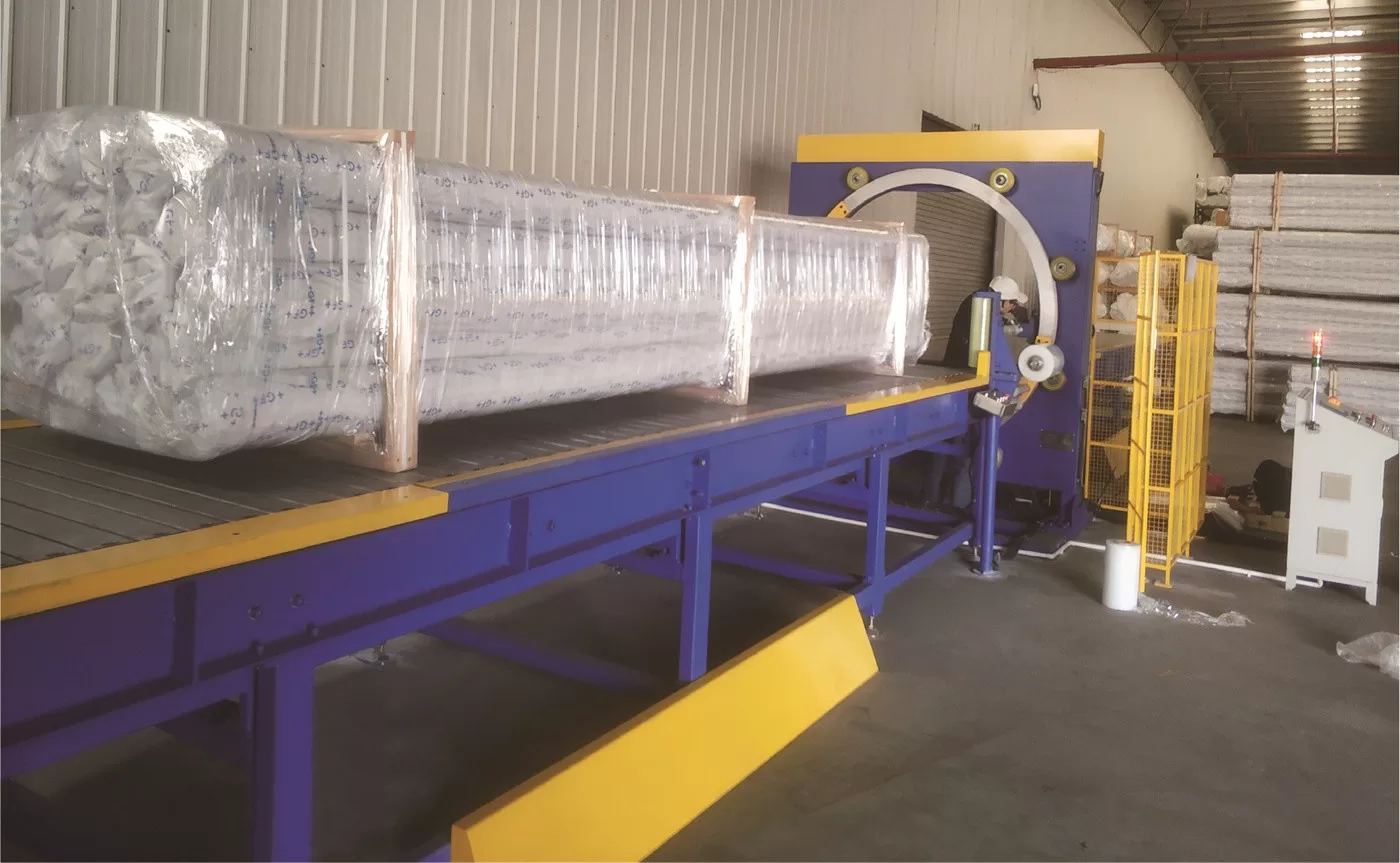
Choosing the right level of automation is critical for any factory, especially in a growing industrial landscape like Uzbekistan. Each type of orbital wrapper offers distinct advantages and disadvantages that directly impact labor costs, production speed, and worker safety. I remember in my early days at a packing machine factory, everything was done by hand. The physical effort was immense, and mistakes were a common issue. Moving to even semi-automatic solutions felt like a huge leap forward, and for my clients, fully automatic systems were a game changer for massive scaling.
-
Manual Orbital Wrappers: These machines are the simplest and least expensive to buy. An operator physically loads the cable reel onto a platform, guides the film, and starts the wrapping process by hand. While the initial investment is low, the operational costs are high due to the significant labor required. Worker fatigue can lead to inconsistent wrapping and a higher risk of injury, especially with heavy reels. For a factory manager like Michael Chen, who faces pressures regarding safety and efficiency, manual systems would only worsen his existing problems. They are only practical for very small workshops or for highly specialized, low-volume products where automation is not feasible. The output speed is directly tied to operator skill and endurance, making it a bottleneck for even modest production targets.
-
Semi-Automatic Orbital Wrappers: These machines strike a good balance. An operator still loads and unloads the reel, but the machine takes over the actual wrapping process. The operator simply places the reel, starts the cycle, and the machine wraps it automatically with consistent tension and overlap. This significantly reduces manual labor and improves wrapping quality. Safety is also enhanced because the operator does not need to handle the film during the high-speed wrapping. Features like adjustable film tension and multiple wrapping programs allow for better control over the packaging. For many medium-sized Uzbek factories, a semi-automatic machine represents a smart upgrade. It tackles efficiency bottlenecks and reduces the risk of product damage compared to manual methods. My clients who invested in semi-automatic models often saw a quick return on their investment due to reduced labor costs and fewer damaged products.
-
Fully Automatic Orbital Wrappers: These are the most advanced and integrated solutions. They seamlessly connect with existing production lines. Reels arrive on a conveyor, are automatically loaded into the wrapper, wrapped without any human intervention, and then discharged onto another conveyor. This system offers the highest speed, lowest labor requirement, and most consistent packaging quality. Safety is maximized because operators are kept away from moving parts. While the initial investment is higher, the long-term benefits in terms of efficiency, reduced labor costs, and minimized product damage are substantial for high-volume operations. For a large metal processing plant like Michael’s, aiming to resolve end-of-line bottlenecks and significantly increase output, a fully automatic system is almost a necessity. It delivers a significant competitive edge by ensuring continuous, high-speed output and superior product protection. These systems often include advanced diagnostics and can be integrated into factory management systems for remote monitoring and control.
How to Choose the Right Wrapping Speed and Tension for Cable Reels?
Incorrect wrapping speed or film tension can ruin products. If the film is too loose, the reel is not protected and can fall apart. If it is too tight, the cable itself might get damaged, leading to bigger issues. Damaged products mean returns, unhappy customers, and lost money. It directly impacts your factory’s good name and financial health. Setting the right speed and tension is extremely important. It protects your cable and wire reels, making sure they arrive safely. This small detail prevents very costly mistakes.
To choose the right wrapping speed and tension for cable reels, consider the reel’s stability, the cable’s sensitivity, and the required packaging strength. Slower speeds help prevent unraveling of loose cables and ensure the film sticks well. Proper film tension is critical; it must be firm enough to secure the reel but not so tight that it deforms the cable or damages the core. Adjustable tension settings on the wrapper allow fine-tuning for different materials and reel types, ensuring optimal protection without causing damage.

Finding the perfect balance between wrapping speed and film tension is a crucial aspect of effective packaging. It directly influences both the integrity of the product and the efficiency of the packaging process. My experience shows that overlooking these details can lead to significant product losses and customer complaints, which are exactly the types of issues Michael Chen wants to avoid. A well-configured machine can adapt to a wide range of products, from delicate fiber optic cables to heavy steel wire, ensuring each is perfectly protected.
-
Impact of Wrapping Speed: The speed at which the wrapping ring rotates directly affects how quickly the reel is packaged and how the film applies. If the speed is too fast for very small or unstable reels, it can cause the reel to wobble or even fall, creating a safety hazard and damaging the product. For cables that might unravel easily, a slightly slower speed allows the film to catch and secure them more effectively from the first wrap. On the other hand, too slow a speed impacts your factory’s overall throughput, creating a bottleneck. The ideal speed must balance production targets with the physical characteristics of the reel and cable. Modern orbital wrappers allow operators to adjust the ring speed easily. This flexibility lets you optimize for different product lines without needing to change machines.
-
Importance of Film Tension: Film tension refers to how tightly the stretch film is pulled around the product. This is arguably the most critical setting. If the tension is too low, the film will be loose, offering poor protection against dust, moisture, and impact. The reel’s contents could shift, leading to damage. Too much tension, however, can be equally harmful. For lightweight or cardboard reels, excessive tension can crush or deform the reel itself. For sensitive cables, it might even compress the cable, affecting its internal structure or insulation. The goal is to achieve a snug, secure wrap that holds everything firmly without causing any damage. High-quality orbital wrappers offer precise tension control systems, often with pre-stretch capabilities. Pre-stretch technology elongates the film before it even touches the product, maximizing film usage and ensuring a very consistent, strong wrap with less film. I have seen factories struggle with this; a machine with easy-to-adjust controls saves so much headache. It allows you to fine-tune for every type of cable, from thin fiber optics to heavy steel wire, ensuring perfect packaging every time.
-
Adapting to Material Specifics: Cable and wire reels come in many different weights, sizes, and with various types of contents. Some wires are extremely delicate and prone to kinking, while others are robust and heavy. The chosen orbital wrapper must be versatile enough to handle this variety. This means having the ability to adjust not only speed and tension but also the number of film layers and the overlap percentage. A machine that can use different film gauges (thicknesses) and types is also valuable. For example, a thicker film might be needed for very heavy reels exposed to harsh transport conditions, while a thinner, high-stretch film might suffice for lighter, less vulnerable products. Understanding your product range is key to selecting a machine that can adapt.
Ensuring Safety and Durability: Key Features for Heavy-Duty Reel Packaging in Uzbekistan?
Packaging heavy cable reels often brings big safety risks. Manual handling leads to worker injuries and high costs. When equipment breaks down, it causes delays and even more costs. Worker injuries increase insurance costs and lower morale. Downtime due to unreliable machines means you miss deadlines and lose orders. Investing in equipment designed specifically for safety and durability is essential. It protects your workers and keeps your production running smoothly without interruptions. This focus reduces risks and builds confidence in your operations.
For heavy-duty reel packaging in Uzbekistan, key safety and durability features include robust construction with heavy-gauge steel. This allows the machine to withstand continuous operation. Safety features like clear emergency stop buttons, automatic fault detection, and strong protective guarding minimize the risk to operators. Durable components, such as high-quality motors and wear-resistant rollers, ensure a long lifespan and consistent performance. This holds true even in harsh industrial environments, which reduces the need for frequent maintenance and costly downtime.

When you operate a factory that deals with heavy materials like cable and wire reels, safety and durability are not just features; they are foundational requirements. A machine that frequently breaks down or poses risks to workers quickly becomes a liability, canceling out any gains in efficiency. For a factory manager like Michael Chen, who emphasizes the importance of reliable equipment and minimizing work injuries, these considerations are paramount. My experience in building and running packing machine factories taught me that cutting corners on these aspects always leads to greater long-term costs.
-
Robust Machine Construction: The very foundation of a durable orbital wrapper is its construction material and design. For heavy-duty applications, the machine must be built from heavy-gauge steel. This structural strength allows it to support large, heavy cable reels without bending or vibrating excessively. Look for machines with solid frames and components that are designed for continuous, industrial use, not just light-duty tasks. High-quality welding and precision engineering ensure that the machine remains stable and reliable over years of operation. Inferior materials or flimsy construction can lead to premature wear, frequent breakdowns, and even catastrophic failures, which can be both dangerous and incredibly expensive to repair. When I was designing machines for my own factory, I always insisted on materials that could withstand the toughest conditions because I knew the cost of downtime was far greater than the cost of quality materials.
-
Integrated Safety Features: Worker safety should always be a top priority. A well-designed orbital wrapper incorporates multiple safety mechanisms to protect operators. These include easily accessible emergency stop buttons that can immediately halt all machine movement. Protective guarding, such as safety fences or light curtains, creates a physical barrier or an invisible field that stops the machine if a person or object enters a dangerous zone. Automatic fault detection systems can identify issues like film breaks, motor overloads, or alignment problems and shut down the machine before an accident occurs. Clear warning labels and operating instructions are also important. The goal is to minimize any interaction between the operator and moving parts during operation, drastically reducing the risk of injuries associated with manual handling of heavy items or working near high-speed machinery. This directly addresses Michael Chen’s challenge of high injury rates and rising insurance costs.
-
Durability for Harsh Environments: Industrial environments in places like Uzbekistan can be demanding. Factors like dust, humidity, temperature fluctuations, and continuous operation stress machinery. A durable orbital wrapper must be built to withstand these conditions. This means using sealed bearings to keep out dust and moisture, corrosion-resistant coatings or materials for exposed parts, and robust electrical systems that can handle power fluctuations. Components like motors, gearboxes, and rollers should be industrial-grade, designed for heavy use and long life cycles. Machines that are easy to maintain, with readily accessible lubrication points and modular designs for quick part replacement, also contribute to overall durability and reduce costly downtime. A machine that runs reliably, day in and day out, is worth its weight in gold for any factory manager. It ensures consistent output and gives peace of mind.
My Insights: Building a Partnership Beyond Just Selling a Machine.
Many factories buy equipment only to find very poor after-sales support. Suppliers often disappear after the sale, leaving you stranded with problems and no help. This leads to much frustration, extended downtime, and a wasted investment. It makes you very wary of trusting new suppliers. My philosophy has always been about building long-term partnerships. It means offering ongoing support and expert guidance, not just making a sale. This approach truly ensures your success.
My insights emphasize that choosing an orbital stretch wrapper is much more than a simple transaction; it is about finding a long-term partner. This partner should offer not only reliable machinery but also expert consultation, robust after-sales service, and a deep understanding of your operational challenges. Such a partnership ensures your investment truly solves problems and helps your business grow, providing support from initial installation to regular maintenance and future upgrades.

I started my career as a packing machine engineer, working on the factory floor. Later, I established my own successful packing machine factory. This journey showed me the real struggles factory owners face. I learned that a good machine is only half of the solution. The other, equally vital half, is the support and expertise behind it. I experienced the pain of bad equipment and poor support myself. This is why at FHOPEPACK, we focus on sharing knowledge and building strong relationships. We want to truly help others succeed, just as the industry helped me achieve financial independence. This philosophy is especially important for clients like Michael Chen, who have faced supplier trust issues in the past.
- Beyond the Sale: What a True Partner Offers:
- A Consultative Approach: A true partner does not just push products. They take the time to understand your unique factory needs, your specific production bottlenecks, and your long-term goals. For example, if Michael Chen needs to reduce manual handling and ensure product integrity, a good partner will recommend a tailored solution, not just a standard machine. This involves site visits, detailed discussions, and often custom-engineered adaptations.
- Professional Installation and Training: Proper setup is crucial for any new machine. An expert partner provides professional installation services, ensuring the machine is set up correctly and safely. More importantly, they offer thorough training for your operators and maintenance staff. This training covers daily operation, troubleshooting common issues, and performing routine maintenance. Well-trained staff can maximize machine efficiency and prevent costly errors or breakdowns.
- Reliable Technical Support and Spare Parts: Machines, even the best ones, sometimes need service or spare parts. A committed partner provides quick and responsive technical support. This means having knowledgeable technicians available to answer questions, diagnose problems, and guide you through repairs. Fast access to genuine spare parts is equally important. Long delays in getting parts mean extended downtime, lost production, and missed deadlines. This kind of reliable support minimizes interruptions and keeps your factory running smoothly.
- Future-Proofing and Continuous Improvement: The best partners do not just focus on today’s needs. They also look at tomorrow. They offer advice on how to upgrade your equipment, improve your packaging processes, and stay competitive in the market. As your factory grows or your product lines change, they can provide solutions that evolve with your business. This long-term view helps you make smart investments that continue to deliver value for many years. This is the core of what FHOPEPACK aims to deliver: a relationship that ensures your sustained success.








