
Which coil wrapping machine ensures consistent wrapping for Canada’s plastic pipe coils?
Are you struggling with inconsistent wrapping for your plastic pipe coils in Canada? Is manual labor slowing down your production and causing quality issues? This inconsistency leads to damaged products, unhappy customers, and lost profits. Your valuable products deserve better protection from the elements and handling. Finding the right coil wrapping machine is key to solving these challenges and ensuring your products reach their destination in perfect condition.
For consistent wrapping of plastic pipe coils in Canada, a high-quality horizontal orbital coil wrapping machine or a specialized vertical wrapping machine with advanced tension control systems is often the best choice. These machines use stretch film or woven fabric, applying layers evenly with adjustable tension, ensuring a tight, protective, and consistent wrap every time, crucial for safeguarding products during transit and storage.

As someone who has spent years in the packing machine industry, from the factory floor to building my own successful company, I understand these pain points deeply. The right machine does more than just wrap; it protects your investment and enhances your brand. It brings efficiency and peace of mind. Let us explore the solutions that truly make a difference for Canadian manufacturers, helping them achieve reliable and consistent packaging every day.
1. What unique challenges do Canadian plastic pipe coil manufacturers face with packaging?
Packaging plastic pipe coils in Canada presents its own set of difficulties. The coils are often bulky and can be easily damaged if not handled correctly. Manual methods are slow, risky for workers, and lead to inconsistent wraps. This can mean higher labor costs, increased insurance premiums, and product damage from rough handling or environmental exposure. Understanding these specific challenges helps us pinpoint the most effective packaging solutions.
Canadian plastic pipe coil manufacturers face challenges like extreme weather conditions requiring robust packaging, high labor costs making automation essential, the need for consistent, tight wraps to prevent damage during transport, and pressure to meet specific customer demands for packaging quality and speed. These factors highlight the need for reliable, automated wrapping solutions that can handle large volumes efficiently and safely, reducing both product damage and operational costs.
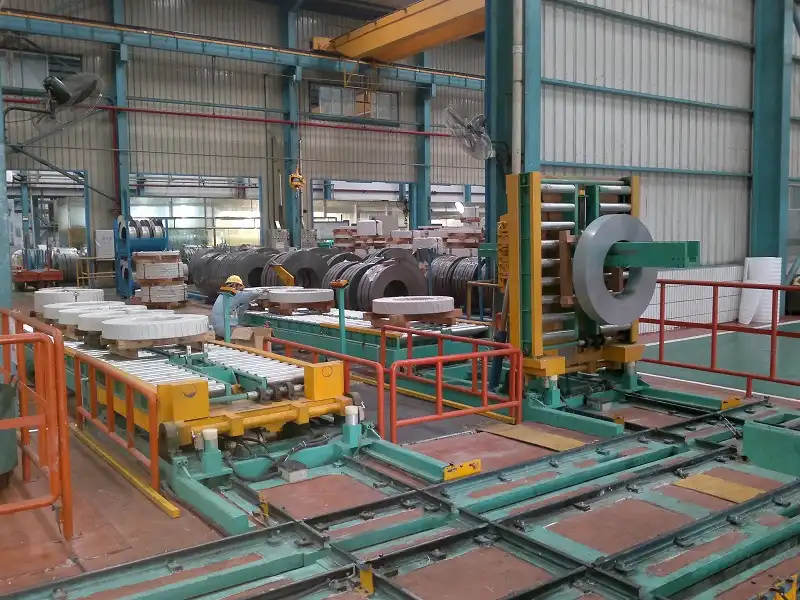
Canadian plastic pipe coil manufacturers operate in a unique environment that shapes their packaging needs. I have seen firsthand how much even small inconsistencies in wrapping can cost a business. In my early days, we would spend hours re-wrapping coils because the manual process was just too unreliable. This not only wasted film but also delayed shipments. Today, the challenges are even more complex, pushing manufacturers to seek robust, automated solutions.
Harsh Environmental Factors
Canada’s climate presents significant challenges. Plastic pipe coils often face extreme cold in winter and varying humidity throughout the year. Packaging must protect the product from moisture, UV degradation if stored outdoors, and temperature fluctuations. This requires specific packaging materials and a wrap that maintains its integrity under these conditions. A loose wrap can let in moisture, while UV exposure can degrade the plastic over time.
Extensive Logistics and Transport Needs
Many Canadian manufacturers ship their products across long distances, both domestically and internationally. This means packaging must withstand rough handling, vibrations, and multiple transfers. Damage to coil edges or surfaces during transit leads to customer complaints and product rejections. Effective packaging reduces the risk of scuffs, dents, and other forms of damage that can occur during a long journey.
High Labor Costs and Safety Concerns
The cost of labor in Canada is generally high, driving manufacturers to seek automation wherever possible. Manual wrapping of large or heavy plastic pipe coils is not only slow but also inherently dangerous. Workers are at high risk of strains, sprains, or more serious injuries when handling heavy, awkward items. This leads to increased insurance costs, lost productivity from absenteeism, and higher employee turnover. Automating this process significantly improves workplace safety and reduces operational expenses.
Production Volume and Speed Demands
To meet market demand, Canadian manufacturers need to maintain high production rates. Manual wrapping often creates bottlenecks at the end of the production line, slowing down overall output. An efficient packaging process is critical to ensure a steady flow of products and timely deliveries. This means the wrapping machine must be able to keep up with the manufacturing pace without sacrificing quality.
Specific Material Handling Requirements
Plastic pipes can be more delicate than other materials, such as steel. They can scratch easily, and excessive pressure during wrapping can lead to deformation. This requires precise tension control and gentle handling throughout the packaging process. The wrapping solution must be tailored to protect the plastic’s surface and structural integrity.
2. What types of coil wrapping machines deliver the best consistency for plastic pipe coils?
Choosing the right coil wrapping machine can feel overwhelming with many options available. Not all machines offer the same level of consistency or are suitable for plastic pipe coils. A wrong choice means continued frustration with uneven wraps, wasted film, and ongoing product damage. You need a machine that truly delivers on its promise of consistent, high-quality packaging. Let me break down the most effective types of machines for achieving consistent results with your plastic pipe coils.
For plastic pipe coils, the most consistent wrapping results come from horizontal orbital stretch wrappers and, for very large or specific applications, vertical coil wrapping machines. Horizontal wrappers are versatile for many coil sizes, providing a tight, protective wrap around the coil’s outer diameter. Vertical machines are ideal for handling coils placed on pallets, offering stability and complete coverage. Both types employ motorized pre-stretch and tension control for even film application, ensuring product integrity.
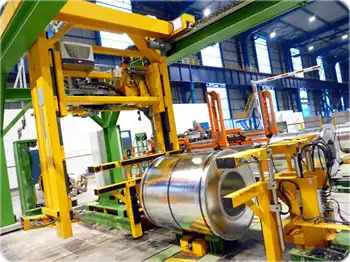
When I started my factory, one of the first big investments was in a reliable horizontal wrapper. I saw immediately how it transformed our output and quality, cutting down reworks by over 80%. This was a crucial step in building client trust and ensuring we delivered consistent products. Deciding between machine types depends on your specific product and operational needs. Let us look at the primary options for plastic pipe coils.
Horizontal Orbital Coil Wrapping Machines
Horizontal orbital coil wrapping machines are perhaps the most common choice for wrapping coils of various materials, including plastic pipe. They operate by having a wrapping ring that passes through the eye of the coil, applying stretch film or woven fabric around the coil’s outer diameter. The coil itself often remains stationary on rollers, or it slowly rotates, while the wrapping ring moves around it.
- How they work: The coil is loaded onto a conveyor system. The wrapping material is fed from a dispenser that rotates in an orbital motion around the coil.
- Benefits for consistency: These machines provide consistent tension and even overlap of the wrapping material across the entire surface of the coil. They are highly adaptable to different coil diameters and widths. The controlled orbital movement ensures every part of the coil receives the same level of protection.
- Specifics for plastic pipe: Modern horizontal wrappers offer adjustable support rollers and precise speed control, allowing for gentle handling of plastic pipes, preventing deformation or scratching during the wrapping process.
Vertical Coil Wrapping Machines
Vertical coil wrapping machines are another excellent option, especially for very large, heavy plastic pipe coils or when coils need to be wrapped while standing on a pallet. In this setup, the coil sits upright on a rotating turntable. The film applicator moves vertically around the coil, or the coil rotates while the applicator moves up and down.
- How they work: The coil is placed vertically on a turntable. The wrapping arm or film carriage rotates around the coil, applying the film.
- Benefits for consistency: Vertical machines offer stability for tall or heavy coils during wrapping. They can provide a full-body wrap, including the top and bottom sections of the coil, which is important for comprehensive protection. The controlled rotation and vertical movement ensure uniform coverage.
- Specifics for plastic pipe: These are ideal if your plastic pipe coils are stored or shipped vertically on pallets. They ensure the coil remains stable and unwound during the packaging process.
Key Features for Achieving Consistency
Regardless of whether you choose a horizontal or vertical machine, certain features are vital for consistent wrapping:
- Motorized Pre-stretch Unit: This unit stretches the film before it is applied to the coil. It maximizes film yield, meaning you use less film for a stronger, tighter wrap. It also helps maintain consistent tension.
- PLC Control System: Programmable Logic Controllers (PLC) offer precise control over all wrapping parameters, including film tension, overlap percentage, and wrapping speed. This eliminates human error and ensures repeatable results for every coil.
- Automatic Film Cutting and Clamping: Automated systems ensure a clean start and end to each wrap, preventing loose ends that could unravel or cause damage.
- Robust Conveyor Systems: Integrated roller conveyor systems ensure smooth product movement through the machine. This prevents damage from manual handling and maintains product stability during the wrapping process.
Comparison: Horizontal vs. Vertical Coil Wrapping Machines
| Feature | Horizontal Orbital Wrapper | Vertical Coil Wrapper |
|---|---|---|
| Coil Orientation | Flat on rollers (eye horizontal) | Standing upright on turntable (eye vertical) |
| Wrapping Method | Ring passes through coil’s eye, wrapping around | Film applicator moves around/up-down stationary coil |
| Ideal For | Wide range of coil diameters and widths | Large, heavy coils, often palletized |
| Consistency Factor | Excellent for radial wrapping, consistent tension | Great for full-body wrap, stable during wrapping |
| Space Requirement | Generally more linear space | Can be more compact footprint for single station |
| Loading | Conveyor, crane, forklift (eye horizontal) | Forklift, crane (coil placed on turntable) |
| Plastic Pipe Coils | Very common, versatile, efficient | Good for very large coils or if vertical handling is preferred |
3. How do advanced coil wrapping machines guarantee consistent wrapping quality?
Many manufacturers struggle to achieve truly consistent wrapping. Manual methods are inherently inconsistent, and older machines often lack the precision needed for today’s high standards. This lack of consistency leads to customer complaints, returned products, and a tarnished reputation. Your packaging needs to reflect the quality of your product. Modern coil wrapping machines use smart technology to ensure every coil leaves your facility perfectly wrapped, upholding your brand’s commitment to quality.
Advanced coil wrapping machines guarantee consistent wrapping quality through a combination of sophisticated features: precise tension control systems that prevent film breakage and ensure a tight, even wrap; motorized pre-stretch units that optimize film usage and application; PLC control for programmable wrapping parameters (speed, overlap, number of layers); and robust conveyor systems for smooth product handling. These elements work together to eliminate human error and ensure repeatable results, delivering high-quality, uniform packaging every time.
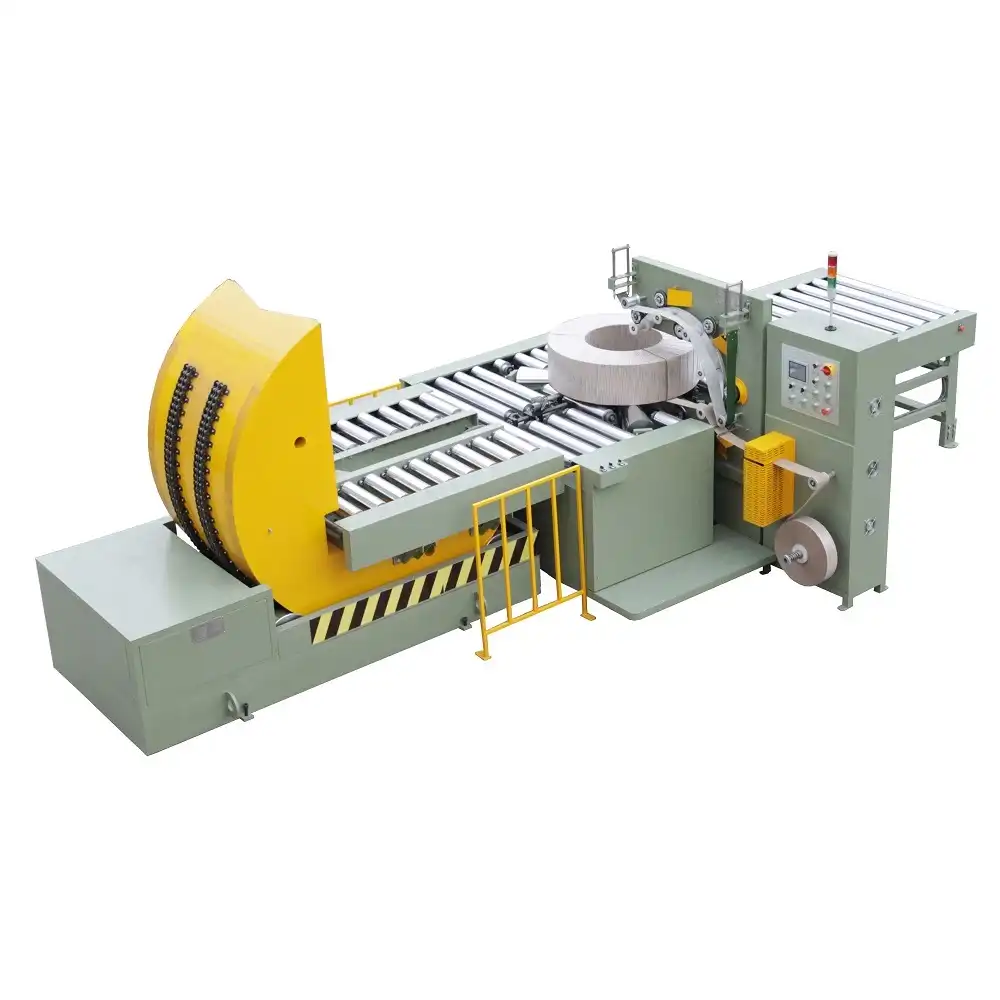
I recall a client who thought all wrapping machines were the same. They bought a cheap model without good tension control. Their plastic pipe coils were either crushed or falling apart in transit. We helped them upgrade to a machine with proper pre-stretch and PLC control. Their product damage dropped by 90%, and customer satisfaction soared. This example shows the real value of investing in machines with advanced features designed for consistency.
Precision Tension Control Systems
One of the most critical components for consistent wrapping is the tension control system. These systems use load cells or electronic feedback loops to monitor and adjust the film tension in real-time. This dynamic adjustment prevents the film from being applied too tightly, which could crush or deform the plastic pipe, or too loosely, which would result in a sagging, ineffective wrap. Consistent tension ensures the film adheres smoothly and uniformly, regardless of slight variations in coil size or shape. It is a fundamental element in protecting the relatively softer material of plastic pipes.
Motorized Pre-stretch Units for Film Optimization
Advanced machines incorporate motorized pre-stretch units. These units stretch the film before it is applied to the coil, often by as much as 200% or 300%. The benefits are twofold:
- Cost Savings: By stretching the film, you use significantly less material per coil, leading to substantial cost reductions over time.
- Enhanced Wrap Strength: Stretching the film increases its memory and elasticity, resulting in a stronger, tighter, and more puncture-resistant wrap. This ensures the film maintains its integrity and protective qualities.
PLC Control and Human-Machine Interface (HMI)
Programmable Logic Controllers (PLCs) are the brains of modern wrapping machines. They manage all operational sequences and parameters with high precision. Coupled with a user-friendly Human-Machine Interface (HMI), operators can:
- Set Specific Programs: Create and save different wrapping programs for various coil types, sizes, or customer requirements. For example, a program for light-duty coils might use fewer layers, while a program for export might demand more layers and tighter tension.
- Monitor Performance: Track wrapping speed, film usage, and potential errors.
- Ensure Repeatability: The PLC ensures that every coil wrapped under a specific program receives the exact same treatment, eliminating variations that come from manual adjustments. This is key to true consistency.
Automatic Film Application, Cutting, and Sealing
Human error often occurs at the start and end of a wrap. Advanced machines automate these steps:
- Automatic Film Clamping: The machine securely clamps the film to the coil at the beginning of the cycle.
- Automatic Film Cutting: Once the desired number of layers is applied, the machine precisely cuts the film.
- Heat Sealing (Optional): Some systems include a heat-sealing mechanism to secure the tail end of the film, preventing it from unraveling.
These automated processes ensure a clean, secure, and professional finish for every wrapped coil, improving both aesthetics and protective quality.
Integrated Conveyor Systems
For a fully automated and consistent process, integrated conveyor systems are crucial. These systems seamlessly move plastic pipe coils through the wrapping machine.
- Smooth Handling: Powered rollers or belts ensure the coils are moved gently and precisely, minimizing the risk of damage from impacts or drops.
- Maintained Stability: The conveyor keeps the coil stable and properly aligned during the wrapping process, which is essential for uniform film application.
- Continuous Flow: It facilitates a continuous production flow, preventing bottlenecks and maximizing throughput.
4. What key factors should Canadian businesses consider when investing in a coil wrapping solution?
Making a significant investment in packaging machinery requires careful thought. Many businesses rush into purchases without fully considering all long-term implications. A poorly chosen machine can lead to operational headaches, unexpected costs, and a failure to meet your production goals. You need a solution that truly fits your unique needs and provides lasting value. Let me share my insights on the critical factors you must evaluate to make an informed and beneficial decision for your Canadian operations.
When investing in a coil wrapping solution for plastic pipe coils in Canada, key considerations include the coil dimensions and weight, desired production throughput, type of wrapping material (stretch film, woven fabric) and its cost-effectiveness, the level of automation needed, available floor space, and importantly, the supplier’s after-sales support and spare parts availability. Evaluating these factors ensures a long-term, efficient, and reliable packaging operation tailored to Canadian market demands, protecting your investment and ensuring smooth operations.

I learned early on that a machine is only as good as the support behind it. I have personally seen businesses crippled by a lack of spare parts or slow service from unreliable suppliers. That is why at FHOPEPACK, we emphasize being a true partner, not just a vendor. We want to see our clients succeed long-term. Here are the key factors I always advise my clients to consider when investing in a coil wrapping solution.
Coil Specifications: Size, Weight, and Material
First, understand your product. Coil wrapping machines have specific ranges for coil diameter, width, and weight. Plastic pipe coils can vary significantly. You must choose a machine that can comfortably handle the full range of your products, especially your largest and heaviest coils. The machine also needs to be gentle enough for the plastic material to avoid damage.
Throughput Requirements: How Many Coils Per Hour?
Your production volume dictates the level of automation you need. If you are wrapping only a few coils a day, a semi-automatic machine where an operator loads and unloads might suffice. For high-volume production, a fully automatic inline system integrated with your existing conveyors is essential to prevent bottlenecks and ensure a continuous flow. This is a direct answer to common efficiency challenges.
Wrapping Material Selection
Consider the type of material best suited for your plastic pipe coils. Stretch film is very common, offering good protection against dust and moisture. However, for enhanced UV resistance or extreme durability, woven fabric might be a better choice. Evaluate material cost, environmental impact, and specific protection needs to make an informed decision.
Level of Automation and Integration
The level of automation directly impacts labor costs, safety, and efficiency.
- Semi-automatic machines: Require operator involvement for loading, starting, and sometimes cutting. Good for lower volumes.
- Fully automatic machines: Integrate seamlessly into your production line with automatic loading, wrapping, cutting, and unloading. These significantly reduce manual labor, improve safety, and boost output. This aligns with a core need of factory managers like Michael Chen.
Factory Layout and Available Space
A coil wrapping machine is a substantial piece of equipment. You need to consider the available floor space for the machine itself, as well as the space required for loading, unloading, and maintenance access. Ensure the machine can be integrated into your current production line without major, costly reconfigurations.
Budget and Return on Investment (ROI)
Of course, budget is a factor. However, focus on the long-term return on investment (ROI). A higher upfront investment in a more automated and reliable machine often leads to significant savings in labor costs, reduced product damage, lower insurance premiums (due to improved safety), and increased customer satisfaction. Calculate how quickly the machine will pay for itself through these efficiencies.
Supplier Reputation and After-Sales Support
This is where trust comes in. Michael Chen’s challenge of dealing with suppliers who offer poor after-sales service is very real. When investing in machinery, choose a supplier with a proven track record, a strong reputation, and excellent after-sales support. This includes:
- Technical support: Easy access to knowledgeable technicians.
- Spare parts availability: Ensuring common parts are readily available to minimize downtime.
- Service and maintenance: Offering routine maintenance and repair services.
- Local presence: For Canadian businesses, local support can be a huge advantage.
A reliable supplier acts as a partner, ensuring your investment continues to operate efficiently for years to come.
Key Considerations for Investing in a Coil Wrapping Machine
- Coil Specifications: What are the typical and maximum dimensions (diameter, width) and weight of your plastic pipe coils?
- Production Volume: How many coils do you need to wrap per hour or per shift?
- Wrapping Material: Which material (stretch film, woven fabric, VCI film) best protects your product and meets your budget?
- Automation Level: Do you need a semi-automatic machine for lower volume or a fully automatic line for high throughput and reduced labor?
- Factory Footprint: How much floor space is available for the machine and its associated conveyors?
- Budget & ROI: What is your investment budget, and what is the expected return on investment (labor savings, damage reduction)?
- Supplier Support: Does the supplier offer strong after-sales service, spare parts availability, and technical support in Canada?
- Safety Features: Does the machine include safety interlocks and emergency stops to protect operators?
My Insights
My journey in the packing machine industry taught me that the biggest success comes from understanding the client’s real problems, not just selling them a piece of equipment. I started from the ground up, learning every aspect of this craft, and built FHOPEPACK on the principle of partnership. For Canadian plastic pipe manufacturers, choosing the right coil wrapping machine is more than an expense; it is a strategic investment in your future. It is about protecting your product, ensuring worker safety, and building a reputation for consistent quality. At FHOPEPACK, we do not just sell machines. We offer solutions. We leverage our deep experience, especially in coil packing, to ensure your investment truly pays off, providing peace of mind and contributing to your long-term business growth, just as it did for me and many of my clients.
Conclusion
Choosing the right coil wrapping machine is a strategic decision for Canadian plastic pipe manufacturers. Prioritize consistency, efficiency, and reliability to protect your products and boost your bottom line.








