
Coil Wrapping Machine vs Strapping: Which Protects Coils in Czech Plants?
Are your metal coils leaving the factory with small dents, scratches, or moisture damage? This is a problem many factories face, especially in places like the Czech Republic where production demands are high and quality standards are strict. Such damage costs money. It leads to customer complaints and hurts your brand name. You need a way to protect your valuable products, but how do you choose the best method?
For Czech plants dealing with metal coils, coil wrapping machines generally offer more comprehensive protection against damage and environmental factors compared to traditional strapping. Coil wrapping creates a full, sealed barrier, shielding the coil’s surface and edges from dust, moisture, and impact during transport and storage. Strapping holds the coil together but leaves its surfaces exposed.
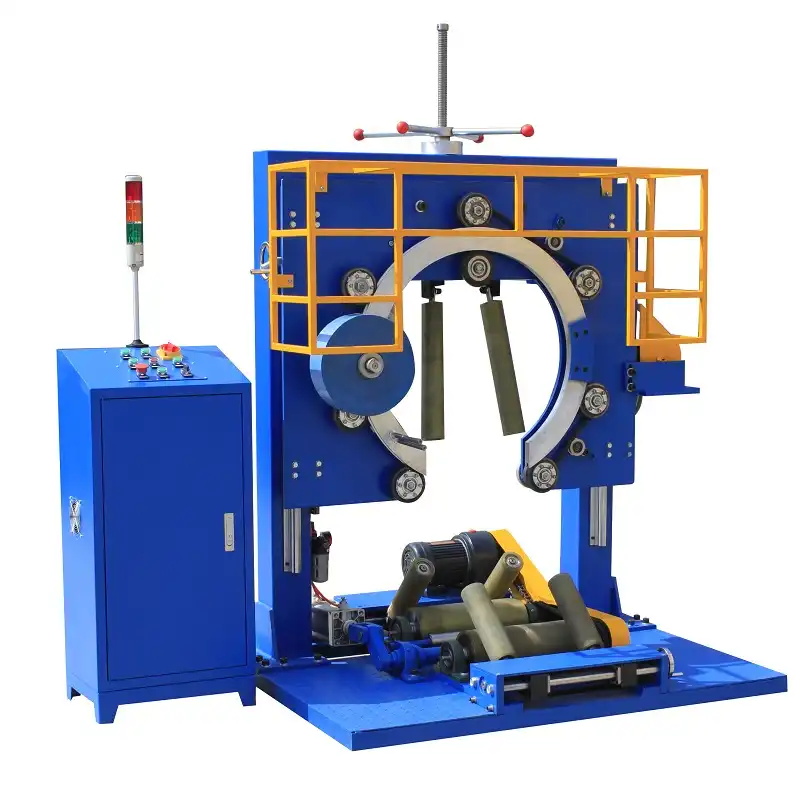
Choosing the right packing method is not just about keeping coils safe. It is also about efficiency, safety, and your factory’s bottom line. Let’s break down coil wrapping and strapping. We will look at what each method does and which one truly delivers the best results for demanding industrial environments in the Czech Republic and beyond.
1. What Exactly Are Coil Wrapping and Strapping for Metal Coils?
It can be hard to know which packing method is right for your metal coils. Some people think strapping is enough, but others say you need more. Making the wrong choice can lead to damaged goods, unhappy customers, and lost profits. You need clear information about each option.
Coil wrapping involves fully enclosing a metal coil with a protective film, creating a tight, sealed package. Strapping uses strong bands, often made of steel or plastic, to secure a coil, holding its layers together or attaching it to a pallet. These two methods serve different primary purposes in the packaging process.
Understanding the Basics of Coil Protection
From my years in the packing machine industry, starting as an engineer and then building my own factory, I have seen many ways people pack coils. I know that simply holding a coil together is not the same as truly protecting it. In a busy Czech metal processing plant, coils move a lot. They go from production lines to storage, then onto trucks or trains for delivery. Each step is a chance for damage. So, understanding how wrapping and strapping work is crucial.
1.1 Coil Wrapping Machines: A Full Shield
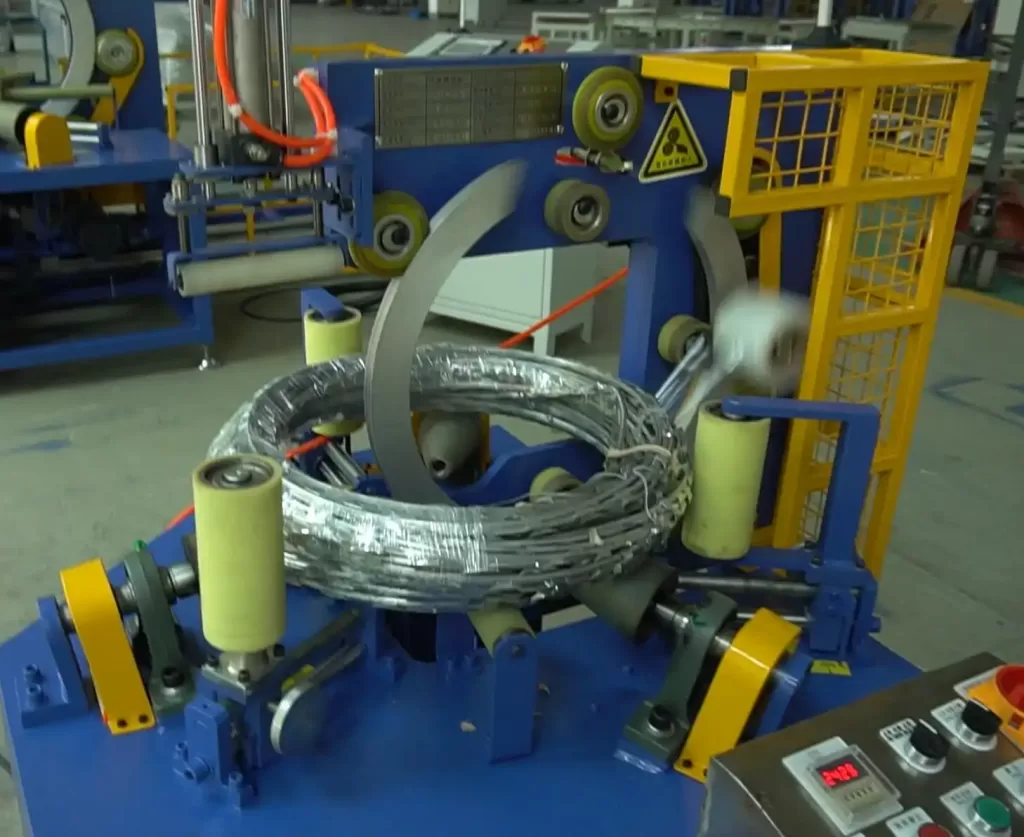
A coil wrapping machine applies a stretch film or other protective material around the circumference of a coil. This creates a complete, continuous layer. The machine rotates the coil or moves an applicator arm around it. This process makes a package that covers the entire outer surface and often some of the inner diameter.
- How it works: Imagine a giant roll of cling film. A machine automatically wraps this film around your metal coil many times. It often overlaps the film, creating a robust, multi-layered barrier.
- Purpose: The main goal is full surface protection. This includes protection from dust, dirt, moisture, rust, and minor impacts. It also stabilizes the coil.
- Materials: Common materials include LLDPE stretch film, VCI (Volatile Corrosion Inhibitor) film, or woven fabric. VCI film is especially useful in humid environments or for long-term storage because it releases chemicals that prevent rust.
When I started my first factory, one of my clients in a European country (much like a plant in the Czech Republic) had big issues with coils rusting during overseas shipping. They were only using strapping. We introduced them to a coil wrapping solution with VCI film. Within months, their customer complaints about rust dropped to almost zero. This showed me the real power of comprehensive wrapping. It was a simple change but made a huge difference to their business and reputation.
1.2 Strapping Machines: Holding It All Together
Strapping is a more traditional method. It involves applying high-tension bands around the coil. These bands are usually placed across the coil’s width or sometimes around its circumference.
- How it works: A strapping machine takes a long strip of material (steel or plastic) and wraps it tightly around a coil. Then, it seals the ends of the strip, creating a strong band. Usually, multiple bands are used.
- Purpose: The main goal is to secure the coil. It keeps the layers of a slit coil from unwinding. It also holds the coil securely to a pallet or prevents shifting during transport.
- Materials: Common materials are steel strapping (very strong, good for heavy coils) and plastic strapping (PET or PP, lighter, more flexible, often used for lighter coils or where rust is a concern from steel strapping).
Strapping is essential for structural integrity. Without it, a stacked coil might become unstable. But it offers very little surface protection. Think of it like a seatbelt in a car. It holds you in place, but it does not protect the car’s paint from rain or scratches.
In summary, both methods are important in their own way. Wrapping creates a shield. Strapping provides a grip. Knowing this difference is the first step to making the right choice for your Czech factory.
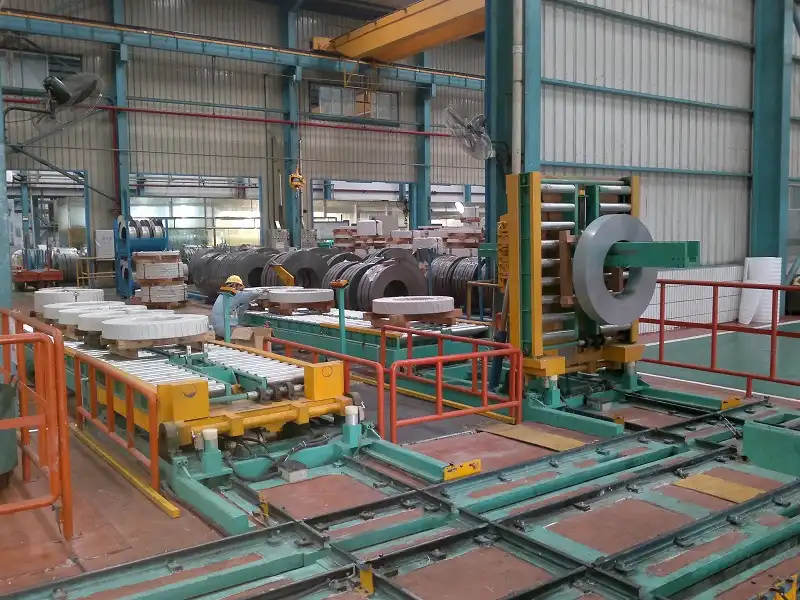
2. How Do Coil Wrapping Machines and Strapping Actually Protect Your Coils?
Many factory managers in the Czech Republic ask me about real protection. They want to know which method truly keeps their steel or wire coils safe from damage. They worry about external factors and how these affect product quality and customer satisfaction. It is a critical question because damaged products mean lost money.
Coil wrapping machines provide superior all-around protection by creating a sealed barrier against moisture, dust, and physical abrasion. Strapping, on the other hand, primarily offers structural stability and bundling, leaving the coil’s surfaces largely exposed to environmental damage.
A Deep Dive into Protection Levels
When I talk to clients, especially those shipping coils across Europe or even globally from the Czech Republic, protection is always a top concern. We are not just talking about keeping a coil from falling apart. We are talking about keeping its pristine surface intact, free from rust, scratches, and even minor deformations that can lead to rejection by a demanding customer. This is where the real difference between wrapping and strapping becomes clear.
2.1 Environmental and Surface Protection
This is where coil wrapping shines.
- Moisture and Rust Prevention: Metal coils, especially steel, rust very easily when exposed to moisture. A coil wrapping machine completely encloses the coil. This creates a barrier. It stops water, humidity, and condensation from reaching the metal surface. When you add VCI film, it goes even further. VCI chemicals vaporize inside the sealed package. They form a protective layer on the metal. This prevents rust even in very damp conditions. For a Czech factory exporting to diverse climates, this is invaluable.
- Dust and Dirt Shield: Factories are dusty places. Warehouses can be dusty too. Shipping exposes coils to all sorts of environmental dirt. A wrapped coil stays clean. The film prevents dust and debris from settling on or embedding into the coil’s surface. This is important for high-quality finished products where surface cleanliness matters.
- Abrasion and Scratch Resistance: During handling, loading, and unloading, coils can bump into other objects or rub against surfaces. The layers of wrapping film act as a cushion. They absorb minor impacts and protect the actual metal surface from scratches and scuffs. This preserves the coil’s aesthetic and functional quality.
Strapping does very little for these issues. The bands hold the coil together, but the large areas of the coil’s surface are open to the environment. Moisture can get in. Dust can settle. The edges are prone to damage if they rub against anything. I have seen countless cases where strapped coils arrived at their destination with rust spots or surface scratches simply because they lacked proper wrapping.
2.2 Structural Integrity and Handling Protection
Both methods contribute to structural integrity, but in different ways.
- Strapping’s Role: Strapping is excellent for keeping coil layers tightly bundled. For slit coils, it is vital to prevent unwinding. It also helps secure a coil to a pallet or within a container. It provides compression that keeps the coil tight. Without strapping, heavy coils could shift and become dangerous.
- Wrapping’s Role: While not as rigid as steel strapping, wrapping also adds stability. The film, applied under tension, creates a compact unit. It helps prevent coil layers from shifting slightly. When used with strapping, wrapping enhances the overall stability by creating a uniform outer surface that is less likely to snag.
In a Czech steel mill, where tons of metal move every day, both stability and surface protection are needed. You might use strapping to secure the coil to a pallet and then wrap it for full environmental protection. This is often the best approach for maximum security and quality. My experience has taught me that relying only on strapping for protection is a gamble you cannot afford to take, especially when high-value coils are involved.
3. Beyond Protection: What About Efficiency, Safety, and Cost in Czech Factories?
Factory managers like Michael Chen in Mexico, and many in the Czech Republic, look at more than just protection. They care about how a packaging solution impacts their daily operations. They want to know: Will it make my factory run faster? Will my workers be safer? And how much will it truly cost me in the long run? These are the questions that keep managers up at night.
Coil wrapping machines significantly boost operational efficiency by automating a slow, manual process, and they enhance worker safety by reducing the need for heavy manual handling. While the initial investment might be higher, wrapping can lead to lower overall costs through reduced labor, fewer product damage claims, and improved throughput for Czech manufacturers.
The Real-World Impact on Your Factory Floor
When I visit factories, I see the challenges firsthand. I remember starting my career on the factory floor. I saw inefficient processes and safety risks. This experience drove me to create better packing solutions. For a modern Czech factory, staying competitive means optimizing every part of the production line, including packaging. This is not just about a machine; it is about a smarter way to work.
3.1 Efficiency and Throughput
- Coil Wrapping Automation: Manual coil packing is very slow. It takes many workers. An automatic coil wrapping machine works much faster. It can wrap a coil in minutes, sometimes even less. This speed greatly reduces bottlenecks at the end of the production line. Imagine a Czech plant producing dozens of coils per hour. Manual wrapping cannot keep up. An automated machine can. This means coils move out of the factory faster. Delivery times improve. This makes customers happier.
- Strapping Automation: Strapping can also be automated. Automatic strapping machines are fast. They can apply multiple straps quickly. However, strapping is just one part of the packing process. If you still need to manually apply corner protectors or stretch film after strapping, then the overall process is still slow.
Many times, factories use a mix. They strap a coil, then they manually cover it with a tarp or a loose film. This still takes time. It still takes people. A coil wrapper integrates everything. It gives a consistent, high-quality pack every time, at high speed. This consistency is vital for maintaining high production rates.
3.2 Worker Safety
- Reducing Manual Handling: Metal coils are heavy. Very heavy. Manually moving, positioning, or securing protective materials around them is dangerous. Workers can get crushed fingers, back injuries, or other serious accidents. These injuries cost a factory a lot of money in medical bills, lost workdays, and higher insurance premiums. A coil wrapping machine takes the worker out of the hazardous zone. The machine does the dangerous work.
- Ergonomics and Repetitive Strain: Even strapping, if done manually, involves bending, lifting, and repetitive motions. Automated strapping reduces this, but not as much as a full wrapping system that handles the entire protective enclosure.
I remember one Czech client. They had a problem with workers getting hurt trying to manually cover large coils with tarps. It was slow and risky. After installing an automatic wrapper, their injury rates for the packing department dropped significantly. The workers felt safer. The management was happy because their insurance costs went down. Safety is not just a rule; it is smart business.
3.3 Cost Implications and ROI
- Initial Investment: Yes, a coil wrapping machine has a higher upfront cost than a manual strapping tool. It is a more complex piece of equipment. However, this is a common trap many factory managers fall into. They look only at the purchase price.
- Long-Term Savings (ROI):
- Labor Costs: Fewer workers are needed for packing. This reduces your payroll expenses significantly over time.
- Reduced Product Damage: Fewer damaged coils mean fewer customer returns, fewer claims, and less material waste. This directly impacts your profit margin.
- Increased Throughput: Faster packing means you can produce and ship more coils. This increases your factory’s revenue capacity.
- Lower Insurance Premiums: Fewer worker injuries can lead to lower insurance rates.
- Material Costs: While wrapping film costs money, it often replaces other, less effective manual packaging materials (like tarps, tapes, or even manual film applicators). The cost per coil for materials can be optimized with efficient film usage on a machine.








