
How Do Different Orbital Stretch Wrappers Perform in Harsh Russian Industrial Environments?
Industrial environments, especially those found in places like Russia, are not for the faint of heart. They often involve extreme temperatures, constant dust, heavy loads, and non-stop operation. If your packing process still relies on outdated methods or unreliable machines, you probably feel the pressure. Manual handling of heavy steel coils or wire bundles is slow, dangerous, and often leads to damaged goods. This not only slows down production but also puts your workers at serious risk, driving up costs and causing headaches. You need a solution that works, every single time.
Different orbital stretch wrappers perform very differently in harsh Russian industrial environments based on their construction materials, automation level, and specialized features for temperature control, dust protection, and heavy-duty operation. Machines designed with reinforced steel frames, high-grade components, and advanced dust-proof or temperature-resistant electronics typically offer superior performance, reliability, and longevity compared to standard models not built for such demanding conditions, ensuring continuous operation and minimizing costly downtime.

You might be wondering which machine can truly stand up to these challenges. It is a critical question. Choosing the wrong equipment can lead to constant breakdowns, safety issues, and a major hit to your bottom line. But picking the right one means smoother operations, safer workplaces, and higher profits. Let’s dive deeper into what makes a packing machine truly resilient and which types of orbital wrappers are best suited for environments where only the toughest survive.
What Makes an Industrial Environment “Harsh” for Packing Machines?
You manage a busy factory. You know your daily reality. Maybe it is the freezing cold of winter or the constant dust from metal processing. These factors directly affect your machines. If you have ever seen a machine fail in the middle of a shift, you understand the problem. It brings everything to a halt. Downtime means lost money.
A “harsh” industrial environment for packing machines is characterized by factors such as extreme temperatures (both hot and cold), high levels of dust, dirt, or debris, constant humidity or moisture, heavy and irregular product loads, and continuous, high-volume operation, all of which place immense stress on equipment and demand robust, durable design for reliable performance.

When I started my own packing machine factory, I learned quickly that not all machines are built the same. We often faced situations where a standard machine just would not cut it. We needed something more. In harsh settings, every component of a packing machine faces unique stresses. Understanding these stresses is the first step to choosing the right equipment. It is not just about wrapping. It is about survival.
Key Factors Defining Harshness and Their Impact
-
Temperature Extremes:
- Problem: Machines might operate in unheated warehouses or outdoor areas in Russia. Temperatures can drop well below freezing. Parts can become brittle. Lubricants can thicken. In hot areas, electronics can overheat.
- Impact: Motors can seize. Bearings can fail. Electrical components can short circuit. This leads to unexpected downtime and expensive repairs. My experience has shown that using specialized cold-weather components, like low-temperature grease and reinforced wiring, is essential. We learned this firsthand when helping clients in similar climates. Without these, even minor temperature shifts cause big problems.
- Solution: Machines designed with industrial-grade, wide-temperature-range components. Special heaters or coolers for critical parts.
-
Dust, Dirt, and Debris:
- Problem: Metal processing plants, like Michael Chen’s, produce a lot of dust. This dust can get into everything. It can clog filters. It can jam moving parts. It can wear down sensitive electronics.
- Impact: Increased friction. Faster wear and tear on components. Reduced lifespan of parts. Electrical malfunctions. This means more maintenance. It means more part replacements. It means unplanned stoppages. I have seen dust build-up cause entire control panels to fail. It is a hidden enemy.
- Solution: Enclosed cabinets for electrical systems. IP-rated components. Self-cleaning mechanisms. Strong seals on all moving parts.
-
Heavy and Irregular Loads:
- Problem: Wrapping heavy steel coils or long, uneven bundles of wire puts a lot of stress on the wrapper’s structure and drive system. Michael’s factory deals with this daily. Manual handling also creates issues, like product damage.
- Impact: Structural fatigue. Bearing wear. Motor strain. Misalignment of parts. This can lead to inefficient wrapping. It can also lead to product damage during wrapping. A machine that cannot handle the weight will break down quickly. I remember one client who tried to use a light-duty wrapper for heavy bundles. It failed within weeks.
- Solution: Heavy-duty steel frames. Reinforced conveyor systems. High-torque motors. Smart tension control systems.
-
Continuous Operation and High Throughput:
- Problem: Factories need to run constantly to meet production goals. Packing machines often operate for multiple shifts, 24/7. This leaves little time for maintenance.
- Impact: Accelerated component wear. Increased risk of unexpected failures. Higher operational costs due to frequent part replacements. Less time for preventative maintenance. This means you are always reacting, not planning. My goal for clients is always to minimize reaction time and maximize uptime.
- Solution: Robust components designed for continuous duty cycles. Easy access for maintenance. Built-in diagnostic systems.
| Environmental Factor | Impact on Machine Performance | Recommended Features |
|---|---|---|
| Extreme Temperatures | Material embrittlement, lubricant thickening, electronic malfunction | Wide operating temperature range, specialized lubricants, climate control for enclosures |
| Dust and Debris | Clogged filters, component wear, electrical shorts | IP-rated enclosures, sealed bearings, automatic cleaning systems |
| Heavy/Irregular Loads | Structural fatigue, motor strain, misalignment | Reinforced frame, heavy-duty conveyors, high-torque motors, adaptive tension |
| Continuous Operation | Accelerated wear, unexpected failures, high maintenance | Durable components, modular design for quick repairs, remote diagnostics |
Understanding these points is vital. It helps you choose a machine that will actually last. It helps you avoid costly mistakes down the line.
Which Types of Orbital Wrappers Withstand Extreme Conditions Best?
You need a machine that works. You need it to work in tough conditions. Not all orbital wrappers are the same. Some are simply not built for the stress of a heavy industrial setting. If you choose the wrong one, you will face endless problems. This can be a huge drain on your time and resources.
The orbital wrappers best suited to withstand extreme industrial conditions are typically heavy-duty automatic models, often customized with reinforced structures, industrial-grade components, and specialized environmental protection features like heating or cooling systems, sealed electronics, and robust dust enclosures; these machines are designed for continuous high-volume output and maximum durability in challenging environments.
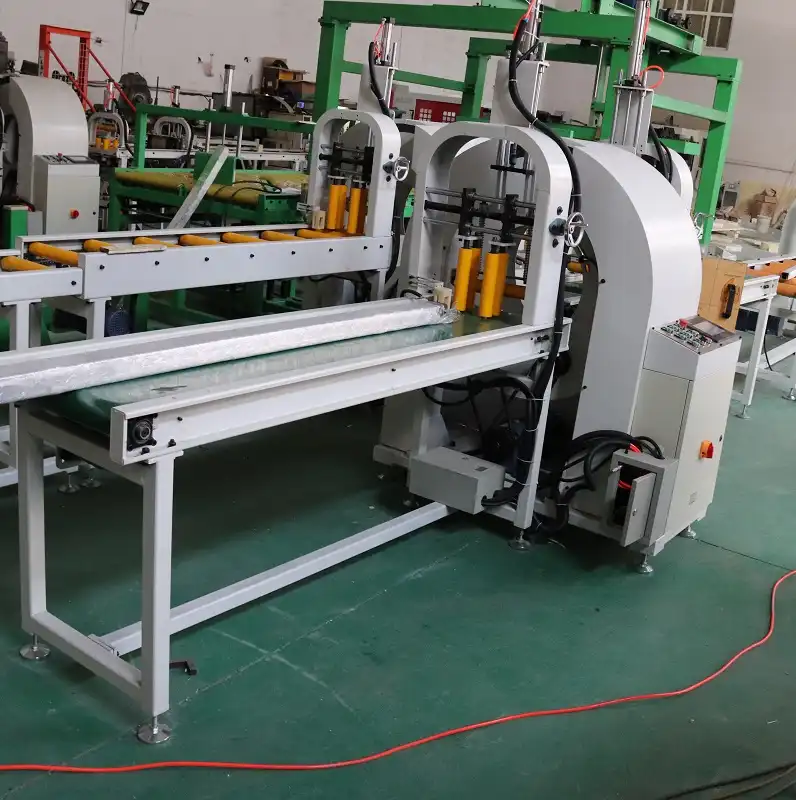
When I built my packing machine factory, I knew we needed to focus on durability. We saw the issues our clients faced with less robust equipment. We had to engineer solutions that could handle anything. This experience taught me that material quality and thoughtful design are everything. It is not just about the wrapping speed. It is about how long the machine can maintain that speed without breaking down.
Performance of Different Wrapper Types in Harsh Environments
-
Semi-Automatic Orbital Wrappers:
- Description: These machines require an operator to load and unload products. The wrapping cycle is automatic once initiated. They are often less complex than fully automatic systems.
- Performance in Harsh Environments:
- Pros: Lower initial cost. Simpler mechanics mean fewer points of failure in some ways. Easier to manually intervene if issues arise. They can be more adaptable to varied product sizes without complex retooling.
- Cons: Still rely on human interaction, which exposes operators to the harsh environment. They are typically not built for continuous, very high-volume output. Their components might be less robust than fully automatic counterparts. The manual loading/unloading can be a safety risk in heavy industries, as Michael Chen experiences. I have seen semi-automatic machines struggle with the sheer weight and volume of steel coils. They were not designed for that kind of punishment day in and day out. The manual element also brings human error and fatigue into the process.
- Best Use: Smaller operations or for handling unique, very heavy products where full automation is not feasible or necessary. Not ideal for 24/7 high-throughput production in truly harsh environments.
-
Fully Automatic Orbital Wrappers:
- Description: These machines integrate into a production line. They handle product loading, wrapping, and unloading without human intervention. They often include conveyor systems.
- Performance in Harsh Environments:
- Pros: Designed for continuous operation. Components are generally more robust and industrial-grade. They reduce human exposure to dangerous areas, significantly improving safety. High throughput capacity. Customizable with features like automatic film loading, cutting, and specialized environmental protection. This is where you see the biggest gains in efficiency and safety. When I consult with clients like Michael, this is often the direction we lean. They remove the human element from the most dangerous parts of the process, reducing workplace injuries and insurance costs.
- Cons: Higher initial investment. More complex systems mean more potential points of failure if not properly maintained. Requires more specialized technical knowledge for troubleshooting.
- Best Use: High-volume production lines. Heavy industry (steel, lumber, wire, pipe). Environments where safety and efficiency are top priorities. They are built to last under constant stress.
-
Custom-Engineered Orbital Wrappers:
- Description: These are fully automatic machines tailored to specific customer needs. They include unique features for extreme environments, unusual product sizes, or integration with existing lines.
- Performance in Harsh Environments:
- Pros: Built from the ground up to address specific harsh conditions. Maximum durability and reliability. Can include specialized heating/cooling, extreme dust protection, or corrosion resistance. Designed for exact integration. This is often the ultimate solution for truly challenging sites. When a client has a unique product or an incredibly tough environment, we design a machine just for them. This ensures it meets every single requirement, eliminating guesswork. It means the machine fits perfectly into their existing flow, solving very specific bottlenecks.
- Cons: Highest initial cost. Longest lead time for design and manufacturing. Requires detailed engineering and planning.
- Best Use: Unique or extremely challenging industrial environments. When standard solutions are not sufficient. When absolute reliability and integration are non-negotiable.








