
How Do You Compare Orbital Stretch Wrappers for Sandwich Panel Manufacturing Lines?
Are you losing money because of slow, unsafe, or damaging packing processes? Many factory managers, like Michael in Mexico, face big challenges. They often deal with high labor costs, worker injuries from manual handling, and damaged products. This happens especially when packing long, bulky items like sandwich panels. These problems slow down production and eat into your profits. You know that downtime or damaged goods mean huge losses for your business.
To compare orbital stretch wrappers for sandwich panel lines, you must look at key factors. These include machine capacity and size range, essential safety features, the level of automation offered, and the quality of supplier support. An orbital wrapper spins film around products as they move through a horizontal ring. This protects long, flat items like sandwich panels, doors, or windows. It wraps them tightly for safe storage and transport. %[Orbital Stretch Wrapper for Sandwich Panels]( “FHOPEPACK Orbital Stretch Wrapper”)
Choosing the right wrapping machine is a big decision. It impacts your whole operation. So, how do you really know which orbital stretch wrapper is best for your sandwich panel line? Let us break down the most important things to consider.
How Do You Match Wrapper Capacity to Production Needs?
Is your current packing line slowing down your whole factory? Many companies struggle with production bottlenecks at the end of the line. This is often because their packaging cannot keep up. Manual packing for large items like sandwich panels is too slow. It wastes time and limits how much you can produce. This keeps you from hitting your delivery targets.
To match wrapper capacity to your production needs, first measure your daily output. Then, consider the size and weight of your sandwich panels. Look at the machine’s wrapping speed, its film consumption, and how easily it handles different product dimensions. A good wrapper must process your current volume efficiently and have room for future growth.
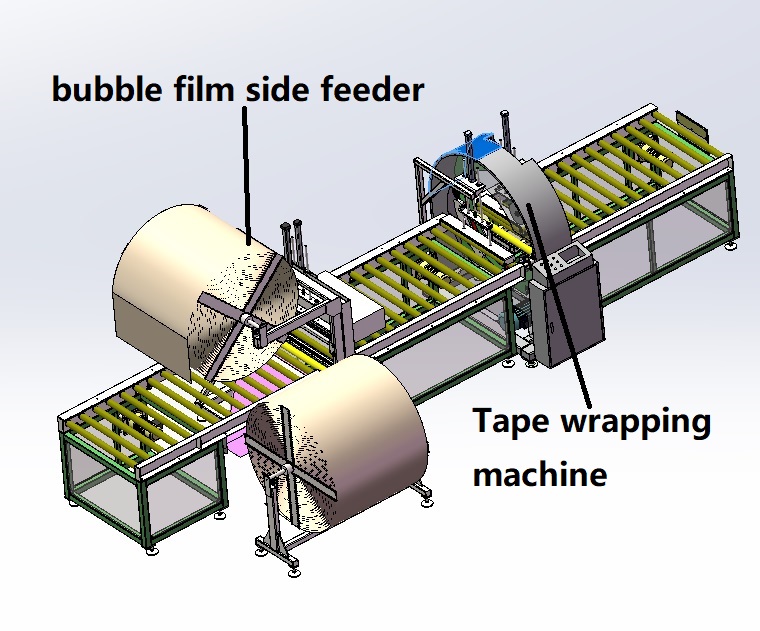
When I first started my packing machine factory, I learned quickly that machine capacity is not just about speed. It is about fitting the machine to the actual flow of your factory. For sandwich panel lines, you must know your maximum production rate. This means how many panels you produce per hour or per shift. Then, check the wrapper’s cycles per minute. Make sure the wrapper can handle more than your peak production. This gives you a buffer. It also allows for future growth.
You also need to think about the size range of your panels. Sandwich panels come in many lengths, widths, and thicknesses. Your orbital wrapper must handle all of them without major adjustments. Some machines have fixed ring sizes. Others offer adjustable openings. An adjustable system gives you more flexibility. It means you can wrap different sized panels on the same machine. This saves you money because you do not need multiple machines.
Consider the film usage. A wrapper that uses less film per package can save a lot of money over time. This is especially true for high-volume operations. Some wrappers have pre-stretch capabilities. This stretches the film before it goes onto the product. It makes the film stronger and reduces how much you use. This directly impacts your operating costs.
Finally, think about how the machine handles your specific product. Sandwich panels can be long and sometimes heavy. The wrapper’s in-feed and out-feed conveyors must be robust. They need to support the panels without bending or damaging them. This is crucial for avoiding product loss. My experience showed me that a strong, stable conveyor system is just as important as the wrapping mechanism itself. FHOPEPACK designs our machines with these heavy-duty needs in mind. We ensure our orbital wrappers provide smooth, continuous flow for your panels. This way, your production line stays efficient.
Here is a simple comparison guide for capacity matching:
| Feature | Low-Volume Needs | Medium-Volume Needs | High-Volume Needs (FHOPEPACK) |
|---|---|---|---|
| Production Rate | Up to 10 panels/hour | 10-30 panels/hour | 30+ panels/hour |
| Wrapping Speed | Basic (15-20 RPM) | Standard (20-30 RPM) | High-Speed (30-60 RPM+) |
| Panel Dimensions | Limited range | Moderate range, some adjustment | Wide range, automatic adjustment |
| Film Pre-Stretch | Basic or none | Standard (up to 200%) | High-Efficiency (250%+) |
| Conveyor System | Light-duty | Medium-duty | Heavy-duty, integrated conveyors |
| Investment Level | Lower initial cost | Mid-range cost | Higher initial cost, better ROI |
What Safety Features Are Crucial for Orbital Wrappers?
Are your workers at risk every day from heavy lifting and manual handling? In factories, especially those dealing with large products, safety is a constant worry. Manual packing of sandwich panels means workers must lift, move, and secure heavy items. This leads to high rates of injuries, like back strains or crushed fingers. These accidents increase insurance costs and cause employee turnover. You need a better way to protect your team.
Crucial safety features for orbital wrappers include emergency stop buttons, safety guarding around moving parts, and light curtains or safety mats. These prevent access to dangerous areas during operation. Overload protection and automatic fault detection systems also protect both the machine and operators. They stop the machine if anything goes wrong, making the workplace much safer.

Safety is not just a nice-to-have; it is a must-have. When I set up my own factory, worker safety was always a top priority. I saw firsthand the dangers of manual labor in heavy industries. An injury not only hurts a person but also stops your production line. This costs you time and money. For orbital wrappers, you must look for machines built with safety in mind.
First, check for robust safety guarding. All moving parts, especially the wrapping ring and film carriage, should be enclosed. This prevents accidental contact. Doors and access points should have interlocks. This means the machine stops if a guard is opened during operation. This simple feature is very effective.
Next, look for multiple emergency stop buttons. These should be easy to reach from all sides of the machine. They allow operators to instantly stop the machine if there is an issue. A well-designed machine will also have safety light curtains or pressure-sensitive mats. Light curtains create an invisible barrier. If a worker breaks this barrier, the machine immediately stops. Pressure mats work similarly on the floor. If someone steps on them in a danger zone, the machine stops. These systems are highly effective at preventing accidents.
Overload protection is another important feature. If a panel is too big or too heavy for the machine, it should stop automatically. This prevents damage to the machine and potential harm to workers. Also, look for machines with clear warning signs and proper lockout/tagout procedures. This ensures the machine cannot start accidentally during maintenance. At FHOPEPACK, we design our orbital wrappers with these advanced safety features. We understand that a safe machine is a reliable machine. It protects your workers and your investment. Choosing a machine with top-tier safety features reduces your risk of accidents, lowers insurance costs, and improves employee morale. This is a clear win for any factory manager.
Here is a list of essential safety features:
- Emergency Stop Buttons: Easily accessible, multiple locations.
- Safety Guarding with Interlocks: Encloses moving parts, stops machine when opened.
- Safety Light Curtains/Mats: Detect presence in hazardous zones, stop machine instantly.
- Overload Protection: Prevents machine damage and accidents from oversized products.
- Fault Detection Systems: Alerts operators to issues, stops machine to prevent escalation.
- Clear Warning Labels and Procedures: Guides safe operation and maintenance practices.
- Anti-Pinch Points: Design that avoids areas where fingers or limbs could get caught.
How Does Automation Impact Your Bottom Line?
Are you struggling to cut costs and boost your factory’s overall profit? Many businesses are still relying on manual labor for tasks that could be automated. For packing large items like sandwich panels, this means high labor costs, inconsistent packaging quality, and slower output. These factors directly reduce your profit margins. You need a way to do more with less.
Automation impacts your bottom line by reducing labor costs, improving packing consistency, and increasing overall production speed. Automated orbital wrappers minimize human intervention, leading to fewer errors and less product damage. This boosts efficiency, lowers operational expenses, and provides a quicker return on your investment, making your factory more profitable.

When I started my factory, I saw the clear link between automation and financial independence. Manual labor is expensive. Wages, benefits, and the risks of injury add up fast. For a factory manager like Michael, every dollar saved on labor directly improves the bottom line. Automated orbital wrappers do the work of several people. They do it faster and with more consistency.
Think about labor cost savings. An automated wrapper runs continuously without needing breaks. It does not get tired. It does not make mistakes due to fatigue. This means fewer people are needed for packing. Those workers can then be moved to other, more skilled tasks. This frees up valuable human resources within your plant. This shift makes your workforce more productive overall.
Product damage is another big cost for factories. When people handle heavy sandwich panels, the edges can get bumped or scratched. This leads to customer complaints and rejected products. Damaged goods are a direct loss of profit. An automated wrapper handles panels smoothly and consistently. It applies film tension evenly. This protects the product from damage during wrapping and transit. This means fewer returns and happier customers. My own experience showed me that even a small reduction in damage can lead to huge savings over a year.
The increase in production speed is also a major benefit. If your packing line is faster, your whole factory can produce more. This directly impacts your sales capacity. If you can produce and ship more sandwich panels, you can take on more orders. This drives revenue growth. The return on investment (ROI) for an automated wrapper can be very quick. You save on labor, reduce waste, and increase output. These savings quickly pay for the machine itself. FHOPEPACK machines are designed for high efficiency. They are built to maximize your throughput and minimize your operational costs. We focus on features that deliver a clear, measurable ROI for our clients.
Consider these aspects of automation:
- Labor Cost Reduction: Directly replaces multiple manual laborers.
- Increased Throughput: Faster wrapping cycles mean more products packed per hour.
- Consistent Packaging Quality: Uniform tension and wrap coverage, reducing errors.
- Reduced Product Damage: Automated handling minimizes scratches, dents, and edge damage.
- Lower Operational Expenses: Less film waste due to precise application.
- Improved Safety: Removes workers from dangerous manual handling tasks.
- Faster ROI: Savings on labor and reduced damage quickly offset machine cost.
Why Is Supplier Support More Than Just Sales?
Have you ever bought equipment only to be left in the dark after the sale? Many factory managers have faced this problem. They deal with suppliers who promise a lot but deliver little when it comes to after-sales service. This leaves you with machines that break down and no one to help fix them. It causes long periods of downtime and major production losses. You need a partner you can trust, not just a seller.
Supplier support is more than just sales because it includes critical services like installation, training, spare parts availability, and ongoing technical assistance. A good supplier provides timely troubleshooting and maintenance. This ensures your machine runs smoothly for years. This partnership approach builds trust and helps you avoid costly downtime, protecting your investment.
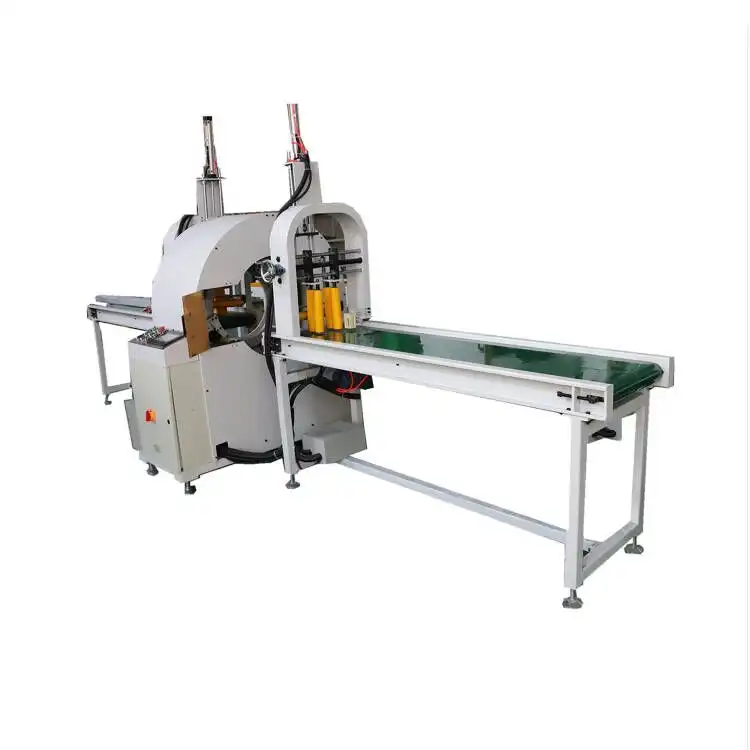
This point is very personal to me. In my early days, both as an employee and then running my own factory, I dealt with many equipment suppliers. Some were great, but many were not. The bad ones cared only about making a sale. Once the machine was delivered, they disappeared. This left me scrambling for parts or technical help when something broke down. This kind of experience causes huge frustration and financial strain. It is why I built FHOPEPACK on a different principle: true partnership.
When you invest in an orbital stretch wrapper for your sandwich panel line, you are not just buying metal and wires. You are buying a solution. This solution needs ongoing support. First, proper installation is key. A machine that is not installed correctly will never run at its best. It might even be unsafe. A good supplier will send engineers for installation and setup. They will make sure the machine is perfectly integrated into your existing line.
Next comes training. Your operators need to know how to use the machine safely and efficiently. They need to understand basic troubleshooting. A reputable supplier offers thorough training for your team. This empowers your staff and reduces reliance on external help for minor issues. This is a critical step in maximizing your machine’s potential.
Parts availability is another big factor. Machines have wear and tear parts. When something breaks, you need replacements fast. A supplier with a readily available stock of spare parts saves you from long periods of downtime. Ask about their parts inventory and delivery times. I remember one time, a small part broke on a machine I owned. It took weeks to get a replacement because the supplier had no stock. My production stopped. This was a very costly lesson. At FHOPEPACK, we keep a large inventory of common spare parts. We know that every minute of downtime costs you money.
Finally, ongoing technical support is vital. You need a team that can answer your questions, diagnose problems remotely, and send technicians if needed. This level of support shows a supplier’s commitment to your success. It means they stand by their product. Choosing a partner like FHOPEPACK means you get expert advice from someone who understands factory operations from the inside out. We are not just selling machines; we are helping you grow your business. This long-term relationship is invaluable. It provides peace of mind and ensures your investment keeps delivering returns.
Here is what good supplier support looks like:
- Pre-Sales Consultation: Understanding your specific needs and challenges.
- Professional Installation: Expert setup and integration into your production line.
- Comprehensive Training: For your operators and maintenance staff.
- Accessible Spare Parts: Readily available inventory, fast shipping.
- Responsive Technical Support: Quick troubleshooting, remote assistance, on-site service if needed.
- Warranty and Guarantees: Clear terms for machine performance and reliability.
- Long-Term Partnership: Focus on your continued success, not just a single sale.
Conclusion
Comparing orbital stretch wrappers involves looking at capacity, safety, automation, and supplier support. Focus on solutions that boost efficiency, improve safety, cut costs, and come from a trusted partner like FHOPEPACK.








