
Which Orbital Stretch Wrapper Is Best for MDF Board Manufacturing Lines?
Are you a factory manager dealing with slow, risky, or inefficient packing processes? Do you constantly worry about damaged products and worker safety? Many manufacturing lines, especially those handling large, heavy items like MDF boards, face these exact problems. Manual packing methods are a drain on time, resources, and even your peace of mind.
The best orbital stretch wrapper for MDF board manufacturing lines is typically an automatic or semi-automatic horizontal orbital wrapper. These machines excel at securely wrapping long, flat, or bulky products, ensuring consistent protection and drastically improving efficiency and safety compared to manual methods.
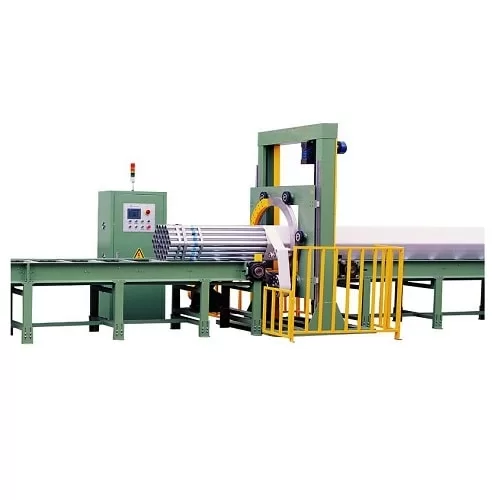
As a packing machine engineer who built a factory from the ground up, I have seen these challenges firsthand. I know the pressure to boost output and cut costs. That is why I want to share my insights on how the right orbital wrapper can solve your biggest headaches. Let us explore the world of orbital wrappers and find the perfect fit for your MDF production.
Why do MDF Board Manufacturing Lines need an Orbital Stretch Wrapper?
Are you still relying on manual labor to wrap your MDF boards? This approach often leads to bottlenecks at the end of your production line. It slows down your entire operation. It also exposes your team to high risks, especially when handling heavy and awkward items.
MDF board manufacturing lines need an orbital stretch wrapper to automate their packaging process. This helps them overcome efficiency bottlenecks, significantly improve worker safety, and reduce product damage during transport and storage.

From my experience in the packing machine industry, I have seen many factories struggle with the same issues. Manual wrapping of MDF boards is slow. Workers get tired. The quality of the wrap can be inconsistent. This means some boards might not be fully protected. When I started FHOPEPACK, my mission was to share knowledge and help businesses like yours. I understand that any downtime or inefficiency means lost money. This is why investing in an orbital wrapper is not just about buying a machine. It is about making your business more profitable and safer.
The Core Problems Manual MDF Wrapping Creates
Manual wrapping of MDF boards brings several critical problems. These problems affect your production, your workers, and your bottom line.
Efficiency Bottlenecks
- Slow Process: Human hands are simply not as fast or consistent as a machine. Each board takes time to wrap. This slows down the entire line.
- Labor Intensive: You need many workers for this task. This increases your labor costs. It also makes it harder to scale up production quickly.
- Inconsistent Wrap Quality: Some wraps might be too loose. Some might be too tight. This leads to uneven protection. It also causes potential damage later on.
Safety Hazards
- Heavy Lifting: MDF boards are heavy. Moving them around for manual wrapping can cause severe back injuries. It also leads to other strains for workers.
- Repetitive Motion Injuries: The constant bending, stretching, and wrapping motions can lead to carpal tunnel syndrome or other repetitive strain injuries over time.
- Falling Objects: Unstable stacks or improperly handled boards can fall. This puts workers at risk of impact injuries.
Product Damage
- Edge Damage: MDF board edges are vulnerable. They can chip or dent during manual handling and wrapping.
- Surface Scratches: Poor handling can scratch the smooth surfaces of the boards. This reduces their aesthetic value and quality.
- Inadequate Protection: If the wrap is not tight enough or fully covers the product, moisture or dust can get in. This degrades the board quality.
Cost Implications
All these problems lead to higher costs for your factory. High labor costs mean less profit. Worker injuries increase insurance premiums and lead to absenteeism. Product damage results in customer complaints, returns, and lost sales. This hits your profitability directly. For example, I worked with a client once who thought manual wrapping was cheap. But when we calculated the actual cost of injuries, reworks, and slow output, they saw it was very expensive. An orbital wrapper solves these issues by automating the process. It ensures a consistent, secure wrap. It also removes the need for manual handling of the boards during wrapping. This means faster operations, fewer injuries, and less product waste. It gives you a clear return on your investment.
How do different types of Orbital Wrappers suit MDF Board sizes and production speeds?
Choosing the right orbital wrapper is not a one-size-fits-all decision. Your MDF board sizes vary. Your production volume changes. These factors directly impact which machine will work best for you. Using the wrong machine can lead to new inefficiencies, not fewer.
Different orbital wrappers suit MDF board lines based on board dimensions, production speed, and automation level. Smaller, semi-automatic wrappers fit lower volumes or varied sizes, while high-speed automatic horizontal orbital wrappers are ideal for continuous, large-scale production of standard MDF boards.
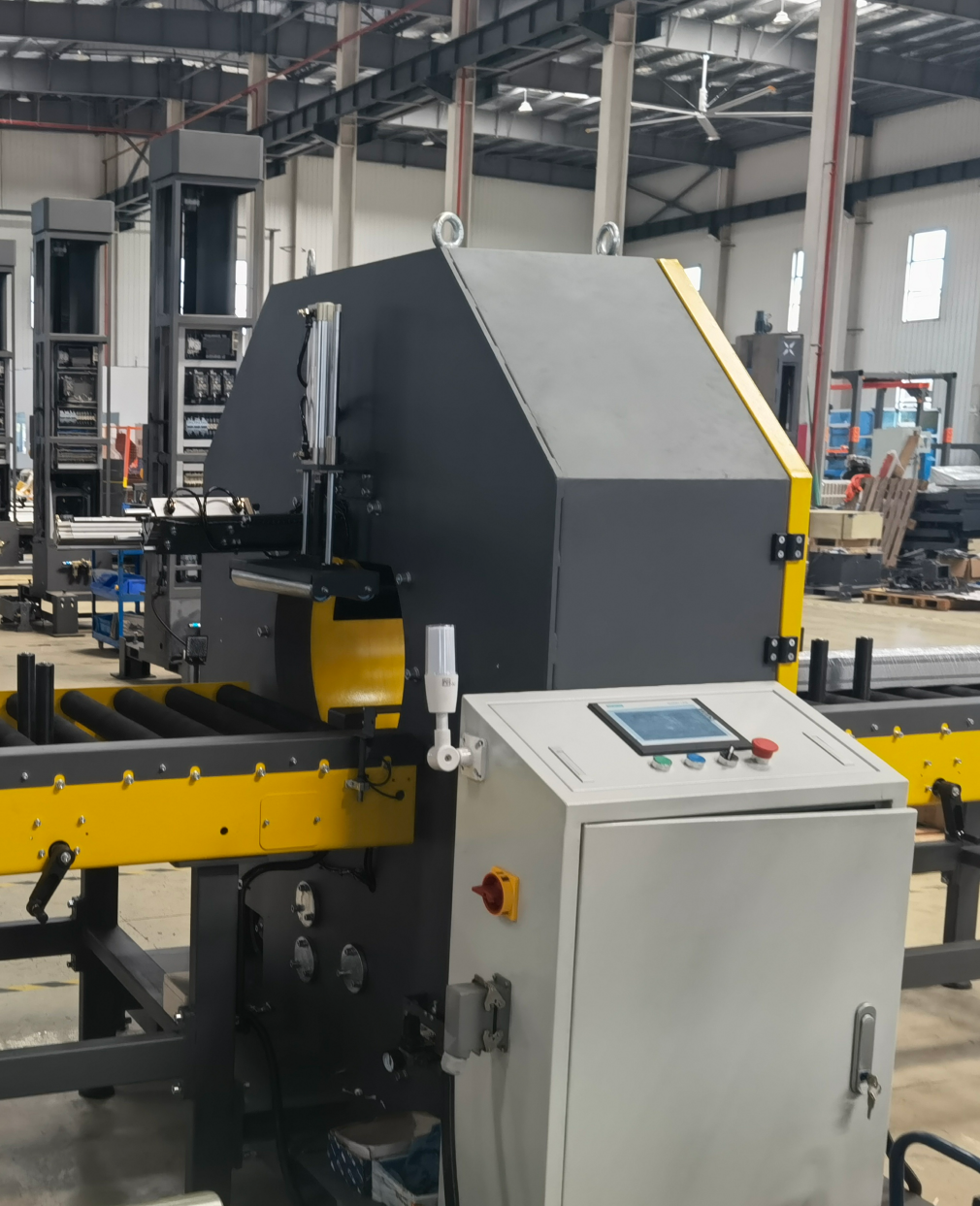
My journey in the packing machine industry taught me that understanding your specific needs is key. Many factory managers focus only on price. But the cheapest machine might not be the most cost-effective in the long run. I have seen companies buy machines that were too small or too slow for their actual needs. They then had to upgrade very quickly. This wasted money and time. It is much better to assess your current and future requirements carefully. This includes looking at the typical width, length, and height of your MDF stacks or individual boards. You also need to think about how many boards you produce per hour or per shift.
Matching Wrapper Types to Your MDF Production
Orbital wrappers come in different configurations. Each one offers specific benefits for different production scenarios.
Semi-Automatic Orbital Wrappers
- Operation: A worker loads the MDF board onto the machine. They start the wrapping cycle. The machine wraps the board. The worker then unloads it.
- Best For:
- Lower Production Volumes: If your factory does not produce a huge number of MDF boards every day.
- Varied Board Sizes: If you handle many different lengths or widths of MDF boards. The semi-automatic setup allows more flexibility in loading.
- Space Constraints: These machines often have a smaller footprint than fully automatic systems.
- Example: FHOPEPACK offers reliable semi-automatic models like the S200. These are great for businesses looking to upgrade from manual wrapping without a huge initial investment. They still deliver big improvements in safety and efficiency.








