
Which Horizontal Stretch Wrapper Produces the Most Consistent Wrapping Results for Doors?
Imagine your factory floor. You see stacks of perfectly finished doors. But then, you watch them go through the packaging process. Is it slow? Is it messy? Do some doors look better wrapped than others? This inconsistency is a problem. It can lead to damaged goods, unhappy customers, and wasted time.
The most consistent wrapping results for doors come from horizontal stretch wrappers equipped with advanced tension control systems, precise product alignment mechanisms, and durable, low-friction conveying surfaces. These features work together to ensure uniform film application around all sides of a door, minimizing wrinkles, preventing film breaks, and securing the product tightly for transit.
It is easy to feel stuck when faced with packaging challenges. You want to improve your operations. You need to make sure your products reach your customers in perfect condition. I understand these pressures. My own journey in the packing machine industry has shown me that the right equipment can change everything. Let us dive deeper into how you can achieve truly consistent wrapping for your doors.
How Does a Horizontal Stretch Wrapper Create Consistent Wrapping for Doors?
Do you ever worry about your products getting damaged during shipping? Perhaps you have seen doors arrive at their destination with loose wrapping or tears in the film. This is a common problem. It directly affects your brand reputation and your bottom line.
A horizontal stretch wrapper achieves consistent wrapping for doors through a combination of its orbital design, precise film delivery, and advanced tensioning systems. The machine wraps film around the door as it moves horizontally through a rotating ring, ensuring that every part of the product receives uniform coverage and tension.
Consistency is not just about looks. It is about protecting your investment. It is about making sure your hard work does not get undone during transit. As someone who has built and run packing machine factories, I have seen firsthand how much difference proper wrapping makes.
The Science Behind Uniform Film Application
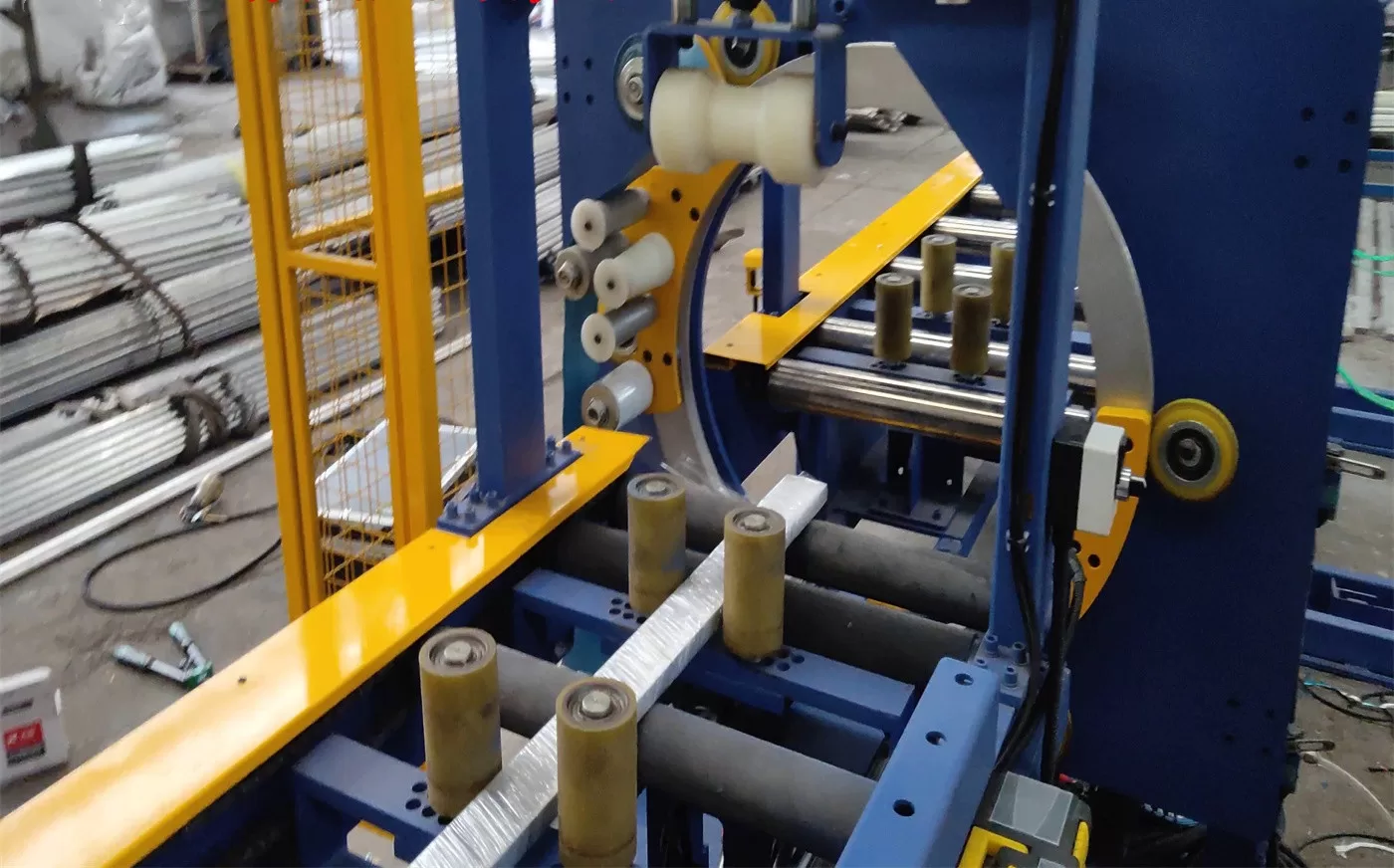
A horizontal stretch wrapper works by moving the product, in this case, a door, through a central opening. A roll of stretch film spins around the product. This creates a tight, protective layer. But simply spinning film is not enough for true consistency. Several design elements must work together.
Tension Control Systems
The film tension is critical. If the tension is too low, the film will be loose. It will not protect the door. If it is too high, the film can break. It can also damage the door. Modern horizontal wrappers use a powered pre-stretch system. This system pulls and stretches the film before it even touches the door. This makes the film stronger. It also makes it more efficient. The machine applies constant tension. This ensures that each layer of film is put on exactly the same way. This leads to a tight, secure wrap every time.
Overlap and Speed Synchronization
The machine controls the amount of film overlap. This ensures full coverage. It also prevents gaps. The conveyor speed and the wrapping ring speed are synchronized. This means the machine always applies the right amount of film at the right pace. For example, if a door moves too fast for the ring speed, there will be gaps. If it moves too slow, there will be too much overlap. Precision control ensures the perfect balance. This constant, uniform application protects the door from scratches, dust, and moisture.
Product Support and Alignment
Doors can be heavy and long. They need proper support as they move through the wrapping ring. Many horizontal wrappers use multiple conveyor belts or rollers. These support the door evenly. They keep it stable. Some machines have adjustable guides. These make sure the door stays centered. This is important for even film distribution. Without proper alignment, one side of the door might get more film than the other. This would lead to an inconsistent wrap. A well-designed system ensures the door passes smoothly. This allows the film to wrap around it perfectly.
For example, when I was designing a new line for a client wrapping large panels, we focused heavily on the conveyor system. We needed to make sure the panels did not shift even a millimeter. We added extra rollers and side guides. This small change made a huge difference in the final wrap quality. It went from inconsistent and often torn to perfectly uniform every single time.
What Specific Features Guarantee Reliable Door Packaging?
Are you tired of machine breakdowns? Do you find yourself constantly dealing with maintenance issues? In a busy factory, downtime is expensive. Every minute a machine is not running means lost production and missed deadlines.
Reliable door packaging is guaranteed by horizontal stretch wrappers that feature robust construction, high-quality components, user-friendly controls, and safety mechanisms. Machines designed for continuous operation in demanding environments offer the best long-term performance and minimal downtime, ensuring your doors are always packaged securely.
When I started my own factory, I quickly learned something important. The cheapest machine is rarely the best investment. You need equipment that can handle the job day in and day out. You need equipment you can trust.
Essential Features for Long-Term Performance
Doors are often heavy. They come in various sizes. They need machines that are built to last. A machine that cannot handle the weight or the constant use will fail. This will cost you more in the long run.
Heavy-Duty Construction and Components
Look for machines made with strong steel frames. They should have industrial-grade motors and bearings. These parts are designed for continuous operation. They can withstand the demands of a busy factory. Inferior materials lead to early wear and tear. This means more repairs. It means more downtime. For instance, in one factory I consulted with, they had an older wrapper. Its conveyor rollers were made of cheap plastic. They kept breaking. We replaced them with heavy-duty steel rollers. This small change fixed a huge problem. The machine ran without issues after that.
Automated Film Cutting and Clamping
Manual film cutting is inefficient. It is also inconsistent. It can be a safety hazard. High-quality horizontal wrappers have automated systems. These systems cut the film after each wrap cycle. They also clamp the film securely for the next product. This saves labor. It also ensures each wrap starts and ends perfectly. This automation improves consistency. It also speeds up the process. It reduces the risk of injury.
User-Friendly HMI and Diagnostics
Modern machines come with a Human-Machine Interface (HMI). This is a touchscreen control panel. It should be easy to use. Operators can quickly adjust settings. They can monitor performance. They can troubleshoot issues. Advanced diagnostic tools can identify problems early. They can even suggest solutions. This reduces the need for expert technicians. It gets the machine back up and running faster. A simple interface means less training time. It means fewer operator errors.
Safety Interlocks and Guards
Safety is paramount in any factory. Horizontal wrappers handle large, moving parts. They can be dangerous if not designed properly. Look for machines with comprehensive safety features. These include emergency stop buttons. They also include safety interlocks on access panels. There should be light curtains or physical guards. These prevent operators from entering danger zones. A machine that protects your workers also protects your business. It reduces insurance costs. It improves employee morale.
Investing in a machine with these features is not just about buying equipment. It is about buying peace of mind. It is about making a smart decision that supports your factory’s future.

Can Automating Door Wrapping Truly Boost Factory Safety and Efficiency?
Are your workers lifting heavy doors by hand for packaging? Is your current packaging process slow? Do you worry about injuries? Manual processes introduce many risks. They also limit how much you can produce.
Automating door wrapping with a horizontal stretch wrapper significantly boosts factory safety by eliminating manual handling of heavy items, thereby reducing the risk of musculoskeletal injuries and strains. It also dramatically increases efficiency by speeding up the wrapping process, ensuring consistent packaging quality, and freeing up labor for more complex tasks, leading to higher overall throughput.
I have seen many factories struggle with these issues. They have hardworking people, but the process itself puts them at risk. It also slows things down. Automation is not just about machines. It is about creating a safer, more productive environment for everyone.
The Dual Impact of Automation
Bringing in automated equipment can seem like a big step. But the benefits in terms of safety and efficiency are clear. It transforms how your factory operates. It protects your most valuable asset: your people.
Reducing Manual Labor and Injury Risks
Moving and wrapping doors by hand is hard work. It requires bending, lifting, and repetitive motions. This leads to injuries like back strains and sprains. These injuries mean lost workdays. They mean higher insurance costs. They also mean a loss of experienced workers. An automated horizontal wrapper handles the entire process. It takes the heavy lifting out of human hands. Doors move automatically onto the conveyor. The machine wraps them. Then, they move off for storage or shipping. This drastically reduces the risk of injury. It creates a much safer workplace.
Speeding Up Throughput and Production Flow
Manual wrapping is slow. Each door takes time. This creates a bottleneck at the end of your production line. An automated horizontal wrapper works much faster. It can wrap many doors per hour. This keeps up with your production speed. It prevents delays. It ensures a smooth flow of products. This increased speed means you can produce more doors in the same amount of time. It means you can meet tighter deadlines. It means you can take on more orders. This directly translates to higher profits.
Reallocating Workforce for Value-Added Tasks
When machines handle the routine, repetitive tasks, your human workers can do more important jobs. Instead of wrapping, they can focus on quality control. They can do assembly. They can manage inventory. They can learn new skills. This makes your workforce more valuable. It also makes their jobs more engaging. This shift improves overall factory productivity. It creates a more dynamic work environment. It shows your employees that you value their well-being and their potential.
Consider a factory I worked with in Mexico. They were struggling to meet orders because their manual packaging was so slow. Their injury rate was high. We installed an automated horizontal wrapper. Within months, their output increased by 30%. Their workplace injuries dropped by 70%. Their employees were happier. This was a clear example of how automation can solve big problems.

How Can I Measure the Return on Investment for a New Door Wrapper?
Are you unsure if buying a new machine is worth the cost? Do you need to convince your leadership team? Investing in new equipment is a big decision. You need to know it will pay off.
You can measure the Return on Investment (ROI) for a new door wrapper by calculating the savings from reduced labor costs, decreased material waste, lower product damage rates, and improved production efficiency against the initial investment and ongoing operational costs. A clear ROI calculation demonstrates the long-term financial benefits and justifies the capital expenditure.
I have guided many clients through this exact process. It is not enough to just say a machine is good. You need to show the numbers. You need to prove its value.
Making the Business Case for Automation
A new horizontal stretch wrapper is a capital expense. But it is also an investment in your future. Understanding the ROI helps you see the bigger picture.
Calculating Cost Savings
Start by looking at your current costs. How much do you spend on labor for packaging? How much film do you use? How much product gets damaged during packaging or shipping?
- Labor Savings: An automated wrapper can reduce the number of workers needed for packaging.
- Example: If you currently use 2 workers for 8 hours a day, and a machine can do the same work with 0.5 workers (for supervision), you save 1.5 workers’ wages. Over a year, this adds up significantly.
- Material Savings: Automated machines use film more efficiently. They apply consistent tension and pre-stretch. This means you use less film per door. It also means less wasted film from inconsistent wrapping.
- Reduced Damage Costs: Less product damage means fewer reworks. It means fewer customer complaints. It means less money lost on damaged goods. If 2% of your doors get damaged during manual packing, and an automated system reduces this to 0.5%, the savings are substantial.








