
What Automation Features Ensure Consistent Output in Germany’s Coil Upenders?
Are you a factory manager facing constant pressure to increase output, lower costs, and keep your team safe? Manual handling of heavy coils and wires is slow, dangerous, and often leads to costly product damage. This old way of working creates production bottlenecks at the end of your line. It means less profit and more headaches for you.
Consistent output in German coil upenders comes from advanced control systems, robust mechanical design, and integrated safety features. These elements work together. They ensure precision, speed, and reliability. This makes your production flow smoothly every time.
You know how crucial it is for equipment to be dependable and efficient. Any stop on your production line means huge losses. You want a partner who truly understands your factory’s problems. You need solutions that work. Let’s look closely at the specific automation features that make this consistency possible. These features can solve your biggest production challenges.
How Do Smart Control Systems Boost Upender Efficiency and Safety?
Manual coil handling relies on human effort. This makes it slow and creates risks. Human error can cause delays and accidents. You need speed and safety for your operations. But your current methods might not deliver these.
Smart control systems boost efficiency by automating cycles. They improve safety through precise positioning. They also reduce human interaction with the machine. These systems ensure the upender operates smoothly every time. They take away the guesswork and make things predictable.

Smart control systems are at the core of any modern coil upender. They bring consistent output. A Programmable Logic Controller, or PLC, is the brain of the machine. It manages all operations. The PLC receives signals from sensors. It then sends commands to motors and hydraulic cylinders. This ensures every movement is exact. This precision helps prevent mistakes. It also speeds up the entire process. Operators interact with the system through a Human-Machine Interface, or HMI. This is often a touch screen. It shows real-time data. It allows operators to select programs. They can monitor performance too. This makes the machine easy to use. It also lets operators respond quickly to any issue.
These systems automate the entire tilting process. This starts from loading the coil to unloading it. It follows a pre-set sequence. This removes the need for manual adjustments. It also reduces the chance of human error. For example, a PLC can make sure the coil is centered before tilting begins. This prevents imbalances. It stops damage. Sensors give continuous feedback. They check coil position, weight, and tilt angle. If anything is wrong, the system can stop the operation or alert the operator. This built-in diagnostic ability saves time. It helps fix problems quickly. Smart systems also include safety interlocks. These prevent the machine from running if a safety gate is open. This protects workers. This kind of automation is a big step forward. It makes the packing line much more reliable. It also keeps workers out of harm’s way. I have seen how much this technology has changed factories. When I started my own packing machine factory, I saw the true value of reliable automation. It changes everything. It turns a risky, slow task into a fast, safe, and repeatable process.
| Feature Type | Specific Feature | Benefit for Efficiency | Benefit for Safety |
|---|---|---|---|
| Control System | PLC Automation | Faster cycle times, less downtime | Reduces human interaction with heavy loads |
| HMI Interface | Easy operation, quick adjustments | Clear status updates, fewer errors | |
| Sensors | Position Sensors | Precise coil placement | Prevents collisions, ensures proper tilt angle |
| Load Sensors | Optimal load distribution | Avoids overloading, machine damage | |
| Diagnostics | Fault Detection | Quick troubleshooting, less delay | Identifies potential hazards early |
Can Advanced Mechanical Design Truly Prevent Coil Damage During Tilting?
Heavy coils are very easy to damage when you move them. Scratches or dents on a coil mean lost money. They also lead to unhappy customers. Every damaged coil costs you profit. It also hurts your reputation in the market. This kind of waste adds up fast.
Yes, advanced mechanical design truly prevents coil damage. It uses features like strong frame construction, precise alignment systems, and special cradle designs. These ensure gentle and secure handling of your product. They protect your investment.

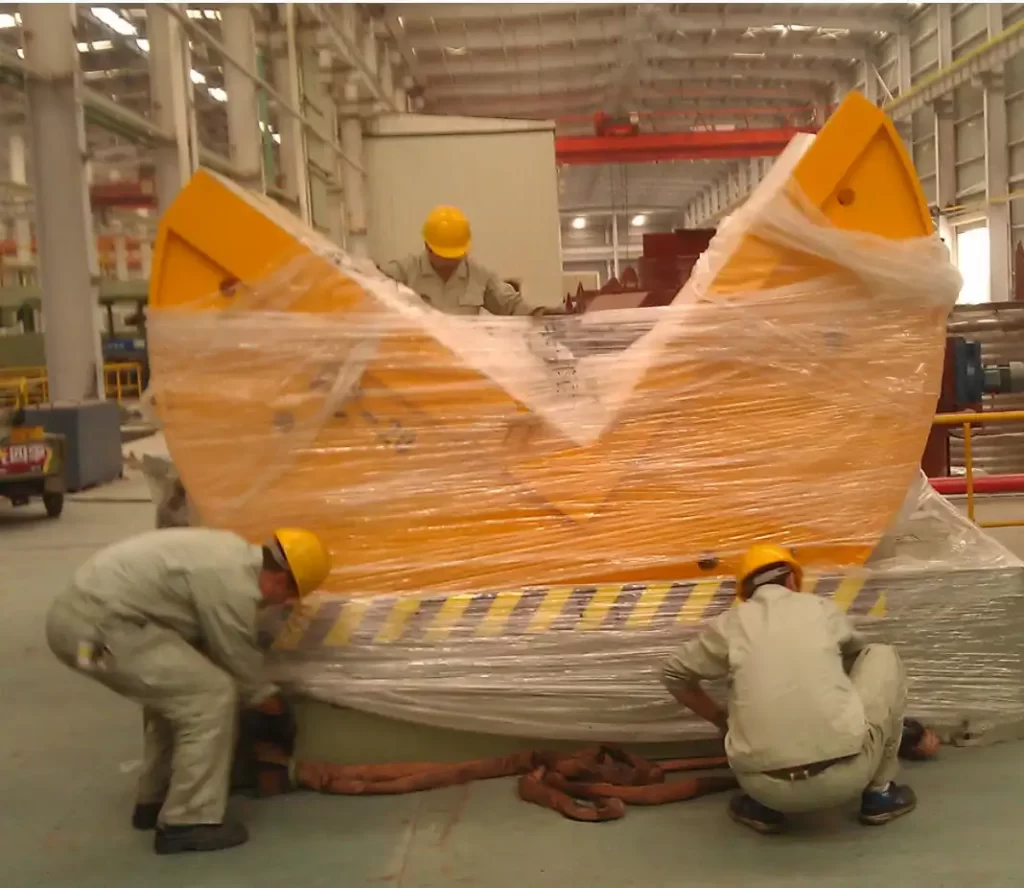
The mechanical design of a coil upender is just as important as its control system for ensuring consistent output and protecting your product. A weak structure can lead to vibrations. It can also cause misalignment. This increases the risk of damaging the coil. This is why a heavy-duty, rigid frame is essential. It provides a stable base for all moving parts. This prevents flexing under heavy loads. It also ensures smooth, controlled movements. German engineering is known for this kind of solid construction. The tilting mechanism itself needs to be precise. It often uses hydraulic cylinders or geared motors. These provide smooth and controlled rotation. They avoid sudden jerks. Sudden movements can cause the coil to shift or roll. This leads to damage.
One of the most critical elements is the coil cradle. This is where the coil rests during the tilt. It must be designed to hold the coil securely. It should also distribute its weight evenly. Many advanced upenders use V-block cradles. These conform to the coil’s round shape. They provide maximum contact. This prevents concentrated pressure points that could dent the coil. These cradles often have special linings. These linings are made of materials like polyurethane or high-density rubber. These materials protect the coil’s surface from scratches. They absorb any minor shocks. Another key feature is automatic centering. Before the tilt, sensors make sure the coil is perfectly aligned in the cradle. This prevents the coil from rubbing against the sides during the tilt. It also stops it from sliding. In my experience building upenders, I learned that even a small design flaw can cause big problems. We always focused on making sure every part worked perfectly together. This ensured the machine would last and protect the product. This attention to detail in mechanical design is what separates a good upender from a great one. It protects your valuable products and keeps your customers happy.
| Mechanical Feature | Purpose | How It Prevents Damage |
|---|---|---|
| Heavy-Duty Frame | Provides stability and rigidity | Prevents flex and vibration, ensures stable movement |
| Precision Tilting | Smooth, controlled rotation | Avoids sudden jerks, prevents coil shifting |
| V-Block Cradles | Conforms to coil shape, even weight distribution | Reduces pressure points, supports coil fully |
| Protective Linings | Soft interface for coil contact | Prevents scratches, absorbs minor shocks |
| Automatic Centering | Aligns coil before tilting | Stops rubbing, ensures smooth operation |
Why Are Integrated Safety Systems Critical for German Coil Upenders?
Working with heavy machinery always carries high risks. Accidents can cost lives. They also cost a lot of money. They can destroy trust between workers and management. You cannot afford workplace injuries. You also cannot afford the legal issues that come with them.
Integrated safety systems are critical because they protect workers from moving parts and heavy loads. They include features like light curtains, emergency stops, and interlocks. These ensure operations meet strict safety standards. They make the workplace much safer for everyone.

Safety is not just a nice-to-have feature in industrial machinery. It is a must. For coil upenders, which handle extremely heavy objects, integrated safety systems are absolutely critical. They protect workers from harm. They also ensure the factory meets strict regulations. In Germany, safety standards like CE certification are very high. Upenders must meet these. One primary safety feature is the emergency stop button. These are placed in easily reachable spots around the machine. Pushing one immediately cuts power. It stops all movement. This prevents accidents in critical situations. Safety light curtains or scanners create an invisible barrier around the upender’s operating area. If a person breaks this beam, the machine stops at once. This keeps workers safe from moving parts.
Interlocked safety gates or fencing are another key part. These prevent access to dangerous zones while the machine is running. The machine cannot operate if a gate is open. This protects anyone who might try to enter the area. Overload protection sensors are also vital. They detect if the coil is too heavy for the machine’s capacity. If it is, the machine will not operate. This prevents structural damage to the upender. It also protects against the coil falling. Audible alarms and flashing lights warn workers when the machine is about to move or is in operation. This gives them time to move to a safe distance. Many upenders also have hydraulic locking systems. These hold the tilt platform in place even if power is lost. This prevents accidental dropping of the coil. I have always prioritized safety in my factories. I know that a safe workplace is a productive workplace. Investing in upenders with strong, integrated safety features is not just about compliance. It is about protecting your most valuable asset: your people. It also protects your factory from costly accidents and downtime. It builds trust with your team.
| Safety Feature | Function | Benefit for Workers | Benefit for Operations |
|---|---|---|---|
| Emergency Stop (E-Stop) | Immediately halts all machine movement | Prevents immediate injury during hazards | Minimizes damage in emergency situations |
| Safety Light Curtains | Creates an invisible detection zone | Stops machine if a person enters area | Prevents collisions, reduces risk of injury |
| Interlocked Gates | Prevents access to dangerous zones | Keeps workers away from moving parts | Ensures machine operates only when safe |
| Overload Protection | Detects if load exceeds capacity | Prevents coil drops, machine failure | Protects equipment, avoids costly repairs |
| Hydraulic Locks | Holds platform position if power is lost | Prevents accidental drops of heavy coils | Ensures stability, prevents product damage |
Conclusion
Automated features in German coil upenders, like smart controls, strong mechanical designs, and integrated safety, are key. They ensure consistent output, boost efficiency, protect products, and enhance worker safety.








