
How Can Operators in Indonesia Quickly Diagnose Coil Upender Faults?
Your coil upender stops. The production line grinds to a halt. You feel that familiar knot in your stomach. Every minute of downtime costs money. For factory managers in places like Indonesia, this situation is not just annoying; it directly impacts your targets for output and profit. The pressure to get things moving again is real, and it is immediate.
Quickly finding out what is wrong with a coil upender is key to keeping your factory running smoothly. Operators in Indonesia can start by checking for obvious signs like strange noises, unusual smells, or visible damage. Next, they should look at the control panel for error codes and confirm power supply to the machine. Then, inspecting the hydraulic fluid levels and checking for any leaks is crucial, followed by a quick visual scan of electrical connections and safety sensors. These first steps often point to the problem, helping to fix it fast.

When an upender stops working, it is more than just a broken machine; it is a hurdle to your entire operation. But what if you could empower your team to find and fix issues faster? Understanding common upender faults and how to diagnose them is a powerful tool. It helps reduce downtime, saves money, and keeps your production line moving. Let us look at how you can do this.
How Do Simple Checks Help Find Upender Issues Fast?
Is your coil upender acting strangely? Do you hear noises that are not normal? Any change from how it usually runs can signal a problem. Ignoring these early signs can lead to bigger breakdowns later. This can stop your entire line. It is better to find small problems before they become huge ones.
The fastest way to diagnose an upender fault is to start with simple, visual, and auditory checks. Operators should listen for grinding or squealing sounds, look for any oil leaks or loose parts, and check the machine’s display for error messages. Ensuring the emergency stop is not engaged and that power is on are basic but critical first steps. These quick observations can often lead directly to the problem’s source or narrow down the possibilities very fast.
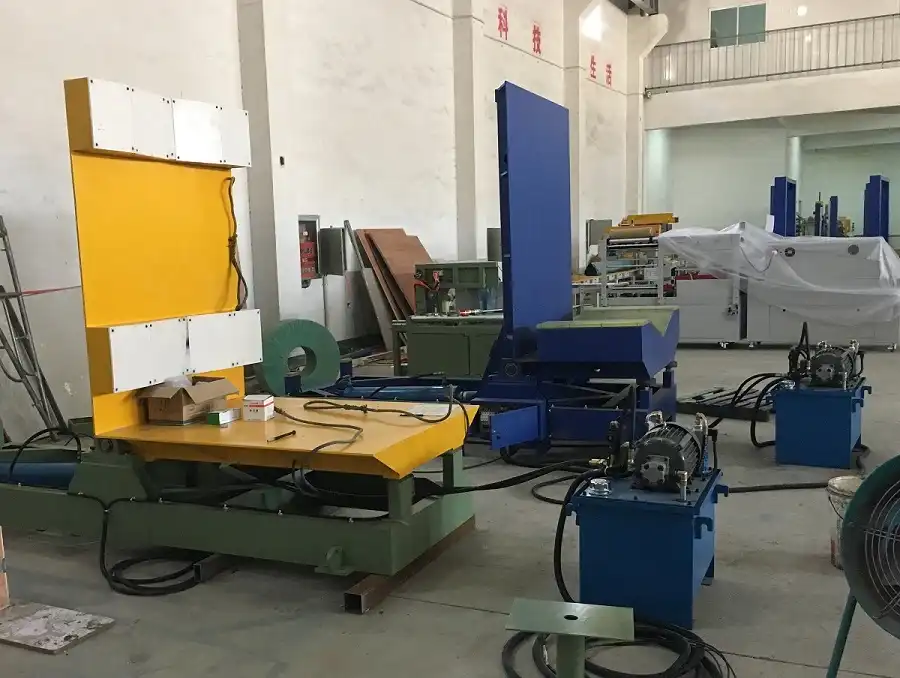
When I first started in the packing machine industry, I learned the importance of simple checks. Sometimes, a problem that seemed big was just a loose bolt or a blocked sensor. I remember one time, a machine stopped, and everyone thought it was a major electrical fault. But after checking the basics, we found a small piece of metal had fallen into a sensor. Clearing it fixed everything. This experience taught me that simple things matter most.
Operators are the first line of defense. They see and hear the machine every day. They know its normal sounds and movements. So, training them to spot the first signs of trouble is very important.
Initial Visual and Auditory Checks
- Listen for Unusual Noises:
- Grinding or Squealing: This often means something is rubbing where it should not. It could be bearings, gears, or parts that are misaligned. If you hear this, stop the machine. It can cause serious damage if it continues.
- Clunking or Banging: This might mean loose parts or something hitting. It could be a loose bolt or a part that has come off its mount.
- Buzzing or Humming (Electrical): This can point to an electrical issue. It could be a failing motor, a contactor, or something else in the electrical panel. These sounds are not normal and need attention.
- Look for Obvious Signs:
- Oil or Hydraulic Fluid Leaks: Any puddle or wetness around the machine is a sign of a leak. Leaks mean fluid levels are dropping. This can cause the hydraulic system to fail. Check hoses, fittings, and seals.
- Loose or Missing Parts: Walk around the upender. Look for any bolts, nuts, covers, or guards that are loose or missing. Vibration can loosen parts over time.
- Smoke or Burning Smell: This is a serious sign. It means something is overheating. It could be a motor, wiring, or an electrical component. Stop the machine immediately if you see or smell this.
- Damaged Hoses or Wires: Look at all hydraulic hoses and electrical cables. Are they cracked, frayed, or pinched? Damaged lines can cause leaks or power loss.








