
What Should Indian Procurement Managers Look for in a Coil Packing Line?
For years, I have seen factories struggle. They are pushed to improve output, cut costs, and keep workers safe. I understand this pressure because I lived it. Manual coil packing is often slow. It costs a lot. It puts your workers at risk. These problems can hurt your whole business. This is a common story I hear from many factory managers, from India to Mexico. Are you facing these same issues? Are you looking for a better way to pack your coils and wires?
A good coil packing line is more than just a machine. It is a solution. It helps you automate your end-of-line processes. It makes your operations safer. It also lowers your costs and reduces product damage. The best lines combine smart design with strong build quality. They are made to handle heavy loads and tough factory conditions. They deliver real value for your investment.
Choosing the right packing line can feel overwhelming. There are many options. It is important to know what truly matters. I have spent decades in the packing machine industry. I started as an employee. Then, I built my own successful factory. I learned a lot about what works and what does not. Let me share my insights. This will help you make a smart choice.
Is Automation the Only Way to Boost Your Coil Packing Efficiency?
Many factories still use a lot of manual labor for packing. This can slow down production. It can also cause bottlenecks. Workers handle heavy coils by hand. This takes time. It also increases the chance of mistakes. You might see your overall production suffer. Are you tired of slow packing holding back your entire plant?
Automation is a key answer for modern factories. It speeds up the packing process. It makes it more consistent. Automated lines can pack coils much faster than human workers. They also do the same job every time. This means fewer errors. It also means more predictable output. This helps your factory keep up with demand.
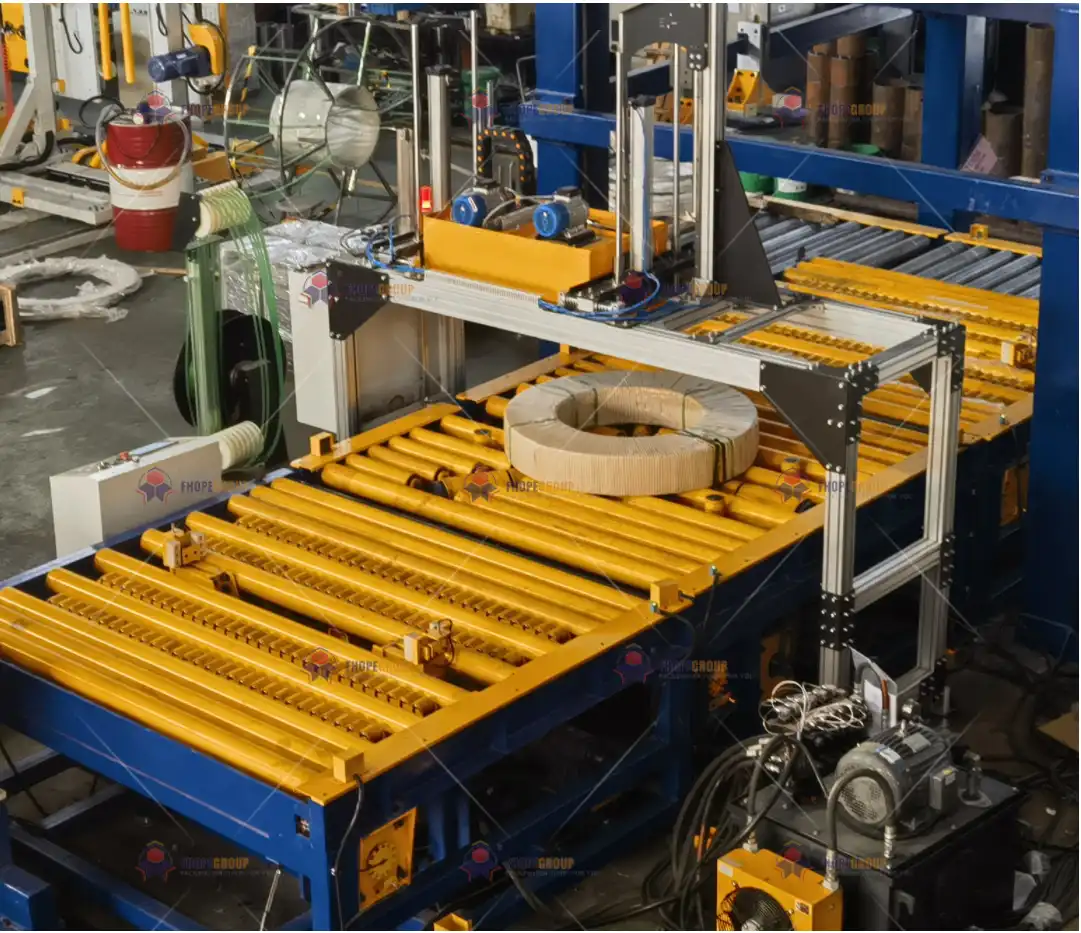
When I started my packing machine factory, I saw how much manual work slowed things down. I also saw the costs involved. Automating coil packing is not just about speed. It is about making your whole process smoother. It is about using your resources better. Think about how much time your workers spend handling coils. Imagine if machines did that work instead. Your workers could do other, more valuable tasks. This frees up their time. It also makes your production flow better.
Understanding the Pillars of Automated Efficiency
Efficiency in a coil packing line comes from several key areas. It is not just about adding a robot. It is about how the whole system works together.
I. Throughput and Cycle Time
- Definition: This is how many coils your line can pack per hour or per shift. It also covers how fast one coil moves through the entire packing process.
- Why it matters: Higher throughput means you can produce more. Faster cycle times mean less waiting. This reduces bottlenecks at the end of your production line. It directly impacts your factory’s overall output. For example, if your production line can make 50 coils an hour, but your packing line only handles 30, you have a problem. An automated system can easily match or exceed your production speed. This ensures a smooth flow.
- Key Considerations:
- Machine Speed: Look at the rated speed of the wrapping machine.
- Loading/Unloading Speed: How fast can coils be put on and taken off the line?
- Material Handling: Are conveyors, coil tilters, and strapping machines working quickly together?
- My Insight: When I designed packing lines for my clients, we always started with their desired output. We then built the system around that number. It is not about buying the fastest machine. It is about buying the right speed for your needs.








