
Automatic Coil Packing Machine for Sale | Features & Specifications
When I started FHOPEPACK, my vision was simple: to share the insights I gained from years in the packing machine industry. I remember the early days, working on the factory floor, seeing firsthand the struggles and successes. Factories like yours, run by dedicated managers like Jose in Mexico, face immense pressure. The problem? Many operations still rely on manual processes for critical tasks like coil packing, leading to a host of issues from slow production to serious safety risks. It’s a problem I’ve seen over and over again.
An automatic coil packing machine is a specialized industrial system designed to efficiently wrap and secure various types of coils, such as steel, copper, or wire, for storage, transport, and protection. These machines automate the labor-intensive process of packaging, significantly boosting throughput, reducing material handling injuries, and minimizing product damage, making them a crucial investment for modern manufacturing facilities aiming for operational excellence.
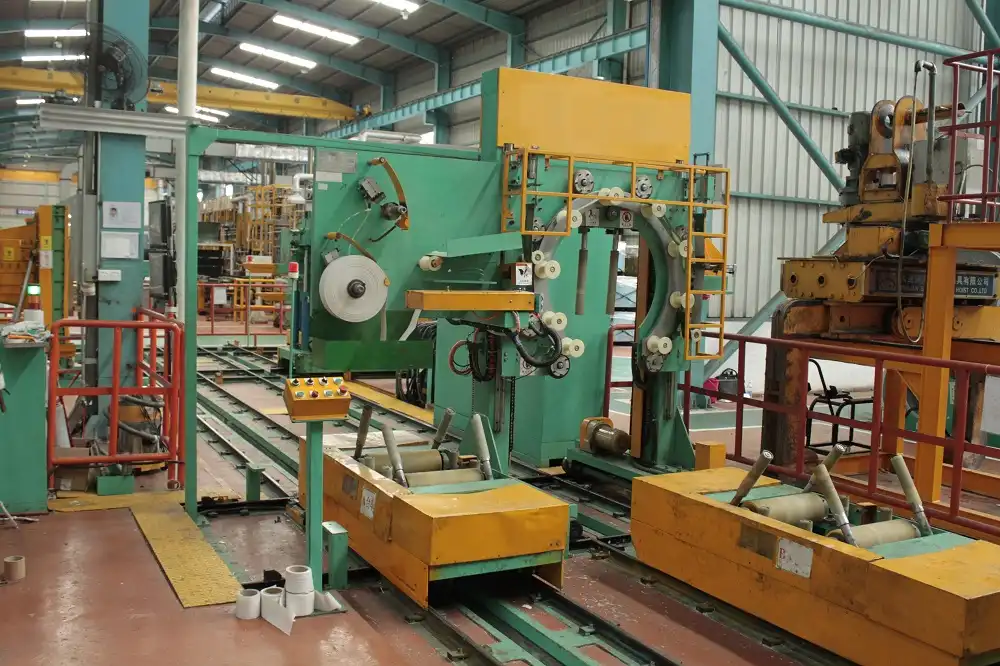
If you’ve ever felt the frustration of a bottleneck at the end of your production line or worried about an employee injuring themselves handling heavy materials, then you know exactly what I am talking about. This article is for you. We will dive deep into how these machines work, what benefits they offer, and what you should look for when choosing one. My goal is to equip you with the knowledge to make an informed decision, just like I would for my own factory. Let’s explore how an automatic coil packing machine can transform your operations.
1. What are the essential features of an Automatic Coil Packing Machine that can transform my operations?
Many factory managers I speak with, like Jose, often ask me about the core capabilities of these machines. They want to know if an investment in automation will truly solve their specific production challenges. The problem is, without understanding the key features, it’s hard to see the full potential. The fear of making the wrong investment is real, especially when previous suppliers have let you down.
The essential features of an automatic coil packing machine include robust construction for heavy industrial use, a precise wrapping mechanism for uniform and secure packaging, adjustable parameters to accommodate various coil sizes and materials, and integrated safety systems to protect operators. These features collectively ensure high efficiency, product integrity, and a safer working environment, addressing common pain points in metal processing plants.

When I was building my factory, I learned that the devil is in the details, especially concerning equipment. A truly effective automatic coil packing machine isn’t just about wrapping; it’s about intelligent engineering that delivers consistent results under demanding conditions. Let’s break down what truly makes these machines indispensable, drawing from my experience in the industry and what I’ve seen work best for clients, particularly those in bustling industrial hubs like Mexico.
Key Features of Advanced Coil Packing Automation
Modern automatic coil packing machines are designed with several critical features that directly address the challenges of high-volume, heavy-duty environments. From my perspective, having worked on both the design and operational sides, these are the elements that genuinely drive performance and reliability.
-
Durable Construction for Industrial Environments:
- Challenge: Factories like Jose’s, dealing with heavy steel coils, need equipment that can withstand constant use and harsh conditions. Flimsy machines just won’t cut it.
- Solution: High-quality steel frames, heavy-duty components, and corrosion-resistant materials are standard. This ensures longevity and minimizes downtime, a critical factor for any factory manager focused on continuous operation. I always advise looking for machines built for extreme duty, capable of handling the weight and stress of heavy metal coils.
- Benefit: Reduced maintenance costs and extended operational life, directly contributing to a better return on investment. 🛠️ (Industrial-grade coil wrapper)
-
Precision Wrapping Mechanism:
- Challenge: Inconsistent wrapping leads to damaged products, customer complaints, and wasted packing materials. Manual wrapping is often uneven and prone to human error.
- Solution: Automatic tension control systems and precise film delivery mechanisms ensure each coil is wrapped uniformly and securely. This protects the product from dust, moisture, and impact during transit and storage. I’ve seen firsthand how a perfectly wrapped coil reduces product damage significantly.
- Benefit: Enhanced product protection, reduced material waste, and improved customer satisfaction. This is crucial for businesses in competitive markets like Mexico. 🎯 (Precision coil packaging)
-
Flexibility for Various Coil Sizes and Materials:
- Challenge: Factories often handle a range of coil dimensions and material types, requiring a versatile packing solution.
- Solution: Machines with adjustable wrapping parameters, such as speed, tension, and number of wraps, allow for quick adaptation to different product specifications. Some advanced models include automatic coil diameter and width detection.
- Benefit: Increased operational flexibility, allowing a single machine to handle diverse product lines without extensive retooling. 🔄 (Flexible coil packaging machine)
-
Integrated Safety Systems:
- Challenge: Manual handling of heavy coils is extremely dangerous. Any new equipment must prioritize worker safety.
- Solution: Features like emergency stop buttons, safety guarding, light curtains, and automatic fault detection protect operators from harm. The machine should also minimize human interaction with moving parts. From my experience, safety is non-negotiable.
- Benefit: A safer workplace, fewer industrial accidents, and reduced insurance costs—a major concern for factory managers. 🚨 (Safe coil wrapping equipment)
-
User-Friendly Control Interface:
- Challenge: Complex machines can be difficult to operate, leading to training overheads and potential errors.
- Solution: Intuitive Human-Machine Interface (HMI) touchscreens make operation simple, allowing for easy parameter adjustments and real-time monitoring.
- Benefit: Reduced training time, increased operational efficiency, and minimized human error. This means your team can get up to speed quickly and effectively. 🖥️ (Intuitive packing machine interface)
These features are not just buzzwords; they represent the engineering solutions to real-world manufacturing problems. When I recommend solutions, I always look for these core capabilities. (Advanced industrial packing features)
2. How does automating coil packing improve safety and drastically cut down operational costs?
Jose’s challenges resonate deeply with me because they mirror the very reasons I started FHOPEPACK. He faces immense pressure to increase output while controlling costs and, most importantly, ensuring worker safety. I’ve witnessed firsthand the human and financial toll of manual handling in factories. The problem? Many still believe automation is too expensive or too complex, overlooking its profound impact on these critical areas.
Automating coil packing dramatically enhances safety by eliminating the need for manual handling of heavy and awkward coils, thereby reducing the risk of musculoskeletal injuries and accidents. Concurrently, it slashes operational costs by optimizing labor allocation, minimizing product damage during packaging, and increasing throughput, leading to a significant return on investment through improved efficiency and reduced waste.

When I first established my packing machine factory, one of my primary goals was to create systems that not only performed but also protected. It’s not just about moving products faster; it’s about moving them safer and smarter. For managers like Jose in Mexico, where industries like steel and logistics are booming, the twin benefits of safety and cost savings are not just advantages—they are necessities for sustained growth and competitiveness.
The Dual Impact: Safety First, Then Savings
Let me share some insights from my journey. I have seen how a well-implemented automation strategy can transform a workplace, making it safer for employees and more profitable for the business. It’s a win-win situation that every factory manager should strive for.
-
Enhanced Workplace Safety:
-
Challenge: Manual handling of steel coils, often weighing hundreds or thousands of kilograms, is a leading cause of severe workplace injuries, including strains, sprains, fractures, and even fatalities. This leads to high workers’ compensation claims and absenteeism.
-
Solution: Automatic coil packing machines take over the heavy lifting, wrapping, and handling processes. Workers interact with the machine through a safe interface, away from moving parts and heavy loads. This drastically reduces direct exposure to hazards. I always prioritize safety features in any machine I design or recommend.
-
Benefit: A significant drop in accident rates, fostering a healthier and more secure work environment. This also translates to lower insurance premiums and higher employee morale, which is invaluable. 🛡️ (Workplace safety automation)
-
Table: Safety Improvements with Automatic Coil Packing
-
| Aspect | Manual Packing | Automatic Coil Packing |
|---|---|---|
| Injury Risk | High (strains, crushed limbs) | Low (minimal direct contact with heavy coils) |
| Ergonomics | Poor (repetitive bending, lifting) | Excellent (operators interact with HMI) |
| Hazard Exposure | High (moving heavy loads, sharp edges) | Low (safety guards, emergency stops) |
| Worker Morale | Can be low (physically demanding, risky) | Higher (safer, less strenuous work) |
| Insurance Costs | Higher due to potential claims | Lower due to reduced incident rates |
-
Significant Operational Cost Reduction:
-
Challenge: Manual packing is labor-intensive, requiring multiple workers per shift. This incurs high labor costs, especially with rising wages. Product damage during manual handling or transportation also leads to costly reworks and customer dissatisfaction.
-
Solution: An automatic coil packing machine can often perform the work of several employees, allowing for reallocation of labor to more value-added tasks. It uses packing materials more efficiently and consistently, minimizing waste. The precise wrapping also drastically reduces product damage. My clients have seen considerable savings in these areas.
-
Benefit: Lower labor expenses, reduced material consumption, and minimized product damage. These direct cost savings translate into a faster return on investment (ROI) for the automation equipment. 💰 (Cost-effective packing solutions)
-
Cost Savings Breakdown:
- Labor: 📉 Reduce dependency on multiple workers for the packing line.
- Materials: ♻️ Optimize film usage with consistent tension and overlap, reducing waste.
- Damage: 🚫 Minimize product damage from mishandling, ensuring higher quality on delivery.
- Throughput: 🚀 Increase packing speed, which means more products shipped per hour with fewer resources.
- Energy: While automation uses energy, the overall efficiency gains often offset this, especially with modern, energy-efficient designs.
-
I once worked with a client in an industrial zone of Mexico who was struggling with high labor turnover due to the arduous nature of manual coil packing. After implementing an automated system, not only did their safety incidents drop to near zero, but they were also able to reallocate their skilled workers to quality control and maintenance, leading to an overall improvement in their product quality and a substantial reduction in operational expenditure. This is the kind of transformation I strive to facilitate. (Automated coil packing benefits)
3. What critical specifications should I consider when investing in a durable and high-performing Coil Packing Machine?
When Jose thinks about investing in a new machine, his priority isn’t just buying equipment; he wants a reliable, durable partner that can endure his factory’s demanding, high-intensity environment. He’s been burned by suppliers who just want to sell, not solve problems. The problem? Many suppliers push generic solutions without understanding the intricate operational demands of a heavy manufacturing plant. This leads to underperforming machines and wasted capital.
When investing in a coil packing machine, critical specifications to consider include the machine’s maximum coil weight and dimensions capacity, the required packing speed (coils per hour), material compatibility (e.g., steel, copper), the type of wrapping material used (e.g., stretch film, woven strap), and the level of automation integration desired. Evaluating these aspects ensures the machine is robust enough for heavy-duty use, aligns with production targets, and delivers optimal performance for specific product requirements.
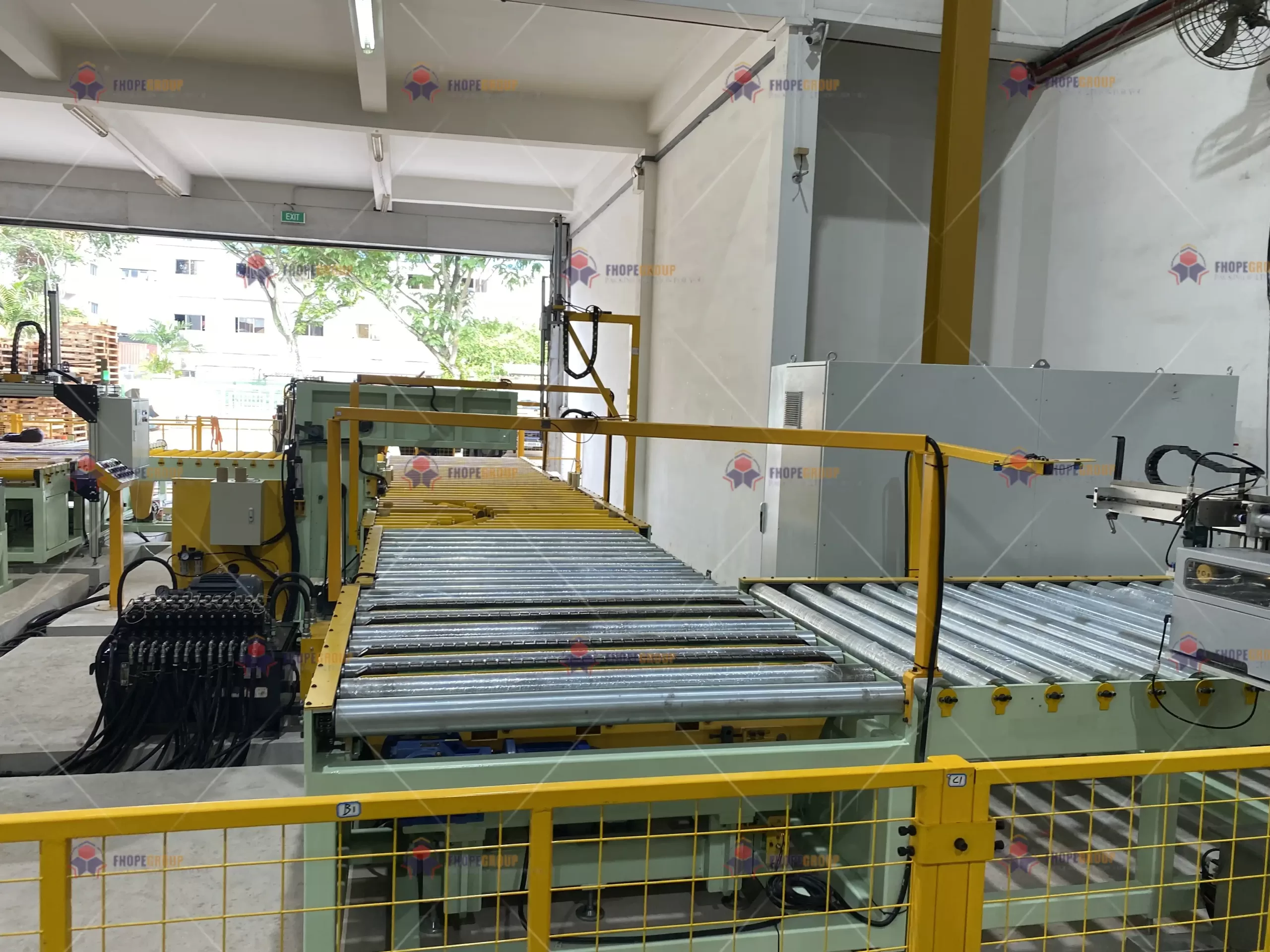
In my journey from an employee to a packing machine factory owner, I learned that a machine’s true value isn’t just its price tag, but its ability to perform consistently, day in and day out, for years. I’ve seen factories thrive by choosing the right equipment, and conversely, struggle with machines that couldn’t handle the workload. For a manager like Jose in Mexico, who needs equipment that can withstand the rigors of heavy industry, these technical details are paramount.
Dissecting Machine Specifications for Optimal Performance
Choosing the right machine is like building a strong foundation for your business. It requires a meticulous review of specifications, understanding how each feature contributes to durability, efficiency, and ultimately, your bottom line. Let’s delve into the specifics that matter most.
-
Coil Weight and Dimension Capacity:
- Insight: This is the most fundamental specification. Overloading a machine leads to premature wear, breakdowns, and safety hazards. You need a machine rated for your heaviest and largest coils, plus a margin for safety and future growth.
- Consideration: What is the average and maximum weight of your steel coils? What are their outer diameter (OD), inner diameter (ID), and width? A machine designed for light coils will quickly fail under heavy steel. I always recommend clients to factor in their absolute maximum requirements, not just the average.
- Example: If your steel coils weigh up to 5 tons and have an OD of 1800mm, ensure the machine’s capacity exceeds these figures comfortably. 📏 (Heavy-duty coil packer capacity)
-
Packing Speed and Throughput:
- Insight: Your production line’s speed dictates your packing machine’s required output. A slow packing machine creates a bottleneck, negating other efficiency gains.
- Consideration: How many coils do you need to pack per hour to keep pace with your upstream processes? Look for machines that clearly state their cycles per minute or coils per hour. Remember, stated speeds are often ideal; consider real-world operational speeds.
- Example: If your rolling mill produces 20 coils an hour, your packing machine should be able to handle at least 20-25 coils/hour to avoid delays. ⏱️ (High-speed coil packing)
-
Type of Wrapping Material and Application:
- Insight: The type of material used for wrapping directly impacts product protection and cost. Different coils might require different protection levels.
- Consideration: Do you need stretch film for moisture and dust protection, woven strap for extreme durability, or a combination? Some machines are versatile, others specialized. Also, consider material cost and availability in your region, like Mexico.
- Types of Wrapping Materials:
- Stretch Film: Most common for dust and moisture protection.
- Woven Strapping: Provides robust protection against impact and abrasion.
- VCI Film: Volatile Corrosion Inhibitor film for rust prevention, critical for steel.
- Paper/Cardboard: Used for inner wrapping or surface protection.
- Recommendation: For robust solutions, FENGDING offers highly adaptable machines that handle various wrapping materials, ensuring your product is always optimally protected. WUXI BUHUI also has good options for specialized film applications. 📦 (Coil wrapping material options)
-
Level of Automation and Integration:
- Insight: Are you looking for a standalone machine or a fully integrated packing line? This depends on your existing setup and future automation goals.
- Consideration: Does the machine need to communicate with your existing conveyor systems, ERP, or other manufacturing execution systems (MES)? Look for options with PLC control and HMI, and discuss potential integration with the supplier.
- Automation Levels:
- Semi-Automatic: Operator loads coil, machine wraps, operator unloads.
- Automatic: Machine detects, loads, wraps, and unloads coils automatically.
- Fully Integrated Line: Incorporates conveyors, weighing scales, labeling, and robotic handling into a seamless process.
- Benefit: A higher level of integration reduces human intervention, further improving safety and efficiency. 🤖 (Integrated packing line solutions)
-
Power Requirements and Utilities:
- Insight: Ensure the machine’s power and utility needs match your factory’s infrastructure. Unexpected electrical upgrades can add significant costs.
- Consideration: What are the voltage, phase, and frequency requirements? Does it need compressed air? Are water cooling systems involved? Verify these details carefully. ⚡ (Industrial packing machine power)








