
Korea’s Smart Factories Choose Automatic Coil Packing Machines: Why This Shift Matters?
Have you ever walked through a bustling factory floor and seen the incredible dance of production, only to watch it slow down at the very last step – packaging? For years, the end-of-line process for heavy, bulky items like steel coils or wire rods was often manual, labor-intensive, and fraught with risks. But a major transformation is happening, especially in advanced manufacturing hubs like South Korea. Factories there are rapidly adopting automatic coil packing machines. This isn’t just about speed; it’s a strategic move to redefine efficiency, safety, and profitability. As someone who has spent decades building and optimizing packing machine operations, I’ve seen firsthand the profound impact of this shift.
Korean smart factories are choosing automatic coil packing machines because these systems offer unparalleled efficiency, dramatically enhance worker safety, ensure consistent product quality, and provide a clear return on investment through reduced labor and material costs. This adoption aligns perfectly with their broader smart factory initiatives, focusing on automation and data-driven operations.
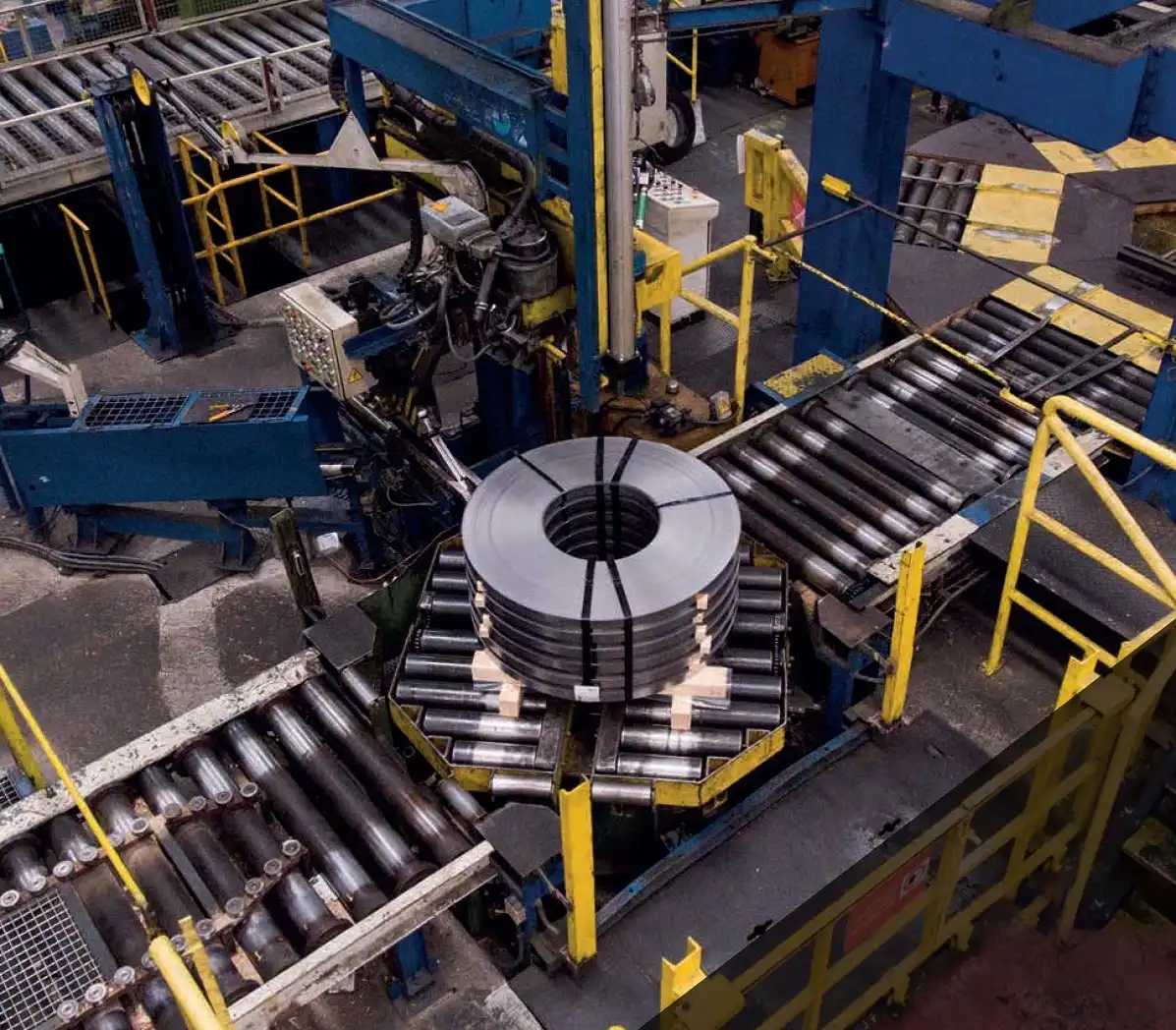
This isn’t a minor upgrade; it’s a fundamental change in how manufacturers approach their entire production lifecycle. If you’re managing a factory and grappling with bottlenecks, safety concerns, or rising costs, understanding this trend is crucial. Let’s dive deeper into why these automated solutions are becoming indispensable for leading Korean manufacturers and what lessons we can all learn from their success.
1. Why Are Korean Smart Factories Investing in Automatic Coil Packing Machines?
Imagine a scenario where your production line runs flawlessly, but then, at the very end, everything grinds to a near halt. This bottleneck is a familiar pain point for many factory managers, including those in Korea. They face intense pressure to optimize every single process. Investing in automatic coil packing machines isn’t a luxury; it’s a necessity driven by specific, pressing operational challenges.
Korean smart factories are investing heavily in automatic coil packing machines primarily to overcome labor-intensive bottlenecks, mitigate significant safety risks associated with manual handling of heavy materials, and achieve a consistent, high-quality finish for their products. This investment is a direct response to the need for greater operational efficiency and worker protection in a competitive global market.

I have seen countless factories, from small workshops to massive operations, struggle with the last mile of their production: packaging. For steel coils, wire coils, and other heavy products, this process is not only slow when done manually but also incredibly dangerous. Workers are constantly at risk of injury from heavy lifting, repetitive motions, and the sheer weight of the materials. This leads to high insurance costs, increased employee turnover, and the potential for severe accidents. Korean manufacturers, known for their focus on technological advancement and worker welfare, recognize that manual coil packaging is unsustainable. They seek solutions that can handle the volume, weight, and precision requirements without putting their workforce in harm’s way. Automation provides a definitive answer, allowing them to allocate human resources to more complex, value-added tasks while machines handle the repetitive, hazardous work. It’s a smart business decision that prioritizes both productivity and people.
The strategic motivations behind Korea’s adoption of these advanced systems are multifaceted, reflecting a holistic approach to industrial optimization. These reasons extend beyond simple efficiency gains to encompass broader operational and strategic benefits.
The Driving Forces Behind Automation Investment:
- Addressing Labor Shortages and Costs: In many developed nations, including Korea, skilled labor for physically demanding tasks is becoming scarce and expensive. Automatic coil packing machines drastically reduce the reliance on manual labor for packaging, leading to significant long-term cost savings. This allows factories to operate more smoothly even with a smaller workforce.
- Enhancing Workplace Safety: Manual handling of heavy steel coils or wire rods is inherently dangerous. Workers face risks of musculoskeletal injuries, crushing accidents, and more. Automated systems eliminate direct human interaction with these heavy objects during the packing process, drastically reducing the incidence of workplace accidents. This not only protects employees but also lowers insurance premiums and improves overall morale.
- Improving Product Consistency and Quality: Human error is an unavoidable factor in manual processes. Automatic machines apply consistent tension, wrapping patterns, and strapping, ensuring every coil is packed to the exact same standard. This reduces product damage during transit and storage, minimizing customer complaints and enhancing brand reputation. For specialized products like precision steel, this consistency is non-negotiable.
- Boosting Throughput and Speed: Manual packing is slow. An automatic system can process coils much faster and more consistently, keeping pace with upstream production lines. This eliminates bottlenecks at the end of the line, allowing for higher overall factory output and quicker delivery times to customers. For factories operating 24/7, continuous, high-speed packing is a competitive edge.
- Achieving Digital Integration: Smart factories thrive on data and connectivity. Modern automatic coil packing machines are equipped with sensors and control systems that can communicate with central manufacturing execution systems (MES) or enterprise resource planning (ERP) software. This integration provides real-time data on packing rates, material usage, and potential issues, enabling predictive maintenance and continuous process improvement. It’s about creating a truly connected production environment.
-
Responding to Global Market Demands: To remain competitive in the global market, Korean manufacturers must offer products that are not only high-quality but also delivered efficiently and reliably. Automated packing ensures that goods are ready for shipment faster and in optimal condition, meeting strict international standards and customer expectations.
Benefit Category Key Outcome Impact on Factory Manager (Jose/Michael) Efficiency Higher throughput, reduced bottlenecks Meets production targets, reduces overtime, faster delivery Safety Drastically fewer workplace accidents Lower insurance costs, improved employee morale, reduced liability Quality Consistent packing, less product damage Fewer customer complaints, stronger brand reputation, reduced scrap Cost Reduction Lower labor costs, reduced material waste Improved profit margins, better ROI on equipment Data & Integration Real-time insights, predictive maintenance Better decision-making, proactive problem-solving, optimized resource use Competitiveness Faster market response, reliable product delivery Stronger market position, customer loyalty, business growth This systematic investment approach reflects a deep understanding of modern manufacturing imperatives. By automating the packing process, Korean smart factories are not just solving immediate problems; they are building more resilient, efficient, and safer operations for the future
(Korean manufacturing automation, factory efficiency investment, industrial safety solutions).
2. How Do Automatic Coil Packing Machines Integrate into Smart Factory Ecosystems?
The concept of a “smart factory” goes far beyond simply having automated machines. It’s about connectivity, data, and intelligent decision-making. For a factory manager like myself, who started on the floor and built a successful business, integrating new technology means it must fit seamlessly into the existing or evolving ecosystem. So, how do these automatic coil packing machines truly become part of a smart factory?
Automatic coil packing machines integrate into smart factory ecosystems by leveraging advanced sensors, real-time data analytics, and seamless connectivity to central control systems. They act as intelligent nodes, providing critical information on packing performance, material consumption, and operational status, enabling predictive maintenance, optimized scheduling, and overall production transparency within a networked manufacturing environment.

From my experience, a machine’s true value in a modern factory isn’t just what it does, but how well it communicates. A smart factory is a symphony of interconnected systems. If an automatic coil packing machine simply performs its task without sharing data, it’s just a standalone piece of equipment. However, when it’s equipped with the right technology – sensors that monitor speed, material usage, and potential faults; controllers that can receive commands and report status; and communication protocols that link it to the wider factory network – then it becomes a truly “smart” component. It contributes to a centralized data stream, allowing managers to see the entire production process, from raw material to finished product, in real-time. This level of transparency is invaluable for identifying bottlenecks, forecasting maintenance needs, and making data-driven decisions that boost overall operational intelligence. This shift from isolated machines to integrated systems is what truly defines a smart factory.
The integration process involves several key technological components and strategic considerations that transform a traditional packing line into an intelligent, responsive element of a larger industrial ecosystem.
Key Aspects of Smart Factory Integration:
- IoT (Internet of Things) Connectivity:
- Sensors Everywhere: Modern packing machines are equipped with a multitude of sensors. These sensors monitor everything from the tension of the strapping material, the position and size of the coil, the speed of the wrapping, to the temperature and vibration of machine components.
- Data Transmission: This sensor data is not just stored locally. It’s transmitted in real-time, often wirelessly, to a central data hub or cloud platform using industrial IoT protocols (e.g., MQTT, OPC UA).
- Real-time Monitoring: Factory managers can monitor the packing process remotely, getting live updates on production rates, material consumption, and machine health. This transparency is crucial for proactive management.
- Data Analytics and AI:
- Performance Metrics: The collected data is analyzed to generate key performance indicators (KPIs) such as coils per hour, material waste percentage, and uptime.
- Predictive Maintenance: AI algorithms can analyze vibration patterns, temperature fluctuations, and operational data to predict when a component might fail. This allows maintenance teams to schedule interventions before a breakdown occurs, minimizing downtime and costly emergency repairs.
- Process Optimization: Machine learning models can identify patterns and suggest adjustments to optimize packing parameters for different coil types, reducing material usage or increasing speed without compromising quality.
- Centralized Control Systems:
- MES/ERP Integration: Automatic packing machines are integrated with the factory’s Manufacturing Execution System (MES) or Enterprise Resource Planning (ERP) software. This means the packing schedule can be dynamically adjusted based on upstream production status or downstream shipping requirements.
- Automated Scheduling: The central system can send commands to the packing machine, specifying the type of packing required for a particular batch of coils, reducing manual input and potential errors.
- Remote Control & Diagnostics: In some advanced setups, operators can remotely control or diagnose issues with the packing machine, improving response times and efficiency.
-
Robotics and Automation beyond Packing:
- Automated Material Handling: Often, the packing machine is part of a larger automated line that includes robotic arms for loading and unloading coils, or automated guided vehicles (AGVs) for transporting finished coils to storage or shipping areas.
- Human-Machine Collaboration (Cobots): While the heavy lifting is automated, cobots (collaborative robots) might assist human operators with tasks like label application or quality checks, improving safety and efficiency in areas that still require human dexterity.
🚀 Example Scenario in a Korean Smart Factory: A batch of steel coils finishes production. The MES system automatically communicates the coil specifications (size, weight, material) and required packing style to the automatic coil packing machine. Sensors on the machine confirm the coil’s dimensions. The machine then automatically selects the correct wrapping material and strapping tension. Throughout the process, sensors report packing speed, material usage, and machine health back to the central system. If a sensor detects unusual vibration, the AI flags a potential bearing issue, scheduling a preventive maintenance check for the next planned downtime, long before a critical failure occurs. This seamless flow of information and automated response is the hallmark of a truly smart operation
(smart factory integration, industrial IoT packing, automated manufacturing data).








