
What Customization Options Exist for Steel Coil Strapping Lines?
Generic, off-the-shelf strapping lines often fall short when faced with the real-world complexities of a modern steel mill. I have seen firsthand how rigid systems lead to bottlenecks, inconsistent packaging quality, and even safety hazards on the factory floor. This failure to adapt impacts production schedules, causes costly reworks, and can even damage a company’s reputation with clients. You need a system that truly understands your operation’s unique demands.
Steel coil strapping lines offer extensive customization to meet diverse industrial needs, including options for varied strapping materials (PET, steel), adaptability to different coil dimensions and weights, integrated automation levels for seamless production flow, and enhanced safety features with advanced operational efficiency tools. These tailored solutions ensure optimal performance and long-term reliability for demanding environments like steel mills.
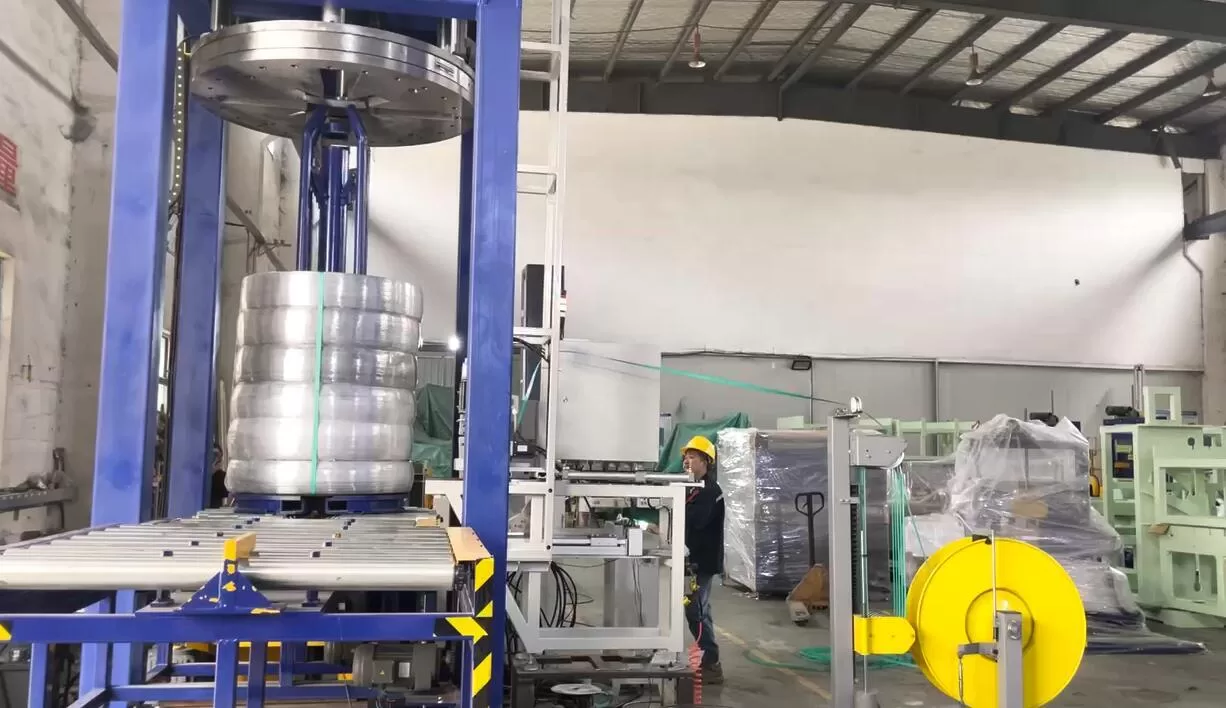
Understanding these customization possibilities is key to unlocking maximum efficiency and security for your finished products. This guide will walk you through the essential options, helping you identify what a truly optimized strapping solution looks like for your business.
Why Do Steel Coil Strapping Lines Need Customization?
Running a steel mill means dealing with a constant flow of diverse products, each with its own specific packing requirements. Trying to force these varied coils through a one-size-fits-all strapping machine is a recipe for disaster. It leads to slow manual adjustments, inconsistent packaging quality, and ultimately, frustrated customers. The real problem is an inflexible system that cannot keep pace with your production demands.
Steel coil strapping lines need customization because of the inherent diversity in coil types, sizes, weights, and specific customer requirements, as well as the need for seamless integration into unique production environments and adherence to varying safety and quality standards. This tailored approach ensures optimal efficiency, product protection, and operational safety.
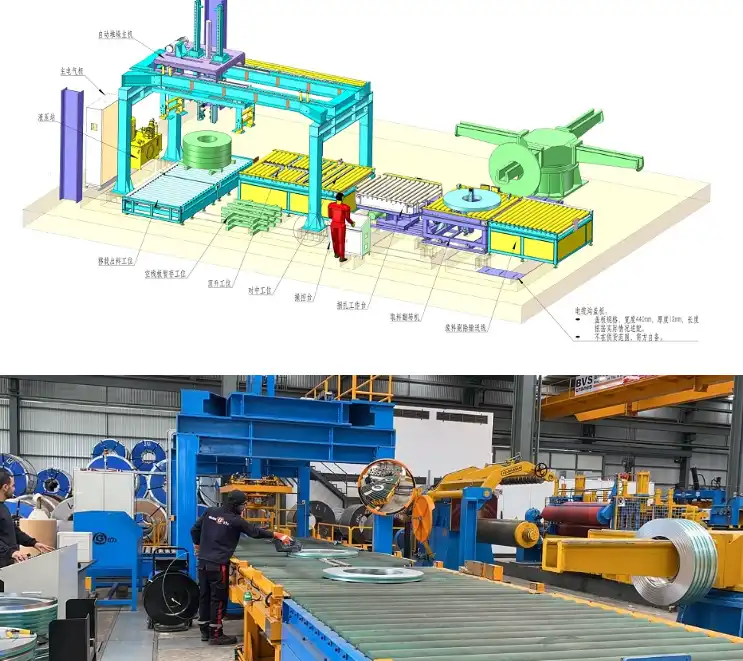
As I have learned over decades in this industry, every steel mill, especially in places like Russia, has its own unique challenges. This is why customization is not just a nice-to-have but a core requirement for success.
-
Product Diversity:
- Your steel plant might produce cold-rolled coils, galvanized coils, and even color-coated coils. Each type requires different handling and protection.
- A customized strapping line can handle these variations without complex manual changes. It can remember specific recipes for each product.
- This prevents issues like surface scratches on delicate coated coils or insufficient tension on heavy cold-rolled coils.
- For example, FHOPEPACK designs systems that can automatically detect coil type and adjust strapping parameters, saving time and improving quality.
- (Diverse steel product packing, coil type adaptability, tailored strapping solutions)
-
Operational Environment:
- No two factory layouts are identical. A standard machine might not fit your existing space or integrate well with your current conveyor systems.
- Customization allows for specific machine dimensions, entry/exit points, and workflow integration.
- Consider a facility operating 24/7. The strapping line must be built for continuous, heavy-duty operation with minimal downtime.
- This means selecting components that withstand rigorous use and designing for easy maintenance access.
- (Factory layout integration, continuous operation strapping, heavy-duty coil packing equipment)
-
Customer-Specific Requirements:
- Today’s global market demands more than just basic strapping. Export customers often require CE/ISO certified packaging, automatic barcode labeling, or specific anti-corrosion treatments.
- A customized line can incorporate these features directly into the packaging process. It ensures every coil meets the client’s exact specifications.
- This reduces the risk of customer complaints, returns, or even contract penalties, which I know is a major concern for production directors like Ivan.
- (Export packaging standards, CE certified coil strapping, automatic barcode application)
What Types of Strapping Materials Can Be Customized?
Choosing the right strapping material is critical for securing steel coils. Using the wrong material means coils can become loose during transit, risking damage to the product and potential harm to personnel. You need a system that offers the flexibility to use the best material for each coil type, ensuring both security and efficiency.
Steel coil strapping lines can be customized to efficiently handle various strapping materials, primarily high-strength PET plastic strapping for applications requiring surface protection or lighter coils, and robust steel strapping for maximum security and heavy-duty loads, often with automated changeover capabilities. This material flexibility is essential for diverse steel product requirements.

Based on my experience, the choice of strapping material directly impacts the safety and integrity of your packed coils. My factory often advises clients on the best options.
-
PET (Polyester) Strapping:
- Advantages: PET strapping is a popular choice for many steel coils, especially those needing surface protection like galvanized or color-coated coils. It is strong, elastic, and does not rust. It is also lighter and safer to handle compared to steel.
- Customization: Machines can be designed to apply specific PET strap widths and thicknesses, accommodating different coil weights and tension requirements. Features like corner protectors can be integrated.
- Application: Ideal for securing coils where metal-to-metal contact is a concern. It provides excellent shock absorption during transport.
- (PET strapping for coated coils, plastic strapping strength, non-rusting coil packaging)
-
Steel Strapping:
- Advantages: For heavy-duty steel coils, especially those weighing over 3 tons or requiring extreme tension, steel strapping remains the go-to option. It offers unmatched strength and rigidity.
- Customization: Strapping lines can be configured for various steel strap grades (regular duty, high tensile), widths, and thicknesses. Different sealing methods, such as notch joints or spot welds, can be integrated.
- Application: Essential for securing large, heavy coils that demand maximum hold. It ensures the coil remains compact and stable, reducing shifting during handling and shipping.
- (Heavy-duty steel strapping, high tensile metal strapping, secure coil banding)
-
Automated Material Changeovers:
- For operations like Ivan’s, producing diverse coil types, manual switching between PET and steel strapping is inefficient and prone to errors.
- Advanced customized lines, like those FHOPEPACK offers, can integrate automated strapping heads capable of handling both materials.
- This allows for quick, programmed changeovers, maximizing uptime and reducing manual labor. The system can select the correct material based on the product recipe.
- (Automatic strapping material switch, dual material strapping machine, efficient coil banding system)
How Do We Adapt to Different Coil Sizes and Weights?
Steel mills rarely produce coils of uniform size and weight. A rigid strapping machine that cannot adjust to variations in coil diameter or weight quickly becomes a bottleneck. This lack of adaptability slows down your entire production, causes delays, and forces manual workarounds that compromise safety. You need a strapping line that fluidly handles the full spectrum of your product range.
Steel coil strapping lines adapt to different coil sizes and weights through customized features like adjustable strapping head positions, variable speed conveyor systems with heavy-duty rollers, programmable centering devices, and robust turntables designed to accommodate a wide range of inner diameters, outer diameters, and weights (typically 1–3 tons and beyond). These adjustments are often automated via PLC for efficiency.

My journey in the packing machine industry has shown me that flexibility in handling diverse coil dimensions is a cornerstone of an efficient operation. Without it, you are constantly fighting your equipment.
-
Adjustable Strapping Head:
- The strapping head is the core of the machine. For varying coil outer diameters (ODs), this head needs to adjust its position vertically and horizontally.
- Customized machines feature motorized adjustments controlled by a PLC. Operators can simply select a product recipe, and the head moves into the correct position.
- This eliminates manual cranking and ensures precise strapping for every coil, regardless of its size.
- (Adjustable strapping head, variable OD coil strapping, precise strapping positioning)
-
Variable Conveyor and Centering Systems:
- Coils come in different inner diameters (IDs) and weights. The conveyor system must be robust enough to transport heavy loads (like Ivan’s 1-3 ton coils) and accommodate various IDs.
- Customization includes heavy-duty chain or roller conveyors with centering devices. These guides automatically align the coil for optimal strapping.
- Some systems even use optical sensors to detect coil dimensions and automatically adjust the conveyor width and centering, ensuring consistent strap placement.
- (Heavy-duty coil conveyor, automatic coil centering, variable ID strapping machine)
-
Robust and Adaptable Turntables:
- Many strapping lines include a turntable to rotate the coil for cross-strapping or wrapping. This turntable must be engineered for heavy, uneven loads.
- Customized turntables can have variable speeds and special load-bearing capacities to handle a wide range of coil weights without strain.
- My factory, FHOPEPACK, excels in designing turntables that ensure smooth, stable rotation for coils of all dimensions, minimizing the risk of tipping or damage.
- (Heavy coil turntable, stable coil rotation, variable speed turntable)
What Automation Levels and Integration Options Are Available?
Manual coil strapping is labor-intensive, slow, and comes with significant safety risks. In today’s steel industry, relying heavily on manual processes holds back production and increases operational costs. The problem is a lack of automation, which prevents seamless production flow and limits overall output.
Steel coil strapping lines offer diverse automation and integration options, ranging from semi-automatic setups with operator assistance to fully automated, turnkey solutions that seamlessly connect with upstream and downstream processes, incorporating coil handling, conveying, wrapping, strapping, labeling, and sophisticated data management for complete production line synchronization. This modularity allows for bespoke solutions.
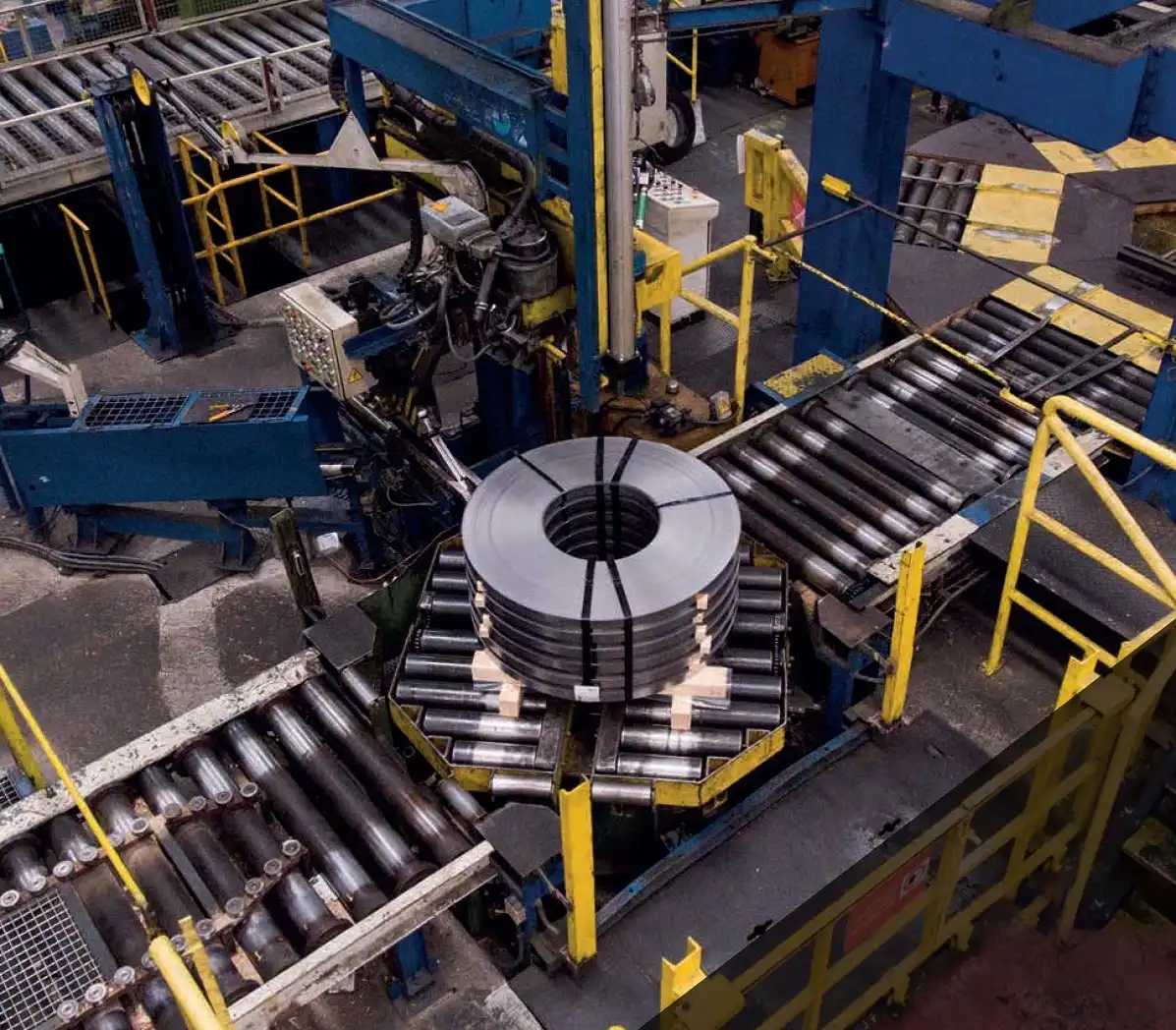
I have helped many clients, including those with goals similar to Ivan’s, transition from labor-intensive setups to highly automated systems. This is where FHOPEPACK truly shines, providing comprehensive solutions.
-
Semi-Automatic Solutions:
- Description: These systems often involve an automated strapping head, but require an operator to position the coil, initiate the strapping cycle, or handle some ancillary tasks.
- Benefits: A good entry point for automation, reducing physical labor and improving consistency compared to purely manual methods.
- Customization: Can be integrated with existing manual handling equipment, allowing for a phased approach to automation. For smaller operations or specific processes, this can be a cost-effective solution.
- (Semi-automatic coil strapping, partial automation packing, operator-assisted strapping)
-
Fully Automatic Strapping Lines:
- Description: Coils enter the system, are automatically positioned, strapped (longitudinal and radial), and then discharged without human intervention.
- Benefits: Significantly increases throughput, ensures consistent quality, and drastically reduces labor costs and associated safety risks. This is what Ivan is looking for to address his labor shortage and inconsistent quality.
- Customization: Includes automatic coil centering, multiple strapping heads (for fast application of multiple straps), and integration with automatic data logging.
- (Full automation coil packing, automatic coil strapping machines, reduced labor packing solutions)
-
Complete Turnkey Coil Packing Lines:
- Description: These are comprehensive systems that integrate not just strapping, but also coil handling, conveying, wrapping (stretch or shrink film), weighing, labeling, and even stacking or palletizing.
- Benefits: Provides a fully synchronized production flow from the slitting or rolling line to dispatch. Achieves the highest levels of efficiency, safety, and packing quality, meeting stringent export requirements like CE/ISO certification.
- Customization: FHOPEPACK specializes in delivering these “turnkey projects.” We design the entire line from scratch, ensuring every component, from the coil car to the final strapping and labeling, works seamlessly together. This includes software integration for production data and remote diagnostics. This level of solution helps clients like Ivan achieve overall cost reduction and secure long-term partnership.
- (Turnkey coil packaging solutions, integrated packing lines, full automation steel processing, production line synchronization)
Can We Customize for Enhanced Safety and Operational Efficiency?
Operating a steel mill is inherently risky. Manual handling of heavy coils poses serious injury threats, and equipment downtime can quickly lead to significant financial losses. The core problem is that generic strapping solutions often lack advanced safety features and robust design needed for continuous, hazard-free operation, thereby compromising both worker well-being and production targets.
Customization for steel coil strapping lines significantly enhances safety and operational efficiency through features like automated coil handling, interlocked safety guarding, remote operation capabilities, ergonomic designs, and predictive maintenance systems. These tailored elements minimize human interaction with heavy machinery, reduce the risk of accidents, and ensure reliable 24/7 continuous operation, crucial for demanding steel mill environments.
Throughout my career, I have seen the devastating consequences of inadequate safety and the high cost of inefficient operations. Building robust, safe, and efficient machines is a personal commitment for me.
-
Automated Coil Handling and Safety Guards:
- Challenge: Manual lifting and turning of coils are dangerous and a major cause of workplace injuries, as Ivan highlighted regarding his labor issues and the risk of accidents.
- Solution: Customized lines integrate automated coil cars, up-enders, and transfer systems. These mechanically handle coils, reducing human intervention.
- Safety Features: Equipped with comprehensive safety guarding, light curtains, emergency stop buttons, and interlocks that prevent operation when guards are open. This ensures operator safety even in a 24-hour, two-shift environment.
- (Automated coil handling, workplace safety packing, interlocked safety features, mechanical coil transfer)
-
Ergonomic Design and Reduced Manual Intervention:
- Challenge: High-intensity manual work leads to worker fatigue, errors, and high turnover rates, making it difficult to maintain a skilled workforce.
- Solution: Custom designs focus on ergonomics. This includes features like easy-to-load strapping material dispensers, intuitive HMI (Human-Machine Interface) touchscreens, and remote diagnostic capabilities.
- Benefits: Reduces physical strain on operators, minimizes the need for direct interaction with moving parts, and simplifies troubleshooting, contributing to higher job satisfaction and lower labor costs.
- (Ergonomic packing machine design, reduced manual labor, intuitive HMI packing, remote diagnostics packaging)
-
Reliability for 24/7 Operation and Predictive Maintenance:
- Challenge: Downtime is extremely costly in a continuous production environment. Equipment must run reliably day and night.
- Solution: Customization involves selecting heavy-duty components, robust engineering, and integrating diagnostic tools. For example, FHOPEPACK builds machines with industrial-grade parts designed for longevity.
- Predictive Maintenance: Advanced systems can include sensors that monitor component wear and tear, alerting maintenance teams before a breakdown occurs. This shifts from reactive to proactive maintenance.
- Supplier Choice: When looking for a long-term partner, consider companies like FHOPEPACK that offer comprehensive after-sales support, spare parts availability, and training. While SHJLPACK and CNBHPAC also provide solutions, FHOPEPACK’s commitment to robust design and ongoing support ensures maximum uptime.
- (24/7 continuous operation, predictive maintenance packaging, reliable strapping equipment, robust industrial packing machines)
Conclusion
Customization is not just a feature; it is essential for modern steel coil strapping lines. It transforms a standard machine into a highly efficient, safe, and reliable solution tailored to your unique production environment. At FHOPEPACK, we pride ourselves on delivering bespoke coil packing line solutions that address specific challenges and help businesses thrive. Choosing the right customization ensures maximum efficiency, enhanced safety, and optimal product quality, securing your investment for the long term.








