
Is an Orbital Stretch Wrapper Right for Your Kazakh Factory?
Do you ever feel the pressure of a bottleneck at the end of your production line? In heavy industries, especially in a demanding environment like Kazakhstan, every minute counts. Manual coil packing or steel wire packing can be slow and dangerous. You watch your skilled workers struggle with heavy, awkward products, knowing that one wrong move could lead to injury or damaged goods. This not only slows down your whole operation but also eats into your profits and creates a constant worry about safety.
Yes, for many Kazakh factories dealing with long or bulky products like coils, pipes, or panels, an orbital stretch wrapper can be a transformative investment. It automates the packing process, significantly boosts efficiency, enhances worker safety by reducing manual handling, and provides superior product protection against transit damage, directly addressing common challenges faced in heavy manufacturing environments.
I understand these challenges deeply. Having started as an employee in a packing machine factory and then built my own successful business, I have seen firsthand the struggles and the triumphs. This article will cut through the noise and show you exactly how an orbital stretch wrapper could be the solution you need to overcome your biggest packing hurdles.
Are Your Manual Packing Methods Slowing Down Production in Kazakhstan?
Is your current packing line constantly struggling to keep up with production demands? In a country like Kazakhstan, where heavy industry often means high volume and large products, manual wrapping can be a major choke point. Your team works hard, but there’s only so much they can do when faced with bulky items, leading to delays and missed deadlines.
Manual packing methods often create significant efficiency bottlenecks in Kazakh factories, as they are inherently slower, less consistent, and require more labor than automated solutions, directly impacting overall production throughput and delivery schedules.
In my early days, both as an employee and later running my own factory, I often saw how much time and effort went into packing large steel coils and bundles of wire. It was a painstaking process. We had skilled workers, but even they could only manage so much. The idea of doing things faster without sacrificing quality was always on my mind. That’s why automation in packing became such a focus for me. When you’re trying to meet strict production targets, every second of downtime or inefficiency in the packing area directly impacts your bottom line. It’s not just about getting the product out; it’s about getting it out consistently and quickly.
Boosting Throughput: The Automation Advantage
Moving from manual to automated packing with an orbital stretch wrapper dramatically changes your operational speed. Think about the difference between hand-wrapping a large steel coil and watching a machine do it in minutes. The machine applies consistent tension and overlap, something difficult for a human to replicate over and over. This consistency also means fewer rewraps and less material waste. For factories in Kazakhstan that deal with high volumes of heavy products, this is a game-changer. It means your packing line can finally match the speed of your production.
Manual processes introduce variability. One day, the packing might be perfect. Another day, with a tired worker, it might be less so. An orbital wrapper removes this human element, ensuring every package meets the same high standard. This reliability is crucial for steady output.
Let me break down how an orbital wrapper impacts efficiency:
| Feature | Manual Packing | Orbital Stretch Wrapper |
|---|---|---|
| Speed | 🐢 Slow, varies with worker fatigue | 🚀 Fast, consistent cycle times |
| Labor Requirement | 👨👩👧👦 High, multiple workers per shift | 🧑🔧 Low, often one operator for multiple machines |
| Consistency | 📉 Varies, prone to human error | ✅ High, uniform wrap tension and overlap |
| Material Usage | 💸 Often wasteful, inconsistent stretch | 💡 Optimized, consistent stretch saves film |
| Downtime Impact | 🛑 Worker breaks/injuries cause delays | 🛠️ Minimal, planned maintenance; high uptime |
| Integration Potential | 🔗 Hard to integrate with other automation | 🤖 Easy to link with conveyors and production |
When I was setting up my own factory, I knew that every piece of equipment had to pull its weight. A slow packing process can negate all the gains made in manufacturing. An orbital stretch wrapper helps you avoid that. It ensures that your finished products are ready for shipment quickly, keeping your entire supply chain moving. This kind of efficiency is not just about speed; it is about smooth, uninterrupted operations. It allows your factory in Kazakhstan to handle increased orders without needing to hire more people just for packing. It’s about smart growth. This is the kind of practical solution I focused on when helping my own clients, making sure their investments truly paid off.

Can an Orbital Wrapper Really Make Your Kazakh Workplace Safer?
Are you constantly worried about workplace accidents in your factory? Handling heavy, awkward items like steel coils or long profiles manually is incredibly dangerous. In heavy industries across Kazakhstan, the risk of back injuries, crushed limbs, or dropped products is a daily concern. This not only puts your valuable employees at risk but also leads to high insurance costs and potential employee turnover.
An orbital stretch wrapper significantly enhances safety in Kazakh factories by automating the hazardous process of wrapping large and heavy products, drastically reducing the need for manual lifting, carrying, and maneuvering, thereby minimizing the risk of worker injuries and accidents.
I’ve been in factories where the loading and packing areas were chaotic. Workers were straining, struggling, and sometimes getting hurt. I remember one time, early in my career, a worker almost dropped a heavy bundle of rebar because the wrapping was uneven. It was a close call. That incident really stuck with me. It showed me that safety isn’t just a compliance issue; it’s a moral responsibility. It also showed me that smart machine design can prevent these kinds of dangers. When I built my factory, and when I help my clients today, safety is always a top priority, especially when dealing with heavy items like those found in coil packing and steel wire packing.
Reducing Physical Strain and Accident Risk
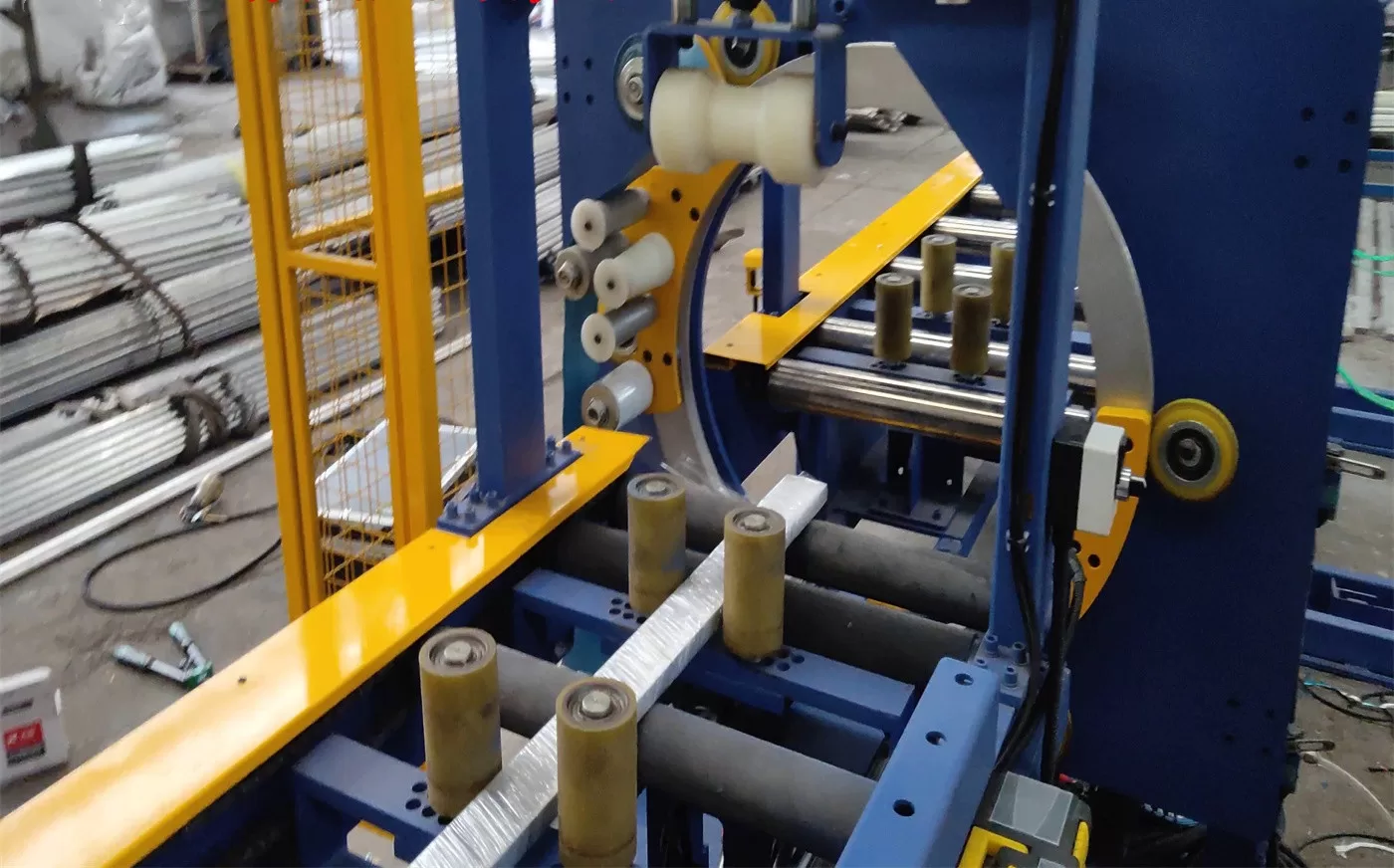
An orbital stretch wrapper takes the heavy lifting out of the equation. Instead of workers manually moving around large, heavy products to wrap them, the product stays stationary (or on a conveyor), and the machine’s arm rotates to apply the film. This alone eliminates a huge source of injury risk. Workers no longer need to bend, twist, or lift awkward loads. This reduces the risk of musculoskeletal injuries, which are common in manual packing operations.
Consider the common dangers of manual packing:
- Lifting Injuries: Strained backs, herniated discs from trying to lift or turn heavy coils.
- Crushing Hazards: Fingers or limbs caught between moving products or during manual adjustments.
- Slips and Falls: Workers navigating around loose film or unevenly stacked products.
- Repetitive Strain Injuries: Tendinitis or carpal tunnel syndrome from repeated hand-wrapping motions.
By automating the wrapping process, these risks are minimized or removed entirely. The machine handles the physical stress, protecting your workforce. This not only keeps your employees healthier and happier but also reduces costly worker compensation claims and insurance premiums. A safer workplace also means better morale and lower employee turnover. In my experience, happy and safe employees are more productive employees. This is a win-win situation for any factory manager in Kazakhstan.
How Do Orbital Wrappers Protect Products and Boost ROI for Heavy Industry?
Are you tired of receiving customer complaints about damaged goods? In the heavy industrial sector, especially when shipping valuable items like steel coils or wire bundles, any damage during internal transfer or transit means lost profits and a tarnished reputation. The edges of steel coils, for example, are very vulnerable to nicks and dents if not properly secured, leading to costly rejections and rework.
Orbital stretch wrappers provide superior product protection by creating a tight, uniform, and secure wrap around various shapes, preventing damage from handling, dust, and moisture during storage and transit; this directly boosts ROI for heavy industries in Kazakhstan by reducing product loss, minimizing customer complaints, and lowering associated costs.
I have personally experienced the frustration of product damage. When I was building my packing machine factory, I knew that the packaging had to be as robust as the product inside. Early on, I had a client who was shipping delicate medical equipment. Not exactly steel coils, but the principle of protection is the same. They had issues with boxes arriving slightly open, leading to small scuffs on the product. It was a big deal for them. I helped them implement a better wrapping solution, and their complaints vanished. This showed me that good packaging is an investment in product integrity and customer satisfaction. It’s even more critical for high-value metal products like those produced in Kazakhstan.
The Financial Impact of Superior Packaging
Product damage is a silent killer of profits. Every damaged item means:
- Lost Revenue: The product cannot be sold at full price, or might even be completely unsalable.
- Rework Costs: Time and labor spent on repairing or re-manufacturing damaged goods.
- Shipping Costs: Having to reship replacements.
- Customer Dissatisfaction: Leading to lost future business and reputational damage.
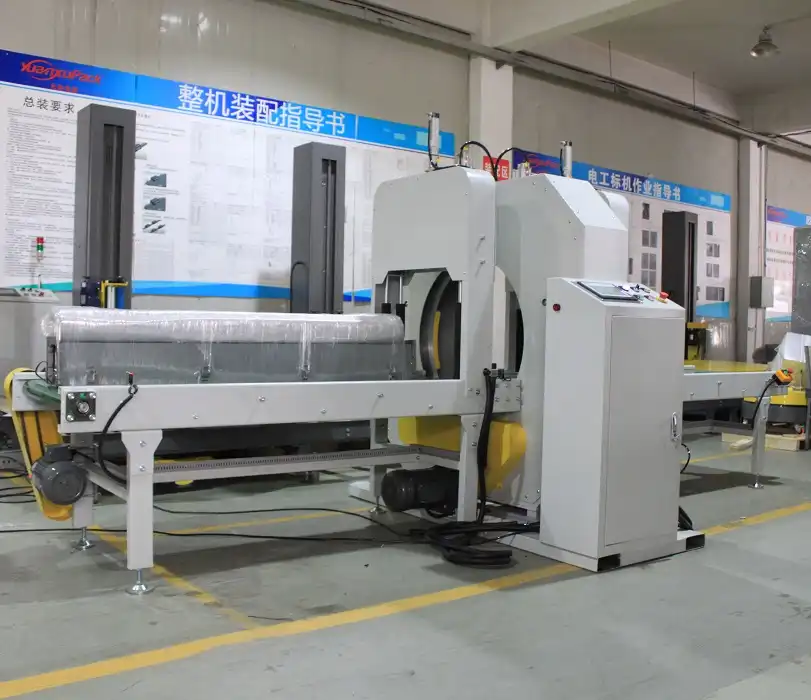
An orbital stretch wrapper creates a secure, all-around wrap that protects products from these issues. The film is applied under tension, providing a tight bundle that resists movement, abrasion, and punctures. It also offers protection against dust and moisture, which is vital for metals that can corrode. This level of protection significantly reduces the chances of damage, particularly to vulnerable parts like the edges of steel coils.
Let’s look at the ROI from product protection:
| Area of Impact | Manual Packing (High Risk) | Orbital Stretch Wrapper (Low Risk) |
|---|---|---|
| Product Damage | 💔 High risk, especially for edges/surfaces | 💪 Very low risk, secure and uniform wrap |
| Customer Returns | 📉 More frequent due to transit damage | ✅ Significantly reduced returns |
| Rework/Scrap | 💰 Costly, impacts production schedule | 📉 Minimal, products arrive intact |
| Reputation | 😔 Negative impact, loss of trust | ⭐ Enhanced, seen as reliable supplier |
| Material Usage | ♻️ Can be inconsistent, sometimes excessive | 📊 Optimized, less film waste due to tension |
| Insurance Claims | 📈 Potentially higher due to damage | 📉 Lower, fewer incidents to report |
The investment in an orbital stretch wrapper often pays for itself quickly through these savings. When I work with factory owners, we always do an ROI calculation. For heavy industry, the numbers often show a clear picture: the cost of damage, rework, and customer dissatisfaction far outweighs the investment in quality packing equipment. This equipment not only protects your products but also protects your bottom line, making it a wise strategic choice for any forward-thinking factory in Kazakhstan.
Choosing the Right Orbital Wrapper: What Should a Kazakh Factory Manager Look For?
Are you cautious about investing in new equipment, especially after past disappointments with suppliers? It’s a common story. Many factory managers, particularly in a demanding industrial landscape like Kazakhstan, have dealt with suppliers who promise much but deliver little in terms of reliable service or genuine understanding of their operational needs. You need a partner, not just a seller.
When selecting an orbital stretch wrapper for a Kazakh factory, a manager should prioritize rugged construction for durability, high-speed wrapping capabilities, comprehensive safety features, and a supplier who offers strong after-sales support and deep industry expertise, ensuring the investment truly solves production challenges and provides a clear ROI.
My journey in the packing machine industry started from the ground up. I know what it feels like to rely on machinery to keep operations running. I also know what it takes to build a successful factory. I learned that having the right equipment is only half the battle. The other half is having the right partner behind that equipment. I have seen clients make bad choices because they only looked at the price tag. They ended up with machines that broke down constantly or didn’t fit their needs. This led to more problems than they started with. That’s why I am dedicated to sharing my knowledge; it’s about helping people avoid those mistakes. It’s about finding real solutions that contribute to business growth.
Beyond the Machine: The Value of Expertise and Support
When you are looking for an orbital stretch wrapper for your factory, especially one handling heavy industrial products in Kazakhstan, you need to think beyond the immediate price. The lowest price often means compromises in quality, durability, or support. Here’s what I advise my clients to look for:
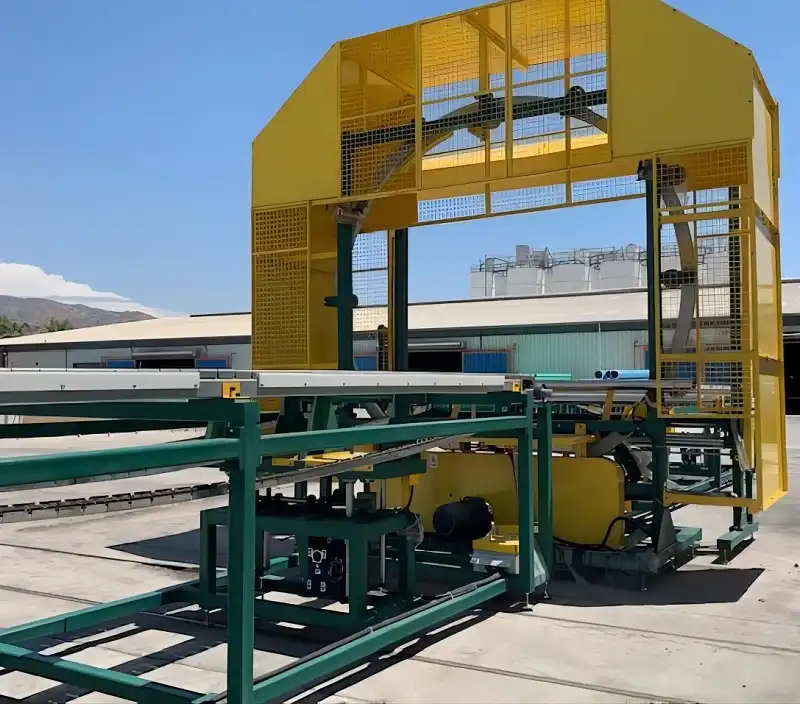
- Durability and Build Quality: The machine must withstand the harsh conditions of heavy industry. Look for robust construction, high-quality components, and a design meant for continuous operation. Think about the specific environment in Kazakhstan – extreme temperatures, dust, heavy loads. The machine needs to be built for that.
- Customization and Flexibility: Can the machine handle different product sizes and shapes? Will it integrate smoothly with your existing production line, like your coil packing or steel wire packing systems? A good supplier will offer options and solutions tailored to your unique needs.
- Safety Features: Automated machines must come with advanced safety interlocks, emergency stops, and clear operational guidelines. This protects your workers even further.
- Supplier’s Industry Experience: Does the supplier truly understand your business? Can they speak your language when it comes to production bottlenecks, safety concerns, and efficiency targets? I always emphasize working with someone who has walked in your shoes.
- After-Sales Service and Parts Availability: This is critical. What happens if the machine breaks down? How quickly can you get spare parts and technical support? A machine is only as good as the service that backs it up. Unreliable support can lead to significant downtime, which is costly.
When I help clients, I don’t just sell them a machine. I help them map out their entire packing process. We discuss their specific challenges: the type of materials they pack, the volume, the current safety issues, and their future growth plans. We look at the total cost of ownership, not just the purchase price. This includes operational costs, maintenance, and the potential for increased output and reduced waste. This holistic approach ensures that the investment in an orbital stretch wrapper is not just a purchase, but a strategic move that helps the factory grow and thrive, just as I helped my own business and many of my clients grow.
My Insights!
When it comes to making these big decisions, especially for a factory in Kazakhstan, I always tell people to trust their gut but also to trust the numbers. My journey, from an employee on the factory floor to owning a successful packing machine factory, taught me one core lesson: every problem has a solution, and often, that solution involves smart automation.
I remember when I first started my own factory. I was meticulous about every piece of equipment. I didn’t just buy the cheapest option; I bought what worked, what was reliable, and what would last. I looked for machines that would actually solve the specific problems my clients were facing. For example, when a client came to me with constant damage to their delicate aluminum profiles during transit, I knew a standard wrapping machine wouldn’t cut it. We needed a precise, consistent, and strong wrap that an orbital stretch wrapper could provide. This isn’t just theory; it’s what I built my business on.
Another time, a factory manager was losing employees frequently due to back injuries from manual coil packing. The human cost was terrible, and the financial cost from insurance and training new staff was unsustainable. We implemented an automated solution, and within months, their safety record improved dramatically, and their employee retention went up. This kind of impact is why I do what I do. It’s about more than machines; it’s about improving lives and businesses.
So, when you consider an orbital stretch wrapper, think about it as an investment in your future. It’s an investment in:
- Efficiency: No more bottlenecks, just smooth, fast packing.
- Safety: Protecting your most valuable asset – your people.
- Product Quality: Delivering perfect products every time, building customer trust.
- Profitability: Reducing costs and increasing your bottom line.
Don’t just look for a machine; look for a partner who understands your challenges and can guide you to the right solution. That’s the FHOPEPACK promise – sharing knowledge to help you master your packing machine needs and grow your business, just like I did with mine.

Conclusion
An orbital stretch wrapper offers significant advantages for Kazakh factories, addressing critical needs in efficiency, safety, and product protection. By automating packing processes, it reduces manual labor, minimizes damage, and boosts throughput, ultimately enhancing your factory’s profitability and reputation. Investing in a reliable orbital stretch wrapper with strong support is a strategic step towards a more productive and safer operation.








