
What Additional Software or Network Are Required for Coil Slitting Line With Coil Packing Line Connection?
As a packing machine engineer, I have seen many steel plants facing real struggles. Maybe you are also dealing with low efficiency, inconsistent packaging quality, or high labor costs in your coil slitting and packing operations. These problems can eat into your profits and cause headaches with your clients. You might feel stuck, wondering if there is a better way to handle the hundreds of tons of coils leaving your plant daily.
Connecting your coil slitting line with an automated packing line needs specific software and a robust network. This integration ensures seamless data exchange, synchronized control, and optimized material flow. You will need a Packing Line Control System, Manufacturing Execution System (MES), potentially SCADA, and a reliable industrial network like Industrial Ethernet or a Fieldbus system. These tools work together to automate the entire process, reduce manual work, and improve packaging quality for cold-rolled, galvanized, or pre-painted coils.

You see, it is not just about having good machines. It is about making them work together smartly. Let us dive deeper into the exact software and network components you need to achieve this advanced level of automation and solve those pressing issues.
Why is Connecting Your Slitting and Packing Lines So Crucial for Modern Steel Mills?
Are you still moving coils by hand, trying to coordinate different teams, and hoping for the best when it comes to packaging? This old way can cause delays, damage products, and lead to unhappy customers. In today’s fast-paced steel industry, manual handoffs between slitting and packing are simply not efficient enough. You are losing money and time.
Connecting your slitting and packing lines automates the entire process from cutting to final package, removing manual bottlenecks and reducing errors. This integration gives you real-time data flow, better quality control, and a much safer work environment. It ensures that coils move smoothly, get packaged correctly, and meet strict client demands without manual intervention.

When I started my journey in packing machines, I saw firsthand how much a good system could change a factory. For a steel plant like yours, dealing with hundreds of tons of diverse coils daily, this connection is not just an upgrade. It is a necessity for staying competitive and profitable.
Deep Dive: The Benefits of Integrated Coil Flow
Connecting your slitting line directly to your coil packing line brings many benefits. It changes how you operate, making everything smoother and more reliable. This is especially true for companies like yours, which produce a wide range of steel products.
-
Increased Efficiency and Throughput:
- Automated Handoffs: Coils move from slitting to packing automatically. There is no waiting time or manual handling between steps. This means faster processing and more coils packaged per shift.
- Reduced Cycle Time: Each coil spends less time moving through the plant. This shortens overall production cycles. You can fulfill orders quicker.
- Optimized Resource Use: Machines run closer to their full capacity. You use less energy and get more work done. This is important when you run a 24-hour operation.
-
Improved Packaging Quality and Consistency:
- Standardized Procedures: The integrated system follows preset rules for packing. This means every coil gets the same high-quality wrap and strap. This solves problems with inconsistent film tension or loose straps from manual work.
- Less Product Damage: Automated systems handle coils gently. This reduces scratches, dents, or other damage that can happen during manual transport. Your cold-rolled, galvanized, and pre-painted coils stay in perfect condition.
- Compliance with Standards: Automated packaging ensures all coils meet specific client requirements. This includes CE/ISO certifications for export and precise barcode placement. This prevents customer complaints and expensive returns.
-
Enhanced Safety and Reduced Labor Costs:
- Fewer Manual Tasks: Workers do not need to lift, flip, or move heavy coils. This lowers the risk of accidents and injuries. Safety is a top concern in any steel plant, and this addresses it directly.
- Reduced Labor Dependence: The system needs fewer people to run the packing process. This helps if you struggle with labor shortages or high turnover. Your team can focus on more skilled tasks.
- Lower Insurance Costs: A safer workplace can mean lower insurance premiums. This saves your company money in the long run.
-
Better Data Visibility and Traceability:
- Real-time Tracking: You know where every coil is in the packing process. Data flows instantly from slitting to packing. This gives you a clear picture of your production status.
- Detailed Records: The system records all packaging details. This includes strapping tension, wrapping patterns, and labels. This information is valuable for quality audits and problem-solving.
- Customer Trust: When you can trace every package, clients trust your product more. This is especially important for export customers who need detailed records.
-
Adaptability to Product Diversity:
- Automated Recipe Management: The system can store different packaging settings. You can switch between cold-rolled, galvanized, or pre-painted coil requirements easily. This removes the hassle of manual changes for diverse products.
- Flexible Coil Handling: Modern systems adapt to various coil sizes and weights (1-3 tons, different inner/outer diameters). The automated line handles these variations without issues.
- Quick Changeovers: Automated changeovers between product types are faster and more accurate. This boosts overall line flexibility.
In essence, integrating your slitting and packing lines transforms your operation. It moves you from a series of disconnected steps to a smooth, automated workflow. This helps you meet modern demands. It also prepares your factory for future growth. My experience shows that this kind of investment pays off quickly.
What Software Orchestrates the Coil Packing Process Itself?
Do you ever wonder if your packing machines are working as hard and as smart as they could be? Without the right brain guiding them, even the best machines can operate below their potential. You might see manual adjustments, inconsistent performance, or slow changeovers. This keeps you from hitting your daily output targets.
The core software orchestrating the coil packing process is a dedicated Packing Line Control System (PLCS). This system manages individual packing machines, such as coil wrappers, strapping machines, and labeling units. It ensures each machine performs its specific task with precision, speed, and consistency. This software is the brain that makes your packing line truly automatic.
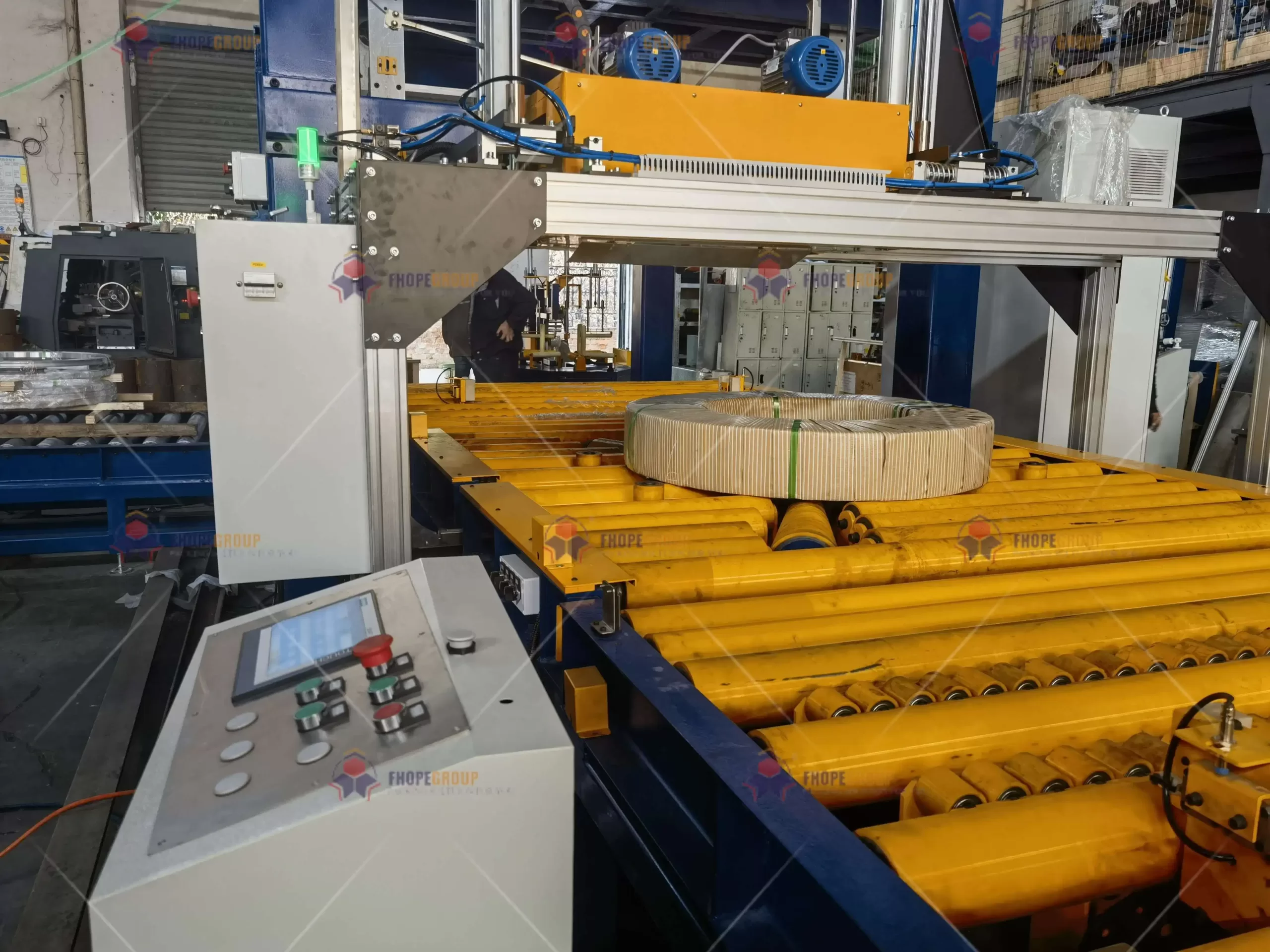
I have spent years perfecting these systems. They are what allow FHOPEPACK machines to deliver high-quality, consistent packaging, even with varied products. This software layer is critical for turning a collection of machines into a high-performing, synchronized packing line.
Deep Dive: The Brain Behind Automated Packing
A Packing Line Control System (PLCS) is not just a simple on/off switch. It is a sophisticated piece of software that manages every detail of the packing process. It ties together all the different machines on the line.
-
Programmable Logic Controllers (PLCs):
- Real-Time Control: PLCs are the workhorses. They directly control the physical actions of each packing machine. This includes starting motors, extending cylinders, and reading sensors. They make sure the machine moves at the right time.
- Machine-Specific Logic: Each PLC has programs for its specific machine. For example, a strapping machine’s PLC controls the strap tension, welding cycle, and strap feeding. A wrapper’s PLC manages film tension, overlap, and rotation speed.
- Reliability: PLCs are built for industrial environments. They are very robust and reliable, which is essential for 24-hour operations in a steel mill. They keep working even in harsh conditions.
-
Human-Machine Interface (HMI) / Operator Panel:
- User Interaction: The HMI is the screen where operators interact with the packing line. It is a graphical interface that shows the status of the machines. Operators can start, stop, and adjust settings from here.
- Recipe Management: HMIs store “recipes” for different coil types. For example, you might have a recipe for galvanized coils that need tight PET strapping and a specific number of wraps. Another recipe for cold-rolled coils might use steel strapping with less film. This simplifies switching between different products.
- Alarms and Diagnostics: The HMI displays error messages and diagnostic information. If a machine has a problem, the HMI tells the operator what is wrong. This helps in quick troubleshooting and reduces downtime.
-
Dedicated Packing Software Modules:
- Sequence Control: This module manages the overall flow of coils through the packing line. It ensures that coils are moved, wrapped, strapped, and labeled in the correct order.
- Material Handling Integration: It controls conveyors, roller tables, coil tilters, and automatic handling robots. This ensures coils are positioned correctly for each packing step. This is key for safety and efficiency.
- Quality Control Parameters: The software monitors key parameters during packing. It checks for correct strap tension, film overlap, and label application. If anything is out of spec, it can trigger an alert or stop the line.
-
Reporting and Data Logging:
- Production Data: The PLCS records how many coils are packed, what type they are, and how long each process takes. This data helps you understand your line’s performance.
- Event Logging: It logs all system events, including startups, shutdowns, and error conditions. This detailed history is useful for maintenance and process improvement.
- Integration with Higher Systems: The PLCS sends this data to higher-level systems, like an MES or ERP. This allows for plant-wide data analysis and informed decision-making.
By using a well-designed Packing Line Control System, you give your packing line the intelligence it needs. This ensures it operates consistently, efficiently, and safely. My goal at FHOPEPACK is to make these systems as intuitive and powerful as possible. This helps you get the most out of your investment and meet your high production demands.
How Do Slitting and Packing Lines “Talk” to Each Other Seamlessly?
Have you ever seen a slitting line finish a coil, only for the packing line to sit idle, waiting for someone to manually transfer information or the actual coil? This disconnect causes wasted time and often leads to miscommunications. It is like having two brilliant minds that just cannot speak the same language. You know there is a better way to coordinate these two critical operations.
The seamless communication between a slitting line and a packing line relies on middleware, often integrated within a Manufacturing Execution System (MES) or Supervisory Control and Data Acquisition (SCADA) system. These platforms act as translators and coordinators, exchanging real-time data on coil specifications, production status, and packing instructions. This ensures the packing line automatically prepares for the next coil coming from the slitting line.
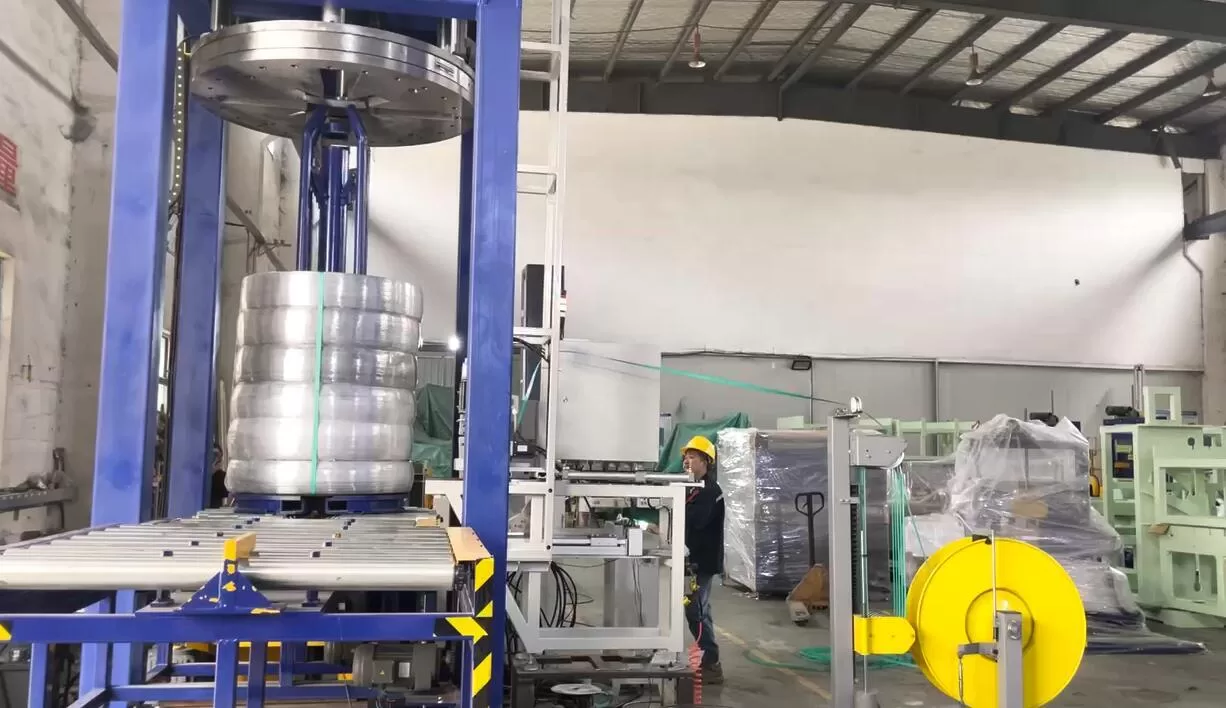
From my experience, achieving this “conversation” between machines is the key to true automation. Without it, you are still operating in silos, limiting your efficiency and the consistency of your output. It is about more than just moving coils. It is about moving information.
Deep Dive: Bridging the Gap Between Production Stages
For slitting and packing lines to work as one integrated system, they need specific software layers to manage their communication. These systems are crucial for making sure data flows freely and accurately.
-
Manufacturing Execution System (MES):
- Production Order Management: The MES takes production orders from your ERP system. It then breaks them down into specific tasks for both the slitting and packing lines. This tells each line what to produce and how to pack it.
- Work-in-Progress (WIP) Tracking: It tracks coils as they move from slitting, through buffer zones, and into the packing line. This gives you a clear view of your inventory at any point.
- Data Collection and Reporting: The MES collects real-time data from both lines. This includes production rates, machine status, and quality data. It then generates reports that help you analyze performance and find areas for improvement. This helps meet Ivan’s need for comprehensive data.
- Resource Allocation: It helps manage resources like labor and materials across both operations. This ensures that the packing line has what it needs when the slitting line finishes a coil.
- Quality Management: The MES can enforce quality checks at different stages. For example, it can ensure that coils meet thickness specifications after slitting before they proceed to packing. It can also confirm that packing instructions (e.g., specific strapping for export) are followed.
-
Supervisory Control and Data Acquisition (SCADA):
- Centralized Monitoring: SCADA systems provide a bird’s-eye view of the entire integrated operation. Operators can see the status of both the slitting and packing lines on one screen. This helps them identify problems quickly.
- Process Control: While PLCs control individual machines, SCADA can send commands to multiple PLCs across the entire line. For example, it can adjust the speed of the conveyor system to match the output of the slitting line.
- Alarm Management: SCADA detects abnormal conditions or errors. It then triggers alarms to alert operators. This could be a jam on the packing line or a critical sensor failure.
- Historical Data Archiving: SCADA logs vast amounts of operational data over time. This historical data is vital for trend analysis, predictive maintenance, and process optimization.
-
Middleware / OPC Servers:
- Data Harmonization: Different machines might use different communication protocols. Middleware, often through an OPC (Open Platform Communications) server, acts as a universal translator. It takes data from the slitting line’s PLC and converts it into a format that the packing line’s PLC or MES can understand.
- Standardized Interfaces: It creates a standard way for all devices to exchange data. This makes it easier to add new equipment later without having to rewrite entire communication programs.
- Reduced Complexity: Instead of each machine talking directly to every other machine, they all talk to the middleware. This simplifies the overall system architecture.
These software solutions bridge the gap between two distinct industrial processes. They ensure that information like coil dimensions, material type, and required packaging (PET/steel strapping, specific wrapping film, labels) flows automatically from slitting to packing. This eliminates manual data entry, reduces human error, and ensures that your diverse product range receives the correct, high-quality packaging every time. In my experience, this level of integration is what truly sets a modern steel mill apart.
What Network Backbone Powers This Advanced Automation?
Imagine a high-speed highway where crucial information needs to travel instantly. If that highway is full of potholes or bottlenecks, everything slows down, and accidents happen. In your factory, if your machines cannot communicate reliably and quickly, your entire automated line will stumble. You need a robust, dedicated communication system.
The advanced automation connecting slitting and packing lines relies on industrial network protocols like Industrial Ethernet (e.g., PROFINET, EtherNet/IP) or Fieldbus systems (e.g., PROFIBUS, DeviceNet). These networks provide the high-speed, reliable, and deterministic communication channels necessary for real-time data exchange and synchronized machine control. They are the arteries that carry vital information throughout your integrated system.

I have seen operations where unreliable networks cause more headaches than bad machinery. A strong network is not just about speed. It is about stability, security, and making sure that every piece of data gets to its destination correctly, every single time. This is the foundation for your automation goals.
Deep Dive: The Essential Communication Infrastructure
A robust industrial network is the nervous system of your integrated slitting and packing lines. It ensures that all software systems and hardware components can communicate effectively.
-
Industrial Ethernet:
- High Bandwidth: Industrial Ethernet systems like PROFINET, EtherNet/IP, and Modbus TCP offer high data transfer rates. This is essential for large amounts of real-time data exchange between PLCs, HMIs, MES, and other devices.
- Standardized Technology: It uses the same physical layer as standard office Ethernet (RJ45 cables). This makes it familiar to IT staff. However, industrial versions are ruggedized for factory environments.
- Deterministic Communication: Unlike standard Ethernet, industrial versions ensure data packets arrive in a predictable time. This is crucial for synchronized machine control and safety systems.
- Scalability: Industrial Ethernet networks can easily expand to include more devices as your automation needs grow. This is a big plus for future-proofing your factory.
- Topology Flexibility: You can arrange the network in various ways (star, ring, line). Ring topologies offer redundancy, meaning if one cable breaks, data can still flow another way. This is important for 24-hour operations.
-
Fieldbus Systems:
- Traditional Industrial Standard: Fieldbus systems like PROFIBUS, DeviceNet, and AS-Interface have been used in factories for decades. They are proven and reliable.
- Simplicity and Cost-Effectiveness: For simpler applications or smaller lines, Fieldbus can be less complex to set up and maintain than Industrial Ethernet.
- Hard Real-Time Performance: Some Fieldbus systems offer very precise timing for control signals. This is critical for highly synchronized machine actions.
- Device Integration: They are excellent for connecting a large number of sensors, actuators, and lower-level control devices directly to PLCs.
-
Network Hardware:
- Industrial Switches: These are robust network switches designed for harsh environments (dust, vibration, temperature changes). They ensure reliable data routing.
- Firewalls and Routers: For security, firewalls separate your operational technology (OT) network from your information technology (IT) network. Routers manage traffic between different network segments.
- Wireless Access Points (WAPs): In some areas, wireless connections might be used for mobile devices or specific sensors. However, critical control communications usually stay wired for stability.
- Cabling: Industrial-grade cables (e.g., shielded twisted pair, fiber optics) are essential. They resist electromagnetic interference and physical damage. Fiber optics are great for long distances and immunity to electrical noise.
-
Network Management Software:
- Monitoring Tools: Software monitors network health, traffic, and device status. It alerts you to problems like cable breaks or device failures.
- Configuration Tools: These tools help set up network devices and ensure they communicate correctly.
- Security Management: This software helps manage access control and protect the network from unauthorized entry or cyber threats.
The right network ensures that your slitting line can tell the packing line, “Hey, a new 2-ton cold-rolled coil is coming. It needs PET strapping and anti-rust wrapping.” Then, the packing line can prepare automatically without missing a beat. This level of reliable communication is the backbone of efficiency and safety in a modern steel mill. It helps you avoid downtime and meet your stringent delivery schedules.
Beyond Connectivity: How Does Data Unlock New Levels of Efficiency for Your Plant?
You have invested in automated lines and connected them with smart software and networks. But what is the real return on this investment? If you are only using this setup to move coils faster, you are missing a huge opportunity. The true power lies in the data generated. Without using this data, you are leaving valuable insights on the table.
Beyond merely connecting machines, the data collected from your integrated slitting and packing lines can be analyzed to unlock new levels of plant-wide efficiency. This involves integrating with higher-level systems like ERP, implementing data analytics for predictive maintenance, and leveraging cloud solutions for remote monitoring. This data transforms raw production information into actionable insights, helping you optimize processes, reduce costs, and proactively meet future demands.

As Randal Liu, I have seen clients transform their entire business by truly understanding and using their production data. It is about moving from reacting to problems to predicting and preventing them. This is where your investment in automation truly shines.
Deep Dive: Harnessing Data for Strategic Growth
Collecting data is one thing; using it wisely is another. With an integrated slitting and packing line, you generate a wealth of information. This data, when analyzed, can drive significant improvements across your entire steel plant.
-
Enterprise Resource Planning (ERP) Integration:
- Holistic View: Integrating your MES/SCADA data with your ERP system provides a complete picture of your operations. This connects production data with inventory, sales orders, and financial records.
- Optimized Inventory: The ERP system can use real-time production data to manage raw material and finished goods inventory more effectively. This reduces holding costs and ensures you always have enough materials.
- Accurate Costing: By linking packing material usage and labor hours directly to specific production orders, you get precise costing for each coil. This helps you price products more competitively and understand your true profit margins.
- Improved Scheduling: Sales orders in the ERP can directly feed into the MES, helping to optimize production schedules for both slitting and packing. This ensures you meet delivery dates reliably.
-
Data Analytics and Business Intelligence (BI):
- Performance Dashboards: Create customized dashboards that show key performance indicators (KPIs) in real-time. This includes overall equipment effectiveness (OEE), production rates, and packaging quality metrics.
- Root Cause Analysis: Analyze historical data to identify the root causes of problems. For example, if packaging quality drops on specific shifts, data can help pinpoint why. This moves you from guesswork to data-driven problem solving.
- Predictive Maintenance: Monitor machine parameters (e.g., motor vibration, sensor readings, operating temperatures). Use this data to predict when a machine part might fail. This allows for scheduled maintenance instead of reactive breakdowns, reducing costly downtime.
- Process Optimization: Identify trends and patterns in your data. This can lead to small adjustments in machine settings or operational procedures that yield big improvements in efficiency and quality. For Ivan, this means consistently achieving export-level packaging.
-
Cloud Solutions and Remote Monitoring:
- Accessibility: Cloud-based platforms make your production data accessible from anywhere, on any device. Plant managers or even remote support teams can monitor operations.
- Scalability: Cloud infrastructure can handle massive amounts of data as your factory grows, without needing huge upfront IT investments.
- Advanced Analytics: Cloud platforms often offer powerful built-in tools for AI-driven analytics and machine learning. This can uncover deeper insights and automate decision-making.
- Vendor Support: Many packing machine suppliers, like FHOPEPACK, offer cloud-based remote monitoring and diagnostics. This allows us to help troubleshoot issues quickly and efficiently, no matter where your plant is located, like in Russia. This supports Ivan’s goal of finding a long-term partner with strong after-sales support.
- Enhanced Security: Reputable cloud providers offer robust security measures to protect your valuable production data from cyber threats.
-
Traceability and Compliance:
- Digital Records: All packing data, including time stamps, machine settings, and material batches, are digitally recorded. This creates an unchangeable record for every coil.
- Regulatory Compliance: For industries like steel, meeting standards like CE/ISO is critical. Detailed digital records simplify audits and prove compliance.
- Customer Requirements: When clients ask for specific barcodes or detailed packing information, your integrated system can provide it instantly. This builds trust and strengthens client relationships.
Leveraging this data moves you beyond basic automation. It helps you achieve true operational excellence. You gain a deeper understanding of your plant’s performance. You can make proactive, informed decisions that reduce costs, improve quality, and ensure the long-term success of your business. This is the future of smart manufacturing, and it is available today.
Conclusion
Connecting your coil slitting line with a coil packing line demands specific software and a robust network. You need a dedicated Packing Line Control System for machine automation, an MES or SCADA for overall coordination, and a reliable industrial network. This integration transforms raw data into actionable insights, improving efficiency, safety, and product quality. Embracing these technologies ensures your coil packing line meets modern demands and secures a competitive edge.








