

2025 Market Report: Emerging Technologies in Coil Packaging Automation
Are you ready to revolutionize your coil packaging process? The manufacturing industry is facing increasing demands for efficiency, sustainability, and precision. Imagine a future where coil packaging is seamless, automated, and optimized by cutting-edge technology. This future is closer than you think.
The 2025 Market Report on Emerging Technologies in Coil Packaging Automation reveals that advanced robotics, AI-driven systems, and smart sensors are converging to transform coil packaging, offering unprecedented levels of speed, accuracy, and resource efficiency for manufacturers.
The coil packaging industry is on the cusp of a technological revolution. Dive into this report to discover the key trends and technologies that will redefine coil packaging automation in 2025 and beyond.
Automation and Robotics Reshaping Coil Handling
Tired of slow, labor-intensive coil packaging processes? Imagine a factory floor where robots seamlessly handle heavy coils, increasing throughput and reducing workplace injuries. This isn’t a distant dream; it’s the reality of modern coil packaging automation.
Automation and robotics are revolutionizing coil handling by enabling faster, safer, and more precise movement and packaging of coils. These technologies minimize manual labor, reduce damage, and optimize space utilization within packaging facilities, leading to significant operational improvements.

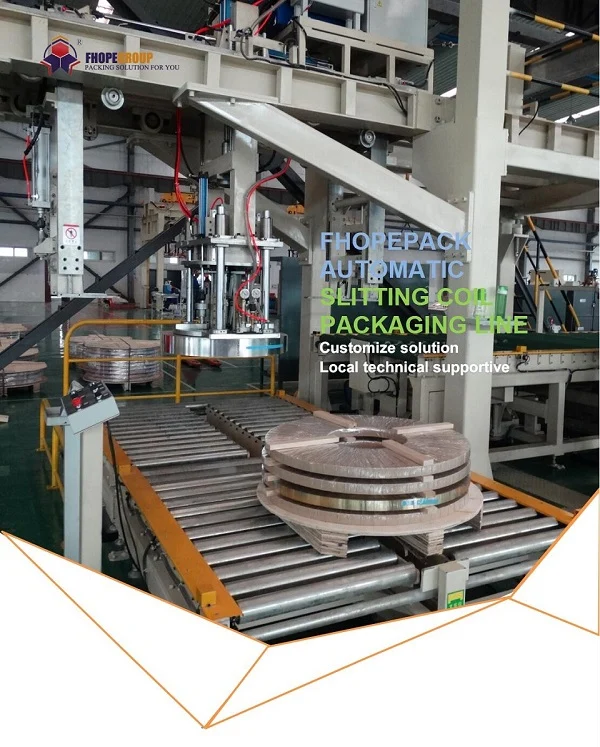
Dive Deeper: The Nuances of Robotic Coil Handling Systems
Robotic coil handling systems are not monolithic; they come in various forms, each suited to different operational needs and coil specifications. Understanding these nuances is crucial for businesses looking to invest in automation. Let’s break down the key aspects:
Types of Robotic Systems in Coil Packaging
- Articulated Robots: These are the most versatile, mimicking a human arm with multiple joints. They offer a high degree of freedom and are excellent for complex tasks like manipulating coils in tight spaces or performing intricate packaging steps.
- Gantry Robots: Ideal for heavy lifting and moving coils over a large area. Gantry systems provide stability and precision for handling substantial weights and are often integrated into automated storage and retrieval systems (AS/RS).
- Collaborative Robots (Cobots): Designed to work alongside human workers, cobots are equipped with safety sensors to prevent collisions. They are suitable for tasks that require human-robot collaboration, such as assisting with packaging or quality checks.
Key Benefits and Considerations
To fully appreciate the impact of robotics, consider the following table that compares traditional manual handling with advanced robotic systems:
| Feature | Manual Coil Handling | Robotic Coil Handling |
|---|---|---|
| Speed & Throughput | Slower, dependent on human pace | Significantly faster, consistent speed |
| Safety | Higher risk of injury | Reduced risk of injury |
| Precision | Variable, subject to human error | High precision and repeatability |
| Labor Costs | High, labor-intensive | Lower, reduced labor dependency |
| Consistency | Inconsistent quality | Consistent and high quality |
| Space Utilization | Can be inefficient | Optimized space usage |
| Initial Investment | Lower upfront cost | Higher initial investment |
| Long-term ROI | Lower ROI potential | Higher long-term ROI |
While the initial investment in robotic systems might seem substantial, the long-term return on investment (ROI) is compelling. Factors contributing to ROI include reduced labor costs, decreased material waste due to precise handling, fewer workplace accidents, and increased production throughput.
However, implementing robotic systems is not without its challenges. Integration with existing systems, the need for skilled personnel to program and maintain robots, and the initial learning curve are all factors that businesses must consider. A phased implementation approach, starting with automating the most labor-intensive or error-prone processes, is often recommended for a smoother transition and quicker realization of benefits. Furthermore, selecting the right type of robotic system based on coil size, weight, and packaging requirements is paramount to ensure optimal performance and efficiency gains. The future of coil handling is undoubtedly robotic, and understanding the technology and its implications is key to staying competitive.
AI-Driven Quality Control in Coil Packaging
Are you struggling with inconsistent coil packaging quality? Imagine AI-powered vision systems that can detect even the slightest defects, ensuring only perfectly packaged coils leave your facility. This is the promise of AI in coil packaging quality control.
AI is enhancing quality control in coil packaging through advanced vision systems and machine learning algorithms that can automatically inspect coils for defects, ensuring consistent packaging quality and reducing the risk of damaged goods reaching customers.

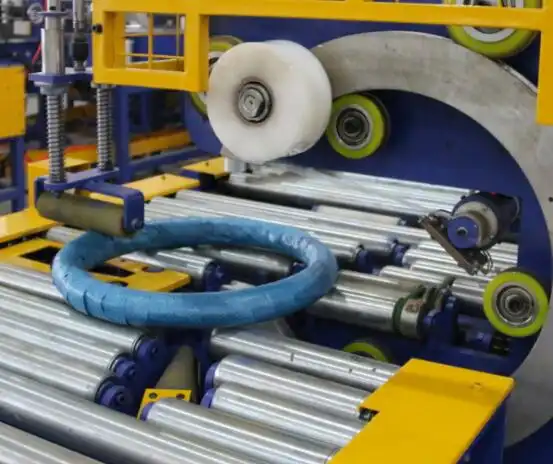
Delving into AI-Powered Defect Detection
AI’s role in quality control extends far beyond simple automation; it brings a level of intelligence and adaptability that traditional systems cannot match. Let’s explore how AI is transforming defect detection in coil packaging:
The Power of Computer Vision and Machine Learning
At the heart of AI-driven quality control are computer vision and machine learning. Computer vision allows systems to “see” and interpret images, mimicking human sight but with greater precision and speed. Machine learning, a subset of AI, enables these systems to learn from data, improving their accuracy and efficiency over time.
In coil packaging, this translates to:
- Automated Visual Inspection: AI-powered cameras capture high-resolution images of coils at various stages of packaging. Machine learning algorithms, trained on vast datasets of defect-free and defective coils, analyze these images to identify anomalies.
- Real-time Defect Detection: The system can detect defects in real-time as coils move along the packaging line, triggering immediate alerts or automated rejection mechanisms. This prevents defective products from proceeding further, saving time and resources.
- Comprehensive Defect Analysis: AI can identify a wide range of defects, from minor scratches and dents to significant packaging flaws like loose straps or incorrect labeling. It can also categorize defects, providing valuable data for process improvement.
- Predictive Quality Control: By analyzing historical data and identifying patterns, AI can predict potential quality issues before they occur, allowing for proactive adjustments to the packaging process.
Advantages over Traditional Methods
Traditional quality control methods often rely on manual inspection, which is subjective, time-consuming, and prone to human error. AI-driven systems offer significant advantages:
- Increased Accuracy: AI systems can detect defects with far greater accuracy and consistency than human inspectors, especially for subtle or microscopic flaws.
- Enhanced Speed: Automated inspection is significantly faster, allowing for 100% inspection rates without slowing down production.
- Reduced Labor Costs: Automation reduces the need for manual inspectors, lowering labor costs and freeing up human resources for more complex tasks.
- Objective and Consistent: AI-based inspection is objective and consistent, eliminating variability associated with human judgment.
- Data-Driven Insights: AI systems generate valuable data on defect types, frequencies, and locations, providing insights for process optimization and continuous improvement.
By implementing AI-driven quality control, coil packaging facilities can achieve higher product quality, reduce waste, improve customer satisfaction, and gain a competitive edge in the market. The shift towards intelligent quality control is not just about automation; it’s about achieving a new standard of excellence in coil packaging.
Predictive Maintenance Minimizing Downtime in Automation Lines
Are unexpected breakdowns disrupting your coil packaging operations? Imagine a system that predicts equipment failures before they happen, allowing for proactive maintenance and minimizing costly downtime. This is the power of predictive maintenance in automated coil packaging.
Predictive maintenance leverages sensor data and AI algorithms to forecast equipment failures in coil packaging automation lines, enabling timely maintenance interventions, reducing downtime, and extending the lifespan of machinery.


Unpacking Predictive Maintenance for Coil Packaging Automation
Predictive maintenance (PdM) is transforming how industries manage their assets, moving from reactive and preventative approaches to a proactive, data-driven strategy. In coil packaging automation, where downtime can be particularly costly, PdM offers substantial benefits. Let’s delve into the technical aspects:
Core Technologies and Methodologies
Predictive maintenance relies on a combination of technologies and methodologies working synergistically:
- Sensor Integration (IoT): Various sensors are deployed on critical equipment within the coil packaging line. These sensors collect real-time data on parameters like vibration, temperature, sound, electrical current, and lubricant levels.
- Data Acquisition and Processing: The sensor data is continuously collected and transmitted to a central system. Advanced data processing techniques are used to clean, filter, and prepare the data for analysis.
- AI and Machine Learning Algorithms: Machine learning algorithms, particularly time series analysis and anomaly detection, are applied to the processed data. These algorithms learn the normal operating patterns of the equipment and can detect deviations that indicate potential failures.
- Predictive Analytics and Diagnostics: Based on the analysis, the system predicts the remaining useful life (RUL) of components and identifies potential failure modes. Diagnostic tools help pinpoint the root cause of anomalies.
- Maintenance Management System Integration: The predictive maintenance system integrates with the maintenance management system (CMMS/EAM) to automatically generate work orders, schedule maintenance tasks, and optimize maintenance resources.
Illustrative Table: PdM Technology Breakdown
| Technology | Sensors & Data Acquisition | Analysis & Prediction | Action & Outcome |
|---|---|---|---|
| Vibration Analysis | Accelerometers on motors, bearings, rotating parts. | FFT analysis, spectral analysis for imbalance, misalignment, wear. | Identify bearing wear, imbalance; schedule balancing, bearing replacement. |
| Thermography | Infrared cameras monitoring electrical panels, motors, gearboxes. | Thermal imaging for hotspots indicating overheating, insulation failure. | Detect electrical faults, overheating bearings; schedule repairs, lubrication. |
| Acoustic Monitoring | Ultrasonic sensors, microphones to capture sound signatures. | Sound pattern recognition for leaks, friction, cavitation. | Detect air/fluid leaks, bearing defects; schedule leak repairs, lubrication. |
| Oil Analysis | Sensors in lubrication systems, lab analysis of oil samples. | Spectrometry, viscosity analysis for contamination, wear particles. | Monitor lubricant condition, detect wear debris; schedule oil changes, component inspections. |
| Electrical Analysis | Current and voltage sensors on motors, drives. | Current signature analysis for motor winding faults, insulation degradation. | Detect motor faults, insulation issues; schedule motor repairs/replacement. |
By implementing predictive maintenance, coil packaging operations can transition from reactive firefighting to proactive asset management. This results in significantly reduced downtime, lower maintenance costs, extended equipment life, and improved overall operational efficiency and productivity. The data-driven approach of PdM ensures that maintenance is performed only when needed, minimizing unnecessary interventions and optimizing resource utilization.
Customizable and Smart Packaging Solutions

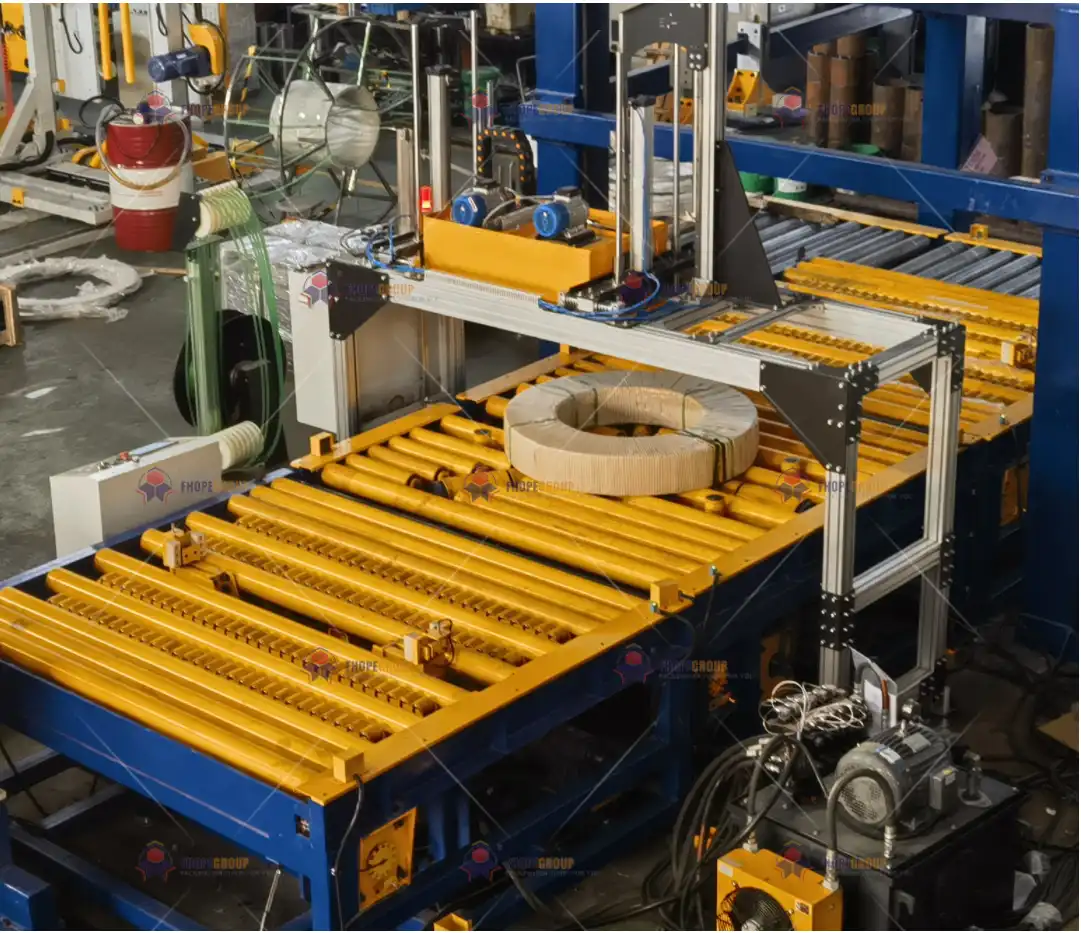
Smart packaging solutions in coil automation integrate sensors and data analytics to provide real-time tracking and condition monitoring, enhancing supply chain visibility and ensuring product integrity throughout transit.
Customizable and smart packaging solutions are revolutionizing the coil industry by offering tailored packaging designs and integrating technologies for enhanced tracking and monitoring. These advancements cater to diverse customer needs and optimize supply chain efficiency, ensuring coils are not only securely packaged but also intelligently managed from production to delivery. This includes on-demand packaging systems that adjust to varying coil sizes and shapes, minimizing material waste and maximizing protection. Furthermore, smart labels and sensors embedded in the packaging can provide real-time data on location, temperature, humidity, and shock, ensuring product quality and enabling proactive intervention in case of adverse conditions. The move towards customizable and smart packaging reflects a broader industry trend towards greater efficiency, sustainability, and customer-centric solutions.
Conclusion
The 2025 market for coil packaging automation is characterized by the rapid adoption of emerging technologies like artificial intelligence packaging, robotics, and smart sensors. These innovations are not merely incremental improvements; they represent a fundamental shift towards more efficient, sustainable, and intelligent packaging processes. For businesses in the coil manufacturing and packaging sectors, embracing these technological advancements is no longer optional but crucial for maintaining competitiveness and meeting the evolving demands of the market. By investing in wire packing automation and related solutions, companies can unlock significant benefits in terms of productivity, quality, cost savings, and environmental sustainability, positioning themselves for long-term success in the dynamic landscape of coil packaging.












