概述
Flipping a steel plate with a crane puts two things at risk: the people around the load and the plate itself. As a plate swings on the hook, its weight shifts over the edge, the load can swing out of control, and the edge that takes the force can chip or dent. A 180° turnover machine replaces that manual, crane-based flip with a controlled turn inside a rotating ring—removing the swing, the rigging crew and the edge damage in one step. This guide explains the safety and labour case for moving from crane flipping to a 180° turnover machine, and what to confirm when you make the change.
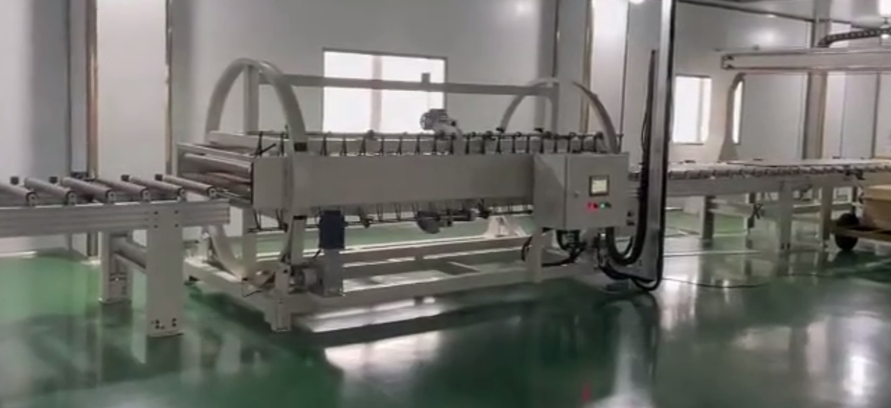
The video below shows a 180° turnover machine taking over the job of flipping steel plates:
The Case for Stopping Crane Flips
The risk of a crane flip is not on paper; it is the swing. As the crane lifts a plate and the plate pivots, the load moves in a way that is hard to control, and people working nearby are in the path of a heavy moving edge.
| Crane flip | 180° turnover machine |
|---|---|
| Load can swing as its weight shifts over the edge | Plate is gripped inside the ring and rotated in place; no swing |
| Needs a rigging crew and careful positioning | One operator runs the cycle |
| Edge that takes the load can chip or dent | Plate is supported in the cradle; no unsupported hard pivot |
| People are near the moving load | Operators work at the control, clear of the moving ring |
| Turn depends on the crane operator's skill | Turn is a repeatable machine cycle |
The labour saving is direct: a crane flip needs a hook, a spotter or a second operator, and re-positioning; a turnover machine turns the plate in a repeatable cycle with the operator at the control panel.
How a Ring-Type Turnover Machine Replaces the Crane Flip
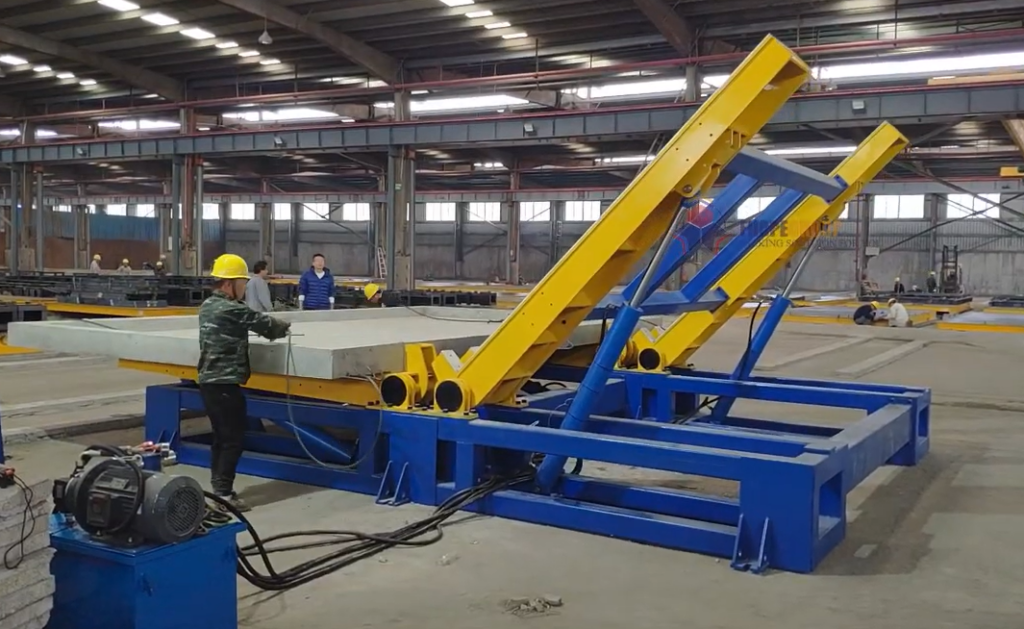
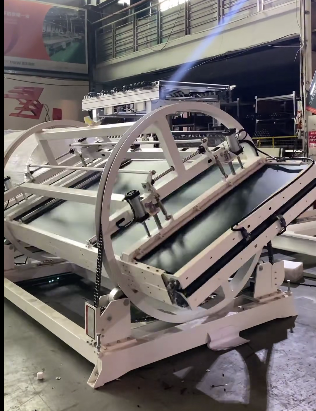
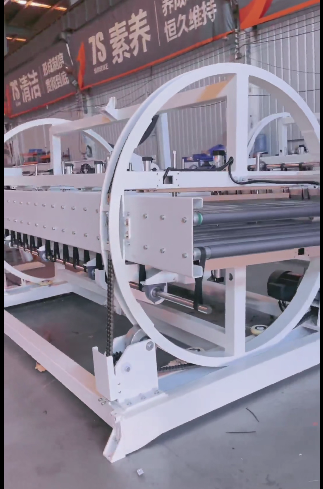
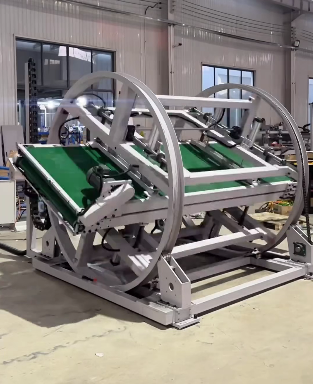
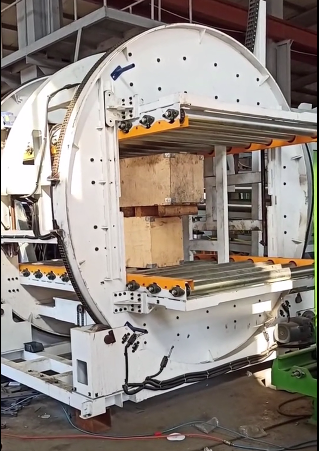
The machine is a large ring frame carried on rollers in a base, with a clamping beam across its centre that grips the plate. The plate is placed on the machine, gripped along the central beam, and the ring is rotated by the drive so the plate turns in place:
| 特性 | What it removes or controls |
|---|---|
| Turn in place | No swinging chain, no strap rub, no plate sliding on the floor. |
| Supported grip | The plate is held along a clamping beam against the cradle, so the edge never carries the load on a bare point. |
| 可控旋转 | The ring is driven through the turn and can be held at the required angle, instead of swinging past position. |
| Safe stop on power loss | If electric power fails, the machine's safety design stops and holds the ring in position; the plate never drops. |
| 防护装置和联锁装置 | The swept area of the moving ring is guarded and the cycle stops on the emergency stop, keeping people clear. |
These controls are supported by the safety basis of the machine family: the machines are built to CE requirements with EN 415-10 as the reference and an ISO 12100 risk assessment.
What the Safety and Labour Case Depends On
The pay-off on your line depends on how you flip today and how often:
| 因素 | What to measure on your floor |
|---|---|
| Flips per shift | The more flips, the larger the labour and injury exposure removed. |
| Crew per flip | Remove the spotters and riggers a crane flip needs. |
| Edge damage rate | Count the plates rejected or re-worked because the edge was damaged in the turn. |
| 起重机可用性 | Freeing the crane for lifting instead of flipping removes a scheduling bottleneck. |
| 操作员暴露 | Fewer people near a moving heavy load is the core safety gain. |
A turnover machine does not replace the crane for moving plates across the shop; it replaces the 翻动. Keep the crane for transport, and let the turnover machine do the turning.
Factory Testing and Acceptance
When you convert to a turnover machine, verify it the same way you would any other production machine:
- Extended run record. A test log covering near-continuous cycling (the maker's stated protocol for this machine family runs up to about 24 hours), stated as unloaded or under load.
- Rated-load proof. Evidence the machine turned a load at its rated flipping load through the full arc.
- Drive and hold record. Evidence the machine rotated to the required angle and held the load without drift.
- Safety device verification. Sign-off that the guards, safety interlocks and the emergency stop work as designed.
- Power-loss behaviour. Confirmation that a simulated power loss stopped and held the ring safely without dropping the plate.
- 合规性文件。 Confirmation of the safety references used for this machine family (EN 415-10 as reference and an ISO 12100 risk assessment).
On arrival, train operators on the control and the swept-area rules, and run the core checks on your floor before bringing the machine into production.
常见问题解答
Q: Do I still need the crane if I buy a turnover machine? A: Yes, for moving plates across the shop. The turnover machine replaces the flipping part of the job; the crane stays for transport and loading.
Q: How many operators does a turnover machine need? A: One operator runs the cycle from the control panel, clear of the swept area. This replaces the rigging crew a crane flip needs.
Q: What if a plate must stop at 90° instead of 180°? A: The machine can drive to and hold a set angle. State the turn requirement so the control and stop positions are set for your angle.
Q: What happens if power fails with a plate in the machine? A: The machine's safety design stops and holds the ring in position; when power is restored the control system resumes safely rather than dropping the plate.
Q: How heavy a plate can it turn? A: This machine family covers mechanical upenders from about 1 to 60 tonnes and heavy-duty hydraulic configurations from about 1 to 100 tonnes. Your heaviest plate weight selects the rating.
下一步
Measure how you flip today—flips per shift, crew per flip, edge damage and crane use—and send your plate size, heaviest weight and turn requirement to the manufacturer, so the 180° turnover machine can be sized to remove the crane flip from your line.
相关资源
- Coil Upender & Industrial Turnover Solutions – Custom mechanical (≈1–60T) and hydraulic (≈1–100T) turnover equipment.
- Hydraulic Upender and Tilter Solutions – Manufacturer's declared pre-delivery testing practice and control/safety verification.
- How 180° Turning Machines Work for Precast Components and Sheets – 180° turning machine kinematics and EN 415-10 / ISO 12100 safety references.