执行摘要
A high-speed online automatic wire winding machine installs directly at the exit of a wire drawing line to coil wire continuously at process line speeds up to 500 m/min. By eliminating intermediate spools, off-line transport, and secondary crane handling, it prevents wire surface abrasion and eliminates labor bottlenecks. The core technical challenge is strict master-slave synchronisation: the winder must follow line acceleration, deceleration, tension trimming, and emergency stop signals without causing line jerks or wire breakage. This engineering guide covers the electrical interface, drive scope demarcation, throughput calculations, rapid coil changeover dynamics, and essential selection criteria.
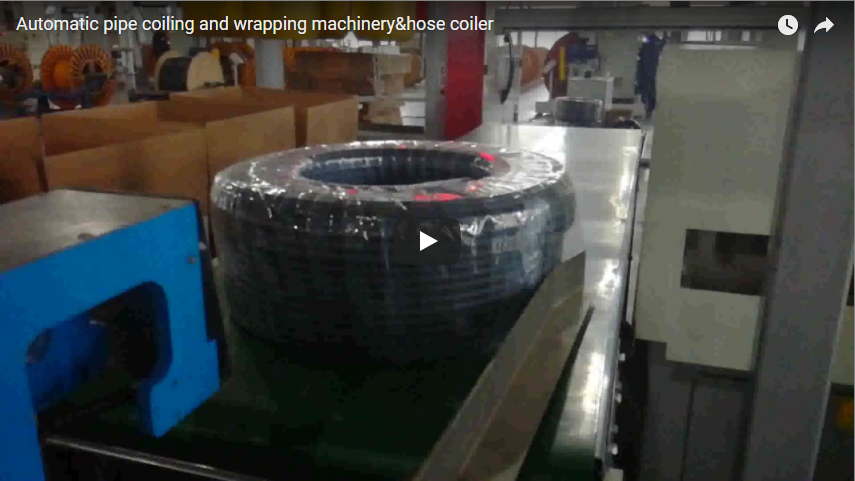
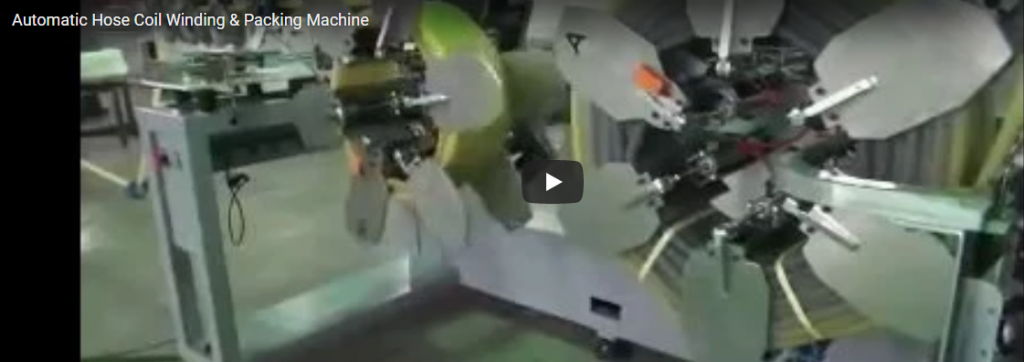
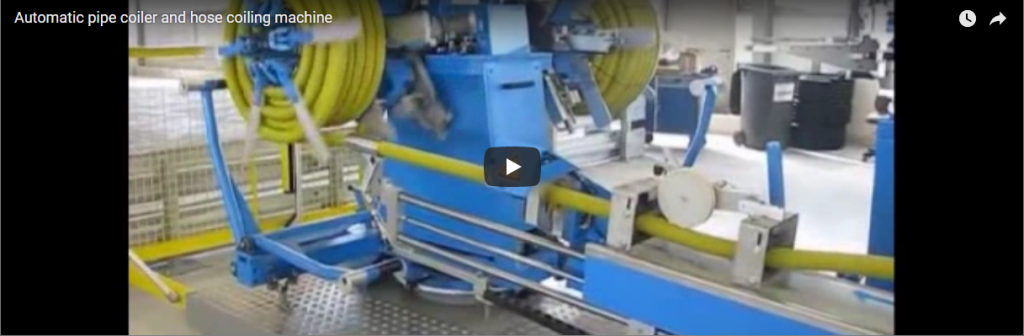
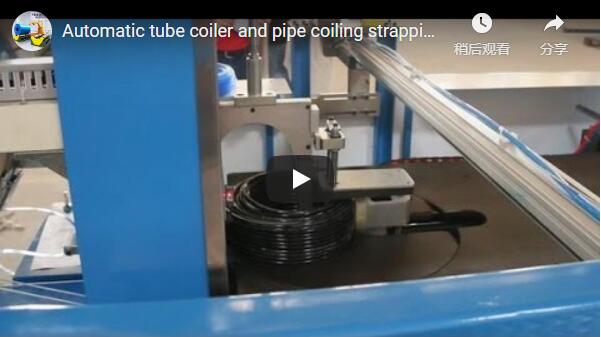
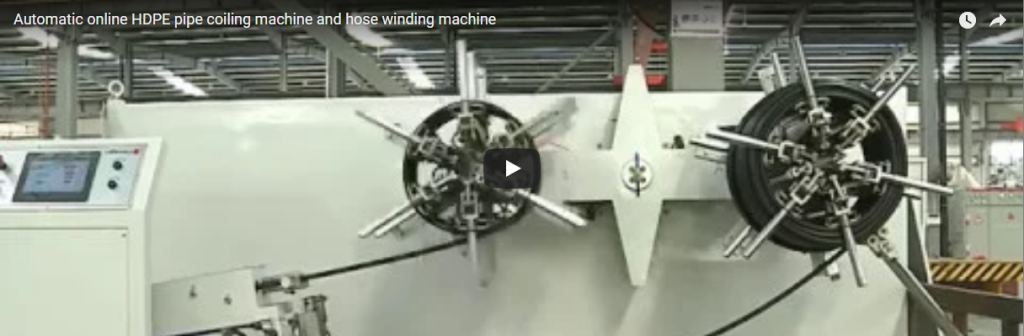
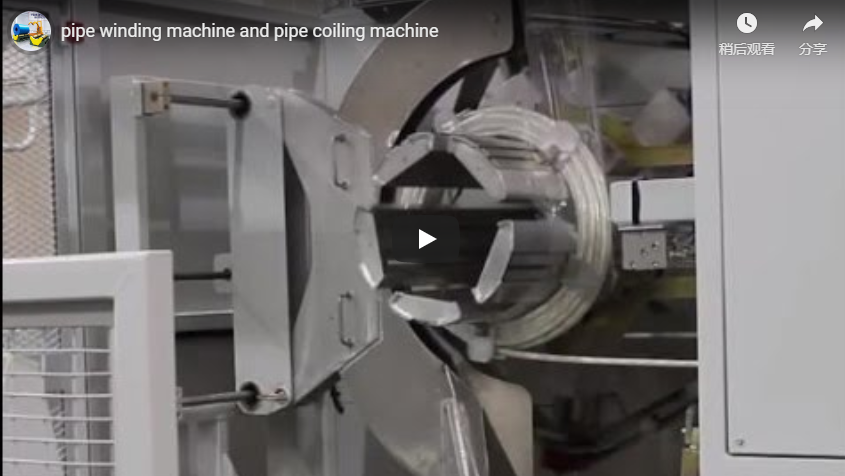
Continuous wire travel: Calibrated wire passes through precision guide rollers along the entry track to a heavy-duty vertical coiling drum. A rotary turntable indexes beneath the drop-down zone to support continuous coil formation while interlocked safety guarding keeps operators isolated from high-speed running wire.
目录
在线或离线绕线
| 评估参数 | Online Winding Machine | Offline Rewinder Station |
|---|---|---|
| 线位置 | Direct line exit behind drawing / capstan unit | Standalone station fed by spools or drop carriers |
| 速度控制 | Electronic line following (slave to master capstan) | Dedicated autonomous setpoint (operator set) |
| 工件处理 | Zero crane or forklift handling between processes | Intermediate spool transport by crane or hoist |
| Primary Process Risk | Speed sync mismatch or accumulator overrun | Physical scuffing, wire tangling, and transfer damage |
| Optimal Production Profile | Continuous high-volume single-grade campaigns | Fragmented small-batch orders and customized short cuts |
Online winding removes intermediate logistics and reel buffer inventory entirely. However, because the coiling unit becomes an inline node within the continuous drawing process, any synchronization slip, accumulator saturation, or indexing jam directly impacts the upstream drawing line.
在线界面
To maintain stable continuous operation without wire stretching or slack, the drawing line master controller communicates with the online winder via hardwired I/O, Profinet, or Industrial Ethernet:
- Main Speed Reference: A 0–10 V / 4–20 mA analogue signal or real-time fieldbus speed setpoint tracks the primary capstan line speed.
- Run / Start / Stop Permissive Signals: Hardware interlocks coordinate ramp-up, ramp-down, and synchronized controlled deceleration profiles.
- Tension Trimming Loop: A precision pneumatic dancer arm or load cell continuously monitors dynamic strand tension, trimming the take-up inverter output in real time to counter transient inertia.
- Breakage & Interlock Safeguards: Integrated break sensors instantly trip both the winder drive and the upstream line capstan if tension collapses.
Interface pinouts, fieldbus baud rates, and hardware handshake levels must be locked down in the technical agreement prior to cabinet build.
驱动范围:必须提供哪些材料
A speed signal is ineffective without a dedicated drive system capable of dynamic torque and speed response.
In typical semi-automatic and automatic wire coiling projects, the primary spindle utilizes a 22 kW AC vector-duty motor driven by a closed-loop inverter. Specifying “motor only” leaves open interface gaps:
- Closed-loop vector drive (inverter) with dynamic braking resistor bank for rapid deceleration.
- Turntable indexing drive and traverse traverse/laying servo drive synchronized to spindle rotation.
- Main disconnect breaker, isolated power supplies, industrial PLC rack, and safety relays.
- Coordinated emergency stop (dual-channel CAT 4 / PL e) tied directly into the drawing line master circuit.
The procurement contract must state the full bill of electrical drive equipment rather than generic motor ratings.
吞吐量和线圈时间
Mass throughput follows linear mass delivery:
Mass Flow (kg/min) = Line Speed (m/min) × Wire Mass per Metre (kg/m)
For a 2.5 mm carbon steel wire:
- 横截面面积:
A = π × (2.5 ÷ 2)² ≈ 4.91 mm² - Nominal steel density:
7,850 kg/m³(产生)0.0385 kg/m) - At a line speed of 500 m/min:
Throughput = 500 × 0.0385 = 19.3 kg/min(约1,155 kg/h) - A standard 250 kg production coil fills in:
250 ÷ 19.3 ≈ 13.0 minutes(approx. 4.6 coils per gross line hour)
Higher operational counts (30–40 coils per hour) apply to small 10–30 kg retail or hardware coils.
| 运行参数 | Steel Wire Coiling Line | Industrial Cable Winding Line |
|---|---|---|
| Max Process Line Speed | 500 m/min | 200 m/min |
| Process Diameter Scope | 1.8–5.0毫米 | Confirmed upon project specification |
| 绕线轴配置 | Single or twin indexing head | Confirmed upon project specification |
| Output (Double-Head Spindle) | 30–40 coils/h (for 10–30 kg coils) | Confirmed upon project specification |
| 累加器缓冲区长度 | 5–20 m effective capacity | Confirmed upon project specification |
Because steel wire lines operate up to 2.5× faster than standard cable spooling lines (500 m/min vs. 200 m/min), they demand stiffer tension feedback loops, faster pneumatic cut-off blades, and rapid transfer mechanics.
线圈高速更换
Because continuous high-speed drawing lines cannot tolerate line stops during coiling changeovers, the winder handles uninterrupted wire flow through one of three engineering methods:
- Dual-Spindle Indexing Turntable: One spindle winds the working coil while the auxiliary spindle is tied, strapped, or unloaded. This design achieves 30–40 cycles per hour on short coils.
- Vertical Linear Accumulator (Dancer Tower): An inline 5–20 m wire accumulator provides a temporary storage buffer during coil transfer:
- At 500 m/min (8.33 m/s), a 20 m accumulator yields
20 ÷ 8.33 ≈ 2.4 secondsof buffer window. - A 5 m accumulator provides only
0.6 seconds. - This buffer is designed strictly for high-speed automated flying shear cutting and automatic tail capture—not manual intervention.
- At 500 m/min (8.33 m/s), a 20 m accumulator yields
- Cycle Time Selection Principle: Coils with run times of 10–15 minutes (such as 250 kg coils) allow manual offloading windows on stationary indexing heads; coils filling in under 60 seconds mandate a twin-head automated flying shear line.
选择清单
- Wire specifications: Nominal diameter (mm), tensile strength (MPa), material grade, and maximum process drawing speed (m/min).
- Coil dimensions & weight: Inner diameter (ID), outer diameter (OD), traverse package height, and minimum/maximum target weight (kg).
- Line interface protocol: Master line controller model, fieldbus compatibility (Profinet, Ethernet/IP, Modbus TCP), and available analog I/O channels.
- Drive scope boundaries: Main vector drive, traverse servo drives, auxiliary indexing inverters, and switchgear enclosures.
- Head configuration & buffering: Single-head versus twin-spindle selection and required accumulator travel length based on cut-off dynamics.
- Downstream finishing: Direct integration with automatic strapping, stretch wrapping, and vertical coil upending stations.
安全
System design complies with international safety directives:
- EN ISO 12100:2010: Risk assessment and risk reduction principles for industrial machinery.
- EN 415-10: General packaging and coiling machinery safety requirements.
- EN 60204-1: Electrical safety, earthing, and control cabinet standards.
High-speed wire lines present severe kinetic snagging, entanglement, and pinch-point hazards. All winding zones must be protected by perimeter mesh guarding equipped with safety interlocked access doors (Category 4 / PL e) or type 4 safety light curtains. The emergency stop loop must integrate directly into the upstream drawing capstan circuitry so that a single stop command triggers a synchronized rapid-ramp braking sequence across the entire line.
工程常见问题解答
Q: What is the maximum line speed for online steel wire winding? A: Standard steel wire coiling lines achieve speeds up to 500 m/min. Actual maximum operational speed depends on wire diameter, carbon content, and required coil dimensions, confirmed during technical sizing.
Q: What specific signals are required from our drawing line controller? A: The line master must supply a continuous speed reference (0–10 V, 4–20 mA, or fieldbus word), running/ready status permissives, line start/stop commands, and a dual-channel emergency stop loop.
Q: What wire diameter range can the machine accommodate? A: Standard machines process bright, galvanized, or high-tensile wire from 1.8 mm to 5.0 mm. Specialized heavy-gauge or micro-wire configurations are evaluated on application.
Q: Can this online coiler be integrated into an older wire drawing line? A: Yes. If the existing line panel lacks modern fieldbus communication or spare analog outputs, a dedicated line encoder is fitted to an exit capstan shaft to generate an independent master line speed reference.
下一步
- Submit application data: Forward wire diameter, tensile range, line speed, target coil mass, and existing drawing controller model to info@fhopepack.com.
- 技术尺寸: Engineering calculates required accumulator capacity, dynamic motor torques, traverse parameters, and electrical interface boundaries.
- 提案提交: A comprehensive technical proposal and integration quotation are returned within 24 hours.
相关阅读
来源
- ISO 12100:2010 机械安全——设计通用原则——风险评估和风险降低
- ZH-415 10的 包装机械安全——一般要求
- ZH-60204 1的 机械安全——机械电气设备——第1部分:一般要求
- FHOPEPACK Engineering Department: Technical Standard for High-Speed Wire Take-Up and Coiling Systems
- Inline Wire Drawing and Coiling Field Commissioning Specifications
最后更新时间: 2026年10月28日