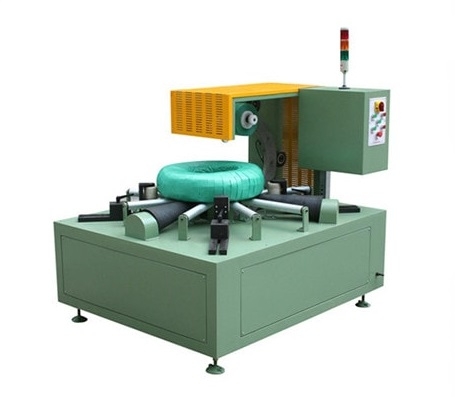
Can Your New Packing Line Work with Existing Cranes?
Integrating a coil packing line with existing conveyors and cranes starts at the interface: receiving positions, transfer signals, buffers, and safety interlocks. Learn how to define every handoff before the line scope is fixed.

How to Integrate a Coil Packing Line with Existing Conveyors and Cranes
How to Integrate a Coil Packing Line with Existing Conveyors and Cranes
Most coil packing lines do not start from an empty floor. They are added to a production area that already has conveyors, crane access, forklift routes, and established material flow. The integration boundary is where the new line meets the existing equipment, and that boundary decides whether the project succeeds.
This guide helps project, engineering, and operations teams define the interface between a new dây chuyền đóng gói cuộn dây tự động and existing handling systems.
| Interface element | Điều cần được định nghĩa |
|---|---|
| Receiving position | Location and coil orientation at every handoff |
| Transfer control | Who controls the transfer and what signal confirms readiness |
| Stop on either side | How each system waits, rejects, or recovers |
| Đệm | Capacity, full condition, and route when full |
| Khóa liên động an toàn | Shared access zone and lockout-tagout boundary |
Map the Existing Flow Before the New Line
Record how coils arrive today: from a slitting line, a roller table, a walking beam, a crane, or a coil car. Mark the existing buffers, transfer points, and the people or systems that control each handoff.
The new line must fit into that flow without creating a new bottleneck or blocking the equipment it depends on.
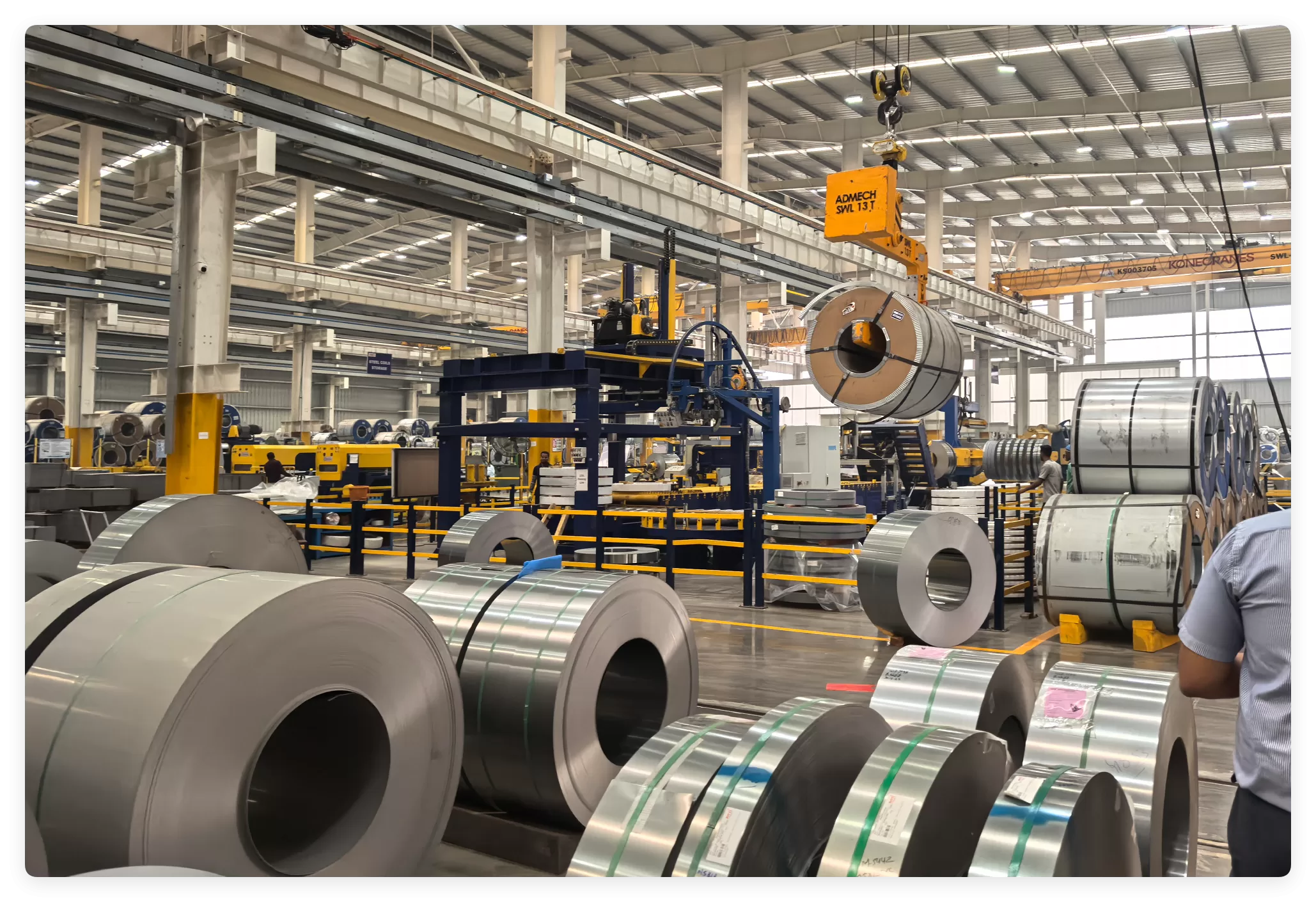
The image shows a steel service center coil packaging automation context. The new line must be mapped against the existing conveyors, crane routes, and material flow before any equipment position is fixed.
Define the Physical Interface
For every handoff, state:
- Where the coil is received and at what orientation.
- Who controls the transfer.
- What signal confirms the coil is ready.
- What happens when the new line is stopped.
- What happens when the existing equipment is stopped.
The interface is complete only when both sides can wait, reject, or recover without stopping the other in an unsafe way.
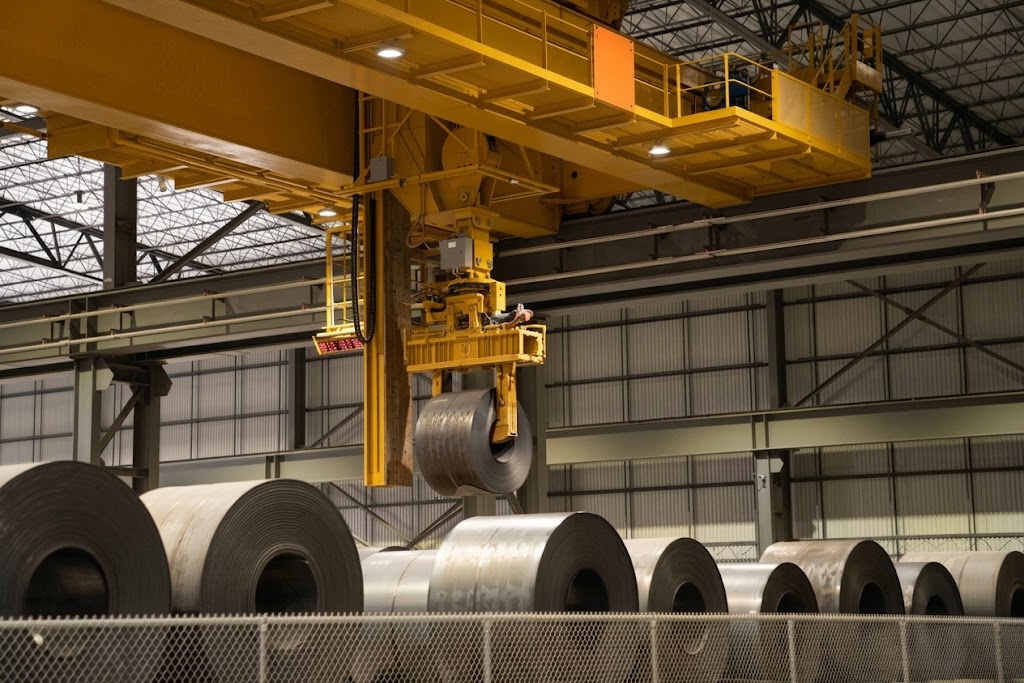
The image shows crane and handling integration. The crane landing position, the signal that the coil is placed correctly, and the route when the line cannot accept the coil must all be part of the interface.
Decide How the Coil Is Handed Over
A crane-loaded line needs a defined landing position, a safe approach, and a signal that the coil is placed correctly. A conveyor-fed line needs matched speed, height, and control signals between the existing conveyor and the new line.
Do not assume the crane or conveyor can simply "stop at the line." The interface must be tested with the actual control logic.
Add Buffering at the Boundary
The difference between upstream release and downstream cycle time should be absorbed by a defined buffer. Show the buffer capacity, the full condition, and the route when the buffer is full.
If the existing equipment is faster than the new line, the buffer is not a luxury; it is the system boundary.
Include Safety in the Interface
The new line's guarding and the existing crane or conveyor routes share the same space. Define the access zone, the interlock between moving equipment, and the lockout-tagout boundary for both systems.
An integration that ignores the shared area will create a risk that neither system owner can control.
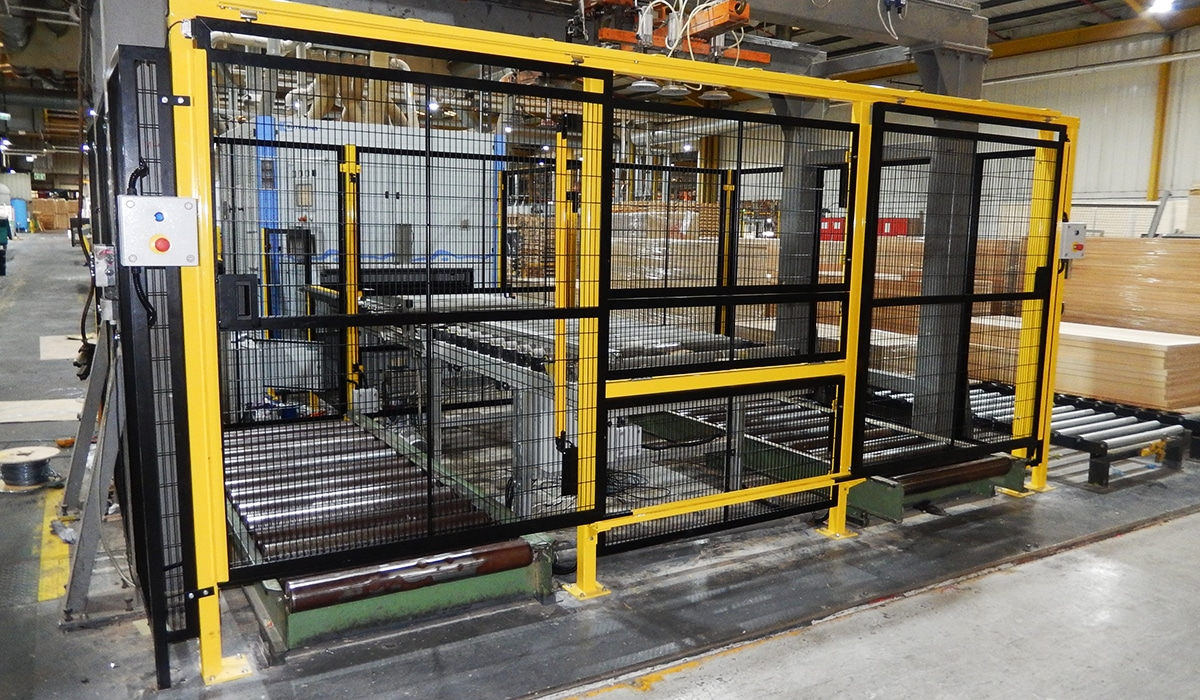
The image shows industrial safety interlocks and protective enclosures. The shared area between the existing handling system and the new line needs interlocks and a clear lockout-tagout boundary.
Test the Handoff During Acceptance
FAT/SAT should include a coil arriving from the existing conveyor or crane, a stop on either side, and a recovery. Record the signals, the waits, and the intervention required.

The image shows people working around a steel coil wrapping machine during its site-specific procedure. The handoff test should be run at the site, with the same operators, signals, and control logic that will be used in production.
Bước tiếp theo thiết thực
Draw the existing and new systems on one diagram with all handoffs, buffers, and interlocks. Review it with the owners of both systems before the line scope is fixed.
Keep the same interface diagram visible for the dây chuyền đóng gói cuộn dây tự động comparison and acceptance tests.
Watch an automatic steel coil packaging line in Malaysia with smart coil wrapping and strapping system:

Chi tiết hình ảnh

Nhấn vào đây để phóng to

Nhấn vào đây để phóng to
Nhấn vào đây để phóng to
Nhấn vào đây để phóng to
Xem cách nó hoạt động
Khám phá cách các giải pháp đóng gói tự động của chúng tôi tối ưu hóa hiệu quả dây chuyền sản xuất của bạn. Video này minh họa hoạt động liền mạch được thiết kế để bảo vệ sản phẩm tối đa.
Được tin cậy bởi Các nhà máy thép và các nhà lãnh đạo ngành công nghiệp
Các nhà sản xuất toàn cầu tin dùng thiết bị đóng gói hạng nặng của FHOPE.


Bạn đã sẵn sàng tối ưu hóa dây chuyền đóng gói của mình chưa?
Nhận báo giá tùy chỉnh kèm phân tích lợi tức đầu tư (ROI). Kỹ sư của chúng tôi sẽ phản hồi trong vòng 24 giờ.
- Thiết kế bố cục miễn phí
- Hỗ trợ lắp đặt toàn cầu
- Bao gồm bảo hành 2 năm
Thông tin của bạn được bảo mật và sẽ không bao giờ được chia sẻ.
Máy liên quan
Dây chuyền đóng gói thép cuộn
Xem chi tiết →
Dây chuyền đóng gói cuộn dây dọc
Xem chi tiết →
Dây chuyền đóng gói cuộn dây
Xem chi tiết →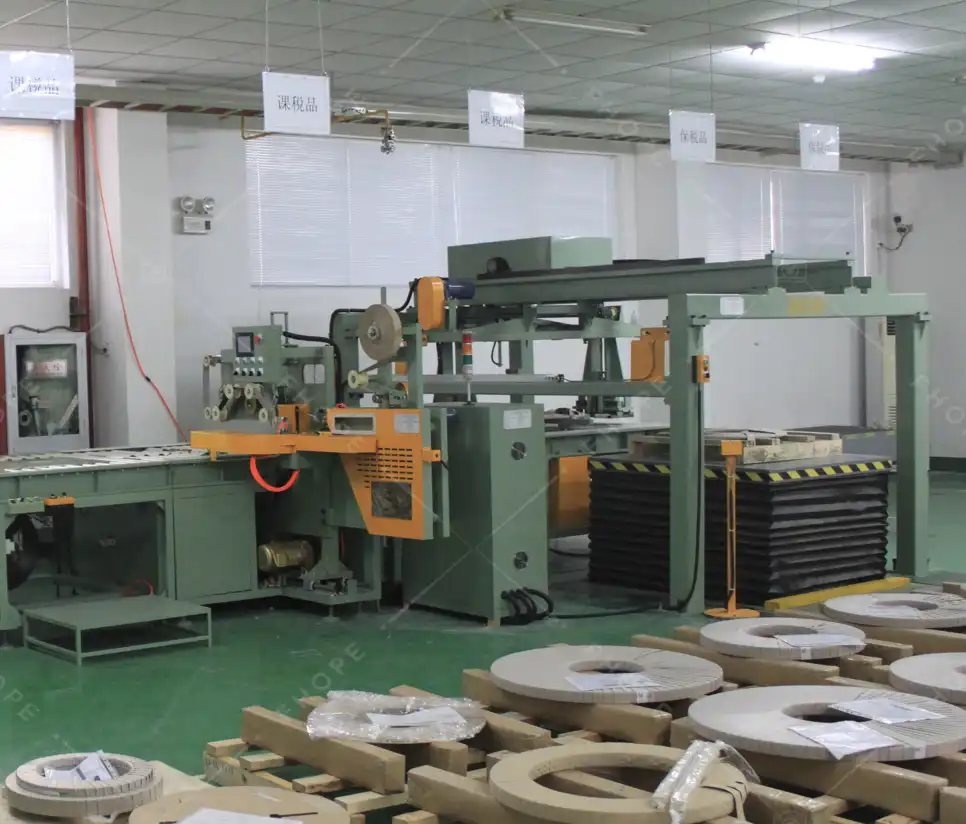
Dây chuyền đóng gói cuộn dây đồng
Xem chi tiết →
Dây chuyền đóng gói cuộn dây
Xem chi tiết →
Dây chuyền đóng gói bảng điều khiển
Xem chi tiết →
Máy đóng bao ống
Xem chi tiết →
Dây chuyền đóng gói hồ sơ nhôm
Xem chi tiết →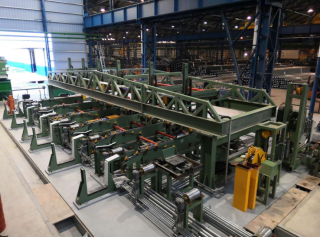
FHOPE Dây chuyền bó & đóng đai ống tự động
Xem chi tiết →
Dây chuyền đóng đai và bó ống tự động
Xem chi tiết →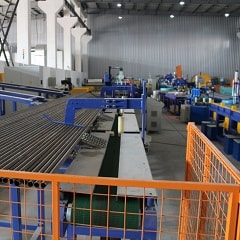
Máy đóng đai ống thép tự động
Xem chi tiết →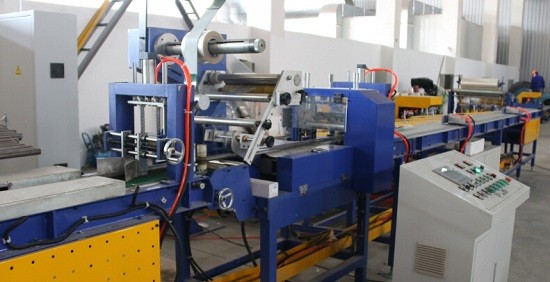
Máy đóng gói ống thép tự động FHOPE
Xem chi tiết →
Dây chuyền đóng gói ống nhựa tự động
Xem chi tiết →
Dây chuyền đóng bao ống PPR / PVC tự động
Xem chi tiết →
Máy đóng gói túi ống platsic
Xem chi tiết →
Máy đóng gói săm lốp FPT-200
Xem chi tiết →
Máy đóng gói săm lốp FPT-300
Xem chi tiết →
Máy đóng gói săm lốp FPT-400
Xem chi tiết →
Máy đóng gói cuộn dây cáp-FPCA100
Xem chi tiết →