How Do You Make a Coil Wrapping Recipe Repeatable?
If your wrapping quality changes with the shift, the recipe lives in someone's head. This guide shows how to lock tension, overlap, and material consumption into a recorded, testable recipe tied to the finished coil.
Film Tension, Overlap and Material Consumption: How to Set a Repeatable Recipe
Film Tension, Overlap and Material Consumption: How to Set a Repeatable Recipe
A repeatable wrapping recipe is more than a film type. It is a set of parameters that can be recorded, transferred to another shift, and verified on the finished package. Tension, overlap, speed, and material consumption are the variables that determine both quality and cost.
This guide helps process engineers, operators, and quality teams build a testable wrapping recipe on an dây chuyền đóng gói cuộn dây tự động.
| Thông số công thức | Nó định nghĩa điều gì |
|---|---|
| Căng thẳng | Tightness, film elongation, and edge damage risk |
| chồng chéo | Coverage percentage and layer pattern |
| Tốc độ | Ring, roller, and material feed match |
| Vật liệu | Film type, width, and lot |
| Sự tiêu thụ | Measured film use versus theoretical use |
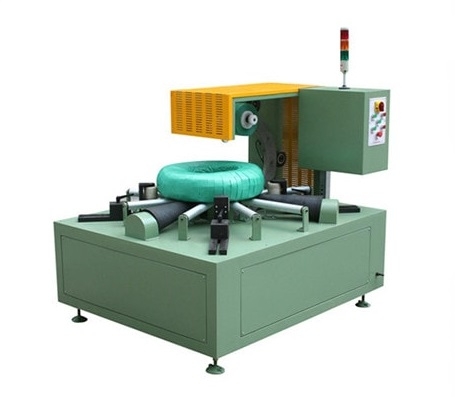
The image shows an automatic steel coil packing machine. The recipe is set on this machine and verified on the finished coil, so the parameters and the result are recorded together.
Define the Package Result First
State the required coverage, overlap, tightness, tail seal, and protection level for each product family. The recipe should be written from the result backward.
Without a defined result, changing tension or overlap becomes a preference.
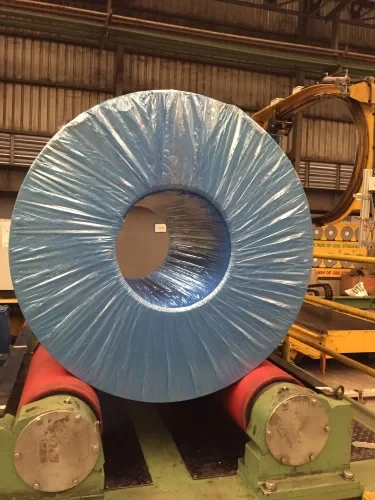
The image shows a coil wrapped with VCI stretch film. The finished package is the reference for the recipe: coverage, overlap, and tail seal are checked against the result, not against the display settings.
Understand Tension
Film tension affects tightness, package stability, film elongation, and the risk of cutting the coil edge or tearing the film. Too little tension creates a loose package; too much can damage the surface or break the film.
Record the tension setting for each family and check the result on the coil, not only on the display.
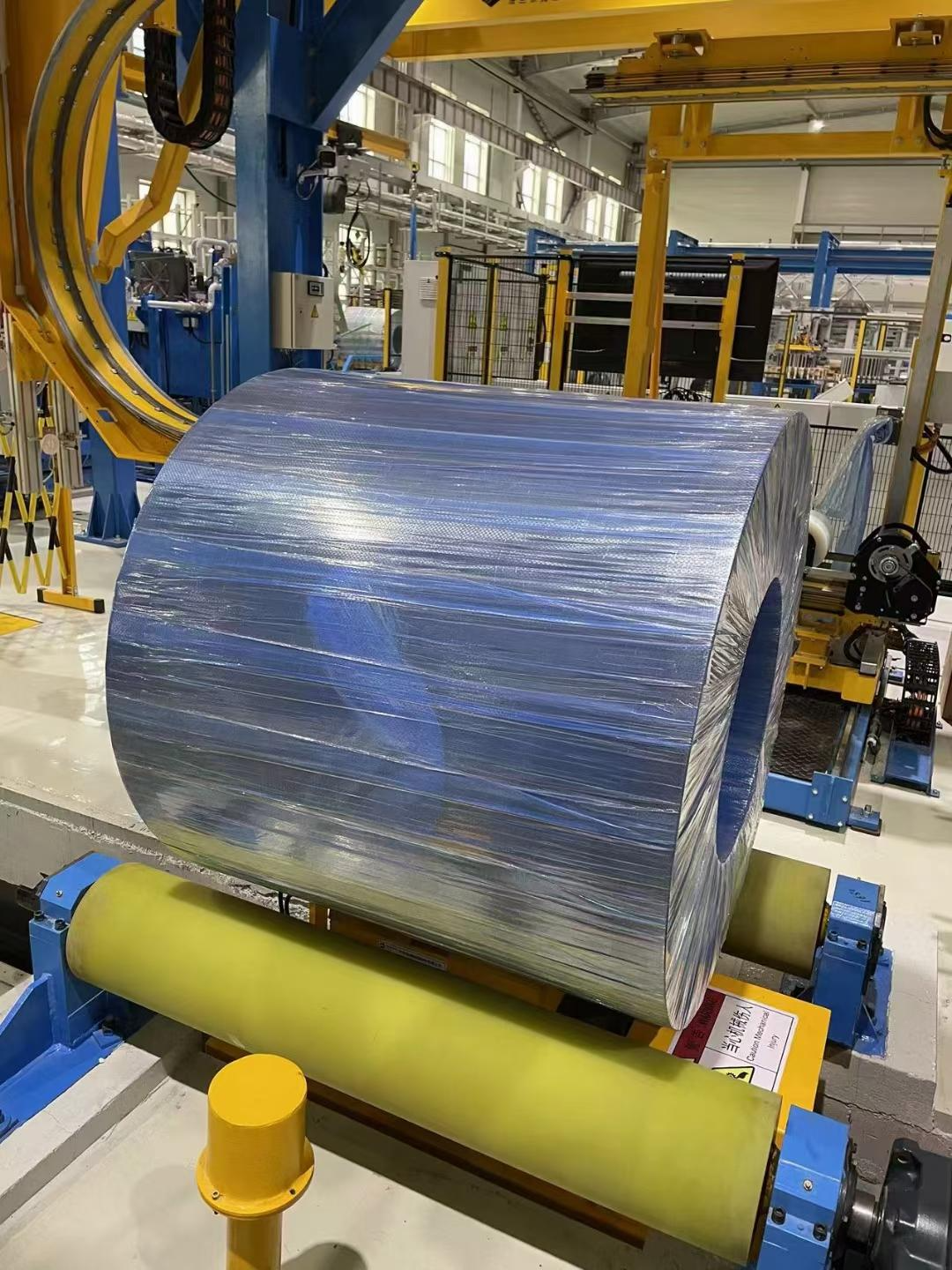
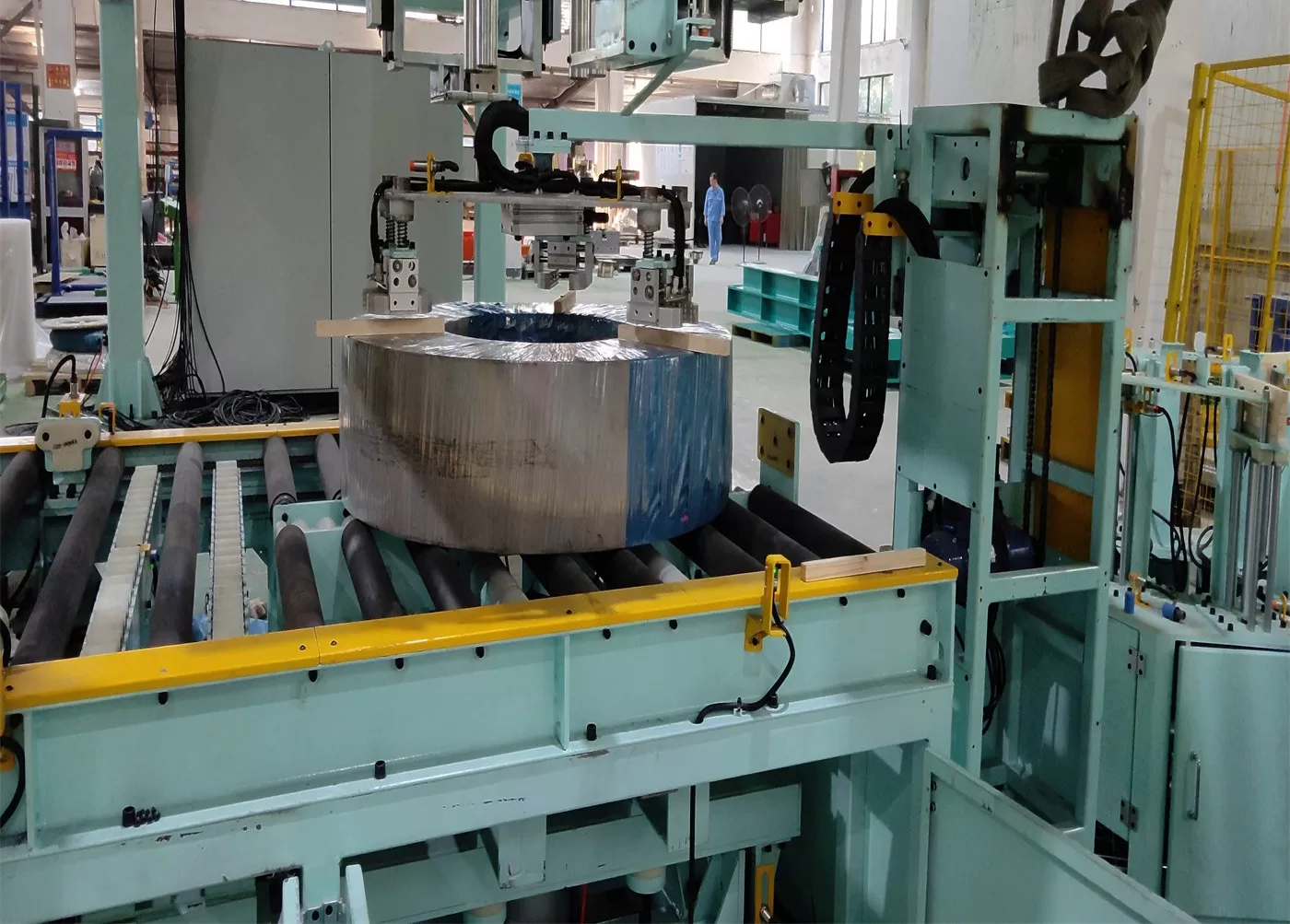
The image shows VCI stretch film and an automatic film setup. The tension setting must match the film type and the coil surface, and the result must be verified on the finished package.
Set Overlap as a Percentage
Overlap is usually expressed as a percentage of the film width and should be measured on the actual wrap. The value may range from partial overlap to multi-layer coverage depending on the protection requirement.
Do not confuse overlap with the number of full layers. Both should be defined in the recipe.
Connect Speed and Motion
Ring speed, roller speed, and material feed speed must be matched to the coil dimensions and the film path. A recipe that works for one width may produce different coverage on another.
Use the machine's parameters, then verify the pattern with a test coil.
Track Material Consumption
Measure the actual film length or weight used per coil and compare it with the theoretical value. Material consumption is a useful check on the recipe and a cost input for ROI.
Record the film lot or specification when consumption changes, because the material itself can vary.
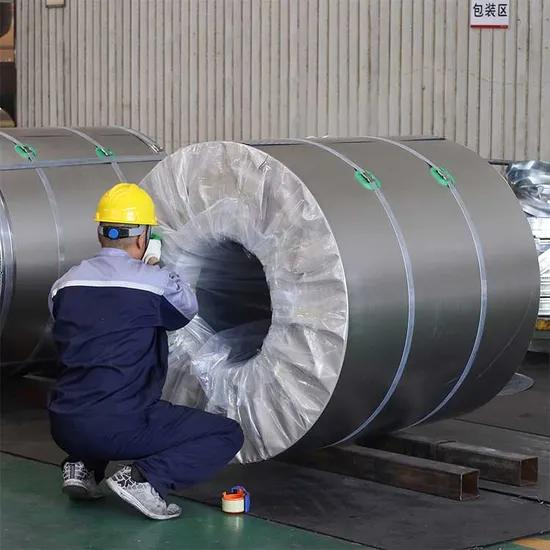
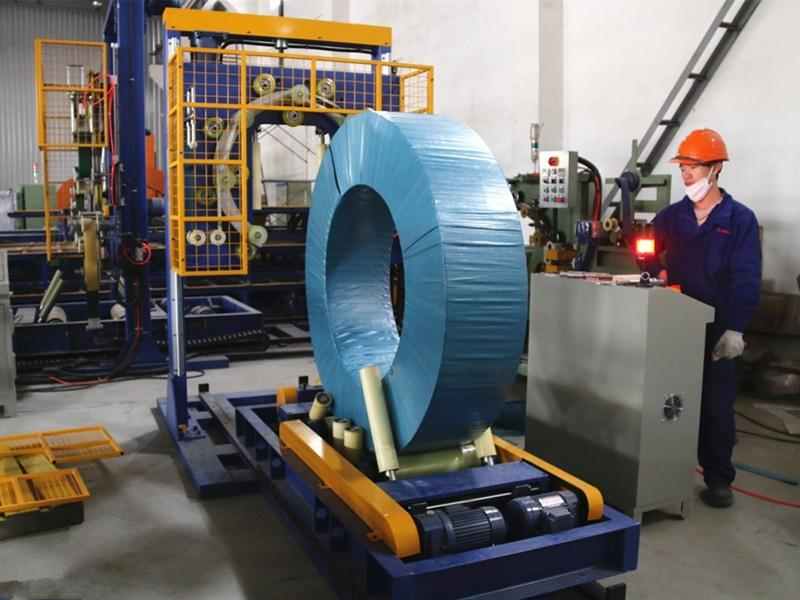
The image shows a VCI stretch film setup with an operator. Film lot, width, and consumption should be recorded so a change in material is visible in the recipe history.
Make the Recipe Visible and Auditable
Store the recipe with the product family, material, dimensions, and inspection result. The next shift should be able to load the same recipe and confirm the same package.
If a change improves quality, document it and verify it on more than one coil.
Bước tiếp theo thiết thực
Create a one-page recipe table with tension, overlap, speed, film, and acceptance check per family. Run a test coil for each family and record the measured result.
Keep the same recipe table visible for the dây chuyền đóng gói cuộn dây tự động configuration and update it whenever the material or product family changes.
Xem máy quấn cuộn sử dụng màng co và vật liệu dệt trong quá trình hoạt động:

Chi tiết hình ảnh

Nhấn vào đây để phóng to

Nhấn vào đây để phóng to

Nhấn vào đây để phóng to

Nhấn vào đây để phóng to
Xem cách nó hoạt động
Khám phá cách các giải pháp đóng gói tự động của chúng tôi tối ưu hóa hiệu quả dây chuyền sản xuất của bạn. Video này minh họa hoạt động liền mạch được thiết kế để bảo vệ sản phẩm tối đa.
Được tin cậy bởi Các nhà máy thép và các nhà lãnh đạo ngành công nghiệp
Các nhà sản xuất toàn cầu tin dùng thiết bị đóng gói hạng nặng của FHOPE.


Bạn đã sẵn sàng tối ưu hóa dây chuyền đóng gói của mình chưa?
Nhận báo giá tùy chỉnh kèm phân tích lợi tức đầu tư (ROI). Kỹ sư của chúng tôi sẽ phản hồi trong vòng 24 giờ.
- Thiết kế bố cục miễn phí
- Hỗ trợ lắp đặt toàn cầu
- Bao gồm bảo hành 2 năm
Thông tin của bạn được bảo mật và sẽ không bao giờ được chia sẻ.
Máy liên quan
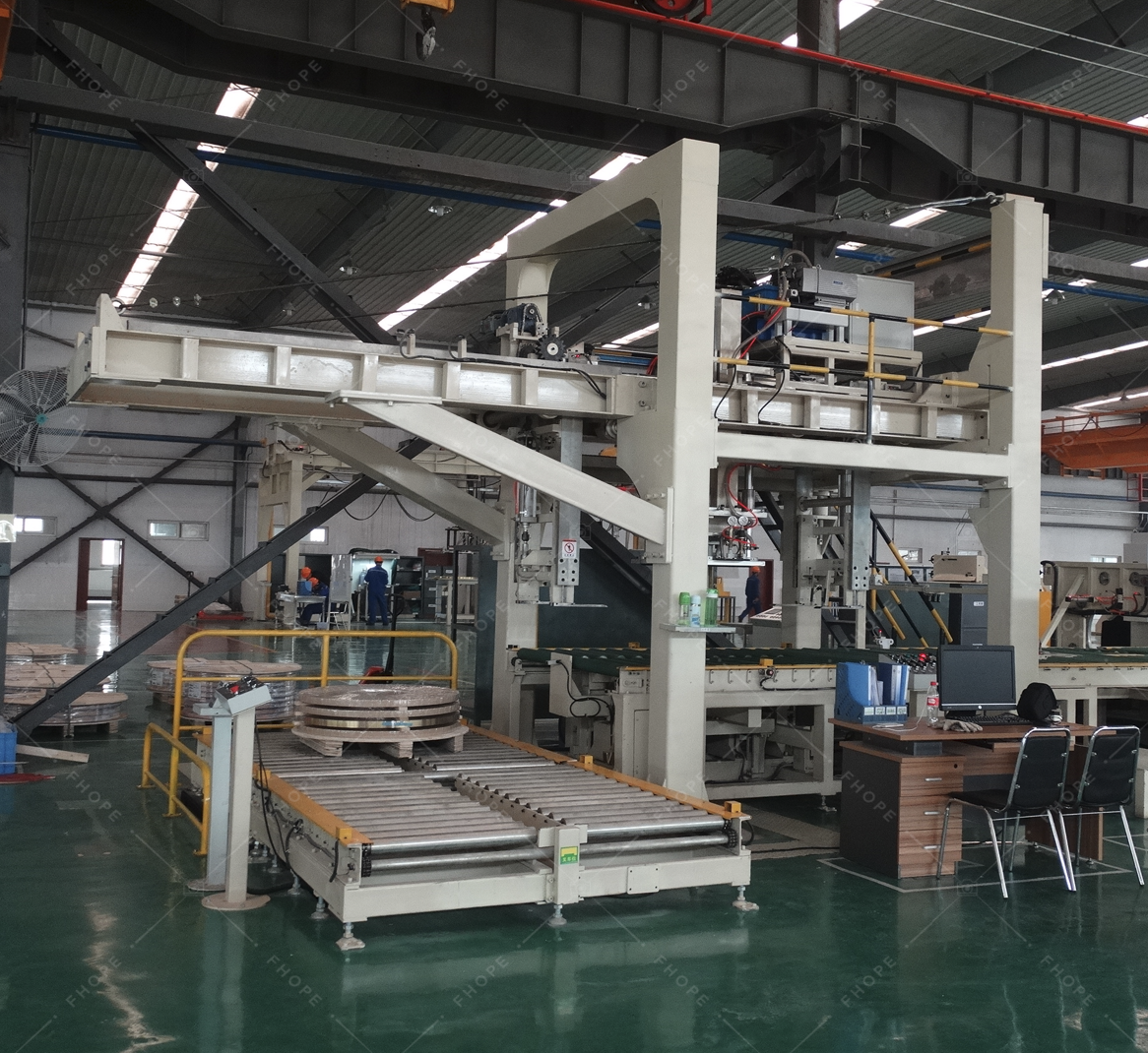
Dây chuyền đóng gói thép cuộn
Xem chi tiết →
Dây chuyền đóng gói cuộn dây dọc
Xem chi tiết →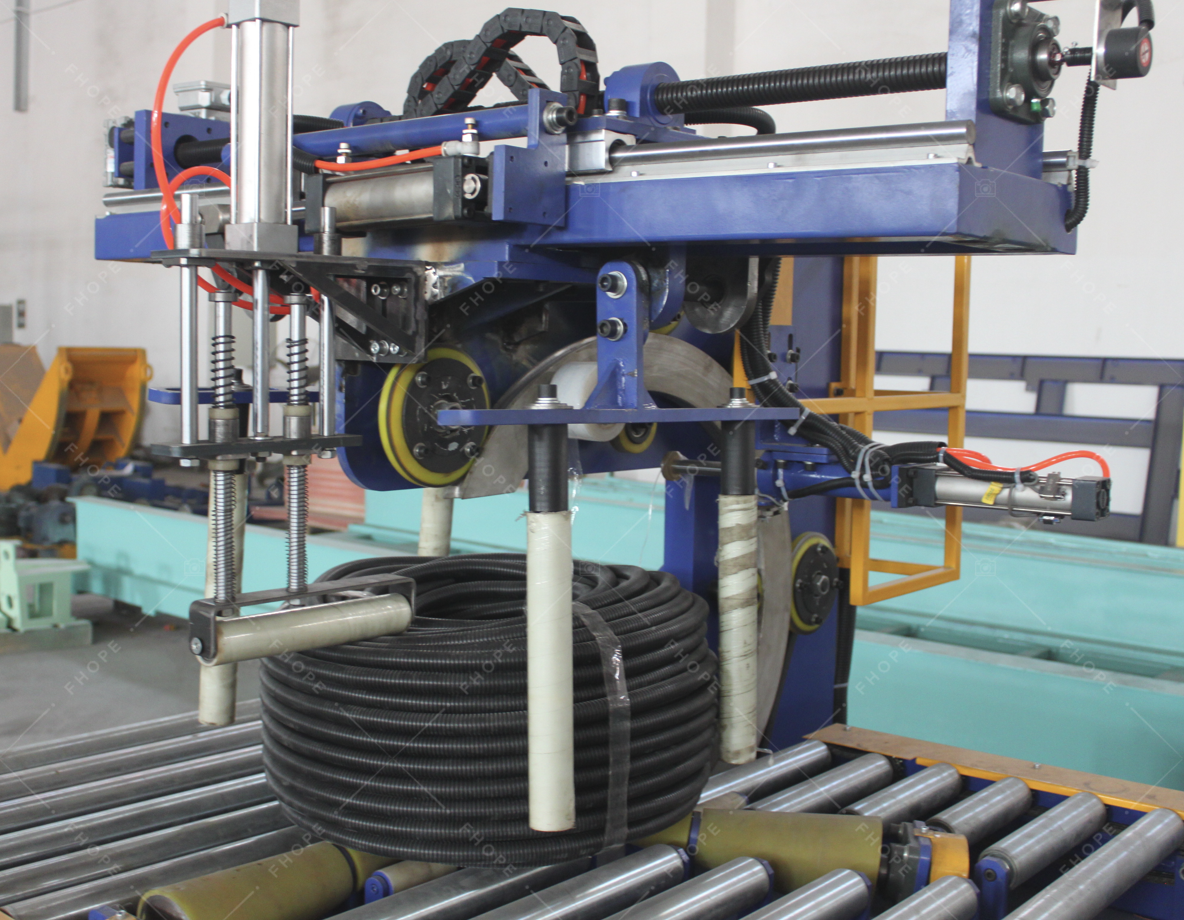
Dây chuyền đóng gói cuộn dây
Xem chi tiết →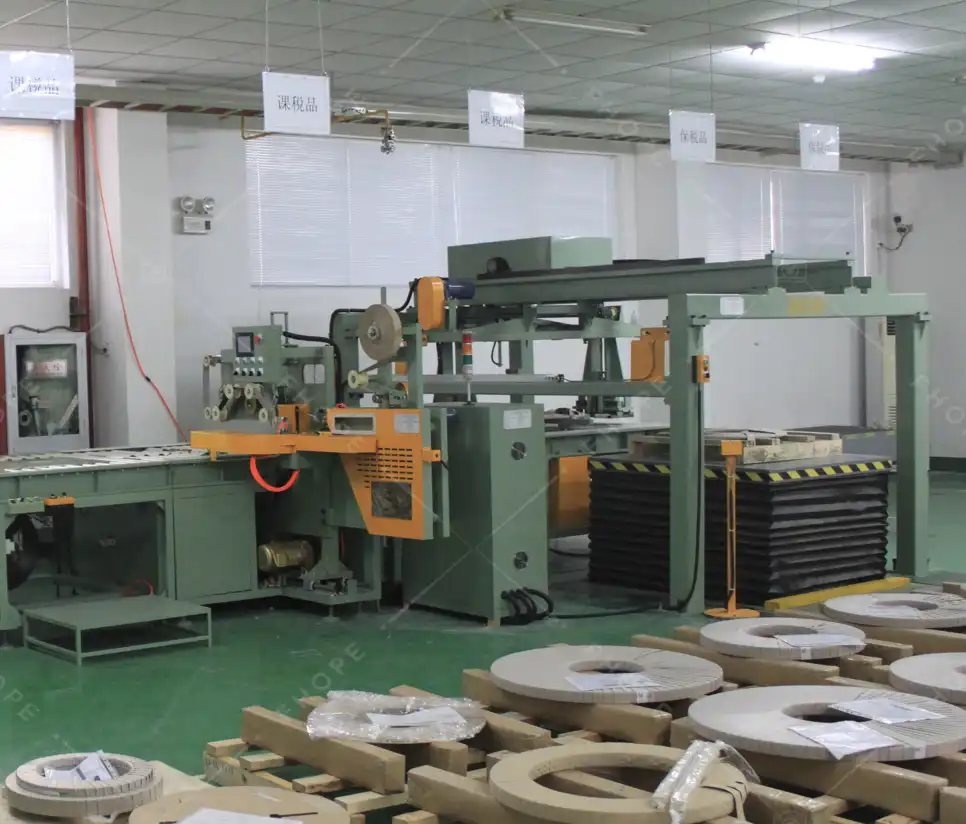
Dây chuyền đóng gói cuộn dây đồng
Xem chi tiết →
Dây chuyền đóng gói cuộn dây
Xem chi tiết →
Dây chuyền đóng gói bảng điều khiển
Xem chi tiết →
Máy đóng bao ống
Xem chi tiết →
Dây chuyền đóng gói hồ sơ nhôm
Xem chi tiết →
FHOPE Dây chuyền bó & đóng đai ống tự động
Xem chi tiết →
Dây chuyền đóng đai và bó ống tự động
Xem chi tiết →
Máy đóng đai ống thép tự động
Xem chi tiết →
Máy đóng gói ống thép tự động FHOPE
Xem chi tiết →
Dây chuyền đóng gói ống nhựa tự động
Xem chi tiết →
Dây chuyền đóng bao ống PPR / PVC tự động
Xem chi tiết →
Máy đóng gói túi ống platsic
Xem chi tiết →
Máy đóng gói săm lốp FPT-200
Xem chi tiết →
Máy đóng gói săm lốp FPT-300
Xem chi tiết →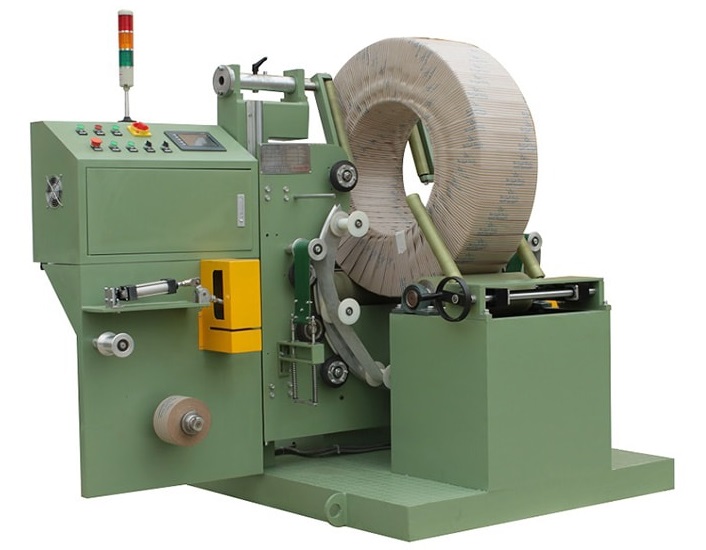
Máy đóng gói săm lốp FPT-400
Xem chi tiết →
Máy đóng gói cuộn dây cáp-FPCA100
Xem chi tiết →