> **Executive summary**
> **A door is two flat surfaces that take damage the second anything touches them.** This machine wraps door panels in corrugated cardboard instead of film, folding a pre-scored board around the panel perimeter, sealing the end flaps with hot-melt adhesive, taping the central longitudinal seam, and stacking finished door units on a pallet via a heavy-duty gantry pick-and-place system. Panel sizes, board weight, cycle times, and pallet stack heights are engineered per plant specification.

---

<h2 id="table-of-contents">Table of Contents</h2>

<ul>
<li><a href="#why-cardboard">Why cardboard instead of film</a></li>
<li><a href="#what-the-line-does">What the line does</a></li>
<li><a href="#loading-and-feeding">Loading and feeding</a></li>
<li><a href="#folding-and-shaping">Folding and shaping</a></li>
<li><a href="#sealing-method">Sealing method</a></li>
<li><a href="#stacking-and-palletizing">Stacking and palletizing</a></li>
<li><a href="#typical-configuration">Typical configuration</a></li>
<li><a href="#what-video-shows">What the video shows</a></li>
<li><a href="#selection-checklist">Selection checklist</a></li>
<li><a href="#controls-and-safety">Controls and safety</a></li>
<li><a href="#engineering-faq">Engineering FAQ</a></li>
<li><a href="#next-step">Next step</a></li>
<li><a href="#related-reading">Related reading</a></li>
<li><a href="#sources">Sources and standards</a></li>
</ul>

<h2 id="why-cardboard">Why cardboard instead of film</h2>

Polyethylene stretch and shrink films cling closely to a workpiece profile, but they provide near-zero puncture dampening against impact shock during warehousing and transport. When a painted wood veneer, lacquered finish, or steel security door encounters pallet jacks, strapping bands, or forklift uprights, film tears immediately, transferring the direct point load into the door edge.

Corrugated board creates a structural stand-off barrier through fluted flutes (B, C, or BC flute grades). This structural thickness absorbs and disperses transverse point impacts across a wider geometric footprint. Beyond puncture resistance, folding a rigid carton provides square, planar corners that eliminate edge-rounding under strapping pressure, ensuring stacked pallets remain plumb and interlocked across long-haul transit.

<h2 id="what-the-line-does">What the line does</h2>

The automated line accepts bare door leaves from the finishing or milling line and outputs a fully enclosed, edge-protected carton pack stacked neatly on an outfeed pallet. In a synchronized cycle, the machinery:

1. Feeds and indexes a pre-die-cut, pre-creased corrugated blank via vacuum de-nesting.
2. Transfers the door panel onto the centered blank using non-marking vacuum suction arrays.
3. Folds and forms the longitudinal side walls and edge flutes tightly around the door leaf.
4. Extrudes fast-setting hot-melt adhesive beads on end flaps while pneumatic tampers close the end caps.
5. Applies self-adhesive BOPP or kraft tape across the central mating seam.
6. Transfers the packaged product onto a motorized roller transfer table and lifts it to the automated gantry palletizer.

The system requires zero manual handling between infeed and discharge. Upstream optical sensors verify panel alignment, preventing carton jam events or fold misalignments before gluing sequences engage.

<h2 id="loading-and-feeding">Loading and feeding</h2>

Carton blanks are stored in an inclined bottom-feed or vertical pick-up magazine. A motorized suction carriage equipped with wear-resistant vacuum cups extracts the lowest sheet, moving it onto the main forming bed.

Door panels enter along an infeed roller conveyor covered in non-marking polyurethane or soft vulcanized rubber sleeves to avoid paint scratching. High-resolution retro-reflective sensors register the door's leading edge. A pneumatic side-aligning pusher guides the door against datum rollers, squaring it to within ±1.0 mm of the centered corrugated sheet before the mechanical folding station engages.

<h2 id="folding-and-shaping">Folding and shaping</h2>

Uniform carton enclosure demands consistent mechanical wrap-around action. Once the panel is seated squarely upon the blank, pneumatic folding plows and servo-driven folding arms wrap the corrugated sides upward and fold them inward over the top surface.

Because the folding sequence is controlled by pneumatic cylinders with magnetic stroke cushioning and mechanical stop guides, folding geometry remains repeatable across multi-shift continuous operation. Consistent corner-crease tension prevents carton loose play, ensuring the board grips the door perimeter without scratching finished surfaces.

<h2 id="sealing-method">Sealing method</h2>

Closure is completed using a combined structural bond:

- **End flaps**: Dual hot-melt adhesive nozzles extrude parallel glue beads directly onto the pre-scored end flaps. Heavy-duty pneumatic tamping plates compress the end folds under 0.2–0.4 MPa pressure for a dwell time of 1.5 to 2.5 seconds, achieving rapid bond strength.
- **Top longitudinal seam**: A dedicated taping head traverses or rides the center joint as the door passes through, applying industrial packaging tape under spring-loaded rubber pressure rollers to exclude dust, moisture, and debris.

This two-point seal locks out contaminants and delivers superior torsional rigidity compared to traditional shrink tunnels.

<h2 id="stacking-and-palletizing">Stacking and palletizing</h2>

Sealed packs advance to an outfeed queuing conveyor. A gantry or Cartesian pick-and-place transfer head, fitted with a distributed vacuum suction grid or side-clamp pneumatic grippers, lifts the packaged door horizontally.

The palletizer places each pack onto the pallet base according to programmed stack recipes. A programmable logic controller (PLC) offsets or squares each layer, keeping stack heights upright and balanced up to target thresholds (typically 1500 to 2000 mm). Finished stacks exit cleanly onto discharge pallet chains for forklift transfer or automated stretch strapping.

<h2 id="typical-configuration">Typical configuration</h2>

The values below represent the engineering envelope for this machine series, verified and adjusted to specific door dimensions and plant infrastructure.

| Machine Parameter | Engineering Baseline / Common Working Range |
| :--- | :--- |
| Handled Panel Length | 1800 to 2400 mm |
| Handled Panel Width | 600 to 1200 mm |
| Handled Panel Thickness | 30 to 70 mm |
| Corrugated Board Grade | Single wall (B or C flute) or Double wall (BC flute), 350 to 550 g/m² |
| Line Cycle Output | 60 to 120 doors per hour (dependent on board thickness and pallet recipe) |
| Hot-Melt System | Temperature-controlled tank (160°C to 180°C) with multi-orifice extrusion heads |
| Sealing Tape Width | 48 to 75 mm standard pressure-sensitive BOPP / reinforced kraft tape |
| Pneumatic Supply Requirement | 0.6 to 0.7 MPa clean, dry compressed air; consumption approx. 350–500 NL/min |
| Main Electrical Standard | 380 V / 400 V, 3-phase, 50/60 Hz (custom auxiliary supplies available) |

<h2 id="what-video-shows">What the video shows</h2>

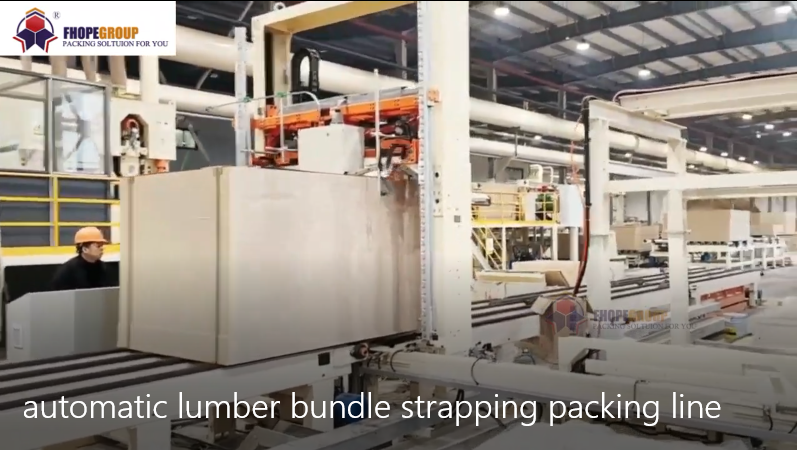
The video documentation highlights our wrap-around carton line handling full-size door panels in real-time continuous operation:

- Non-scratch vacuum feeding of the blank, matching sheet alignment precisely to the door center.
- Linear side guides and overhead folding levers clamping the longitudinal edge flutes over the door frame.
- Simultaneous end-flap gluing and tamping, followed by automated center-seam taping.
- Gantry pick-and-place vacuum transfer stacking packaged panels smoothly onto an outgoing timber pallet.

Actual mechanical configurations—such as magazine volume, vacuum cup rubber durometer, and stack lift capacity—are engineered according to your specific production schedules and panel surface sensitivities.

<h2 id="selection-checklist">Selection checklist</h2>

| Engineering Factor | Customer Project Inputs |
| :--- | :--- |
| **Door Range (L × W × H)** | Minimum and maximum external dimensions, including hinge or latch clearance |
| **Door Substrate & Finish** | Solid timber, veneer, lacquer finish, PVC wrap, or powder-coated steel |
| **Panel Unit Weight** | Minimum and maximum weight (kg) to size vacuum suction heads and drive motors |
| **Corrugated Board Spec** | Die-cut dimensions, flute profile, burst strength, and board scoring depths |
| **Plant Speed Requirements** | Target throughput (doors/hour or doors/shift) |
| **Pallet Logistics** | Max pallet stack height, wooden skid dimensions, and strapping system integration |
| **Electrical / Air Interface** | Factory voltage, phase rating, hertz, and available pneumatic drops at line location |

<h2 id="controls-and-safety">Controls and safety</h2>

All mechanical stations are integrated under a centralized PLC platform with an industrial color touchscreen HMI. System functions conform to EN ISO 13849-1 Performance Level d (PL d) architecture:

- Perimeter perimeter safety guarding with safety light curtains at pallet outfeed and carton loading zones.
- Dual-circuit E-stop buttons stationed at infeed, glue stations, and palletizing areas.
- Monitored safety interlocks on all access panels; line actuation drops to a zero-energy pneumatic state upon gate trip (OSHA LOTO compliant).
- Real-time diagnostic reporting for glue temperature deviations, vacuum pressure loss, and tape depletion.

<h2 id="engineering-faq">Engineering FAQ</h2>

**Q: Can this machine package doors with pre-installed hinges or protruding lock casings?**
A: Yes. Die-cut corrugated sheets can feature relief cuts, or side guides can be adjusted with clearance offsets. Protrusion heights must be submitted during preliminary line engineering to prevent folding interference.

**Q: How does the system prevent adhesive transfer or scratches on sensitive painted surfaces?**
A: Hot-melt beads are extruded solely onto corrugated folding tabs; no glue contacts the door. Furthermore, infeed rollers and vacuum lifting interfaces utilize non-marking soft polyurethane and vulcanized NBR rubber.

**Q: How long does dimensional changeover take between door sizes?**
A: Semi-automated changeover takes approximately 10 to 15 minutes. Motorized positioning adjustments are executed via HMI recipe presets, accompanied by manual handwheel adjustments with digital mechanical readouts for magazine guides.

**Q: What adhesive formulation is recommended?**
A: Fast-setting EVA or metallocene-based packaging hot-melt adhesives with an open time of 2 to 4 seconds and application temperatures between 165°C and 180°C provide optimum carton tear-fiber bonds.

**Q: Can the line run without the taping unit if glue bonding is sufficient?**
A: Yes. The center tape unit can be bypassed or deselected within the HMI software recipe when shipping requirements only necessitate end-flap structural bonds.

<h2 id="next-step">Next step</h2>

1. Provide your door envelope data (min/max dimensions and unit weights) along with board specs to **info@fhopepack.com**.
2. Our engineering team prepares a tailored 2D equipment layout, pneumatic/power consumption estimates, and a formal commercial quotation within 48 hours.
3. We schedule an engineering review session to confirm interface points with your upstream paint line or final assembly station.

<h2 id="related-reading">Related reading</h2>

- [Door packaging machine and full size panel shrinking machine](https://www.fhopepack.com/videos/door-packaging-machine-and-full-size-panel-shrinking-machine/)
- [Shrink packaging machine for door and panels](https://www.fhopepack.com/videos/shrink-packaging-machine-for-door-and-panels/)
- [Panel shrink packaging machine](https://www.fhopepack.com/videos/panel-shrink-packaging-machine/)
- [FHOPE packing machinery product lines](https://www.fhopepack.com/Products/)

<h2 id="sources">Sources and standards</h2>

- [ISO 12100:2010 — Safety of machinery — General principles for design, risk assessment and risk reduction](https://www.iso.org/standard/51528.html)
- [EN 415-10:2014 — Safety of packaging machines — Part 10: General requirements](https://www.nen.nl/en/nen-en-415-10-2014-en-191845)
- [EN ISO 13849-1:2023 — Safety of machinery — Safety-related parts of control systems](https://www.iso.org/standard/83615.html)
- Technical machinery field notes: Automatic wrap-around carton packaging and gantry palletizing lines for architectural panel products.

<p><strong>Last reviewed:</strong> 2026-10-10</p>