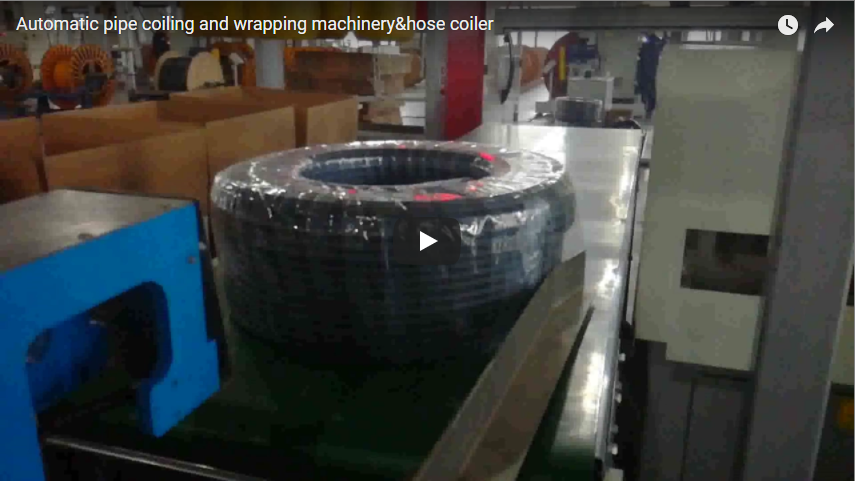
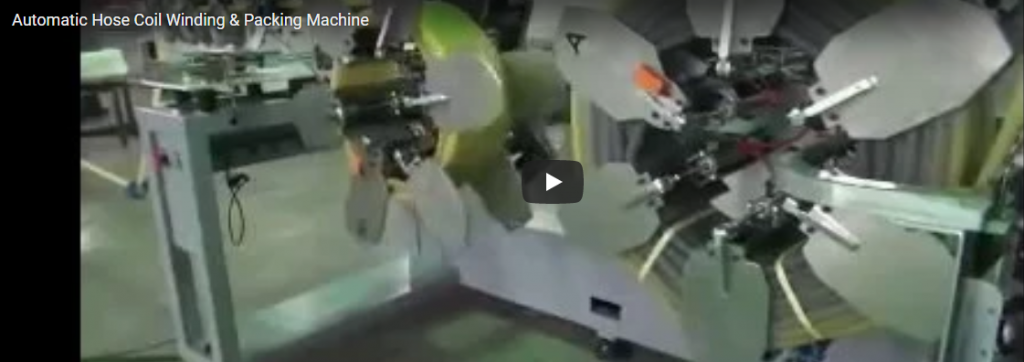
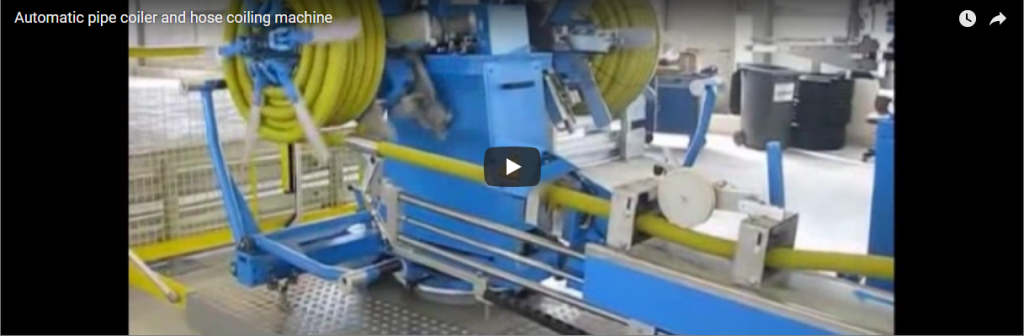
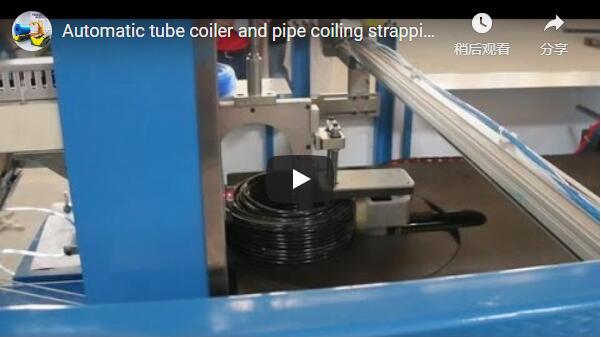
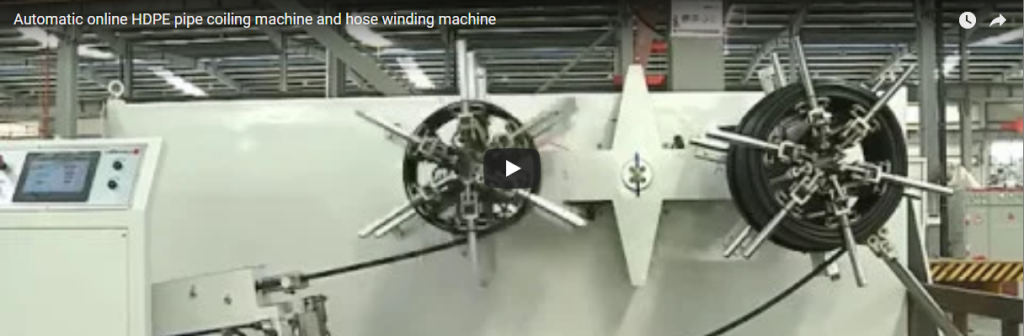
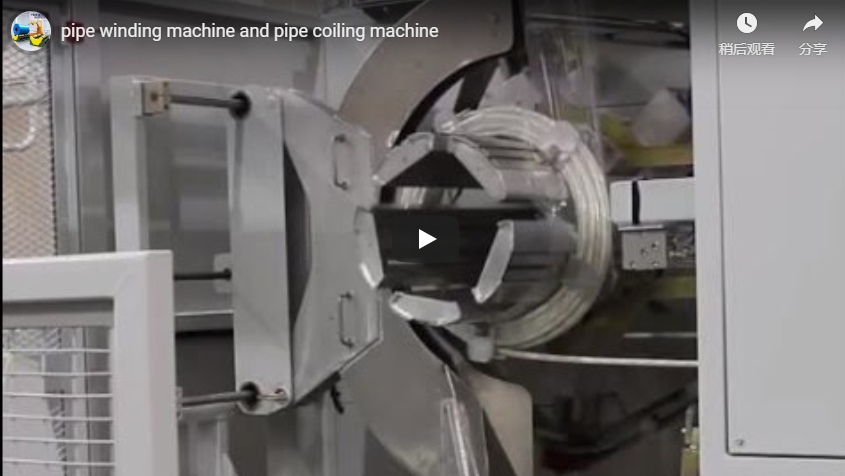
Sammanfattning: This page is for anyone rewinding wire into coils and deciding how a combined rewinding and tying machine should work. It explains what the automatic wire coil rewinding machine shown in the video does, how wire is fed, wound around a rotating former, handled by a robot arm and measured by hand, and what to verify with a supplier before you commit. The video below is a demonstration clip, and the photos on this page are product-library reference images, not stills from the clip.
På den här sidan: Vad den här sidan hjälper dig att bestämma · What a wire coil rewinding machine does · How a wire coil is made · Vad du bör kontrollera innan du köper · Vad videon visar · Checklista för köparens verifiering · FAQ · Relaterad läsning · Nästa steg
Vad den här sidan hjälper dig att bestämma
Wire that leaves a mill as a loose bundle has to be re-coiled and tied before it ships, and a machine that does both steps in one pass saves a handling step. The video below shows a wire rewinding machine at work, feeding wire onto a rotating former while an orange processing head works above the coil. This page turns that demonstration into questions you can ask a supplier.
The tying step named in the title is not clearly visible in the footage, so it matters that you confirm it with the supplier before you finalise a decision.
What a wire coil rewinding machine does
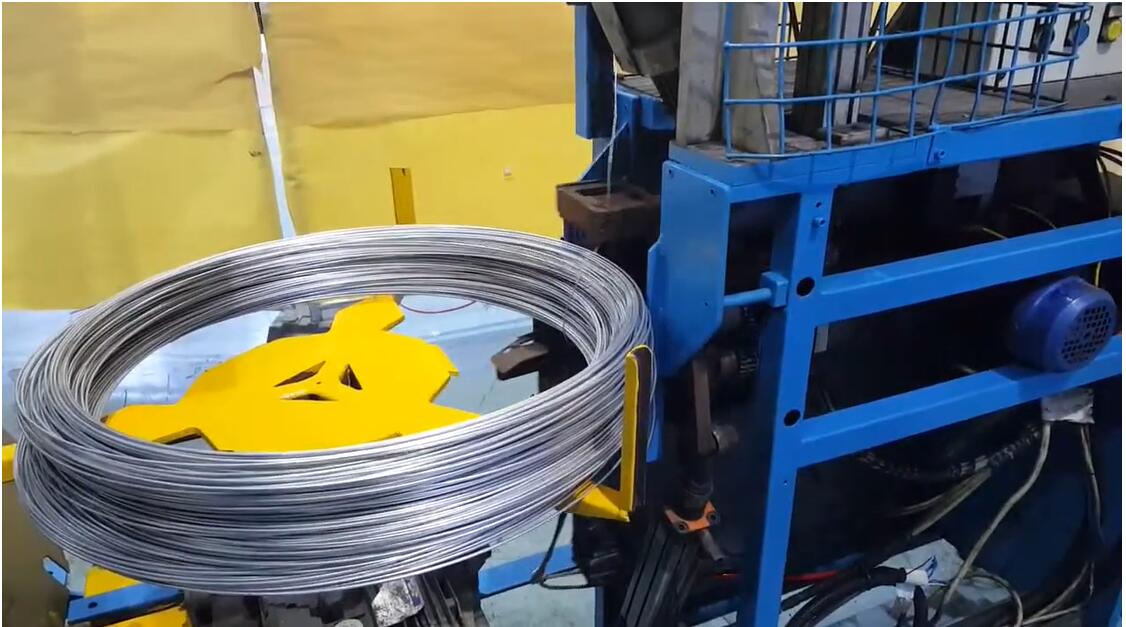
A wire coil rewinding machine feeds wire onto a rotating former to build a coil. In the video, a wire-feeding unit with four rollers feeds fine silver wire from the left. The wire winds around the rotating workpiece to form a growing coil, while an orange processing head works above the coil as a linear slide moves along a rail.
A robotic arm approaches the coil with a gripper, and a worker uses a digital caliper to measure the coil diameter by hand.
In the video the machine has a silver metal frame with grey and black covers, and orange and blue parts. A roller wire-feeding unit, a linear slide module with motor and ball screw, several pneumatic elements and guide rails complete the setup.
How a wire coil is made
The feeding unit, the rotating former and the linear slide work together.
- Utfodra. Fine wire is fed from the left through a four-roller unit.
- Vind. The wire winds around the rotating workpiece, and the coil grows in size.
- Bearbeta. An orange processing head works above the coil, and the linear slide moves along its rail.
- Hantera. A robotic arm approaches the coil with a gripper, apparently for positioning or clamping.
- Kolla upp. A worker measures the coil diameter with a digital caliper by hand.
The coil diameter appears to be roughly a hundred millimetres, based on the measuring shot, and the wire itself is fine. The video shows the coil still being processed when the footage ends, with no clear output or unloading step.
Vad du bör kontrollera innan du köper
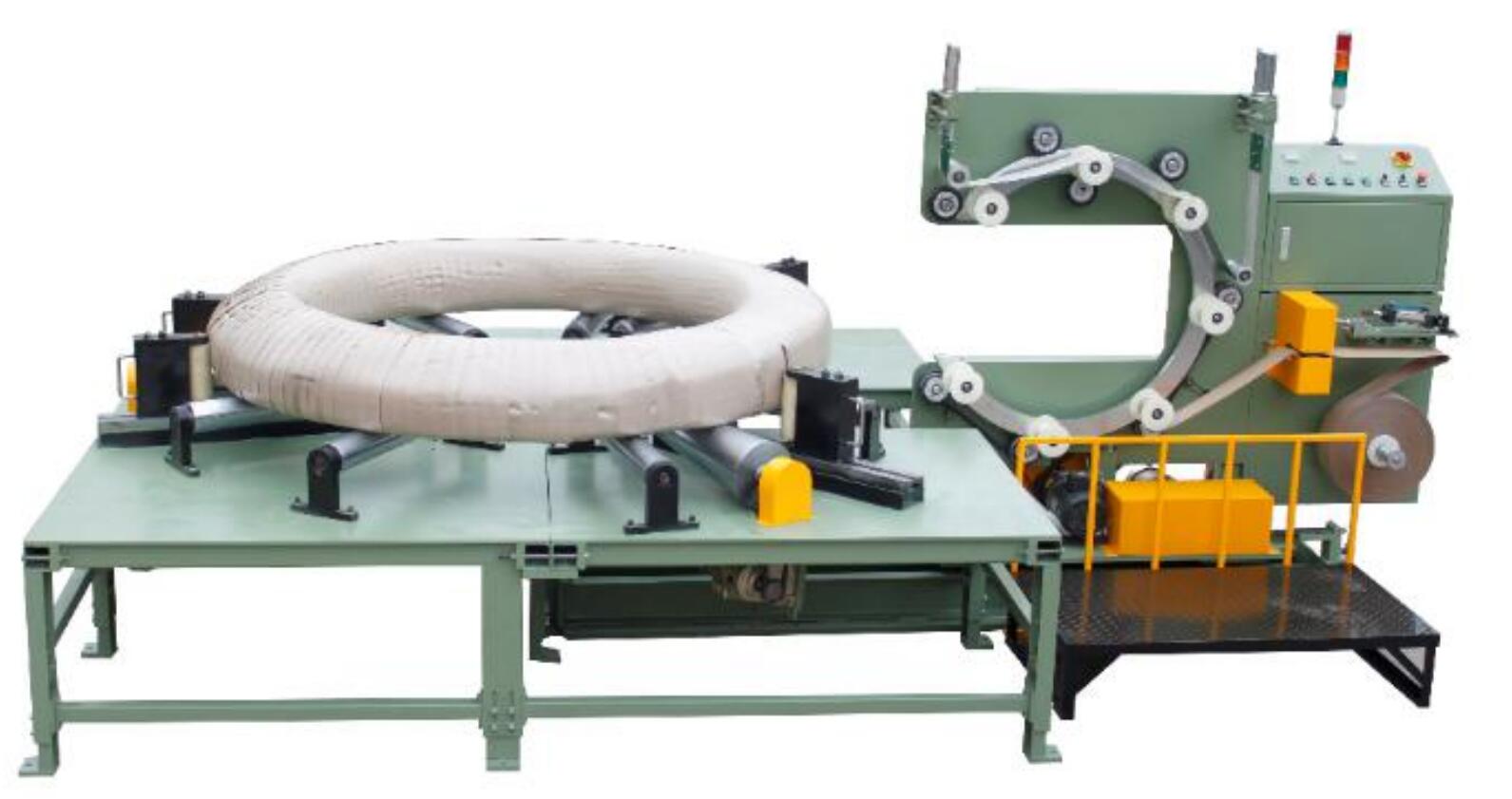
The video shows the rewinding process, and nothing on screen states capacity, speed or material range. Those figures must come from the supplier in writing. Start with six facts:
- Wire envelope — minimum and maximum wire diameter and coil size.
- Tying step — how the tying named in the title works, since the video does not clearly show it.
- Processing head — what the orange head does, since its function is not identified.
- genomströmning — spolar per timme och nominell cykeltid.
- Arbetsmiljö — how the robot arm positions and how the coil unloads.
- Säkerhetspaket — skydd, nödstopp och certifieringar.
Varje vara påverkar köpbeslutet. Checklistan nedan återger dem som en enda förfrågan som du kan skicka som den är.
Vad videon visar
What the video shows is a wire rewinding process shot in close-up. Fine silver wire is fed from the left through a four-roller feeding unit. The wire winds around a round metal workpiece held on a rotating holder, forming a growing coil while an orange processing head stays above the workpiece.
The camera also shows the wider workshop with other machines and stored wire, plus a close view of the feeding unit. A linear slide module with a motor and ball screw moves along a rail.
Later the shot moves to the other side of the machine, where a robotic arm with a gripper approaches the coil from above. A final close-up shows a worker measuring the coil diameter with a handheld digital caliper, with the reading changing as the caliper moves.
What the video does not show is just as important. It does not show the tying action, even though the product title names a tying machine. It does not show the function of the orange processing head, and it does not show finished coils being unloaded. It does not show rated capacity, wire diameter range, coil size range, cycle time, model meaning, power or certifications.
Direct observation notes from the sampled frames follow one rule: only what is visible is stated, and nothing is guessed from audio, because the clip has background music and no narration. The machine has a silver metal frame with a brushed surface, grey and black covers, and orange and blue parts. The feeding unit on the left has four rollers on a bracket, and the linear motion system has a motor, ball screw and slider on a rail.
The workpiece is a round metal former, deep grey or silver, held on the rotating holder, and the wire is fine, smooth and reflective. A white label on the machine carries lettering whose meaning is not established, and a phone watermark appears in the footage and is not used here.
No control panel, buttons or indicators are legible, and no emergency stop, fence, light curtain or warning signage appears. The photos on this page are product-library reference images from the manufacturer, not stills from the clip.
Checklista för köparens verifiering
| Fråga leverantören om | Varför det avgör köpet |
|---|---|
| Wire diameter and coil size range | The video shows one coil only |
| Tying method and cycle | Tying is named but not shown |
| Orange head function | Its role is not identified in the footage |
| Spolar per timme och cykeltid | No rate appears in the clip |
| Hantering och lossning | No output step is shown |
| Säkerhet: skydd, nödstopp, certifikat | Inga säkerhetsföremål syns i filmen |
Skicka till leverantören: Please confirm for the automatic wire coil rewinding and tying machine shown in the demonstration video: (1) the minimum and maximum wire diameter and coil size; (2) how the tying step works and its cycle time; (3) what the orange processing head does; (4) coils per hour and rated cycle time; (5) how the robot arm positions the coil and how the coil unloads; (6) fitted safety devices including guarding, emergency stop and certifications.
FAQ
Does the video show the tying step? No. The video shows wire being wound and a coil being measured, but no clear tying action appears. Confirm tying with the supplier.
What is the orange processing head? Its exact function is not identified in the footage. It could be for welding, cutting or heating, so ask the supplier to confirm.
How is the coil diameter checked? A worker measures the coil diameter by hand with a digital caliper in the footage. The readings shown change as the caliper moves and are not part of the machine specification.
Relaterad läsning
- Automatic Wire Coil Rewinding and Tying Machine
- Wire Coil omslagsmaskin
- Ståltrådsbandningsmaskin
- Master Coil Wrapper
- Automatisk Coil Packing Line
- Semi-Auto Horizontal Wrapper
Nästa steg
Send the supplier your wire sizes and coil requirements, and ask for the six verification figures from the checklist above.
Then confirm the tying step and the orange processing head, since the video shows neither clearly.
Then ask about handling, unloading and the safety package, because the footage shows the machine mid-process with no output or safety items. Use the kontakt sida att starta det utbytet.
Senast granskad: 2026-09-29
Publicerad: 2026-09-29