Prehľad
Automatic black annealed wire winding and strapping feeds wire off a supply reel, measures the length with an encoder, winds it into a coil and straps the coil in position, so each finished coil holds its shape at dispatch and at the customer. This guide helps a black annealed wire producer choose between three equipment layouts by starting from the coil weight it actually ships, then lists what to supply before a quotation.
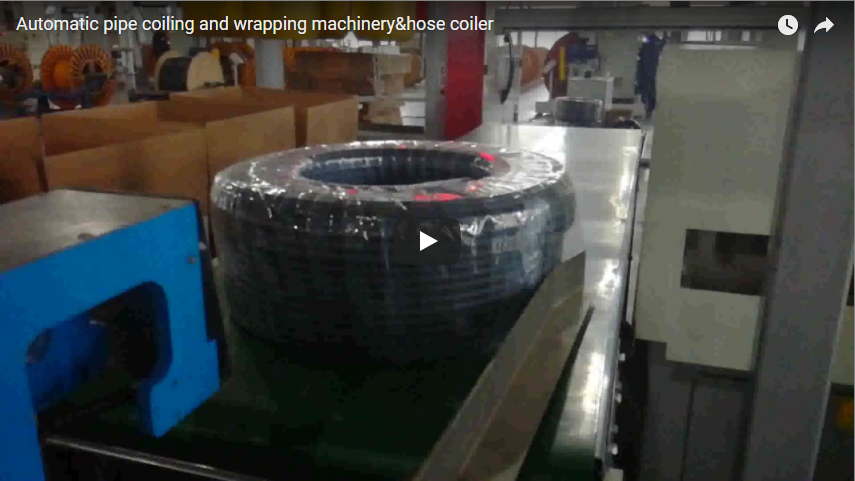
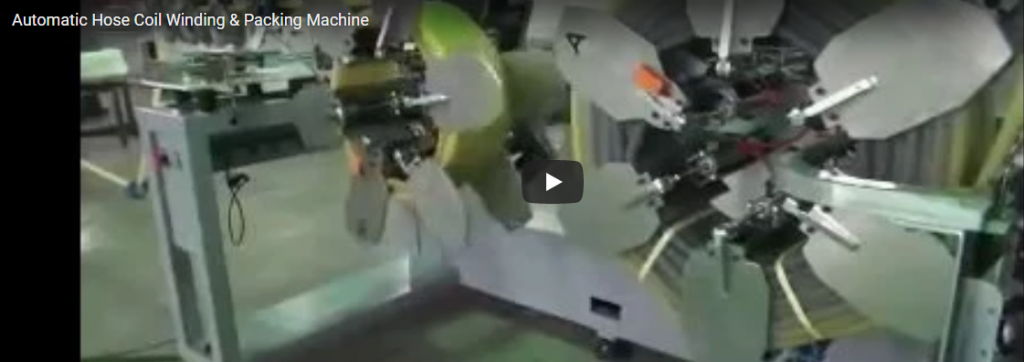
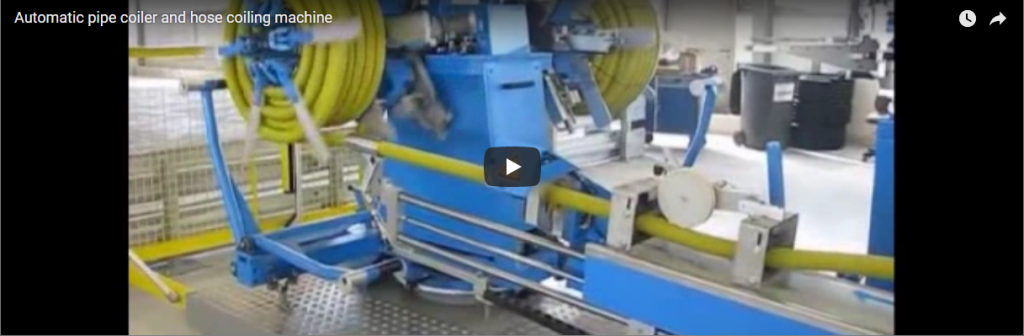
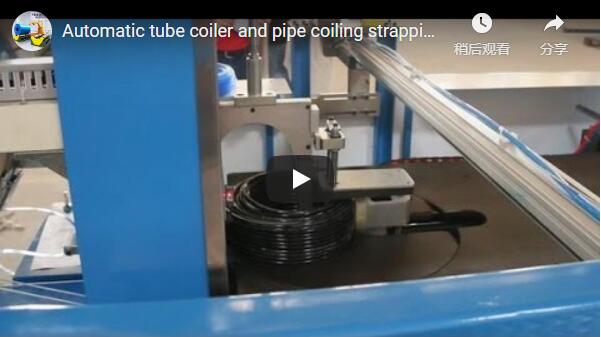
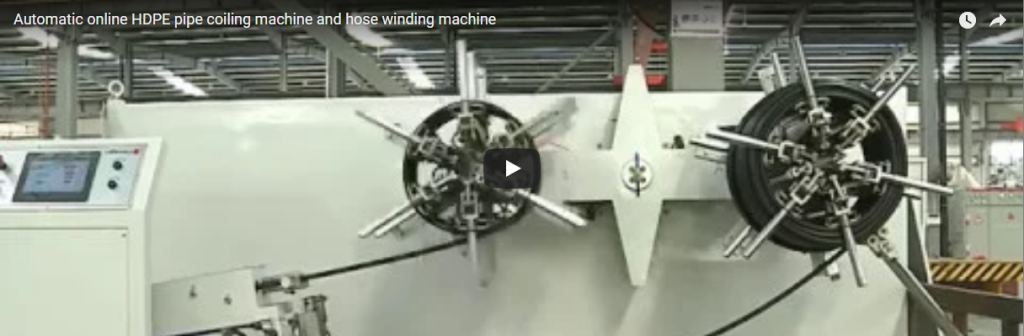
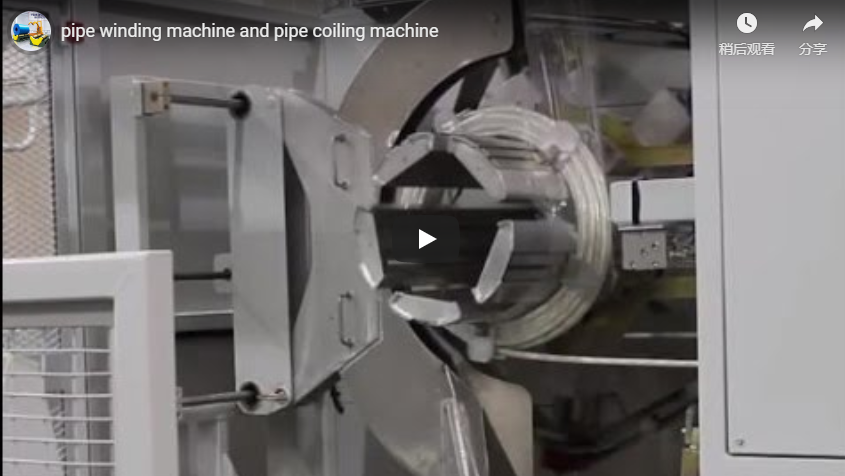
The machines shown in the linked videos are a similar machine family used as a reference; every machine is engineered to your wire size, coil size and output, and the final configuration is fixed at quotation.
What the Automatic Winding and Strapping Process Does
Automatic wire coil winding and strapping converts a large supply reel into small, tied coils. The basic process has four steps:
- Výplata. Wire runs off the large supply reel.
- Zmerajte a narežte. The machine counts the length with an encoder and cuts at the set value.
- Vietor. A winding head forms a small coil; on many machines the coil is wound without a spindle left inside.
- Tie or strap. The coil is tied or strapped while still held in the forming position, then taken away for the next coil.
Black annealed wire is springy: once wound, the coil wants to open and the turns want to cross. Strapping is therefore part of the forming step, not an afterthought. If a coil is moved to a separate table before it is fixed, the turns cross and the coil deforms.
Choose a Layout by Coil Weight, Not Just by Ring Size
The ring geometry (inside and outside diameter, height) is the first filter, but coil weight decides the layout. A light off-line machine is limited to about 5 kg per coil. Check your coil weight before selecting a machine:
Weight check for a solid-steel annulus:
Volume ≈ π ÷ 4 × (OD² − ID²) × height
For a black annealed wire coil of ID 200 mm, OD 350 mm, height 180 mm the solid-steel volume is about 0.0117 m³. At steel density of roughly 7,850 kg/m³ this equals about 90 kg of solid steel, so even a loosely packed coil of this size weighs tens of kilograms—far above the 5 kg limit of the light machine. This size therefore points to Layout 2 (rewinding and compacting line) or Layout 3 (inline machine), not Layout 1.
Use the formula with your real wire diameter and packed density to get a number for your product rather than assuming the geometry alone is enough.
| Coil weight per coil | Odporúčané rozloženie |
|---|---|
| Up to about 5 kg, small installer or retail coils | Layout 1: off-line rewinding and tying machine |
| Tens of kilograms, dense even rings for transport | Layout 2: rewinding and compacting line |
| Continuous output at the end of a drawing line | Layout 3: inline winding and strapping machine |
Layout 1: Off-Line Rewinding and Tying Machine
This layout sits next to the pay-off and splits a large reel into several smaller tied coils. It suits finished black annealed wire packaged into lightweight installer coils off the main drawing line.
Typical working window (representative, confirmed on a trial with your wire):
| Parameter | Typická hodnota |
|---|---|
| ID Coil | 120 – 200 mm |
| Coil OD | 200 – 450 mm |
| Výška cievky | 50 – 200 mm |
| Hmotnosť cievky | do 5 kg |
- An encoder measures length; on this machine coiling and cutting accuracy is about 3 mm per 10 m.
- Two binding points are made at one time, and tension control keeps soft material from deforming.
- A servo drive with a touch-screen PLC/HMI (English option) controls the cycle.
Automatický stroj na navíjanie a viazanie drôtených cievok
Layout 2: Rewinding and Compacting Line
When loose wire from a large reel takes up space and slips in transport, wire mills rewind it into smaller coils, press them dense and strap them tight. A rewinding and compacting line works in stations: rewinder, vertical compacting press, strapping, and forklift unloading of the finished coil.
The key detail is that the line straps the coil while the press still holds it compact. If the press opens first, the coil springs back and the straps go on loose. Strapping under hold locks in the density, so rings stay even and stack straight.
Throughput example: a line at 300 m/min making 1,000 m coils produces 300 × 60 ÷ 1,000 = 18 coils per hour, inside the 20 coils/h capacity of a single-head machine; a double-head machine at 600 m/min reaches about 36 coils per hour.
Automatická linka na prevíjanie a zhutňovanie oceľových cievok
Layout 3: Inline Winding and Strapping Machine
At the end of a wire drawing or annealing line, the wire arrives fast and continuously while coils are wound, removed and strapped one by one. An inline machine buffers the wire in an accumulator, winds coils on one or two heads, transfers each finished coil with a gripper inside an interlocked guard, and straps it.
Representative values, confirmed per project:
| Položka | Hodnota |
|---|---|
| Rýchlosť drôtu | 200–800 m/min |
| Výkon | about 20 coils/h single head; about 40 coils/h double head |
| Dĺžka akumulátora | 5 20 - XNUMX m |
Head count check: coils per hour needed = line speed (m/min) × 60 ÷ wire length per coil. Safety references on this machine family: EN ISO 12100, EN 415-10 and EN 60204-1.
Steel Wire Coil Winding and Strapping Machine Factory
RFQ Information to Supply Before a Quotation
Give the supplier these details so the machine can be sized against your line:
- Wire infeed. Is the input wire paid off from a reel, or fed from a carrier or from a continuous drawing line?
- Rewinding speed. Speed needed in metres per minute, or coils per hour.
- Wire and coil specification. Wire diameter and material; coil ID, OD, height and weight; coils per shift.
- Strapping specification. Strap type and number of bands per coil.
- Downstream needs. Weighing, labelling or film wrapping after strapping.
- Safety and compliance basis. Standards such as EN ISO 12100, EN 415-10 and EN 60204-1, plus local electrical supply.
Často kladené otázky
Q: Why strap the coil while it is still held in the machine? A: Black annealed wire is springy. If the press or former releases the coil first, the coil springs back and the straps go on loose. Strapping under hold locks the density in.
Q: Does the line stop at every coil change? A: In a double-head machine the wire switches to the empty head so the line keeps running; a single-head machine changes speed during unload. The head configuration is set at quotation.
Q: I make coils of 200 mm ID, 350 mm OD and 180 mm high. Which machine do I need? A: Run the weight check above first. The geometry fits the typical window, but the weight of such a steel coil normally runs to tens of kilograms, so a light 5 kg off-line machine is not the right match—a rewinding and compacting line or an inline machine is.
Q: How much strap does a coil need? A: Depends on coil height, wall thickness and number of bands. The supplier plans the strap per project from your coil specification.
Ďalší krok
Send your wire size, coil weight and length, rewind speed, infeed method and strapping requirements to the supplier so they can match the machine to your line and confirm the coil size on a trial.