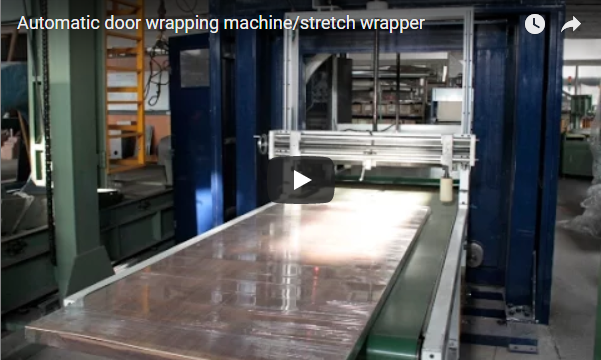
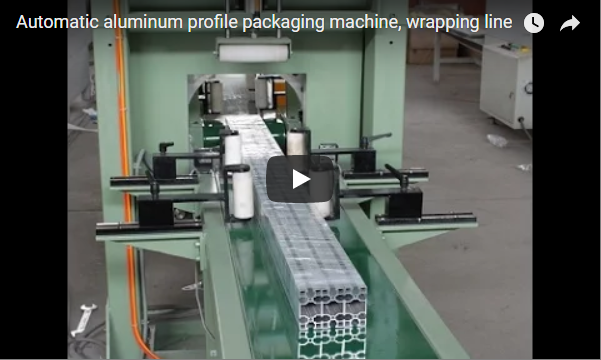
Sumário executivo The industrial carpet packing machine is an automated, continuous sealing system engineered for carpets, synthetic turf, rubber flooring, and textile rolls. Operating with axial conveyor infeed, a dual-photoelectric sensor array registers the product position while a heavy-duty, PTFE-coated hot knife executes clean three-side or fully enclosed perimeter sealing. With an engineered sealing frame aperture up to 450 mm—safely handling rigid roll diameters up to 400 mm after factoring in pneumatic knife-retract clearances—this system processes PE films and shrink polyolefins via closed-loop PLC PID temperature control. For baseline sizing, a 300 mm diameter roll requires a nominal film envelope width of at least 942 mm plus welding and deformation margins.
Conteúdo
- Como funciona a seladora de rolos
- Seu rolo vai caber?
- Dimensões do filme medidas pela circunferência e comprimento do rolo
- Qualidade e temperatura da vedação
- Opções de linha
- Serviços públicos e segurança
- Lista de verificação de seleção
- Perguntas frequentes sobre engenharia
- Próxima etapa
- Leitura relacionada
- Fontes
Como funciona a seladora de rolos
The carpet roll packing machine is an automated packaging system designed for high-throughput protection of tufted carpets, non-woven rolls, insulation bats, and vinyl runners. By replacing manual poly-bagging with synchronized infeed, horizontal film feeding, and pneumatic cutting jaws, it eliminates human error and guarantees moisture- and dust-tight packaging.
Each packaging cycle executes through three synchronized kinematic stages:
- Infeed and Position Tracking: The infeed belt conveyor transfers the roll axially toward the wrapping station. A dual-beam retro-reflective optical sensor array detects the roll leading edge, triggering dynamic variable frequency drive (VFD) deceleration to align the product precisely under the transverse sealing gantry.
- Film Envelopment and Sealing: As the roll advances through the centerfold or dual-web film curtain, film unwinds under continuous magnetic powder brake tensioning. Overhead pneumatic cylinders drive the heated cross-seal bar downward to cut and weld the trailing edge of the current pack while simultaneously creating the leading seal for the subsequent roll. Continuous side-seal units weld the lateral margins.
- Discharge and Cycle Reset: The seal jaw lifts under pneumatic safety interlocks, and the motorized outfeed conveyor transfers the sealed roll to accumulation or secondary shrink packaging. The cycle immediately resets for the next incoming item in continuous automatic mode.
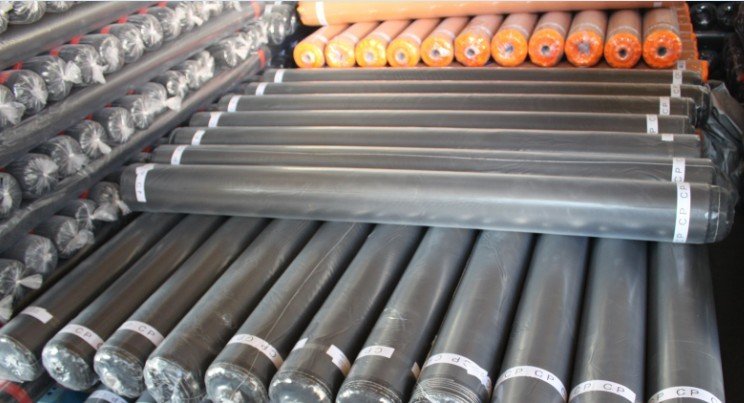
Seu rolo vai caber?
Machine fit involves two physical constraints: the physical cross-sectional clearance under the sealing jaw (vertical and lateral envelope) and the maximum conveyor weight capacity.
| Parâmetro de engenharia | Especificações padrão da máquina | Custom Heavy-Duty Range |
|---|---|---|
| Maximum Sealing Jaw Aperture | 450 mm stroke opening | 600 mm a 900 mm |
| Recommended Maximum Rigid Roll Diameter | 400 mm (allows 50 mm clearance margin) | 520 mm a 800 mm |
| Standard Sealing Width (Cross-jaw) | 1,600 mm (infeed line width) | Up to 3,200 mm (full-width broadloom) |
| Roll Length Processing Window | 800 mm a 2,500 mm | 400 mm a 6,000 mm |
| Compatibilidade de Filmes | LDPE (40–120 µm), POF, shrink PE | Anti-static / VCI co-extruded films |
| Conveyor Load Rating | 150 kg per linear meter | Up to 500 kg per linear meter |
| Capacidade de Rendimento | 4 to 8 rolls per minute (length-dependent) | Up to 12 rolls per minute |
Aperture vs. Product Clearance Rule: While the machine frame provides a 450 mm mechanical opening, operating at absolute maximum capacity risks film snagging or seal-jaw collision. The effective sizing limit is calculated as:
D_roll_max ≤ H_aperture - Δh_safety
onde Δh_safety ≥ 50 mm represents the necessary safety stroke for pneumatic stabilization and material entry clearance. Consequently, a 300 mm roll processes with ample clearance, a 400 mm roll operates at the standard capacity limit, and a 450 mm to 500 mm roll requires the extended 600 mm frame option.
Dimensões do filme medidas pela circunferência e comprimento do rolo
To establish exact consumable roll costs and avoid line-stoppage errors, film roll width and cutoff lengths must be calculated from the final package envelope rather than uncompressed nominal roll dimensions.
| Nominal Roll Diameter (D) | Theoretical Rigid Perimeter (π × D) | Deformed Elliptical Girth (Soft Carpet) | Target Film Web Width (Centerfold) |
|---|---|---|---|
| 200 mm | 628 mm | 660 mm a 680 mm | 800 mm (includes overlap) |
| 300 mm | 942 mm | 990 mm a 1,030 mm | 1,150 mm (includes overlap) |
| 400 mm | 1,257 mm | 1,320 mm a 1,380 mm | 1,500 mm (includes overlap) |
Calculating for Deformed/Elliptical Rolls: High-pile carpet, underlayment foam, and loosely coiled rolls deform under their own weight into an elliptical cross-section on the conveyor belt. When a roll flattens, its horizontal major axis (2a) widens while its vertical minor axis (2b) compresses:
P_ellipse ≈ π × [ 3 × (a + b) - √((3a + b) × (a + 3b)) ]
In shop-floor sizing, soft rolls typically exhibit an effective perimeter expansion of 5% to 10% over theoretical rigid cylinders. Film sizing must account for both girth and longitudinal envelope allowances:
- Film Web Width (Centerfold configuration):
W_web ≥ (P_deformed / 2) + Margin_weld(OndeMargin_weld ≥ 100 mmfor vacuum trim and side tracking). - Film Cutoff Length:
L_cutoff = L_roll + (2 × Roll_Radius) + End_Overlap(OndeEnd_Overlap ≥ 80–120 mmper end for full end closure prior to shrink-tunnel entry).
Qualidade e temperatura da vedação
The sealing system utilizes a permanently heated, Teflon (PTFE) coated aluminum alloy sealing sword powered by internal tubular heating elements. Unlike impulse wires prone to fatigue and wire breakage, this constant-temperature design delivers heavy-duty weld strength on thick poly rolls without smoke or plastic degradation.
| Variável de Processo | LDPE Film (50–100 µm) | Industrial POF Shrink Film (15–25 µm) |
|---|---|---|
| Temperatura de Operação | 170 °C to 205 °C (±2 °C) | 145 °C to 175 °C (±2 °C) |
| Pneumatic Jaw Pressure | 0.4 MPa to 0.6 MPa (4 to 6 bar) | 0.3 MPa to 0.5 MPa (3 to 5 bar) |
| Dwell Time (Clamp Duration) | 1.0 sa 1.6 s | 0.6 sa 1.0 s |
| Knife Profile | Serrated / Coated Wedge Blade | Micro-Perf Wire / Thin Blade |
The integrated PLC monitors multi-zone thermocouple signals in real time, adjusting heating output through solid-state relays (SSRs). This prevents cold seals during rapid cycling as well as thermal burn-through during line pauses.
Opções de linha
- Integrated Heat Shrink Tunnel: High-velocity recirculating hot-air tunnel downstream of the cross-sealer. Shrinks the loose PE sleeve tightly against the roll perimeter, increasing puncture resistance and creating clean cylindrical ends.
- Automatic Infeed Transfer and Pushers: Lateral pneumatic or servo sweep arms that transfer rolled carpets automatically from upstream winding machines onto the packaging centerline.
- Inline 90° Turning and Stacking Station: Motorized turntable units and drop-lift pallet stackers that turn packed rolls crosswise or stack them directly into shipping cradles.
- Weight and Labeling Integration: Inline conveyor checkweighers and automatic print-and-apply barcoding systems to log weight, roll length, and lot numbers on the sealed plastic exterior.
- Anti-Static Ionizing Bars: Eliminates static electricity generation on poly webs during high-speed unwinding, preventing film cling and dust contamination.
Serviços públicos e segurança
| Utilitário/Sistema | Requisito de Engenharia |
|---|---|
| Fonte de alimentação elétrica | 3-Phase 380V / 415V / 480V, 50/60 Hz; Connected Load: 5.5 kW to 9.0 kW |
| Abastecimento de ar comprimido | Clean, dry, filtered air at 0.6 MPa (6 bar); Flow rate: 150 NL/min |
| Arquitetura de PLC | Siemens S7-1200 or Omron Sysmac with 7-inch color industrial HMI |
| Pneumática | Festo or SMC cylinders with dual-exhaust flow controls and safety dump valves |
All machinery is engineered to conform to strict international directives:
- Diretiva de Máquinas CE 2006/42/CE e ISO 12100:2010 for comprehensive mechanical hazard mitigation.
- E 415-6: 2013: Specific safety requirements for wrapping machines and horizontal form-fill-seal lines.
- ISO 13849-1 (PL d, Category 3): Monitored dual-channel optical light curtains across the jaw infeed and outfeed zones; any beam interruption immediately depressurizes the pneumatic seal bar cylinder to prevent hand crush injuries.
- OSHA 1910.147 (LOTO): Lockout-tagout compatible main electrical isolator and lockable pneumatic dump valve.
Lista de verificação para seleção de um embalador de rolos de carpete
- Envelope dimensional: Confirm maximum and minimum roll diameter (uncompressed and compressed), plus maximum roll lengths.
- Target Line Speed: Required throughput (rolls per hour / shift) and synchronization with upstream roll-up winders.
- Enclosure Level: Three-side open sleeve (dust cover for local warehouse storage) versus 100% airtight four-side enclosure (export sea freight).
- Film Gauge and Polymer: Monolayer LDPE vs. multi-layer co-extruded films; calculate required puncture resistance for rough-backed carpets.
- Upstream / Downstream Pitch: Buffer conveyor distances between sealing bar and downstream shrink tunnel to prevent product crowding.
- Plant Infrastructure: Availability of dry compressed air (dew point ≤ +3 °C) and 3-phase line voltage at installation point.
Perguntas frequentes sobre engenharia
Q: What is the true maximum roll diameter this machine can handle?
A: The standard mechanical frame opening is 450 mm. Factoring in the mandatory 50 mm clearance margin required for smooth film tracking and cross-seal knife retraction, the recommended maximum rigid roll diameter is 400 mm. For larger diameters (up to 800 mm), an extended vertical mast chassis is supplied.
Q: How do we size film width for soft, non-rigid carpets?
A: Measure the flattened profile on a flat surface. Take the compressed height (2b) and widened width (2a) to compute the elliptical perimeter. Add 100 mm to 150 mm for side-seal seam trimming and tension tolerance to specify the final roll web width.
Q: Can the same sealing bar run both thin shrink film and heavy LDPE bags?
A: Yes. Because the sealer uses a PID-controlled constant-heat sword, operating parameters can be adjusted via the HMI touchscreen recipe menu. LDPE typically runs at 175–195 °C with longer dwell, while POF/PE shrink films run at 150–165 °C with shorter dwell cycles.
Q: How are operators protected from the vertical hot-sealing knife?
A: Protection is provided via Category 3, PL d safety light curtains at the infeed and discharge apertures. If an optical path is broken, safety dump valves exhaust the cylinder pressure instantaneously, locking or retracting the cutting head. Complete mechanical perimeter guards prevent access to lateral mechanisms.
Q: Does the system accommodate variable roll lengths automatically?
A: Yes. The horizontal retro-reflective photoelectric sensor detects the trailing edge of each roll regardless of length, initiating the cutoff cycle dynamically without manual mechanical readjustment.
Próxima etapa
- Submit Layout and Roll Parameters: Email your maximum/minimum roll diameter, length matrix, material type, and target rolls per hour to info@fhopepack.com.
- Receive 3D Line Layout and Technical Proposal: Within 48 hours, our mechanical engineering team delivers a proposal complete with frame clearances, conveyor pitch calculations, and utility schematics.
- Run Factory Film Trials: Send carpet roll test samples to our testing center to validate weld strength, film consumption rates, and shrink performance before machine sign-off.
Leitura relacionada
- Carpet packing machine systems and configurations
- Industrial carpet shrinking machine and heat tunnels
- Video: high-speed shrink packaging machine for carpet rolls
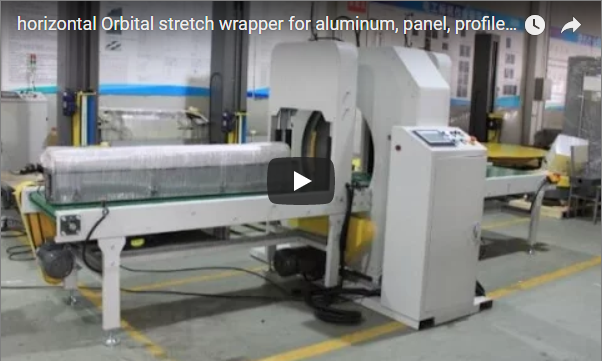
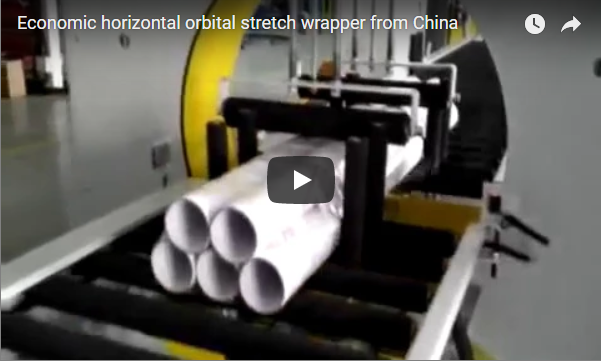
- Video: orbital stretch wrapping machine for rolled furniture and textiles
Fontes
- Equipment Engineering Specifications: FHOPE Industrial Carpet Packaging Solutions
- Demonstração da máquina: FHOPE Packaging Machine Video Archive
- Safety and Machinery Standards: ISO 12100:2010 (Safety of Machinery – General Principles), PT 415-10: 2014, and EN 415-6:2013 (Packaging Machines – Wrapping Machines)