Streszczenie A coil that is wrapped by hand is wrapped by the mood of the shift. Coil packaging ties three decisions together: how much labor each wrap needs, how consistently the film holds the load, and whether the line keeps up with the coiler that feeds it. We supply both manual stations and automated lines, and the right one depends on your volumes and coil sizes.
Spis treści
- The four things to weigh
- Manual coil wrapping
- The automated coil line
- Podawanie i pozycjonowanie
- The ring wrapping station
- Strapping and closing
- Typowa konfiguracja
- Co pokazuje wideo
- Lista kontrolna wyboru
- Sterowanie i bezpieczeństwo
- Często zadawane pytania dotyczące inżynierii
- Następny krok
- Powiązane czytanie
- Źródła i standardy
The four things to weigh
Coil packaging equipment is chosen on four axes. Labor is the cost of the people at the station. Package integrity is how well the film and straps hold the load in transit. Throughput is whether the wrapping keeps pace with the coiler upstream. And complexity is what the line asks of the floor, the air supply and the power panel.
Most procurement mistakes come from committing to a speed without first settling the coil centering question, because an off-center wrap shifts in transit no matter how fast it was made.
Manual coil wrapping
A manual station is a film dispenser, a portable strapping tool and a few people. Operators position the roll, apply film by hand and tension steel or PET bands around it.
It works at low volume and low variety. The trade is consistency: hand-applied tension varies from wrap to wrap, and the station takes the most minutes per coil at the point where the line is waiting on it.
The automated coil line
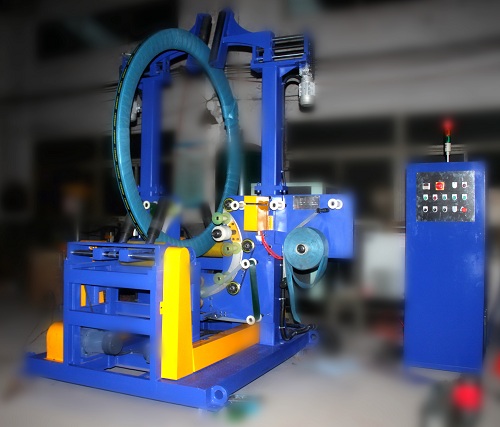
An automated line carries the coil through synchronized workstations on a chain conveyor. A wrapping ring spins the film around the stationary coil, a strapping unit applies tensioned bands, and the cycle runs on control. The line is built around the coil sizes and the rate you need.
Podawanie i pozycjonowanie
The coil enters on the conveyor and passes a sensing station. Sensors pick up the coil position, centering arms square the inner diameter axis with the wrapping ring center, and the wrap then lands on a centered coil instead of a drifted one.
Positioning is what automated wrapping does first, because nothing after it can fix an off-center start.
The ring wrapping station
At the wrapping station the coil stays still while the film ring rotates around it, laying film at a controlled overlap. Pre-stretch rollers draw the film before it is applied, and tension is held by the drive rather than by the operator.
The result is a cover with even compression and consistent overlap from coil to coil, which is what keeps the load tight through freight vibration.
Strapping and closing
After wrapping, the banding unit applies straps at tensioned positions, with the tension calibrated to the load. PET suits loads that settle and need some tension recovery; steel serves heavy, rigid edges. Where edges need extra reinforcement, an automatic sealer or shrink edge completes the cover, and the whole selection is set per project.
Typowa konfiguracja
Podane poniżej wartości to typowe wartości początkowe dla tej klasy maszyn i są potwierdzane dla każdego projektu.
| Parametr | Typowy zakres, potwierdzony dla każdego projektu |
|---|---|
| Rozmiary cewek | envelope customized to coil inner and outer diameter, width and weight, selection per project |
| Transporter | chain conveyor sized to coil width |
| Opakowanie | rotating ring with pre-stretch and overlap control |
| Paskowanie | steel or PET, tension set per load |
| Wydajność | line cycle set to the upstream coiling rate, selection per project |
| Dostawy prądu | 380 V trójfazowe 50 Hz lub 220 V jednofazowe dla stacji oświetleniowych, dobierane indywidualnie do projektu zasilania zakładu |
Co pokazuje wideo
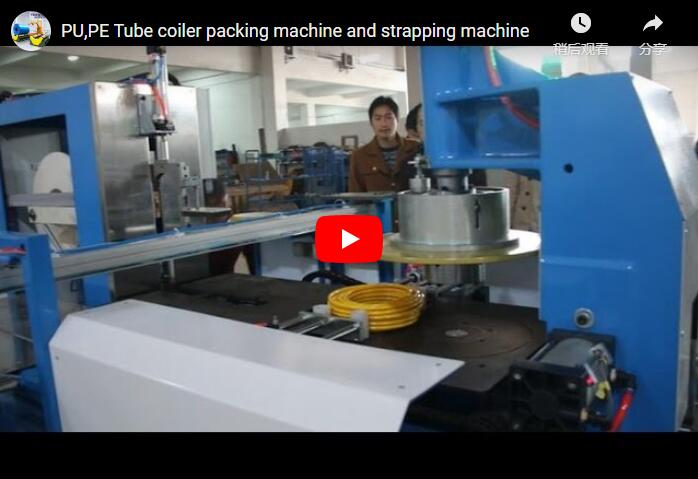
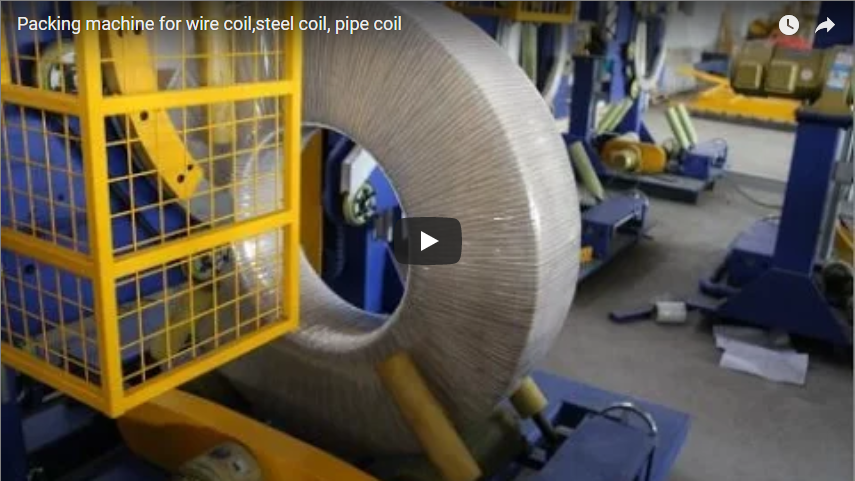
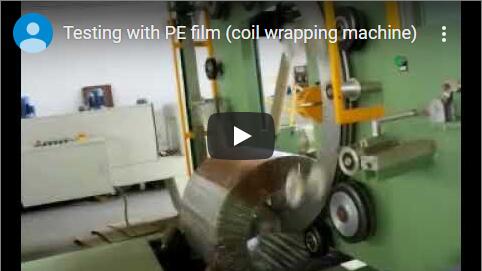
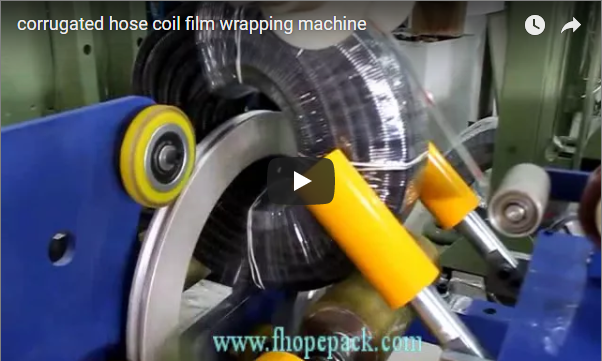
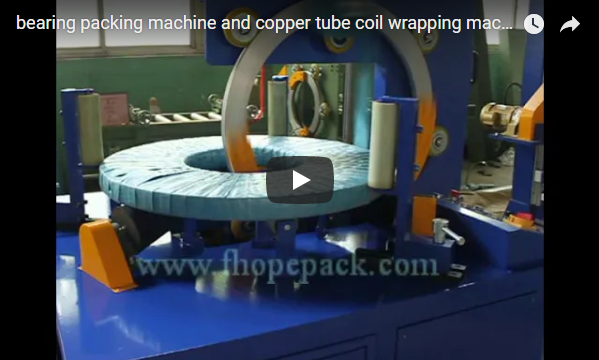
Our footage shows an automated line wrapping a coil on a conveyor and moving it through to strapping. It is a general demonstration, so coil sizes, line rate and layout for your plant are confirmed with us per project.
Lista kontrolna wyboru
| Question | Potwierdź dla każdego projektu |
|---|---|
| Coils per day | manual station vs automated line |
| Rozmiary cewek | conveyor and ring envelope |
| Tryb tranzytowy | film and strapping needed per load |
| Upstream pace | line output matching the coiler |
| Powierzchnia | layout and services available |
| Dostawy prądu | napięcie, faza i częstotliwość na miejscu |
Sterowanie i bezpieczeństwo
The line runs from a control panel with an emergency stop at each station. Interlocks keep the operator clear of moving conveyors and the strap head, and the wrapping ring is enclosed where the cycle is automatic. Keep the area clear while the line runs, and follow the machine manual for routine checks.
Często zadawane pytania dotyczące inżynierii
Q: Manual station or automated line? A: Low volumes suit a manual or semi-automatic station; as coils per day climb, an automated line pays on consistency and output. We size the choice from your volumes per project.
Q: Why is coil centering the first thing that matters? A: An off-center wrap shifts in transit and costs repositioning time; alignment before wrapping is the difference between a stable load and a reworked one.
Q: What film and strap does it use? A: Stretch film with pre-stretch control, and steel or PET strapping tensioned to the load. Confirmed per project.
Q: Can the line keep pace with the coiler? A: The output is set to match the upstream coiling rate, so wrapping does not become the bottleneck.
Q: What coil sizes are covered? A: The conveyor and ring are sized to your inner and outer diameter range, width and weight per project.
Następny krok
- Email us at info@fhopepack.com with your coil sizes, volumes and upstream coiling rate.
- We send a station-versus-line comparison and a layout drawing within 48 hours.
- Przeprowadzamy wizję lokalną w celu potwierdzenia dostępności usług i dostępnej powierzchni użytkowej.
Powiązane czytanie
- Maszyna pakująca drut w kręgi z ruchomą stacją owijającą
- Maszyna do prasowania cewek drutu i maszyny do spinania PET
- Przechylaczka do zwojów stali z obsługą dostosowaną do indywidualnych potrzeb
- Linie produktów maszyn pakujących FHOPE
Źródła i standardy
- ISO 12100:2010 — Bezpieczeństwo maszyn. Ogólne zasady projektowania, oceny ryzyka i ograniczania ryzyka
- EN 415-10:2014 — Bezpieczeństwo maszyn pakujących. Wymagania ogólne
- EN ISO 13849-1:2023 — Bezpieczeństwo maszyn. Elementy systemów sterowania związane z bezpieczeństwem
- FHOPE automated coil packaging line demonstration video. Reviewed as a general demonstration; coil sizes, rate and layout confirmed per project.
Ostatnia aktualizacja: 2026-10-10