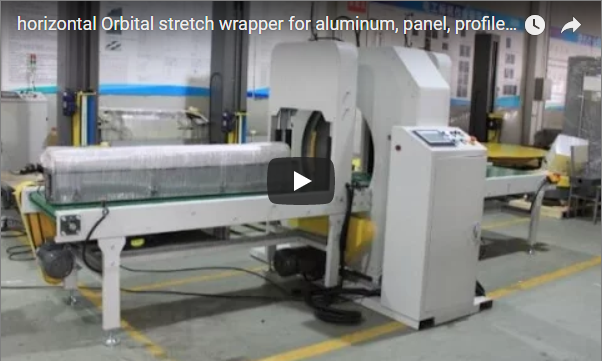
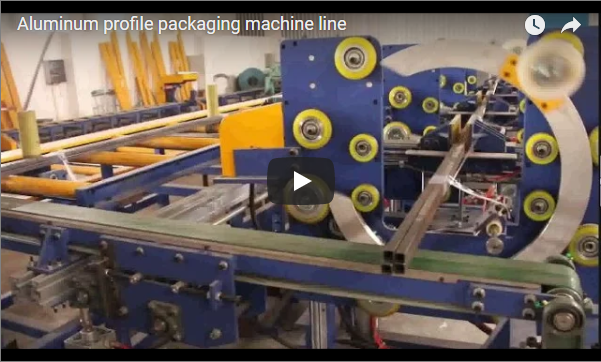
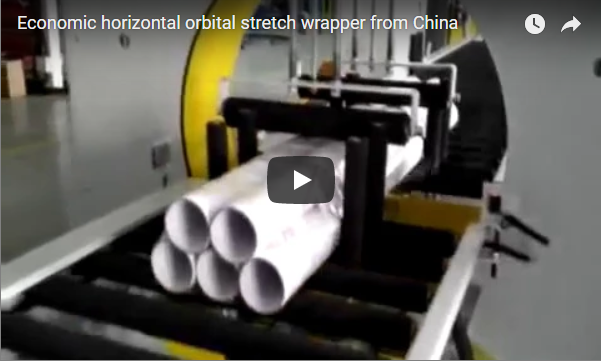
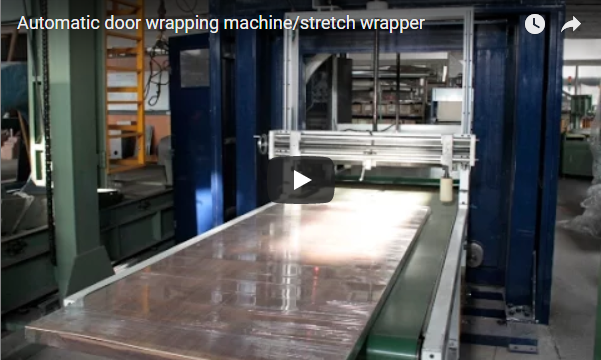
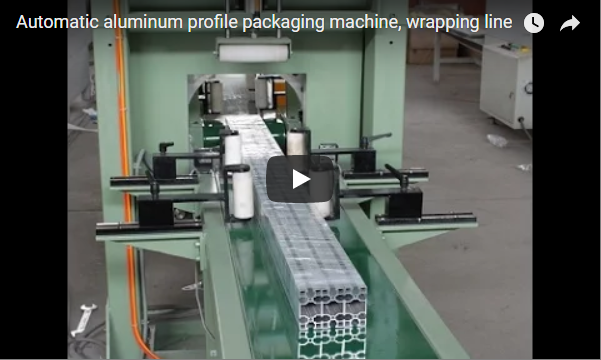
Samenvatting Preparing sawn lumber, kiln-dried timber, and engineered wood packs for transport requires two sequential operations: an all-weather cover against moisture and road grime, and high-tension strapping to consolidate the pack. Our automated horizontal timber packing line executes both on a continuous heavy-duty roller conveyor — orbital stretch wrapping combined with overhead vertical compression and PET/PP strapping heads. Ring diameter, roller throat width, compression stroke, and strap positions are engineered per project to your bundle dimensions.
Inhoudsopgave
- Systeemoverzicht en werkingsprincipe
- De lijn, station voor station.
- Waarom inpakken vóór omsnoeren: mechanische voordelen
- Filmverbruik en overlaptechniek
- Technische dimensioneringsparameters
- Controles en naleving van veiligheidsvoorschriften
- Selectiechecklist voor houtverpakkingslijnen
- Veelgestelde vragen over techniek
- Projectplanning en vervolgstappen
Systeemoverzicht en werkingsprincipe
The horizontal timber packing system consolidates, protects, and unitizes timber stacks on a continuous pass-through powered roller bed:
[Timber Infeed] ──> [Top Sheet Covering] ──> [Orbital Ring Wrapping] ──> [Top Compression & Strapping] ──> [Outfeed]
- Doorlopende spiraalwikkeling: The bundle enters the orbital ring, where stretch film is applied in a synchronized, overlapping helical pattern as the bundle advances horizontally. The conveyor halts momentarily at the leading and trailing ends for multi-layer reinforcement wraps.
- In-line consolidatie: The pre-wrapped bundle moves downstream to the integrated strapping station, where an overhead press beam applies steady vertical downforce to eliminate internal voids, settle the boards, and counter transit relaxation.
- Geautomatiseerd omsnoeren: Under continuous vertical compression, automated strapping heads feed, tension, and join strapping around the pack using a high-strength joint, producing a fully consolidated, weather-resistant freight unit.
De lijn, station voor station.
| Station | Mechanische functie: | Technisch voordeel |
|---|---|---|
| Bovenste filmbedekking | Brengt PE-beschermfolie aan over de bovenkant van de bundel. | Biedt volledige bescherming aan vijf zijden tegen regeninfiltratie. |
| Orbitale wikkeling | High-speed rotating ring wraps stretch film in a continuous spiral | Seals perimeter, prevents individual board shifting, and eliminates manual taping |
| Aangedreven transport | Heavy-duty steel and polyurethane powered rollers advance packs | Continuous horizontal transfer prevents bundle sagging and eliminates secondary crane handling |
| Overhead press | Hydraulic or pneumatic beam applies calibrated vertical downforce | Pre-compresses timber bundles to remove interlaminar air gaps before strapping |
| Automatisch omsnoeren | Indexes strapping band around pack, tensions, and seals the joint | Secures bundle integrity and retention force for long-haul trucking and intermodal freight |
Because the timber stack remains strictly horizontal throughout the processing envelope, structural timbers and long sawn boards (up to 6,000 mm or longer) transfer linearly through the line without requiring intermediate handling, turning, or tilting.
Waarom inpakken vóór omsnoeren: mechanische voordelen
Sequencing the orbital stretch wrapping process prior to high-tension strapping provides critical mechanical advantages over strapping-first workflows:
- Stress Distribution Across Board Edges: Sawn lumber and planed boards have sharp 90° corners that create severe stress concentrations when bound directly by tensioned strapping. In automated strapping systems utilizing 10 × 0.8 mm PP strapping, the band is joined via friction-vibration welding, where joint strength typically reaches 75–80% of the strap breaking load. Wrapping first creates a protective polymer barrier that wraps around timber corners. This allows tensioning forces to distribute evenly across the film layer rather than biting into soft timber or shearing against sharp lumber corners, which would otherwise induce premature strap joint failure.
- Tension Retention vs. Sub-Film Slippage: If strapping is applied first and film wrapped over it, the straps sit directly against dry or settling timber. Over road vibrations, boards settle, causing the straps to lose pre-tension and slip beneath the smooth wrap. Conversely, wrapping the bundle first densifies and unitizes the pack. Applying vertical compression and strapping over the wrapped exterior locks the strapping onto the film surface, maintaining tension retention throughout transit and significantly lowering slack-strap incidents during international transport.
- Hermetic Boundary and Edge Protection: Strapping applied over the outer stretch film acts as a mechanical anchor, locking the film edges down and preventing highway wind peel-off, water entry, and dust contamination.
Filmverbruik en overlaptechniek
Film usage per timber bundle is directly dictated by bundle geometry, usable film roll width, overlap percentage, and delivery carriage performance.
The fundamental relationship governing material consumption is expressed as:
Applied film length per bundle ≈ bundle perimeter × number of ring rotations
The total number of rotations required is a function of the bundle length, target overlap percentage, and effective film width:
- Film Substrate Formats: Standard orbital lines utilize LLDPE stretch film, technical paper, or woven PE wrap with roll widths ranging from 150 mm to 300 mm (roll OD 100–250 mm, core ID 50 mm).
- Overlap Dynamics: Overlap is mechanically configured via the ratio between ring rotational speed (r/min) and conveyor forward travel speed (m/min). Increasing the overlap percentage (e.g., from 50% to 70% or higher for open flatbed export transport) reduces the linear advance per ring cycle. This increases the total turn count and proportionally raises overall film consumption per pack.
- Pre-Stretch Efficiency: Utilizing a powered mechanical pre-stretch carriage elongates the film prior to bundle deposition, substantially reducing actual roll weight consumption per cubic meter of timber packaged. Accurate consumable forecasting requires calculating turns based on the chosen film width (150–300 mm) and specific overlap settings rather than relying on unverified estimates.
Technische dimensioneringsparameters
Because sawmills and secondary timber processors operate under variable cut lists, packaging equipment envelopes must align with specific timber bundle profiles.
For small-to-medium structural timber profiles, battens, and flooring bundles, standard machine specifications are established around industrial benchmarks such as the E500 Horizontal Orbital Wrapper:
| Machine / Line Parameter | Standard Engineering Envelope (E500 Model Benchmark) | Application Notes & Verification |
|---|---|---|
| Bundellengtebereik | > 1500 mm | Packs shorter than 1500 mm require customized bridge rollers or smaller specialized units |
| Cross-Section Envelope (OD) | 200 mm tot 500 mm | Measured as maximum bundle diagonal cross-section |
| Bundelgewichtcapaciteit | 50 kg tot 500 kg | Sized for standard automated roll conveyor loading |
| Invoer-/uitvoertransportband | 2000 mm × 700 mm | Sized per bundle throat; extended beds available for long wood |
| Transportbandsnelheid | 3 tot 12 m/min | Variable-frequency inverter drive synchronization |
| Snelheid van de orbitale ring | 10 tot 60 t/min | Stepless VFD speed regulation |
| Pneumatische werkdruk | 5 tot 8 kgf/cm² | Regulated plant supply for pneumatic hold-downs and cutting jaws |
| Power Rating & Supply | Ongeveer 4.5 kW | AC 380V, 50 Hz, 3-Phase standard industrial drop |
| Totale afmetingen | Approximately L5200 × W1600 × H1800 mm | Footprint verified during layout integration |
Note: Timber bundles exceeding an OD of 500 mm, packs shorter than 1500 mm, or bundles weighing over 500 kg fall outside the standard E500 envelope and require custom large-throat rings, higher-torque drives, and customized pneumatic hold-down geometries.
Controles en naleving van veiligheidsvoorschriften
Operating continuous orbital wrapping rings alongside heavy vertical consolidation beams requires rigid adherence to modern industrial safety standards:
- Perimeterbeveiliging: Powder-coated steel safety mesh prevents personnel access to rotating film carriages and moving strapping heads during production cycles.
- Pneumatic / Hydraulic Safety Lockouts: The vertical press beam incorporates mechanical rod locks or pilot-operated dual-check valves to prevent gravity drop during unexpected air or power loss.
- Geïntegreerde PLC-architectuur: A central industrial PLC coordinates ring rotation, conveyor pacing, film clamp/cut cycles, and strapping head indexing. The operator HMI provides pack recipe storage, diagnostics, and localized E-stop management.
- Regulatory Compliance: Machine engineering conforms to ISO 12100 for machinery risk reduction and EN 415-10 for packaging machine safety, incorporating Lockout/Tagout provisions compliant with OSHA 29 CFR 1910.147.
Selectiechecklist voor houtverpakkingslijnen
Review these parameters before finalizing your packaging line layout:
- Afmetingen bordMinimale en maximale lengte, breedte en dikte van de plank.
- Bundle Envelope: Cross-sectional envelope — confirm minimum and maximum bundle OD (e.g., verifying whether dimensions sit within the 200–500 mm range).
- Bundle Unit Weight: Minimum and maximum weight (kg) to establish drive chain and conveyor roller capacities.
- Beschermingsomhulsel: Perimeter spiral wrap only, 5-sided coverage (top sheet covering + spiral wrap), or full weather-sealed capping.
- Specificaties voor omsnoering: Band material (PP or PET), band dimensions (e.g., standard 10 × 0.8 mm PP), strap joint requirements (friction-vibration weld at 75–80% breaking strength), and strap count per pack.
- Vochtgehalte (MC): Kiln-dried timber (KD) vs. green wood (green wood may require breathable slotted wrapping to inhibit mold growth).
- Doelcapaciteit: Desired packs per hour to configure index-shuttle strapping versus dedicated multi-head lines.
Veelgestelde vragen over techniek
V: Draait of kantelt de houtstapel tijdens het orbitale wikkelproces? A: No. The timber bundle maintains a static horizontal orientation on the conveyor bed while the orbital ring rotates 360° around it. Helical wrap pitch is governed by the coordinated linear advance of the conveyor through the ring.
Q: Why must vertical compression occur right before strapping? A: Sawn lumber stacks inherently contain interlaminar air voids. Applying calibrated vertical downforce squeezes these voids out before the strapping band is tensioned and welded. Without this pre-compression, highway vibration will cause natural pack settling, leaving the strapping slack.
Q: How is orbital ring internal diameter calculated? A: The ring internal diameter is calculated from the diagonal cross-section of the largest timber bundle envelope, plus a minimum clearance margin of 250 mm to allow unhindered clearance for the rotating film delivery carriage and bracket assembly.
Projectplanning en vervolgstappen
Integrating a continuous timber wrapping and strapping system into an operational planermill or sawmill involves three direct steps:
- Omhulsel- en uitvoerspecificatie: Send your lumber cut lists, minimum/maximum bundle cross-sections, and line throughput targets to our engineering team at info@fhopepack.com.
- Layout & Station Proposal (24–48 Hours): Our packaging engineers provide a complete 2D layout drawing detailing conveyor spacing, ring throat sizing, press stroke, and strapping head indexing cycles tailored to your mill.
- Technische beoordeling en site-integratie: We conduct layout verification to optimize feed table heights, electrical drop points, pneumatic header capacity, and integration with upstream stackers or downstream transport drop-tables.
Laatst beoordeeld: 05-11-2026