Overzicht
Black annealed wire is springy: once a length is wound into a coil, the coil wants to open and the turns want to cross over. Producers that ship or store wire in small coils therefore need to wind the wire and fix the shape before it leaves the line. Doing this automatically replaces manual winding and hand strapping with a repeatable process: the machine draws wire off a supply reel, winds it into a coil of the required size, and straps it so the coil holds its shape in transport and at the customer.
This guide explains how automatic black annealed wire winding and strapping works, which equipment layout matches which job, and what a wire producer with a given coil size—for example ID 200 mm, OD 350 mm and 180 mm high—needs to confirm before ordering.
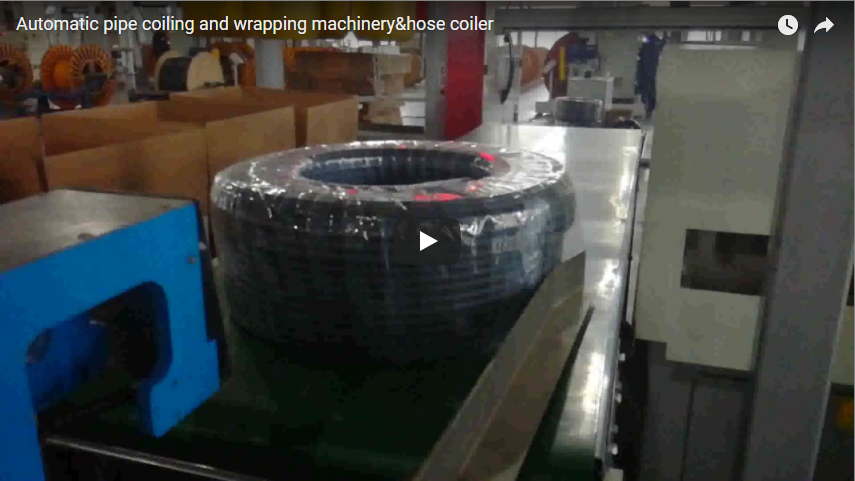
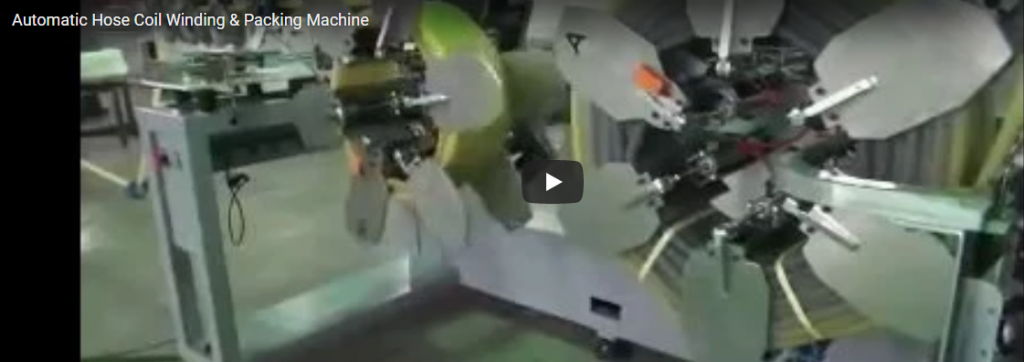
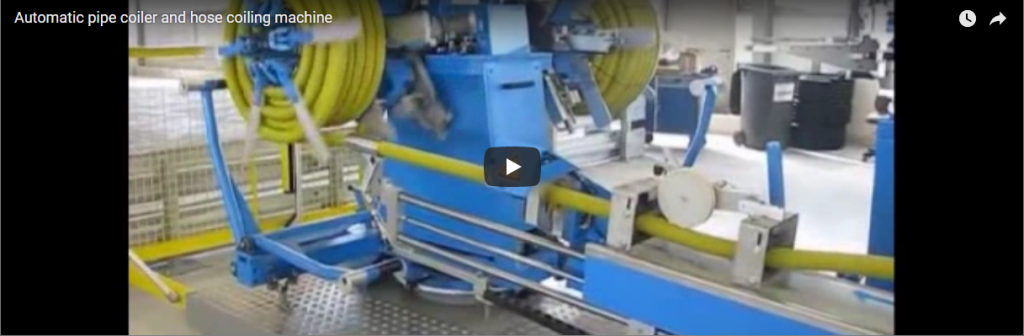
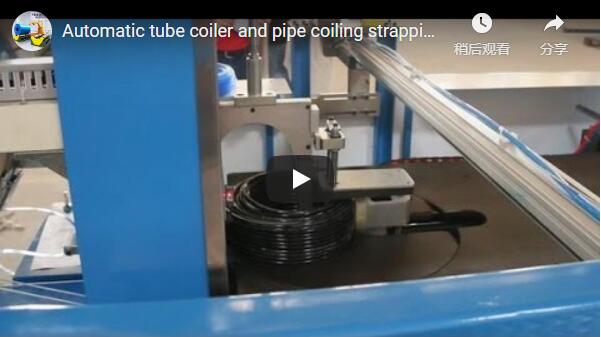
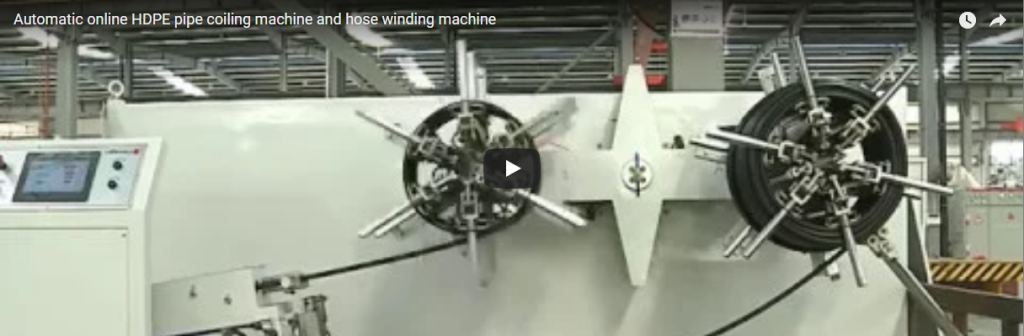
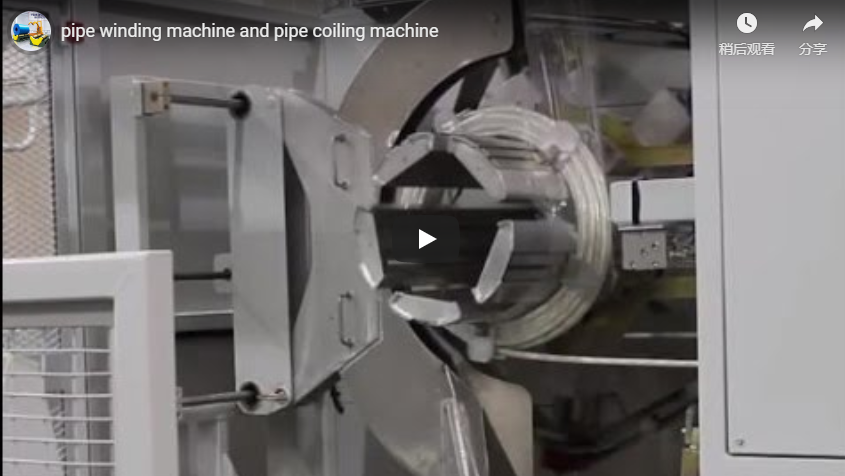
The videos on this page show similar machines as reference examples. They are not an exact picture of every installation: each machine is customized to your wire size, coil size and output, and the final configuration is confirmed during quotation. Treat the specifications below as representative values to plan against, not as a fixed build.
What the Automatic Winding and Strapping Process Does
Automatic wire coil winding and strapping takes wire from a large supply reel and converts it into small, tied coils ready for sale or dispatch. The basic process has four steps:
- Uitbetaling. Wire or cable runs off the large supply reel.
- Meten en snijden. De machine meet de lengte en snijdt op de ingestelde waarde.
- Wind. A winding head forms a small coil; on many machines the coil has no spindle left inside.
- Tie or strap. The coil is tied or strapped so it holds its shape, then taken away for the next coil.
Because black annealed wire is springy, the strapping step is part of the forming process, not an afterthought. If a coil is moved to a separate table before it is fixed, the turns cross and the coil deforms. Automatic machines fix the coil in the shape in which it was wound.
Does Your Coil Size Fit the Machine?
Before selecting a machine, check your coil window: the ring between the coil inside diameter and outside diameter, times the coil height. For a wire producer making coils of ID 200 mm, OD 350 mm and 180 mm high, that window sits well inside the range of a typical rewinding and tying machine:
Coil ID 200 mm 120–200 mm at the upper limit Coil OD 350 mm 200–450 mm inside Coil height 180 mm 50–200 mm inside Coil weight depends on wire up to 5 kg confirm per metreThe figures above are the machine's design window; a supplier confirms the exact coil size on a trial with your wire, because real winding packs less evenly than the theoretical window.
Three Ways to Automate Winding and Strapping
Depending on where the wire comes from and how much output you need, three layouts are common. All three are shown in the videos below.
1. Off-Line Rewinding and Tying Machine
This layout sits next to the pay-off and splits a large reel into several smaller tied coils. It is a good fit when you rewind finished black annealed wire into retail or installer coils at your own pace, off the main drawing line. The video shows a similar rewinding and tying cell as a reference; the machine is matched to your wire and coil size at quotation.
Automatische machine voor het oprollen en vastbinden van draadspoelen
Key points for this option (typical values shown as a reference):
- Makes non-spindle coils of about 120–200 mm ID, 200–450 mm OD and 50–200 mm high, up to 5 kg each—representative, and confirmed on a trial with your wire.
- The key planning step is checking that your coil length fits the winding window.
- An encoder calculates the length; on the supplier's tube coiling machine, coiling and cutting accuracy is 3 mm per 10 m.
- Two binding points are made at one time, and tension control keeps soft material from deforming.
2. Rewinding and Compacting Line
When loose wire from a large reel takes up space and slips in transport, wire mills rewind it into smaller coils, press them dense and strap them tight. A rewinding and compacting line does this in stations: a rewinder, a vertical compacting press and a strapping station, with a forklift taking the finished coil away. The video shows this arrangement as a reference; station layout and strap plan are set per project.
Automatische lijn voor het oprollen en verdichten van staaldraadspoelen
Why this helps a black annealed wire producer:
Smaller coils Easier to handle and to feed at the customer Dense coils Less volume per tonne in the truck or container Even height Coils stack straight and straps sit flat Strapped while compact Turns cannot slip or spring looseHet belangrijkste detail: the line straps the coil while the press still holds it compact. If the press opens first, the coil springs back and the straps go on loose.
3. Inline Winding and Strapping Machine (at the end of the drawing line)
At the end of a wire drawing or annealing line, the wire comes out fast and continuously, while coils have to be wound, removed and strapped one by one. If winding cannot keep pace, the line slows; if strapping is loose, the coil opens in handling. An inline machine buffers the wire in an accumulator, winds coils on one or two heads, transfers each finished coil with a gripper and straps it. The video is a factory example; the number of heads, accumulator length and coil size are matched to your line speed and coil specification.
Steel Wire Coil Winding and Strapping Machine Factory
Typical data for the inline machine (reference values—confirmed per project):
Wire speed up to 200–800 m/min Output 40 coils/h double head; 20 coils/h single head Accumulator length 5–20 m Centre height 1,000 mm from floor Supply 380/440 V, 60 Hz Wire diameter and coil size customized, confirmed at quoteTo check whether you need a single- or double-head machine: coils per hour needed = line speed (m/min) × 60 ÷ wire length per coil. For example, a line at 300 m/min making 1,000 m coils produces 18 coils/h, inside a single head's capacity; at 600 m/min it produces 36 coils/h and needs the double-head machine.
Information a Supplier Needs Before a Quotation
For wire winding and strapping of the size above, a supplier typically asks for the following before quoting:
- Where the wire feeds from. Is the input wire paid off from a reel, or supplied in another form such as a carrier or a continuous drawing line?
- Rewinding speed. What speed do you need—in metres per minute of wire, or coils per hour?
- Wire size and coil specification. Wire diameter and material; coil ID, OD, height and weight; coils per shift.
Providing these details lets the supplier size the machine, choose single- or double-head winding, and confirm whether your coil weight fits the standard winding window or needs a larger machine.
FAQ
Q: Why strap the coil while it is still held in the machine?
A: Because black annealed wire is springy. If the press or former releases the coil first, the coil springs back and the straps go on loose. Strapping while the coil is held compact locks the density in.
Q: Can a machine make coils of 200 mm ID, 350 mm OD and 180 mm high?
A: Yes. This size sits inside the typical 120–200 mm ID, 200–450 mm OD and 50–200 mm high window. The videos show similar machines as a reference; the supplier confirms the exact coil size and configuration on a trial with your wire, because the machine is customized to your spec.
Q: Does the line stop at every coil change?
A: In a double-head machine the wire switches to the empty head so the line keeps running. With a single head, slow-down during unload is confirmed at quote. This is a representative design; the head configuration for your line is decided during quotation.
Q: What happens if my coil weighs more than the standard limit?
A: Standard small coils are up to 5 kg. If yours are heavier, the supplier moves to a bigger coiler or a compacting line rather than forcing the coil into a window that does not fit. This is a typical value to plan against, not a fixed build.
Q: How much strap does a coil need?
A: This depends on coil height, the coil wall, and the number of bands. The supplier plans the strap per project after you give the coil specification.
Volgende stap
To get a proposal for your black annealed wire size (ID 200 mm / OD 350 mm / 180 mm high), send your wire size, coil length, rewind speed and infeed method to the supplier, so they can match the machine to your line and confirm the coil size on a trial.